

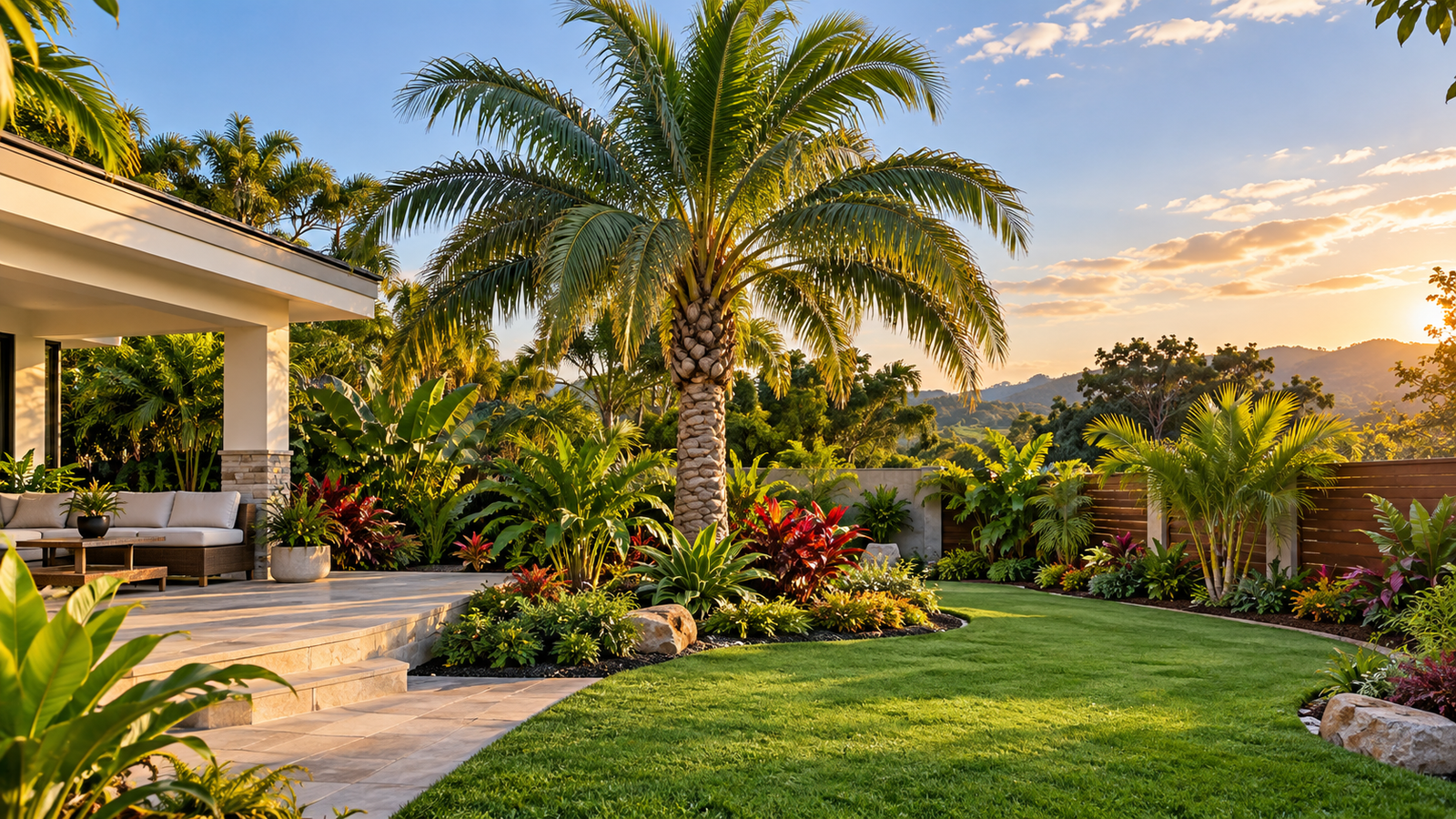
Palm plant ideas for backyards work best when the palm matches your climate, mature space, sunlight, drainage, and landscape goal. Choose compact palms for small yards, clustering palms for privacy, container palms for flexibility, and solitary palms when you want one strong architectural focal point.
Palm Plant Ideas for Backyards by Yard Type
Start with the biggest limitation or purpose in your backyard rather than choosing a palm only because it looks attractive at the nursery.
A palm should still fit, function, and remain manageable when it reaches maturity.
| Backyard Situation | Start With | Main Check |
|---|---|---|
| Small backyard | Compact palm | Mature crown width |
| Cool climate | Cold-tolerant palm | Winter lows and frost |
| Shaded area | Shade-tolerant palm | Daily light |
| Wet area | Moisture-compatible palm | How long soil stays wet |
| Patio | Container or compact palm | Drainage and stability |
| Focal point | Solitary palm | Mature height and view |
| Privacy | Clustering palm | Foliage height and width |
| Hot, dry area | Heat-tolerant palm | Drainage and watering |
| Coastal yard | Salt-tolerant local choice | Wind and salt exposure |
| Use this order: | ||
| Climate → Mature Size → Site → Function → Safety → Maintenance | ||
| This prevents one of the most common landscaping mistakes: selecting a palm for its current nursery size instead of its long-term suitability. |
How to Choose the Right Backyard Palm
Use the 4S Palm Selection Framework: Survival, Size, Site, and Service.
A palm should pass all four tests before becoming a permanent part of the landscape.
Survival
Choose a palm that can tolerate your regional climate.
Consider:
- winter minimum temperatures;
- frost duration;
- summer heat;
- humidity;
- rainfall;
- wind;
- coastal exposure.
Windmill palm (Trachycarpus fortunei) is one of the more cold-tolerant true palms commonly used in temperate landscapes. Dwarf palmetto (Sabal minor) is another option worth researching for comparatively cool conditions.
Size
Check both mature height and crown width before planting.
Consider:
- crown spread;
- roof and gutter clearance;
- overhead utilities;
- neighboring boundaries;
- nearby trees;
- future maintenance access.
A young palm may fit comfortably today but become unsuitable when its crown reaches full size.
Site
Evaluate the exact planting position rather than treating the whole backyard as one environment.
Check:
- sunlight;
- soil drainage;
- standing water;
- reflected heat;
- wind exposure;
- irrigation access.
Lady palm (Rhapis excelsa) can suit sheltered shade, while Mediterranean fan palm (Chamaerops humilis) is better suited to brighter, well-drained conditions.
Service
Ask whether you can realistically manage:
- irrigation;
- dead fronds;
- fruit or flower debris;
- sharp foliage;
- winter protection;
- mature crown access;
- container repotting.
A palm that survives your climate but becomes difficult to maintain is still the wrong palm for that location.
Backyard Palm Microclimates
A backyard rarely has one uniform growing environment.
A west-facing wall may create intense afternoon heat, while a shaded corner stays cooler and wetter. Low areas can collect water, enclosed spaces may stay sheltered, and narrow gaps between buildings can funnel wind.
Before choosing a palm, identify:
- morning sun;
- strong afternoon sun;
- seasonal shade;
- reflected heat;
- wind corridors;
- sheltered corners;
- wet areas;
- fast-drying soil;
- possible frost pockets.
Use this sequence:
Regional Climate → Backyard Microclimate → Palm Selection → Exact Placement
A palm can be suitable for your general region but unsuitable for one particular place in the backyard. Microclimate planning should happen before you make the final species choice.
Best Palms for Backyard Conditions
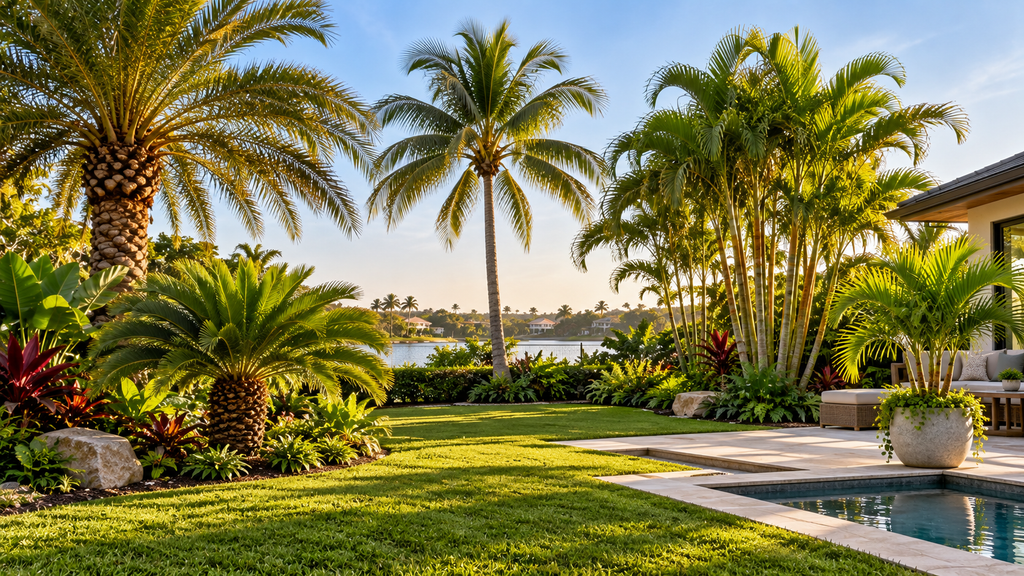
Different palms solve different backyard problems. Narrow your options according to climate, mature dimensions, growth habit, moisture, light, and safety.
| Palm | Best Fit | Growth Habit | Useful Role | Main Caution |
|---|---|---|---|---|
| Dwarf palmetto | Mild to warm temperate sites | Short/subterranean trunk | Small or moist areas | Verify local suitability |
| Windmill palm | Cooler climates | Solitary | Cool-climate focal palm | Wind exposure |
| Mediterranean fan palm | Hot, dry sites | Clustering | Dry gardens and structure | Sharp petiole spines |
| Lady palm | Sheltered shade | Clustering | Shaded yards | Cold sensitivity |
| Pygmy date palm | Warm climates | Solitary | Compact tropical planting | Sharp basal spines |
| Areca palm | Tropical/subtropical sites | Clustering | Screening and tropical mass | Needs mature width |
| Use the selector in this order: |
- Remove palms unsuitable for your climate.
- Remove palms that exceed the mature space.
- Match the remaining palms to sunlight and drainage.
- Choose the growth habit that performs the required function.
- Check safety and maintenance.
- Verify the final choice using reliable regional guidance.
The best palm is not the most impressive one in the nursery. It is the palm that still works in your backyard at maturity.
Palm Climate Guide
International gardeners should not depend on a hardiness-zone number alone. Actual winter lows, frost duration, summer heat, rainfall, humidity, wind, and local growing conditions usually provide a more complete picture.
Tropical and Humid
Prioritize palms suited to persistent warmth and humidity.
Also check drainage because heavy rainfall can create root-zone problems even in tropical climates.
Warm Subtropical
Warm subtropical gardens may experience occasional cold events despite having long, hot summers.
Check minimum winter temperatures, frost frequency, freeze duration, and wind exposure.
Mediterranean and Hot-Dry
Prioritize heat tolerance, strong drainage, establishment watering, and long-term drought suitability.
Mediterranean fan palm is especially relevant to hot, well-drained conditions.
Mild Temperate
Choose palms with credible cold tolerance and use sheltered microclimates where possible.
Protection from damaging wind can sometimes be almost as important as minimum temperature.
Colder Temperate
Where permanent outdoor palms are unreliable, consider container palms, seasonal outdoor placement, protected overwintering, or hardy plants with similarly bold foliage.
Coastal Backyards
Coastal gardens add salt exposure and persistent wind to the normal palm-selection process.
Check:
- salt spray;
- salty irrigation water;
- prevailing winds;
- drainage;
- sandy or low-fertility soil;
- storm exposure;
- mature crown stability.
Do not assume every tropical-looking palm naturally suits coastal conditions.
Use:
Regional Climate → Coastal Exposure → Microclimate → Species → Placement
Also check whether the species is recommended locally. A palm that performs well in one region may be invasive, restricted, or environmentally unsuitable in another.
Solitary vs Clustering Palms
Growth habit determines what a palm can realistically do in a backyard.
Solitary Palms
Solitary palms develop one main trunk and are useful for:
- vertical structure;
- architectural height;
- focal positions;
- open views.
They work best when you want a specimen rather than dense lower screening.
Clustering Palms
Clustering palms produce multiple stems and more foliage closer to ground level.
They can work well for:
- privacy;
- broader visual mass;
- softer boundaries;
- tropical layering.
However, clustering palms often require more mature width than expected.
Short Palms
Some palms provide strong foliage without becoming conventional tall trees.
Dwarf palmetto is useful where vertical space is limited because much of its trunk remains below ground.
Container Palms
Containers provide mobility but require closer attention to drainage, watering, root space, stability, and repotting.
Use:
Function → Growth Habit → Species
Then apply the final decision system:
4S → 3F → Safe Space → Local Verification
The 3F Filter asks:
- Function: What job should the palm perform?
- Footprint: How much mature space will it need?
- Future: Will the decision still work as the palm matures?
Best Backyard Palm Ideas
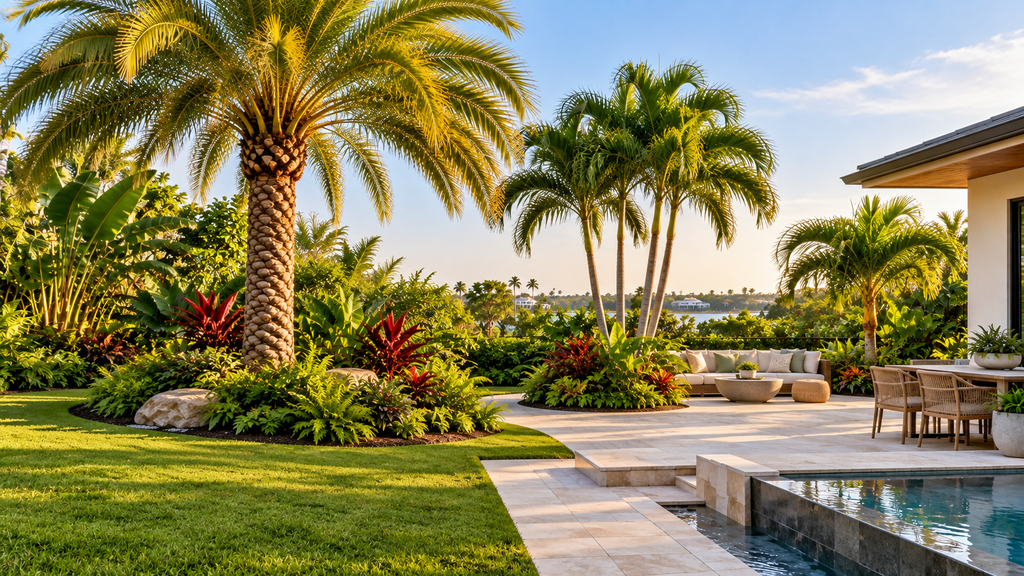
Backyard palm design works best when every palm has a clear purpose. Avoid scattering palms randomly just to create an instant tropical effect.
Use One Palm as a Focal Point
One correctly positioned palm can create more impact than several unrelated palms.
Good locations include:
- beyond a patio;
- outside an important window;
- at the end of an open view;
- beside a transition between garden spaces.
Use the View Corridor Test.
Stand at the patio, back door, kitchen window, main seating area, and garden entrance. Ask whether the mature palm improves the view, blocks something important, or competes with another major tree.
Create a Three-Palm Grove
Three palms can create rhythm and depth without overwhelming the backyard.
A triangular arrangement often looks more natural than a straight row, but mature crown size should determine the final spacing.
Use one species where possible and leave enough open space for each crown to develop.
Use Compact Palms in Small Yards
Small backyards usually benefit from one carefully selected compact palm rather than several palms forced into limited space.
A simple composition is:
- one compact palm;
- one repeated mid-height companion;
- one low groundcover;
- open circulation.
In confined yards, mature width can matter more than height.
Grow Palms in Outdoor Planters
Container palms work well on patios, paved yards, rental properties, and in climates where seasonal protection is needed.
Check:
- drainage;
- root volume;
- stability;
- watering;
- repotting;
- winter movement.
A container does not permanently turn a naturally large palm into a small plant.
Use Palms in Wet Areas
Some palms tolerate moist conditions, but the actual wet-dry pattern matters.
Determine whether water remains for hours, days, or most of the season.
Dwarf palmetto is one option worth researching for moist or periodically wet sites.
Use Palms in Cooler Backyards
Windmill palm and dwarf palmetto are two palms worth researching for comparatively cool conditions.
Improve success with sheltered placement, wind protection, hardy companions, and container growing where permanent outdoor planting is marginal.
Use Palms in Shade
Lady palm is a useful example for sheltered, lower-light areas.
Shade tolerance does not mean no light. Determine whether the site receives morning sun, filtered tree shade, building shade, or bright indirect light.
Use Palms Around Pools and Patios
Choose palms with manageable mature crowns, safe foliage, and reasonable debris levels.
Avoid oversized or sharply armed palms where people regularly walk, sit, play, or enter a pool.
Good positions may include patio corners, the outer edge of a seating view, or behind lower planting. The palm should frame the space rather than obstruct it.
How Much Space Do Palms Need?
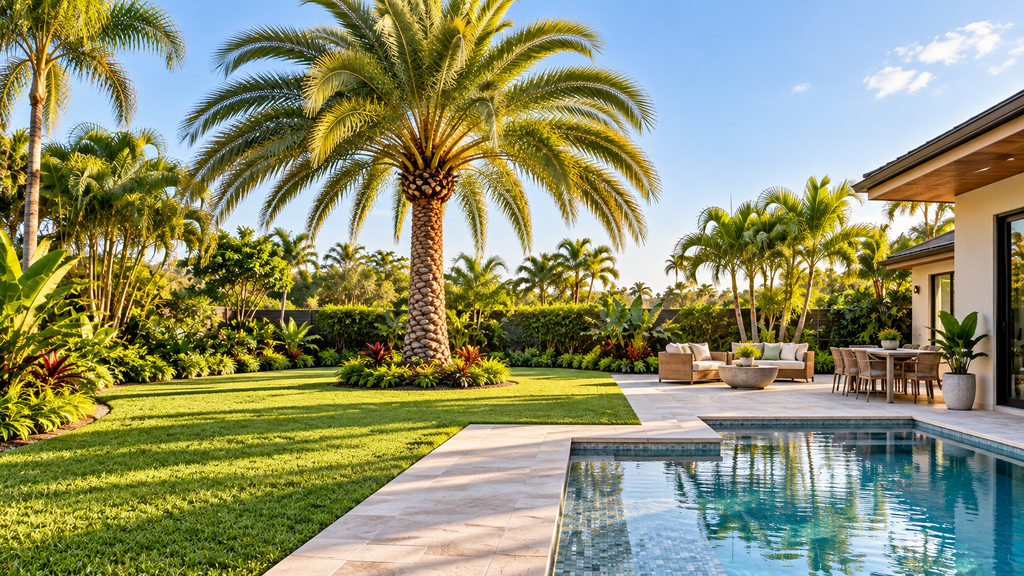
Palm spacing should include the mature crown and the space people need around it.
Use:
Mature Crown Radius + Functional Clearance + Maintenance Access = Safe Space Envelope
Check for conflicts with:
- paths;
- patios;
- fences;
- gates;
- roofs;
- gutters;
- windows;
- utilities;
- neighboring property.
Sharp palms require additional human clearance.
Test the Mature Footprint
Before planting, mark the expected mature width with rope, chalk, temporary stakes, or a garden hose.
View the marked area from windows, seating areas, paths, doors, and the lawn.
Then walk around it.
If circulation already feels awkward before the palm is planted, the mature palm is too large for that position.
Plan for Maturity
Think beyond Year 1.
As the palm grows, review crown expansion, changing shade, plant competition, and path clearance.
At maturity, the backyard should still provide usable space, structural clearance, maintenance access, and comfortable circulation.
Do not solve a temporary empty-space problem with another permanent tree.
Palm Roots Near Patios and Pools
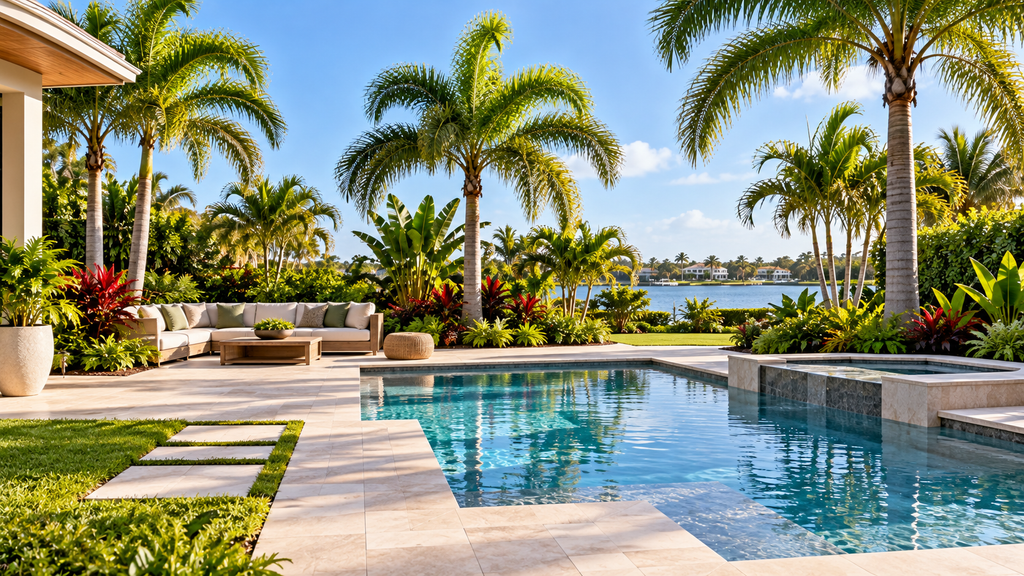
Palm roots are fibrous rather than developing the large expanding woody roots associated with many broadleaf trees.
However, this does not mean every palm can be planted directly beside a patio, pool, wall, or foundation.
Consider:
- mature trunk size;
- palm base development;
- root-zone space;
- irrigation;
- drainage;
- paving;
- underground services;
- maintenance access.
The mature plant matters more than the size of the root ball at planting time.
How Far From a House or Pool?
There is no universal safe distance for every palm.
Use:
Mature Crown Radius + Functional Clearance + Maintenance Access + Site Constraints = Practical Planting Distance
If a palm will develop an eight-foot-wide crown, begin by visualizing about four feet of foliage extending from the center, then add the clearance required for the specific location.
Best Palms for Backyard Privacy
Start with the exact sightline you want to block.
It may be:
- a neighboring patio;
- ground-floor window;
- upper-story window;
- street view;
- service area.
Clustering palms are often more useful for lower-level privacy because they maintain more foliage closer to the ground.
A tall solitary palm may eventually lift its crown above the view you originally wanted to screen.
Use companion planting where extra low coverage is needed.
The best privacy planting blocks the unwanted view without creating excessive shade, crowding, or maintenance problems.
What to Plant Around Palm Trees
Choose companion plants according to growing conditions first.
Match:
- sunlight;
- moisture;
- drainage;
- climate;
- mature scale.
Then create visual layers:
Palm Canopy → Medium Foliage → Low Ground Layer → Open Foreground
For shaded palms, use shade-compatible companions.
For palms in moist locations, choose plants that tolerate the same wet-dry cycle.
For hot, dry sites, select companions suited to strong sun and drainage.
Use this rule:
Ecological Compatibility First; Visual Compatibility Second
Backyard Palm Maintenance
Palm maintenance depends on both the species and its location.
Before planting, consider:
- irrigation;
- drainage sensitivity;
- dead fronds;
- fruit or flower debris;
- sharp foliage;
- cold protection;
- mature crown access;
- container care;
- wind exposure.
A palm may be easy to manage at the back of a large garden but inconvenient beside a doorway or narrow path.
Ask:
Is this palm easy to maintain in this exact position?
Palm Pruning
Palm maintenance does not mean removing large amounts of healthy foliage.
Healthy green fronds support the palm, so avoid severe pruning simply to create a smaller or neater crown.
Routine maintenance may include removing dead fronds, managing hazardous debris, maintaining safe clearance, and arranging professional access for tall palms.
Avoid repeated severe pruning or “hurricane cuts” that remove large amounts of healthy green foliage.
Common Backyard Palm Mistakes
Most palm problems begin with the wrong plant or the wrong position.
Avoid:
- choosing by nursery size;
- ignoring mature width;
- planting too close to structures;
- ignoring microclimates;
- choosing a palm without a clear function;
- using tall palms for low-level screening;
- ignoring sharp foliage;
- designing only for Year 1;
- overlooking future maintenance;
- assuming every palm-like plant is a true palm.
When Not to Plant a Palm
Delay planting if:
- the species is unknown;
- mature size is unknown;
- climate compatibility is uncertain;
- drainage has not been checked;
- utility clearance is uncertain;
- sharp foliage blocks a required route;
- pet or child safety is unclear;
- the mature crown conflicts with a structure;
- the palm has no clear function.
Ask:
What happens if this palm becomes exactly as large and vigorous as it is capable of becoming?
If the answer creates a serious problem, choose another palm or another location.
Is Sago Palm Safe?
Sago palm (Cycas revoluta) is not a true palm. It is a cycad.
All parts of the plant are toxic if ingested, making correct identification especially important in backyards used by pets or young children.
Before buying any palm or palm-like plant, confirm:
- botanical name;
- plant family;
- toxicity;
- sharp foliage;
- fruit or seed hazards;
- placement around children;
- placement around pets.
Physical Hazard vs Toxicity
These are separate safety issues.
Ingestion Safety: Is the plant toxic?
Physical Safety: Can its foliage, spines, fruit, falling fronds, or mature position cause injury?
Some true palms may not present the same ingestion hazard as sago palm but can still have sharp petioles, rigid foliage, heavy fruit, or difficult-to-access crowns.
Backyard Palm Decision Matrix
Identify the biggest limitation in the site first.
| Backyard Condition | Prioritize | Main Risk |
|---|---|---|
| Very small yard | Compact mature crown | Excess width |
| Narrow passage | Safe clearance | Physical contact |
| Windy garden | Suitable palm and shelter | Frond damage |
| Cold winter | Verified cold tolerance | Freeze injury |
| Wet soil | Moisture compatibility | Root-zone mismatch |
| Hot wall | Heat tolerance | Reflected heat |
| Shaded corner | Shade tolerance | Insufficient light |
| Difficult access | Manageable mature form | Maintenance problems |
| Pets or children | Safe identified species | Toxicity or spines |
| Container | Manageable growth | Root restriction |
| Coastal exposure | Salt and wind tolerance | Salt or wind damage |
| Pool or patio | Safe manageable form | Debris or contact |
| Use: | ||
| 4S → 3F → Safe Space → Local Verification | ||
| The best palm solves the backyard’s biggest limitation while creating the fewest new problems. |
Backyard Palm Planning Checklist
Before planting, confirm:
- I know the botanical species.
- The palm suits my regional climate.
- I mapped the backyard microclimate.
- I know the mature height and width.
- I identified the growth habit.
- Light and drainage are suitable.
- The palm passes the 4S test.
- The design passes the 3F filter.
- The Safe Space Envelope fits.
- I considered the mature footprint.
- Circulation remains comfortable.
- Physical hazards have been checked.
- Pet and child safety has been checked where relevant.
- Structure and utility conflicts are resolved.
- Coastal exposure has been checked where relevant.
- Local invasive or restricted status has been checked.
- Maintenance remains practical.
- The palm performs a clear landscape function.
- Important species information has been locally verified.
FAQs About Palm Plant Ideas for Backyards
What is the best palm for a small backyard?
Compact palms such as dwarf palmetto can work well in small yards. Check mature crown width, climate suitability, and available clearance before planting.
Which palm is best for a cold backyard?
Windmill palm is one of the better choices for cooler climates. Dwarf palmetto may also work where winter lows, frost, wind, and moisture are suitable.
Can palm trees grow in shade?
Yes. Some palms, including lady palm, tolerate partial to substantial shade. They still need adequate natural light to grow well.
Can palm trees grow in outdoor pots?
Yes. Palms can grow in containers with good drainage, enough root space, regular watering, and stable pots. Repotting may be needed as they grow.
Which palm is good for wet soil?
Dwarf palmetto can tolerate moist or periodically wet conditions. Match the species to how long the soil stays wet after rainfall.
Can palm roots damage patios or foundations?
Palm roots are fibrous and behave differently from large woody tree roots. Still, allow enough space for the trunk, root zone, paving, structures, and maintenance access.
How far should a palm be from a house or pool?
There is no single distance for every palm. Use the mature crown radius and add clearance for structures, pathways, maintenance, and trunk development.
Which palms are best for backyard privacy?
Clustering palms are often better for lower-level privacy because they keep more foliage near the ground. Tall solitary palms may eventually rise above the required sightline.
Which palms work best around pools and patios?
Choose palms with manageable mature size, safe foliage, and reasonable debris levels. Avoid sharp or oversized palms beside seating, walkways, and pool edges.
Are sago palms true palms?
No. Sago palm (Cycas revoluta) is a cycad, not a true palm. It is toxic if ingested, so extra care is needed around pets and children.
Which Backyard Palm Is Best?
The best backyard palm depends on what the site needs.
Choose a solitary palm for a strong focal point, a compact palm when mature space is limited, and a suitable clustering palm when lower-level privacy or broader foliage is required.
Use container palms where mobility or winter protection matters. Research windmill palm or dwarf palmetto for comparatively cool conditions, lady palm for suitable shaded locations, and moisture-compatible palms for wetter areas.
Avoid palms whose mature crowns interfere with paths, structures, utilities, boundaries, or essential outdoor space.
Use the final decision system:
4S: Survival → Size → Site → Service
3F: Function → Footprint → Future
Safe Space → Local Verification
The best backyard palm is not simply the most attractive species. It is the palm that fits the climate, mature space, microclimate, landscape function, safety requirements, and maintenance capacity of the site.
21 Outdoor Succulent Planter Ideas for Patios, Porches and Yards
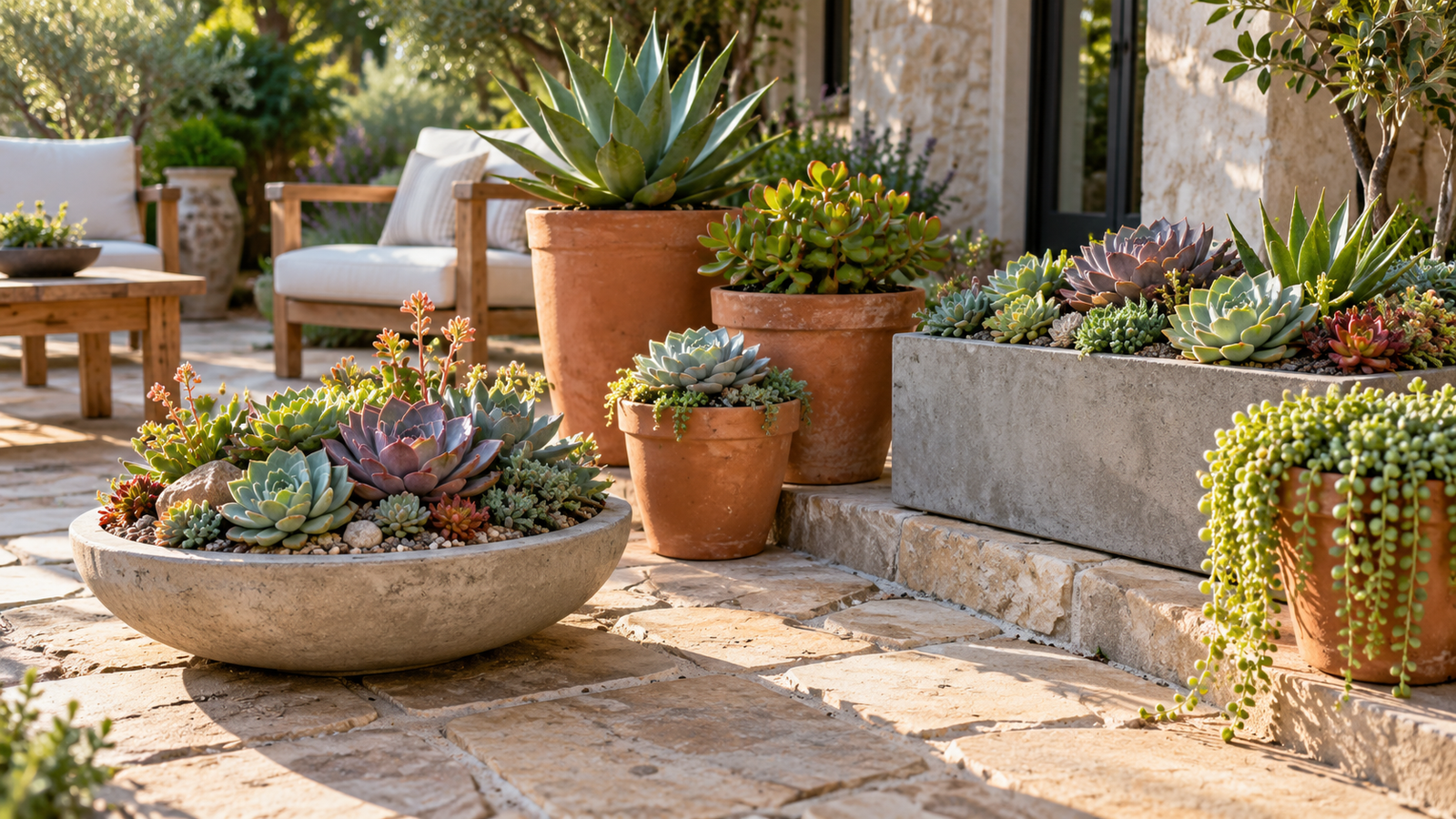
Outdoor succulent planter ideas include mixed rosette bowls, terracotta groups, concrete troughs, vertical wall displays, and hanging baskets. Choose each design according to sunlight, rain exposure, drainage, and winter conditions. Explore 21 practical options, then use the planting and care...
Backyard Plant Bed Ideas: 21 Layouts for Every Yard
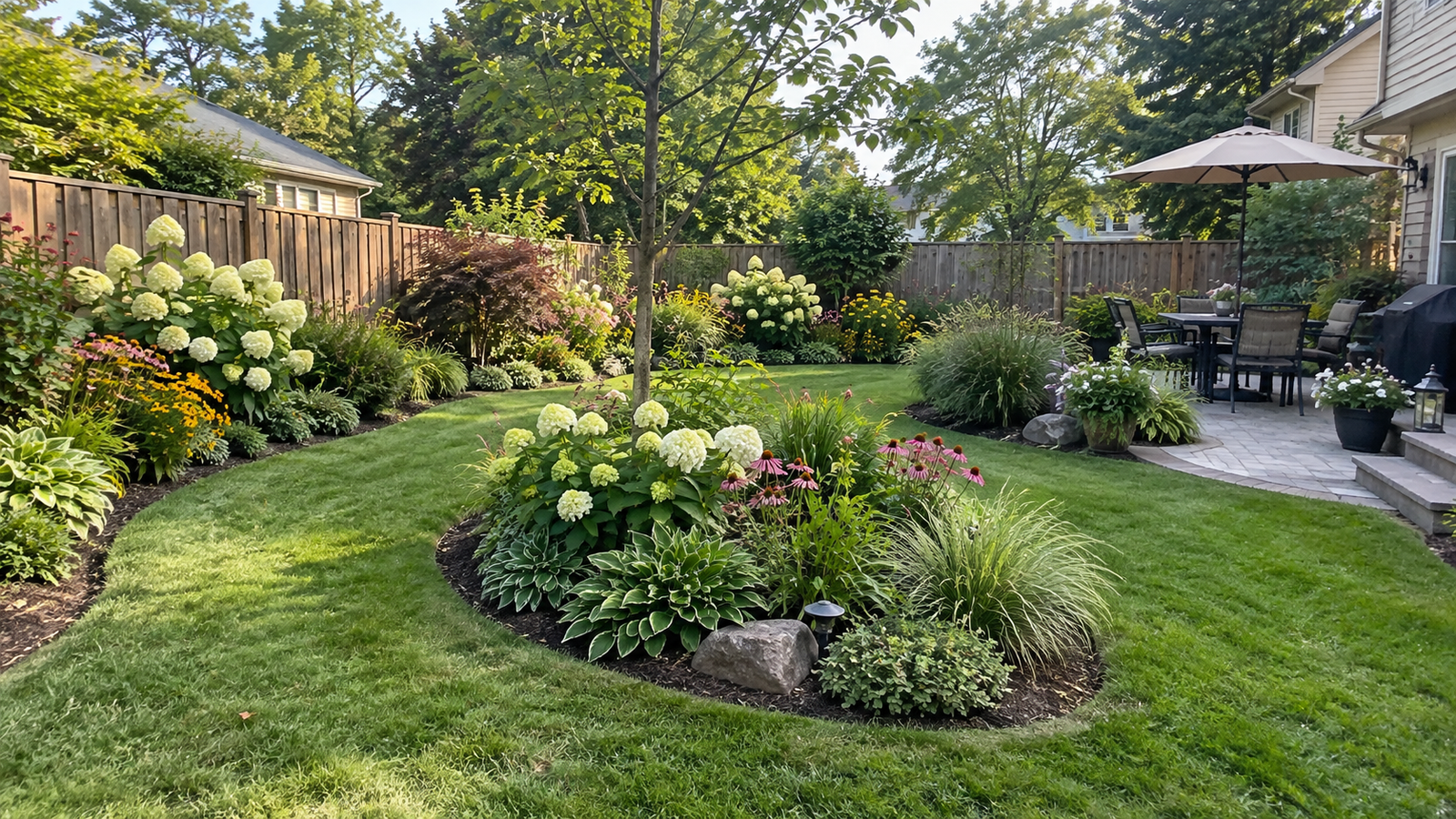
The best backyard plant bed ideas preserve usable space while adding structure and color. Border beds frame lawns, island beds create focal points, fence beds offer screening, curved beds soften straight edges, and raised beds organize growing areas. Choose according...
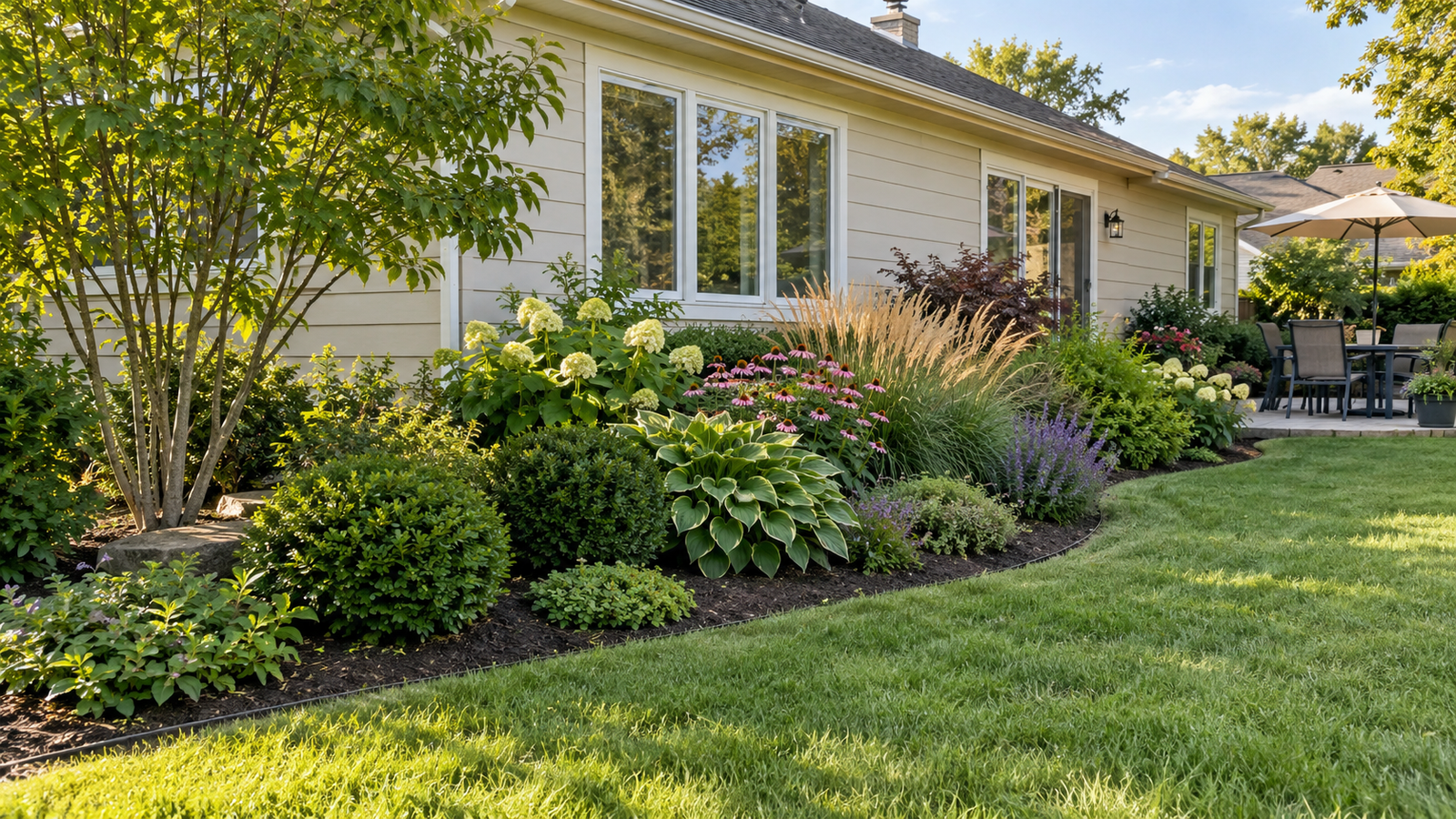
Backyard Foundation Planting Ideas: 21 Ways to Plant Along Your House
The best backyard foundation planting ideas use compact shrubs, flowering perennials, grasses, and groundcovers to soften exterior walls without obstructing windows, drainage, or access. Choose a layout that fits the available bed depth, then select plants for their mature size,...
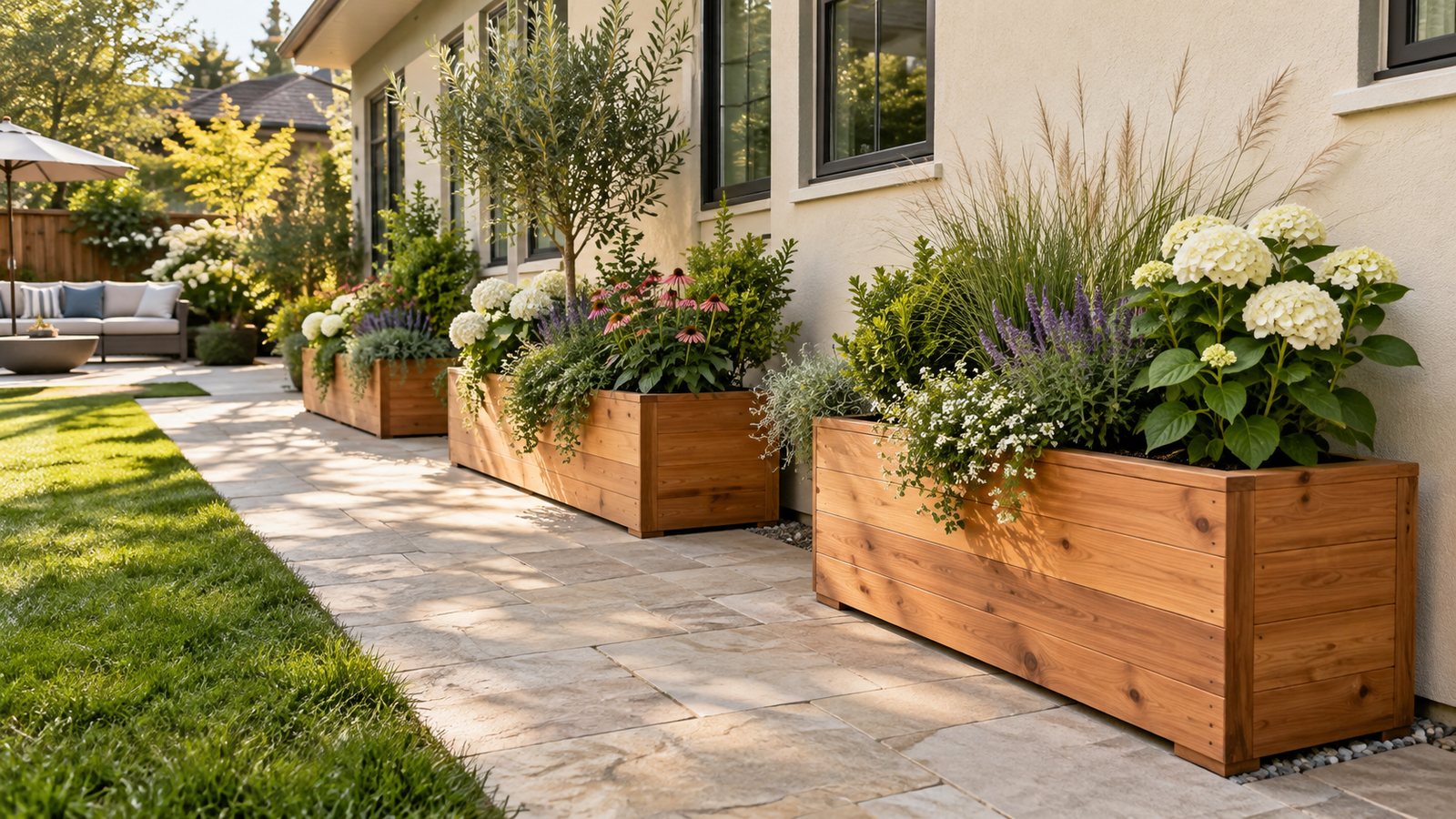
Backyard Planter Box Along House Ideas: 17 Practical Designs
The best backyard planter box along house ideas combine attractive planting with safe, practical placement. Freestanding troughs, cedar boxes, low window planters, and trellis containers can transform a plain wall without blocking access or trapping moisture. Choose a design that...
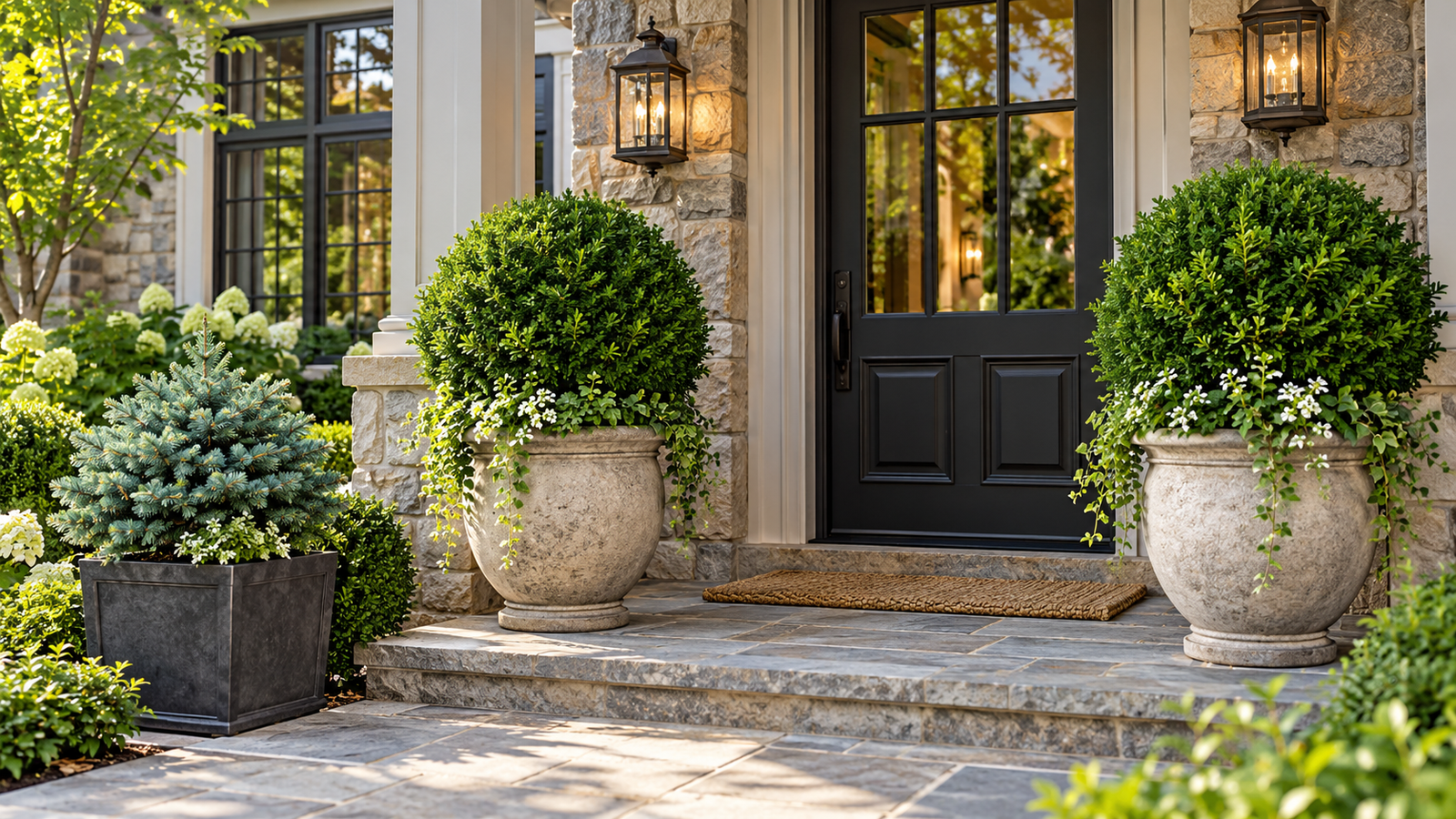
Evergreen Planter Ideas for Beautiful Outdoor Spaces Year-Round
Evergreen planter ideas bring lasting color, shape, and structure to front doors, patios, porches, and balconies. From paired entrance shrubs to low-growing junipers and decorative dwarf conifers, the right arrangement can make an outdoor space feel finished even when seasonal...
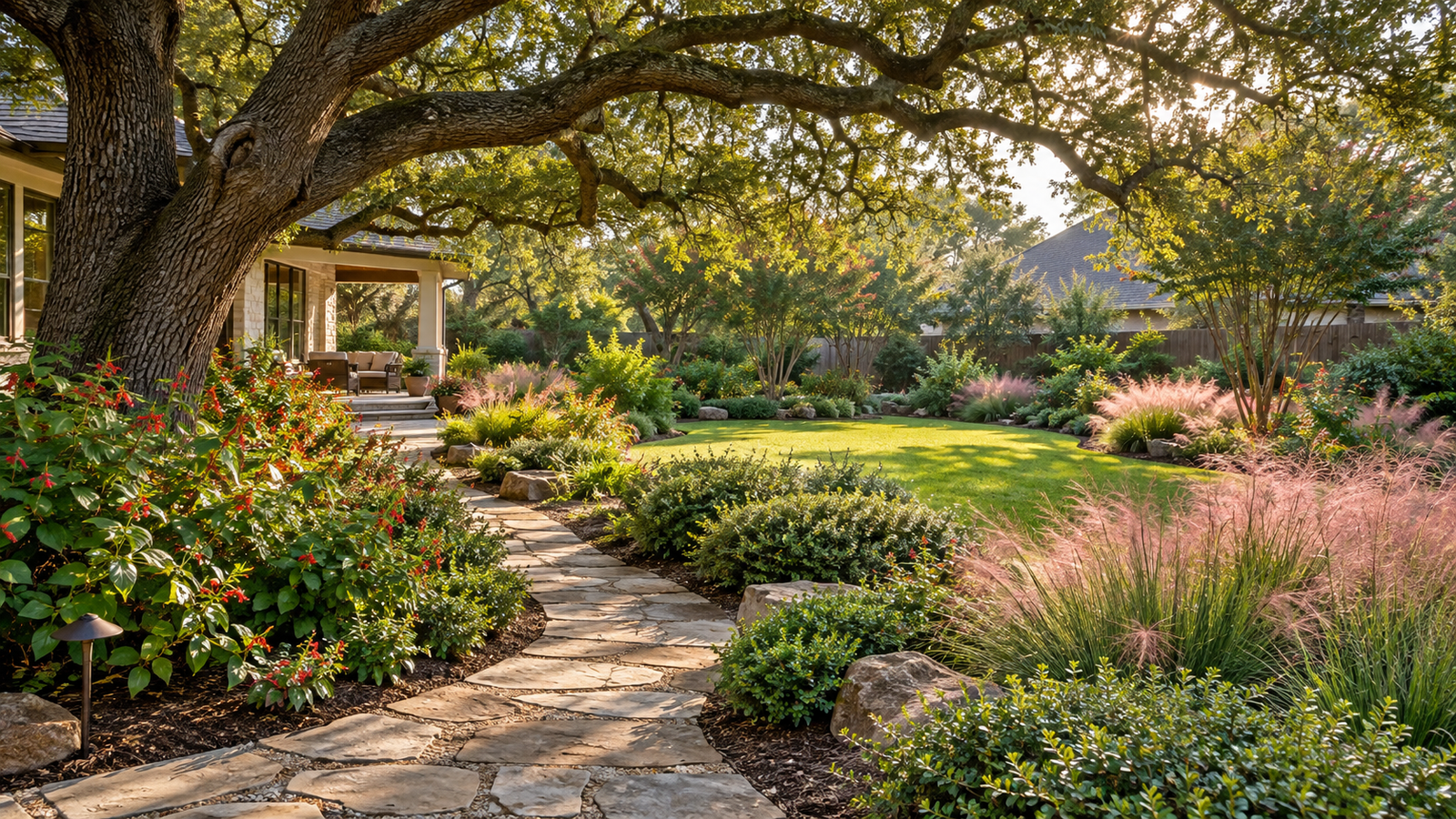
Houston Backyard Plant Ideas for Sun, Shade, Privacy, and More
The best Houston backyard plant ideas combine heat-tolerant flowers, dependable evergreen shrubs, shade-friendly natives, and plants matched to local soil. Yaupon holly provides structure, southern wax myrtle creates privacy, Turk’s cap flowers in partial shade, and Gulf muhly adds texture....
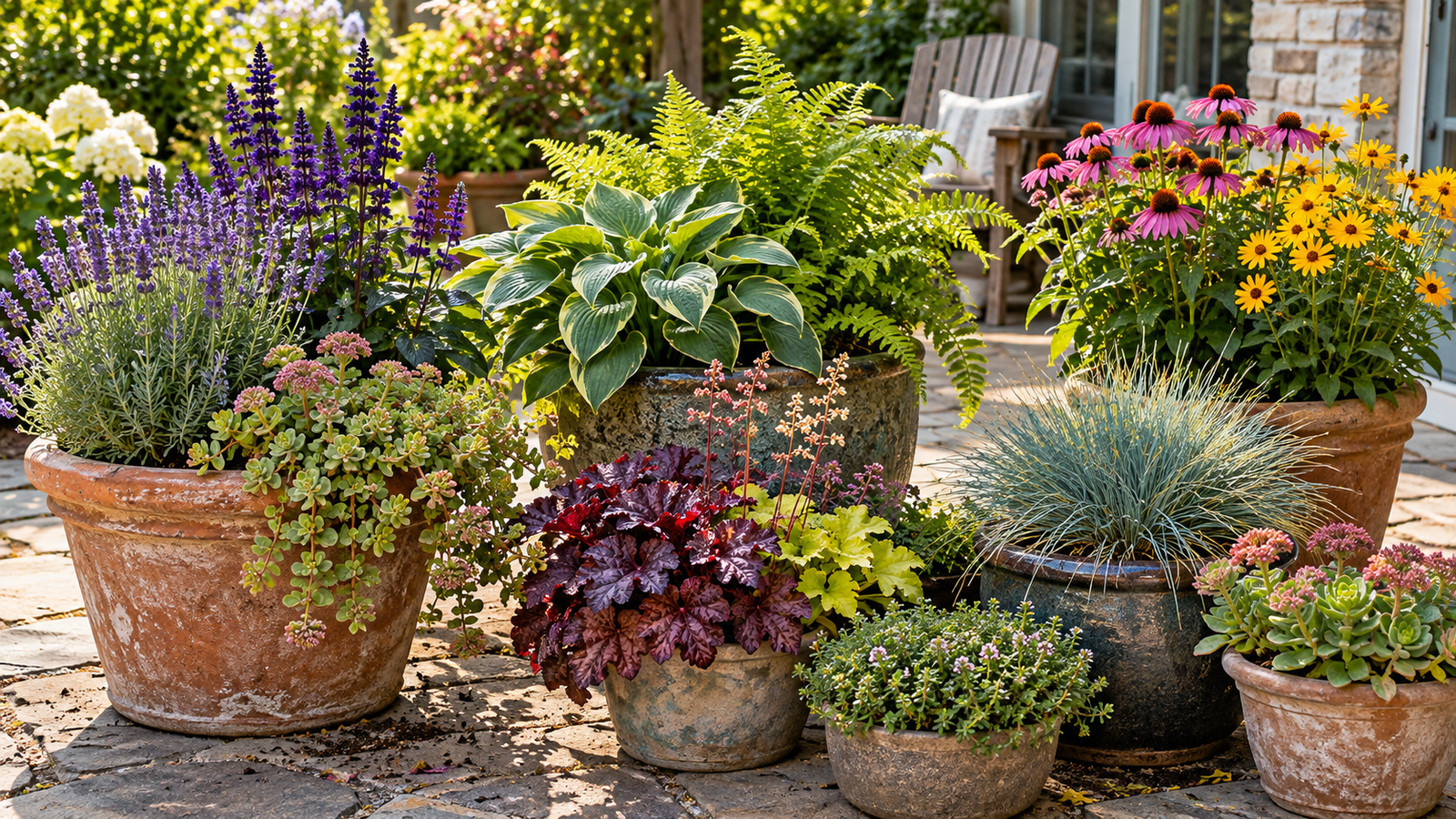
Perennial Planter Ideas
Perennial planter ideas work best when plants share the same sunlight, moisture, drainage, and growing-space requirements. Choose suitable plants and containers, and a display can return for several years with less seasonal replanting.
The secret is planning for mature growth rather...
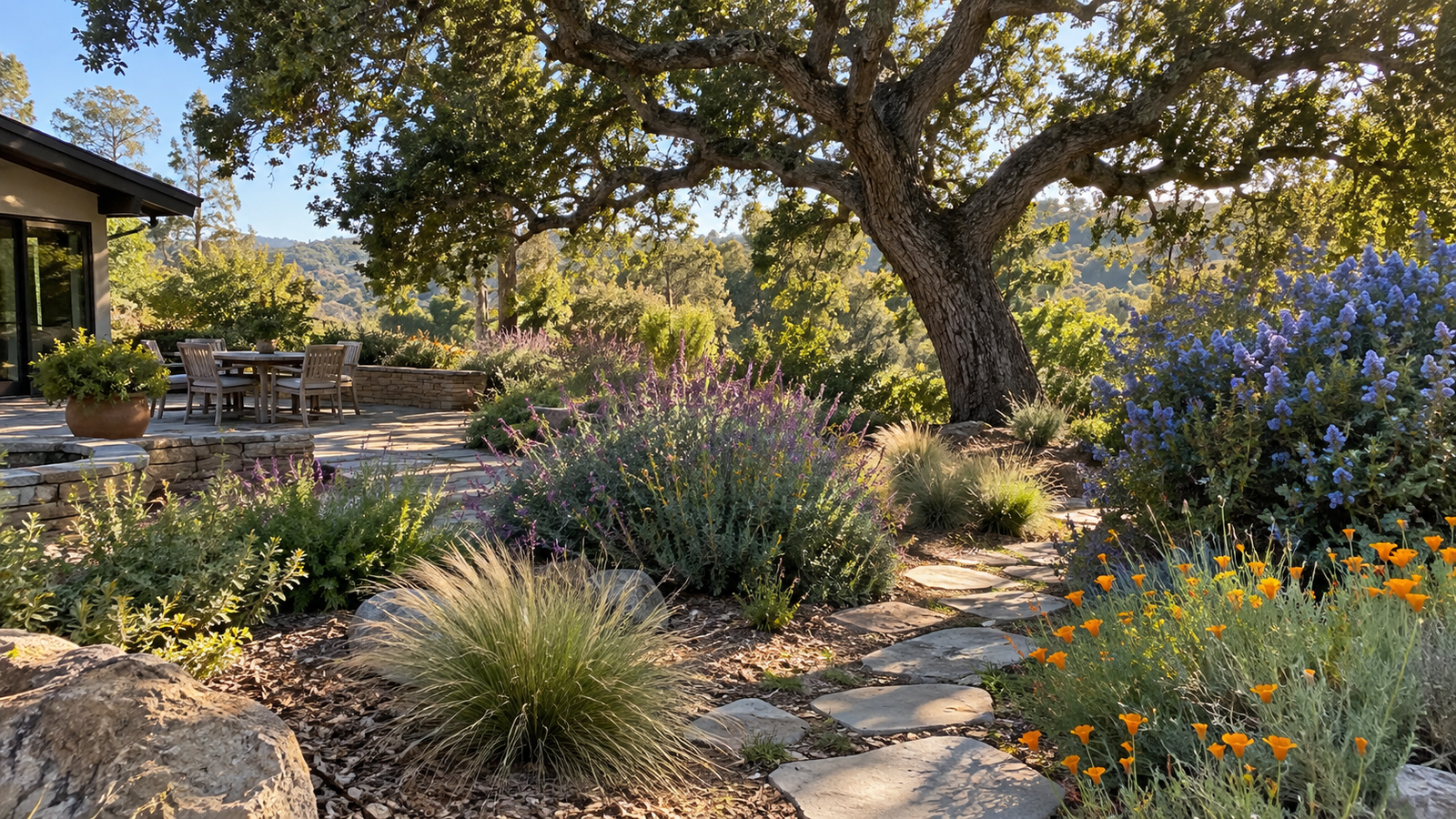
California Backyard Plant Ideas: 25 Water-Wise Choices
The best California backyard plants suit your local climate, soil, sunlight, and available water. Coast live oak, toyon, ceanothus, California fuchsia, deer grass, and native salvias can create attractive, functional landscapes where conditions match their needs. Group plants by water...
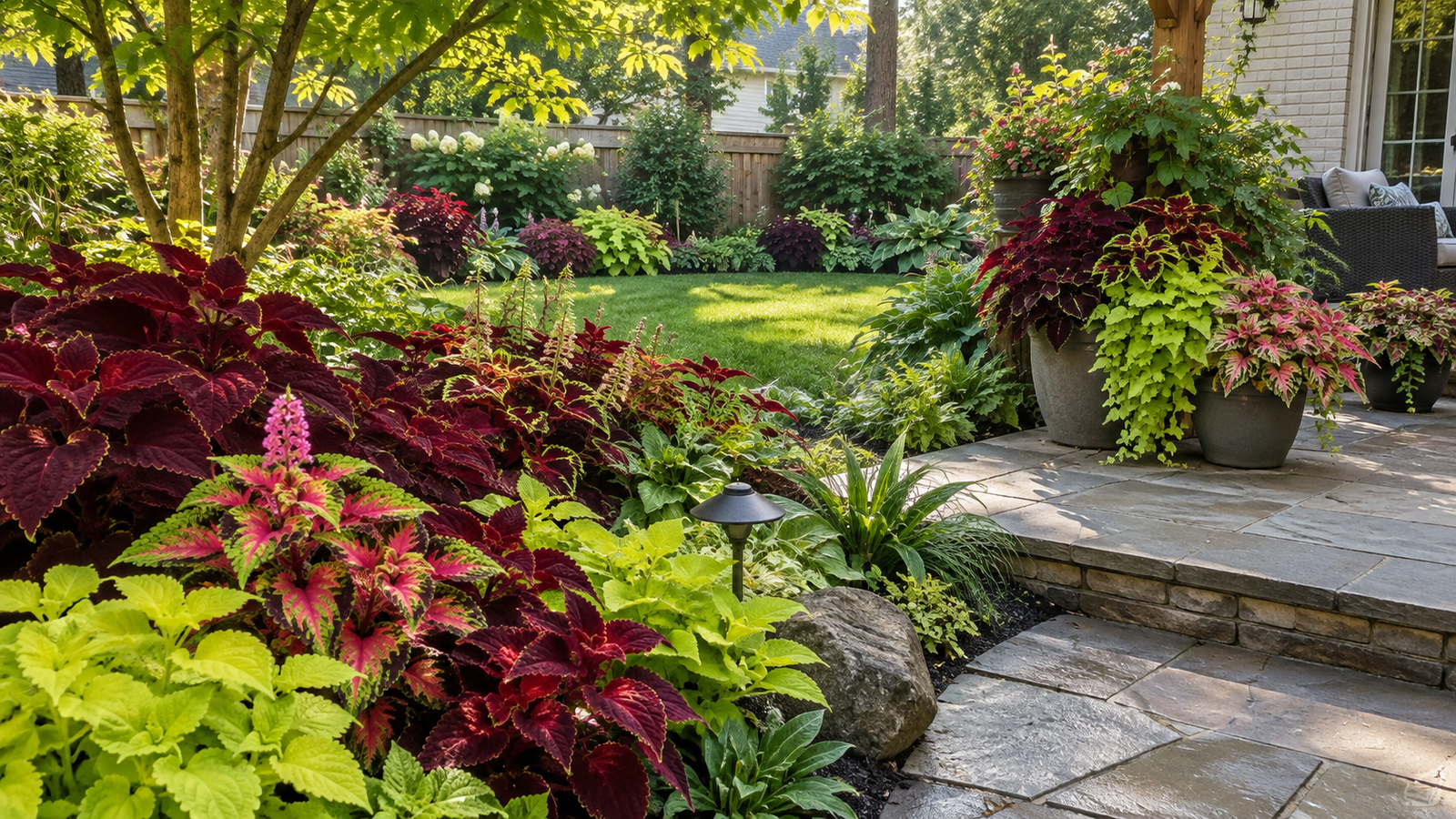
Backyard Planting Ideas With Coleus
Backyard planting ideas with coleus include layered shade borders, mass plantings, pathway edging, patio pots, tropical foliage beds, under-tree containers, and burgundy or lime focal plants. Match the cultivar's mature size, growth habit, and light tolerance to the site first,...
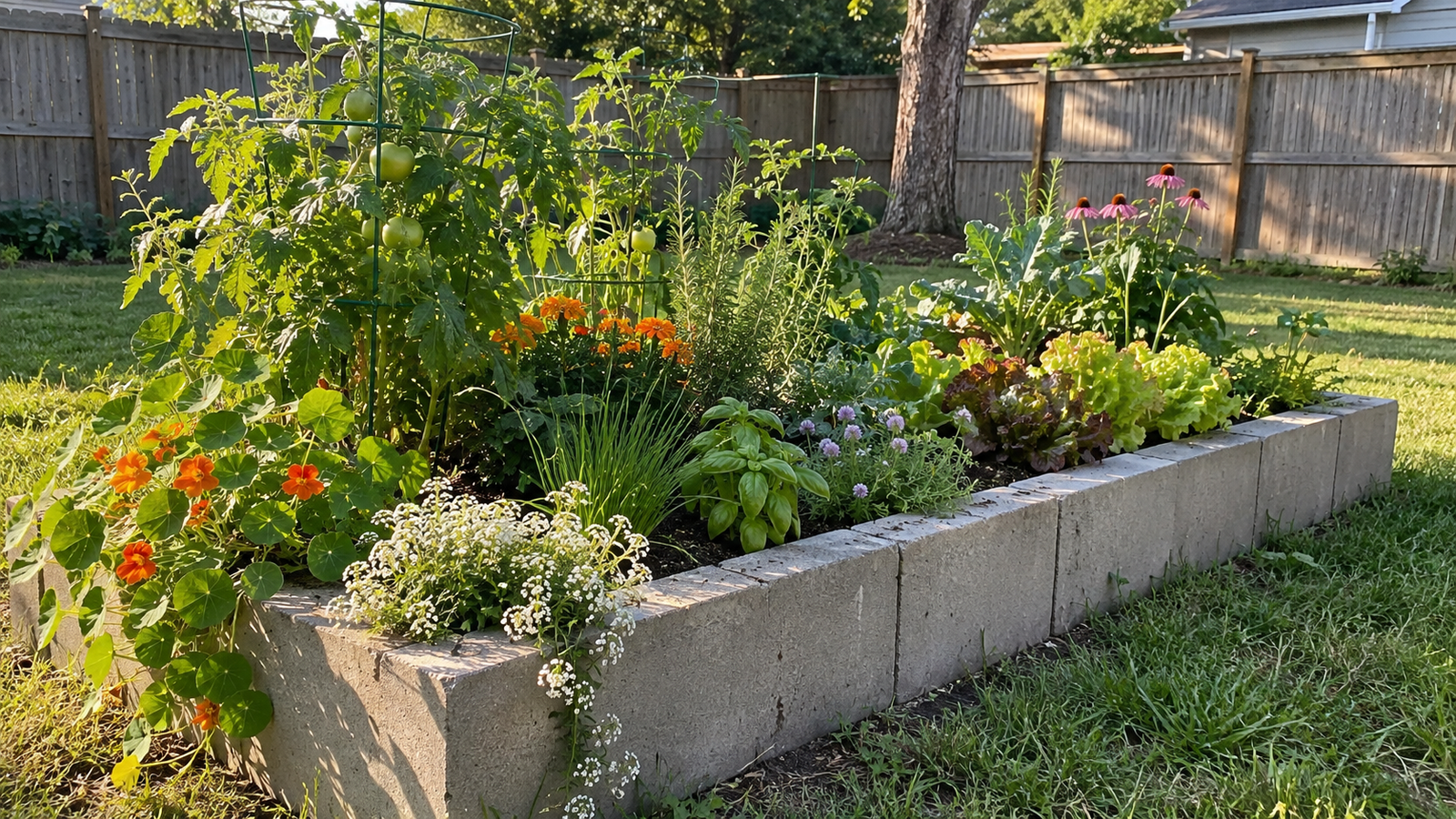
Cinder Block Planter Ideas
Cinder block planter ideas offer a practical way to grow flowers, herbs, vegetables, succulents, or ornamental plants without complicated construction. Low raised beds, narrow fence planters, stepped corner designs, and compact vertical arrangements work especially well because they balance growing...