

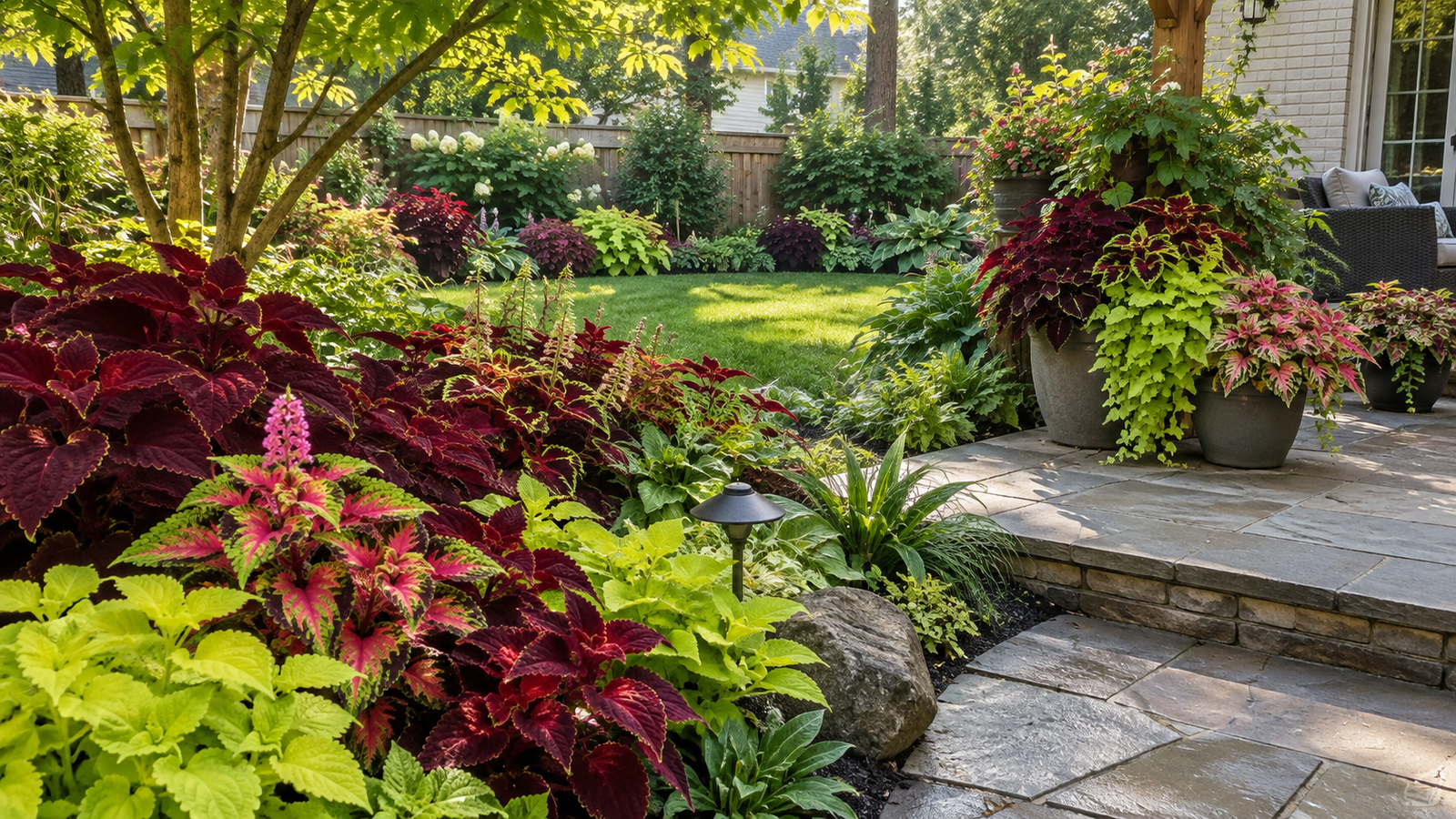
Backyard planting ideas with coleus include layered shade borders, mass plantings, pathway edging, patio pots, tropical foliage beds, under-tree containers, and burgundy or lime focal plants. Match the cultivar’s mature size, growth habit, and light tolerance to the site first, then use foliage color to create contrast, repetition, or connection.
Why Plant Coleus in Backyards?
Coleus is useful in backyard design because its foliage provides most of its ornamental value. Burgundy, lime, pink, cream, bronze, red, green, and multicolored leaves can keep beds and containers interesting even when nearby flowers are not blooming.
The accepted botanical name is Coleus scutellarioides. Cultivars vary in height, spread, growth habit, leaf shape, color, and light tolerance. Some stay compact enough for paths and pots, while larger selections can become focal plants.
Coleus works especially well in shaded beds, patio containers, entrances, tropical-style planting, small backyards, and repeated foliage groups.
Choose coleus for a purpose. A plant that adds brightness, structure, contrast, or repetition usually contributes more than one selected only for attractive leaves.
Where to Plant Coleus
The best location for coleus is one where light, moisture, drainage, heat, mature size, and maintenance needs suit the cultivar. A spot that appears shaded in the morning may receive intense afternoon sun, while a pot beside paving can become hotter and drier than a nearby bed.
Before planting, observe the area during different parts of the day. Check morning sunlight, afternoon heat, reflected heat from walls or paving, wind exposure, soil drainage, moisture retention, tree-root competition, mature width, and access for watering.
Backyards often contain several microclimates. A west-facing patio may be hot and dry, while a bed under filtered tree cover stays cooler but competes with roots for moisture.
If a location is uncertain, test one coleus in a movable container first. Observe foliage quality, watering demand, and heat response before planting several in the same place.
Check Your Coleus Site
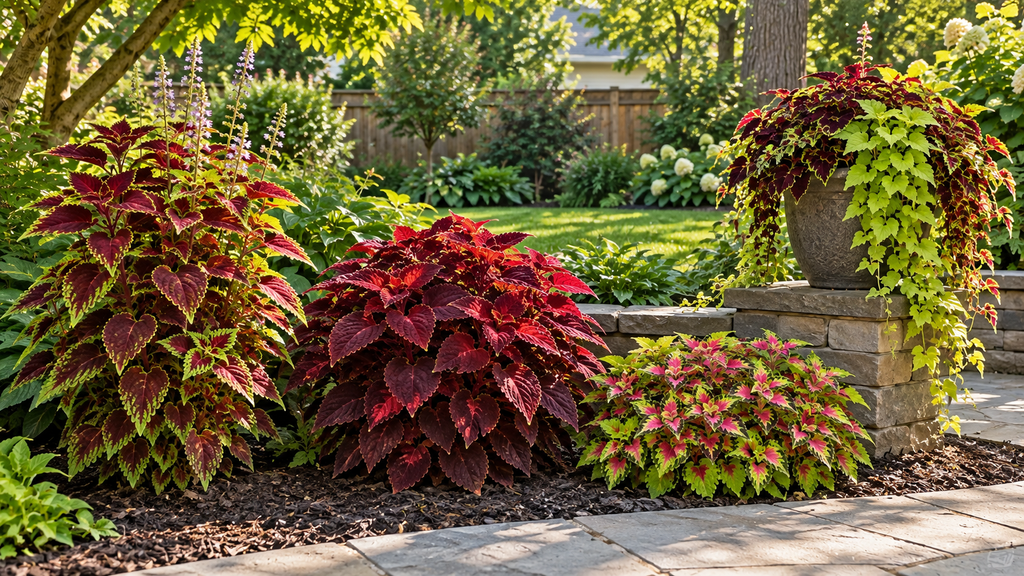
Use this simple Backyard Coleus Site-Fit Score before planting. Score each factor from 0 to 2.
| Factor | 0 | 1 | 2 |
|---|---|---|---|
| Light | Poor match | Adjustable | Good match |
| Moisture | Extreme | Needs management | Stable |
| Drainage | Problematic | Correctable | Suitable |
| Mature space | Crowded | Manageable | Fits well |
| Maintenance | Difficult | Moderate | Easy |
- 9-10: Strong site
- 7-8: Workable with minor changes
- 5-6: Reconsider the cultivar or location
- 0-4: Solve the site problem first
A lime coleus may look perfect against a dark wall, but that visual match will not matter if the wall creates severe afternoon heat and the root zone dries too quickly. Site suitability should come before foliage color.
Choose a Coleus Design Role
Give each coleus one clear visual job. This keeps the backyard from becoming a collection of unrelated colors and patterns.
- Anchor: A large, dark, or dominant plant that gives the bed visual weight.
- Brightener: Lime, chartreuse, cream, or vivid foliage used to lift a darker area.
- Bridge: Multicolored foliage that connects colors from two nearby garden zones.
- Edge: Compact coleus used along paths, borders, steps, or container fronts.
Before buying, complete this sentence: “This coleus belongs here because the space needs ______.” If you cannot identify its job, the plant may not improve the design.
Best Coleus Growth Habits
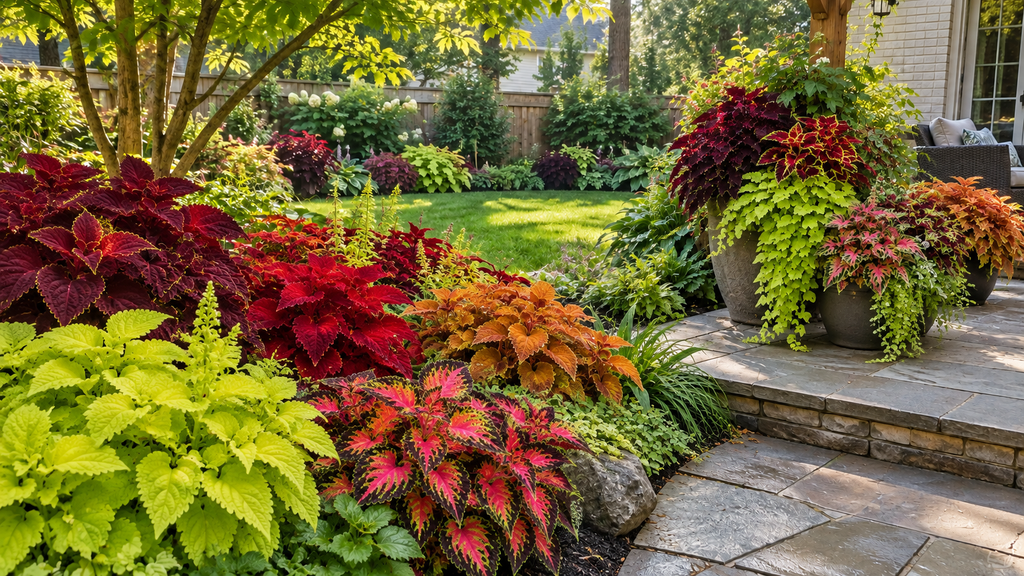
Growth habit affects placement as much as foliage color.
| Growth habit | Best use | Main advantage |
|---|---|---|
| Upright | Focal points, backs of beds, large containers | Adds height and visual weight |
| Mounding | Mass planting, mixed beds, medium pots | Creates broad foliage blocks |
| Compact | Paths, small beds, smaller containers | Fits restricted spaces |
| Trailing | Raised pots, baskets, container edges | Adds cascading growth |
An upright coleus may work beautifully at the back of a border but feel oversized beside a narrow path. A trailing type may be weak as a bed anchor yet ideal spilling over a tall patio pot.
Best Coleus Varieties for Backyards
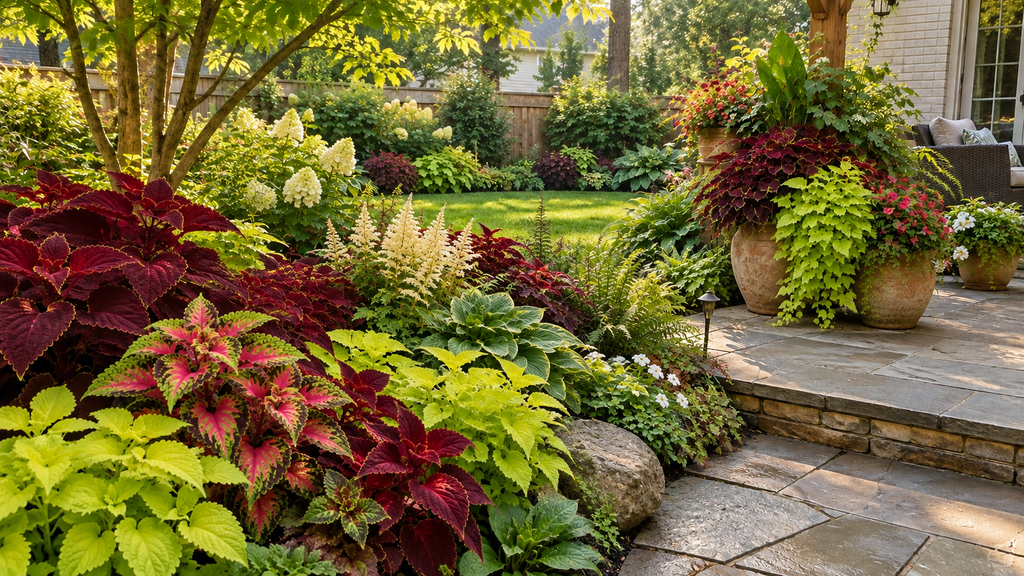
Named cultivars differ in size, habit, foliage color, and light tolerance. Use cultivar names as starting points, then confirm mature size and recommended exposure on the plant label.
| Backyard use | Coleus type | Example cultivar |
|---|---|---|
| Brightening shade | Chartreuse foliage | Versa Lime |
| Dark focal foliage | Deep burgundy or purple | ColorBlaze Dark Star |
| Cascading container | Trailing | Trailing Red |
| Pink trailing display | Cascading | Trailing Rose |
| Shade-focused planting | Shade-adapted type | Rebel Rouser |
| Warm bronze and orange | Warm multicolored foliage | Alabama Sunset |
| Bright chartreuse display | Sun-tolerant type | Sun Wasabi |
| Strong red foliage | Solid red | Versa Redhead |
Availability varies by region, so prioritize mature size, growth habit, and exposure over finding one exact cultivar.
Coleus Ideas for Shade
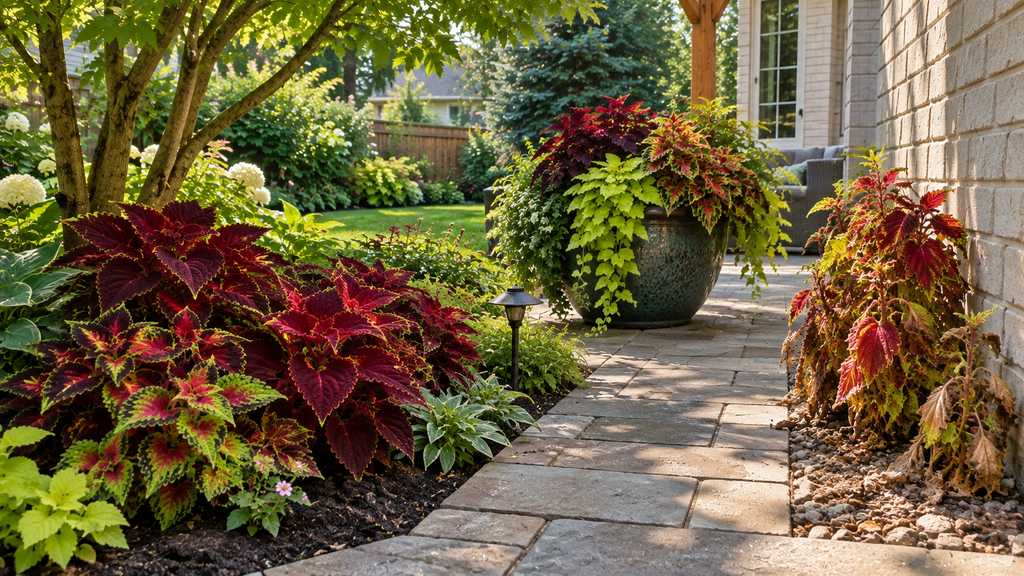
1. Create a Layered Shade Border
Use coleus as the middle layer between taller structural plants and lower foreground foliage. Burgundy varieties add depth, while lime selections brighten areas dominated by dark green.
Repeat one or two cultivars instead of filling the border with many unrelated colors. Repetition creates a more unified planting.
2. Brighten a Dark Corner
Lime and chartreuse coleus can visually lift areas beside dark fencing, shaded walls, dense shrubs, or covered patios. Useful combinations include lime with deep green, lime with burgundy, or bright foliage against charcoal-colored containers.
If stems become long and sparse, the location may be too dark for healthy compact growth.
3. Grow Coleus Beneath Trees
Coleus can work beneath open tree canopies where filtered light is sufficient. Root competition and dry soil are often greater challenges than shade itself.
If surface roots are dense, use freestanding containers instead of digging heavily. Also check whether the canopy prevents rainfall from reaching the root zone.
Coleus Beds and Borders
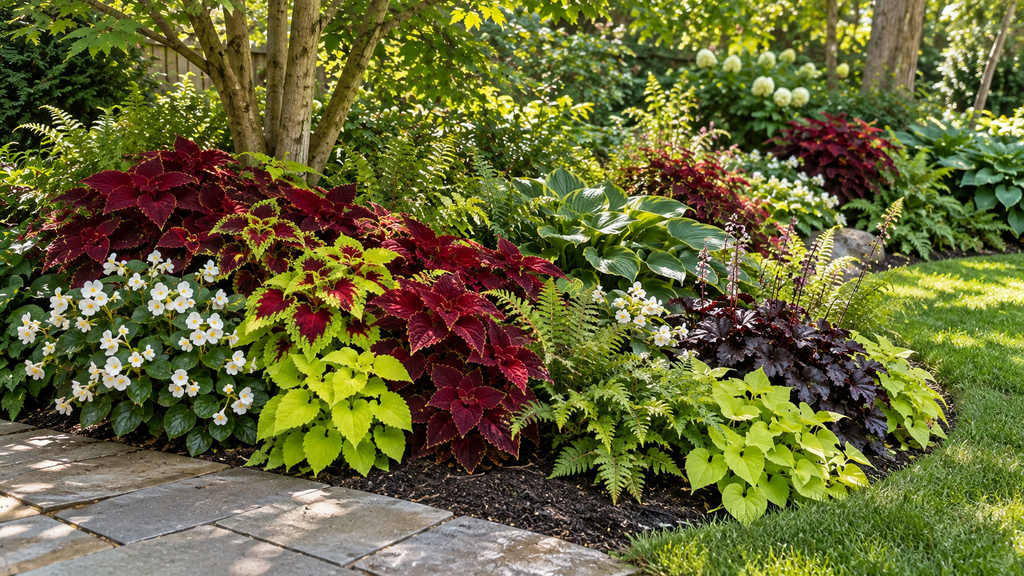
4. Use One Large Coleus as a Focal Plant
A large upright cultivar can anchor a bed, patio corner, or path destination. Place it where it can be seen from an important viewpoint such as a kitchen window, entrance, or patio chair.
Surround it with quieter foliage so the coleus remains the dominant feature.
5. Pair Burgundy Coleus With Pale Flowers
Dark burgundy foliage creates strong contrast with white, cream, pale pink, lavender, and soft yellow flowers. The dark leaves continue providing structure when neighboring flowers are between bloom periods.
6. Build a Tropical Foliage Corner
Create a lush effect through different leaf shapes rather than excessive color. Combine broad foliage, patterned coleus, fine-textured plants, and a lower-growing layer.
The goal is richness through texture and form instead of making every plant compete for attention.
7. Mass One Coleus Variety
Several plants of one cultivar create a stronger color block than many unrelated varieties. Mass burgundy adds depth, while mass lime can brighten a shaded bed.
Repeated color also reads more clearly from a distance than intricate individual leaf patterns.
Coleus for Paths and Entrances
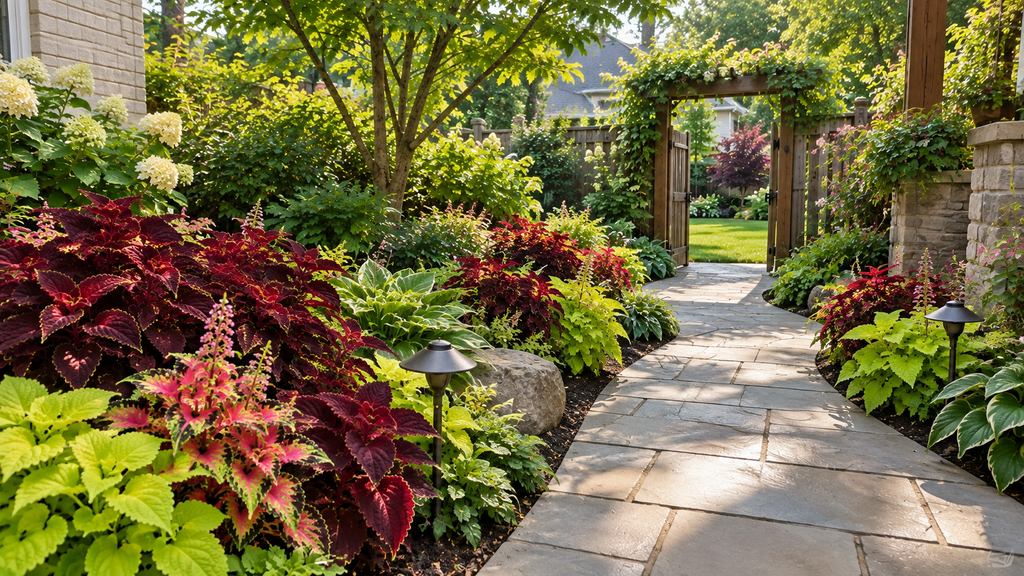
8. Repeat Coleus Along a Path
Compact coleus repeated along a walkway can create rhythm and guide the eye through the backyard. Burgundy contrasts well with pale paving, while lime stands out against dark mulch.
Leave enough mature width so foliage does not crowd the walking surface.
9. Frame a Patio Entrance
Two matching coleus containers can define a doorway, steps, or the transition between patio and garden. Check walking clearance, reflected heat, mature spread, and watering access before choosing container size.
10. Create a Color Echo
Repeat one coleus color elsewhere in the backyard to connect separate areas. Burgundy foliage can echo dark outdoor furniture, while lime can repeat chartreuse shrubs or other bright foliage.
11. Bridge Two Garden Zones
A multicolored coleus can connect visually different spaces. A green-and-burgundy selection, for example, can link a green planting bed with a darker patio or fence.
Use this technique at transitions rather than scattering the same plant randomly throughout the garden.
Coleus Ideas for Patio Pots
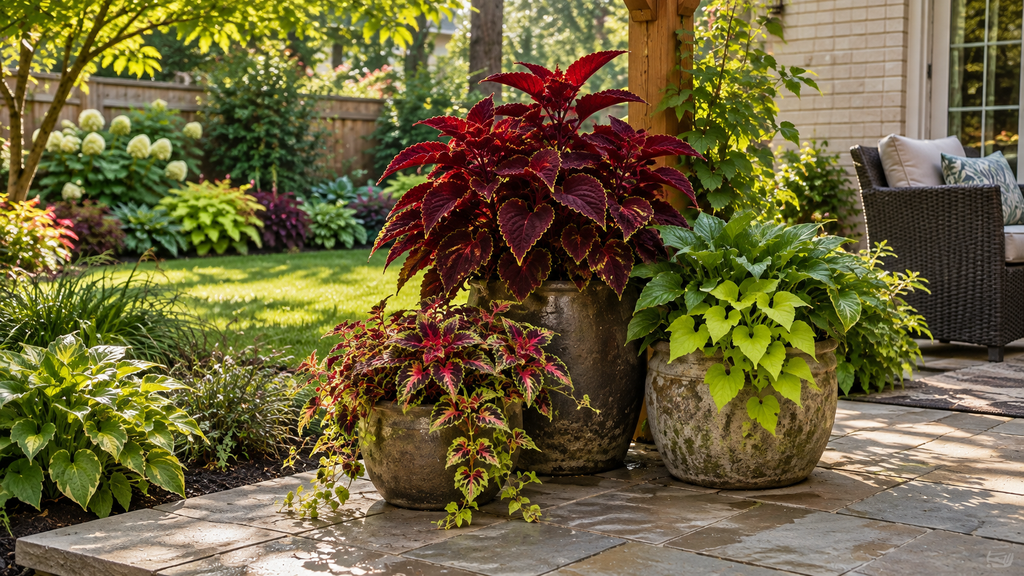
12. Build a Three-Pot Group
Use one large anchor pot, one medium supporting container, and one smaller accent. Varying height creates more depth than placing three identical pots in a straight line.
- Large pot: Dominant upright coleus
- Medium pot: Simpler supporting foliage
- Small pot: Trailing plant
13. Combine Upright and Trailing Plants
Use upright coleus as the structural element and compatible trailing foliage to soften the container edge. Only combine plants that share similar light and moisture needs.
If their requirements differ, use separate coordinated pots rather than forcing them into the same root zone.
Coleus Ideas for Small Backyards
14. Repeat Compact Coleus
Small backyards usually benefit from repetition more than excessive variety. One compact cultivar repeated in two or three places can connect the space without overwhelming paths, seating, gates, or storage areas.
15. Use Coleus as Seasonal Color
In climates with cold winters, coleus can provide strong seasonal foliage without needing to become a permanent planting. Keep cultivars that grow well in your conditions, fit the available space, and remain manageable through the season.
Favorite plants can also be preserved through cuttings before damaging cold weather arrives.
When to Plant Coleus Outdoors
Plant coleus outdoors after cold conditions have passed and the soil has warmed. A soil temperature above about 60°F or 16°C is a useful reference point.
Acclimate protected plants gradually to stronger sunlight, wind, and outdoor temperatures. Containers can be moved temporarily if unexpected cold returns.
Plan Coleus by Viewing Distance
Choose coleus according to where people will normally see it.
- Close view: Detailed leaf patterns and texture matter most.
- Mid-range: Plant shape and color contrast become more important.
- Long view: Larger plants and repeated color blocks are easier to read.
A highly patterned cultivar may look impressive up close but become unclear across a lawn. Repeated burgundy or lime plants often create a stronger distant effect.
Best Coleus Color Combinations
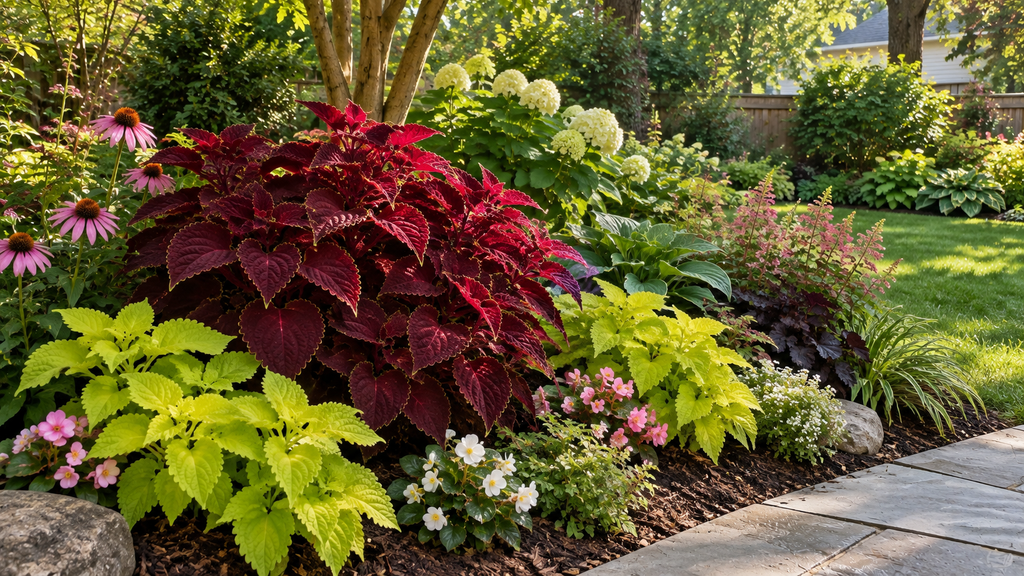
Controlled contrast usually works better than using many unrelated colors.
- Burgundy + lime: Strong contrast for neutral backgrounds.
- Burgundy + white: Works well with pale flowers and containers.
- Lime + deep green: Brightens shaded planting.
- Pink + green: Creates a softer garden palette.
- Red + bronze: Works naturally with brick, terracotta, and warm wood.
When coleus already contains several colors, use simpler companions. When the foliage is mostly one color, you have more freedom to introduce variety nearby.
Best Companion Plants for Coleus
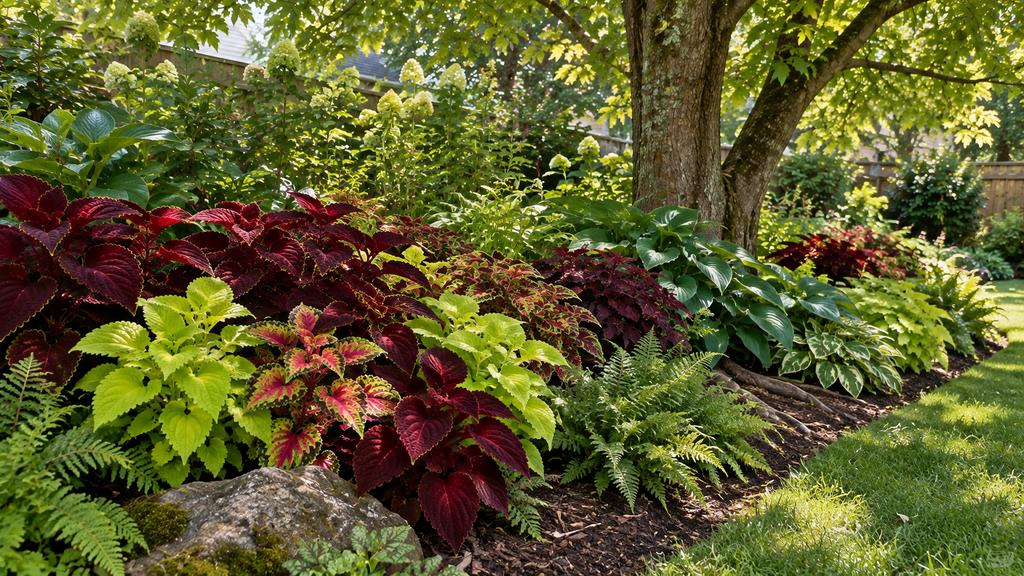
Good companions should share similar light and moisture needs while contributing a different leaf shape, height, texture, or flower form.
| Coleus look | Possible companion | Design purpose |
|---|---|---|
| Burgundy coleus | White begonia | Light-dark contrast |
| Lime coleus | Dark heuchera | Foliage contrast |
| Patterned coleus | Green fern | Reduces visual competition |
| Upright coleus | Trailing sweet potato vine | Height and cascading contrast |
| Dark coleus | Pale impatiens or begonias | Brightens shade |
| Compact coleus | Hosta | Leaf-size contrast |
Useful combinations include burgundy coleus with white begonias or lime coleus with dark heuchera and green ferns. Confirm that companions share compatible growing conditions.
Coleus Care Essentials
How Much Sun Does Coleus Need?
Light requirements vary by cultivar. Many coleus plants grow well with morning sun and afternoon protection, while sun-tolerant selections can handle brighter conditions when moisture is adequate.
Very low light can produce long spaces between leaves, leaning stems, weak branching, and sparse growth.
How Far Apart Should You Plant Coleus?
About 12 inches or 30 cm is a useful starting point, but final spacing should follow the cultivar’s mature width. Larger selections need more room than compact varieties.
Also consider path clearance, airflow, and whether the goal is a dense color block or individually visible plants.
What Soil Is Best for Coleus?
Coleus grows best in soil that holds useful moisture while allowing excess water to drain. In beds, avoid severely compacted or persistently saturated areas. In containers, use a suitable potting medium and working drainage holes.
How Often Should You Water Coleus?
Water according to root-zone moisture rather than a fixed calendar. Heat, wind, strong sun, small containers, and larger plants increase water demand.
Check the soil before watering. Wilting does not always mean the root zone is dry.
How Do You Keep Coleus Bushy?
Pinching young growing tips encourages side shoots and denser foliage. Flower spikes can also be removed when foliage is the main design feature.
If a plant repeatedly becomes long and sparse after pinching, check the light level before adding more fertilizer.
Coleus in Pots vs. Beds
Containers provide flexibility and control, while garden beds work better for larger repeated displays.
Choose containers when garden soil is difficult, tree roots limit digging, the patio is the main planting area, sunlight changes through the season, or plants may need moving.
Choose garden beds when you want a larger mass planting, the soil drains well, the area is permanent, and more root space is useful.
Containers usually need closer moisture monitoring but make it easier to adjust exposure or move plants as conditions change.
Coleus for Different Backyard Conditions
| Condition | Main concern | Best response |
|---|---|---|
| Hot and dry | Rapid moisture loss | Stable moisture and suitable exposure |
| Hot and humid | Slow drying | Good drainage and airflow |
| Cool and frost-prone | Short season | Grow seasonally or preserve cuttings |
| Mild and damp | Wet roots | Prioritize drainage |
| Under trees | Root competition | Consider containers |
| Hardscape-heavy patio | Stored heat | Use movable pots |
| Windy area | Fast drying | Increase protection or soil volume |
| Deep shade | Weak growth | Monitor plant form |
Actual backyard conditions are usually more useful than broad climate labels. Choose coleus according to the pressures of the specific planting area.
Common Coleus Problems
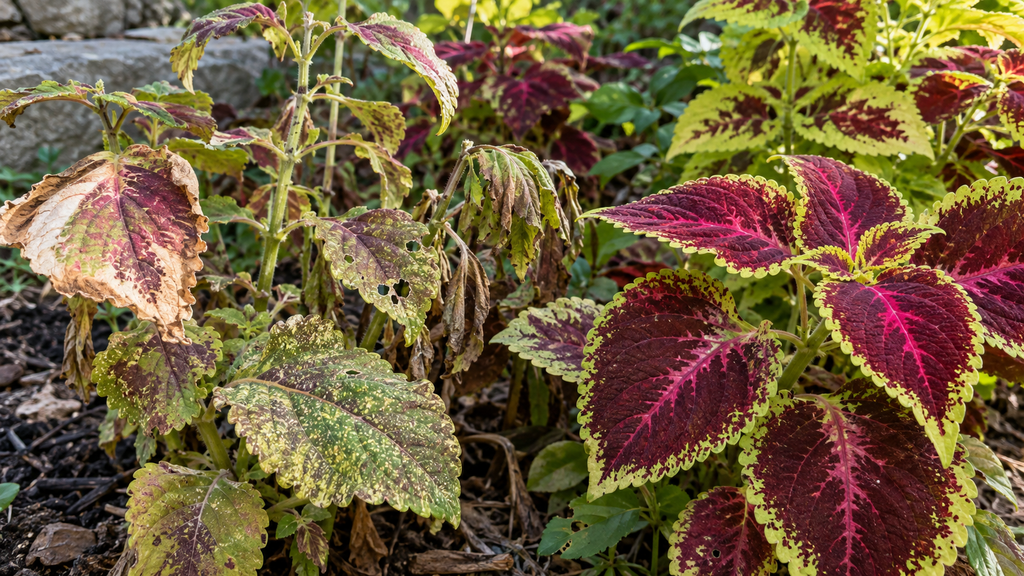
Start with moisture, drainage, light, temperature, and recent weather changes before adding fertilizer or pest treatment.
| Symptom | Check first | Possible issue |
|---|---|---|
| Wilting with dry soil | Root-zone moisture | Water shortage |
| Wilting with wet soil | Drainage and roots | Root stress |
| Bleached or scorched foliage | Sun and heat | Exposure stress |
| Long sparse stems | Available light | Too little usable light |
| Yellowing and weak growth | Roots and moisture | Root or site problem |
| Fine stippling or webbing | Leaf undersides | Spider mites |
| Sticky leaves or insects on new growth | Young stems and leaf undersides | Aphids or whiteflies |
| Irregular holes | Damage pattern | Slugs, snails, insects, or browsing |
When several symptoms appear together, start with the root zone and recent environmental changes. Avoid changing watering, fertilizer, location, and pest treatment all at once.
Coleus Planting Mistakes
Avoid assuming every coleus needs deep shade, choosing plants only by leaf color, ignoring mature width, using too many foliage patterns together, overcrowding containers, or watering on a fixed schedule.
Also avoid assuming every wilted plant needs water, digging heavily around established tree roots, and making every plant a focal point.
Good planting design often improves when visual competition is reduced rather than when more plants are added.
How to Propagate Coleus
Coleus can be propagated from stem cuttings, making it practical to preserve a cultivar that performs especially well in your backyard.
- Select a healthy stem.
- Take a cutting about 4-6 inches long.
- Remove the lower leaves.
- Place the lower nodes in a suitable rooting environment.
- Allow roots to develop.
- Transfer the rooted cutting into growing medium.
- Establish it before exposing it to harsher outdoor conditions.
Preserve cultivars that have already proved reliable in your conditions.
Is Coleus Annual or Perennial?
Coleus is a tender perennial but is commonly grown as a seasonal plant where winters bring frost or damaging cold.
In frost-prone climates, take cuttings before cold weather, protect selected plants where practical, or plan for seasonal replacement. In warmer conditions, plants may persist longer but still need suitable drainage, moisture, heat management, and pest monitoring.
Test Coleus in Your Backyard
Test one or two plants before repeating a cultivar across the backyard.
Check them at planting and around weeks 2, 4, and 6. Record location, light, bed or container, size, watering demand, foliage condition, pruning, weather stress, and visual result.
Then classify the planting as Repeat, Repeat with Changes, Relocate, or Replace. This produces site-specific information that generic advice cannot.
Backyard Planting Ideas With Coleus: Formula
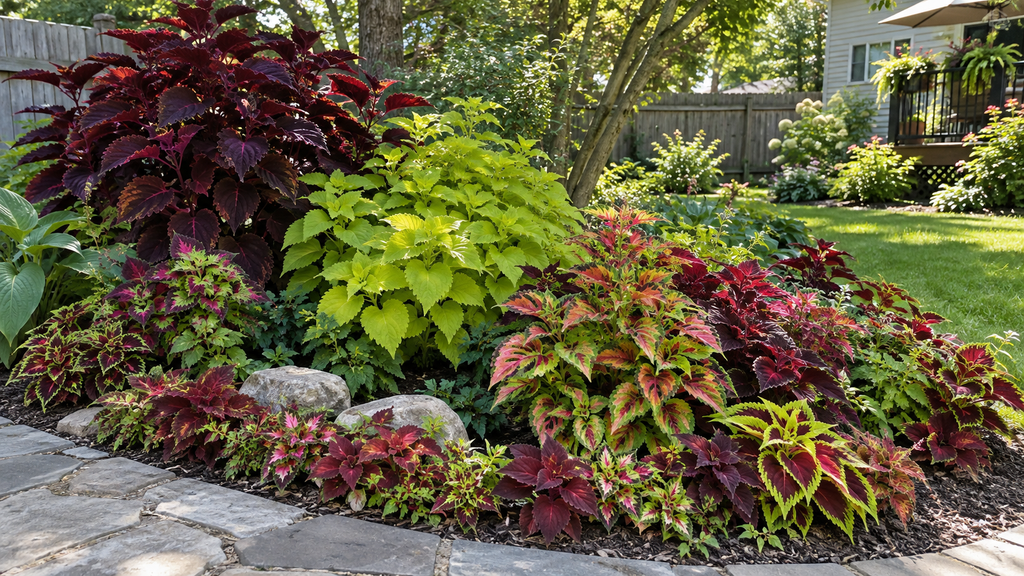
Use this six-step process when planning a new coleus planting.
Step 1: Identify the Problem
Decide whether the space needs brightness, structure, a focal point, an edge, or better visual connection.
Step 2: Assess the Site
Check light, moisture, drainage, heat, available space, and the main viewing direction.
Step 3: Choose the Role
Select Anchor, Brightener, Bridge, or Edge.
Step 4: Choose the Growth Habit
Decide whether the location needs an upright, mounding, compact, or trailing plant.
Step 5: Choose the Cultivar
Match mature size, light tolerance, growth habit, foliage color, and local availability.
Step 6: Repeat One Element
Repeat a color, plant form, container material, or another visual element elsewhere in the backyard so the planting feels connected to the wider space.
Backyard Planting With Coleus FAQs
What Is the Best Way to Use Coleus in Landscaping?
Use coleus to brighten shade, create contrast, edge paths, fill containers, or connect garden areas. Match its growth habit and mature size to the intended role.
Where Is the Best Place to Plant Coleus?
Choose a location with suitable light, good drainage, reliable moisture, and enough room for mature growth. Many cultivars perform well with morning sun and some afternoon protection.
Does Coleus Prefer Sun or Shade?
Coleus can grow in sun or shade depending on the cultivar. Many prefer partial shade, while sun-tolerant varieties can handle brighter locations when moisture is adequate.
Which Type of Coleus Is Best for Landscaping?
Use upright types for focal points, mounding forms for beds, compact cultivars for edging, and trailing coleus for containers or baskets.
Is Coleus Better in Pots or in the Ground?
Both work well. Pots offer more control over soil and placement, while beds provide more root space for repeated plantings.
How Far Apart Should You Plant Coleus?
About 12 inches or 30 cm is a useful starting point, but final spacing should follow the cultivar’s mature width.
What Plants Grow Well With Coleus?
Begonias, impatiens, ferns, hostas, heuchera, and ornamental sweet potato vine can work well when their light and moisture needs are compatible.
How Often Should Outdoor Coleus Be Watered?
Water according to root-zone moisture rather than a fixed schedule. Plants exposed to heat, wind, or containers usually dry faster than shaded in-ground plants.
Why Is My Coleus Wilting in Wet Soil?
Wilting in wet soil can indicate poor drainage or root stress. Check the root zone and drainage before adding more water.
Will Coleus Come Back Every Year?
Coleus is a tender perennial but is often grown seasonally in frost-prone climates. Favorite cultivars can also be preserved through stem cuttings.
Coleus Handling and Safety
Gardeners who frequently pinch, prune, or propagate coleus may prefer gloves, especially with sensitive skin. Wash hands after extended handling and avoid touching your eyes while pruning.
When checking plant safety information, use the botanical name Coleus scutellarioides to reduce confusion with other plants that may also be called coleus.
Final Backyard Planting Ideas With Coleus
The best backyard planting ideas with coleus begin with the site rather than the plant catalog. Evaluate light, heat, moisture, drainage, mature space, growth habit, maintenance, and viewing direction before choosing a cultivar.
Use burgundy foliage as an anchor, lime as a brightener, multicolored foliage as a bridge, compact plants as edges, upright types for focal points, and trailing types for raised containers. Repeat selected colors or plant forms where the backyard needs unity.
Before planting, ask whether the site suits the cultivar, whether its mature size fits the space, and whether its color connects with the surrounding design.
With those decisions made first, coleus becomes a practical design tool for contrast, movement, garden-zone connections, shaded areas, and dependable foliage structure throughout the growing season.

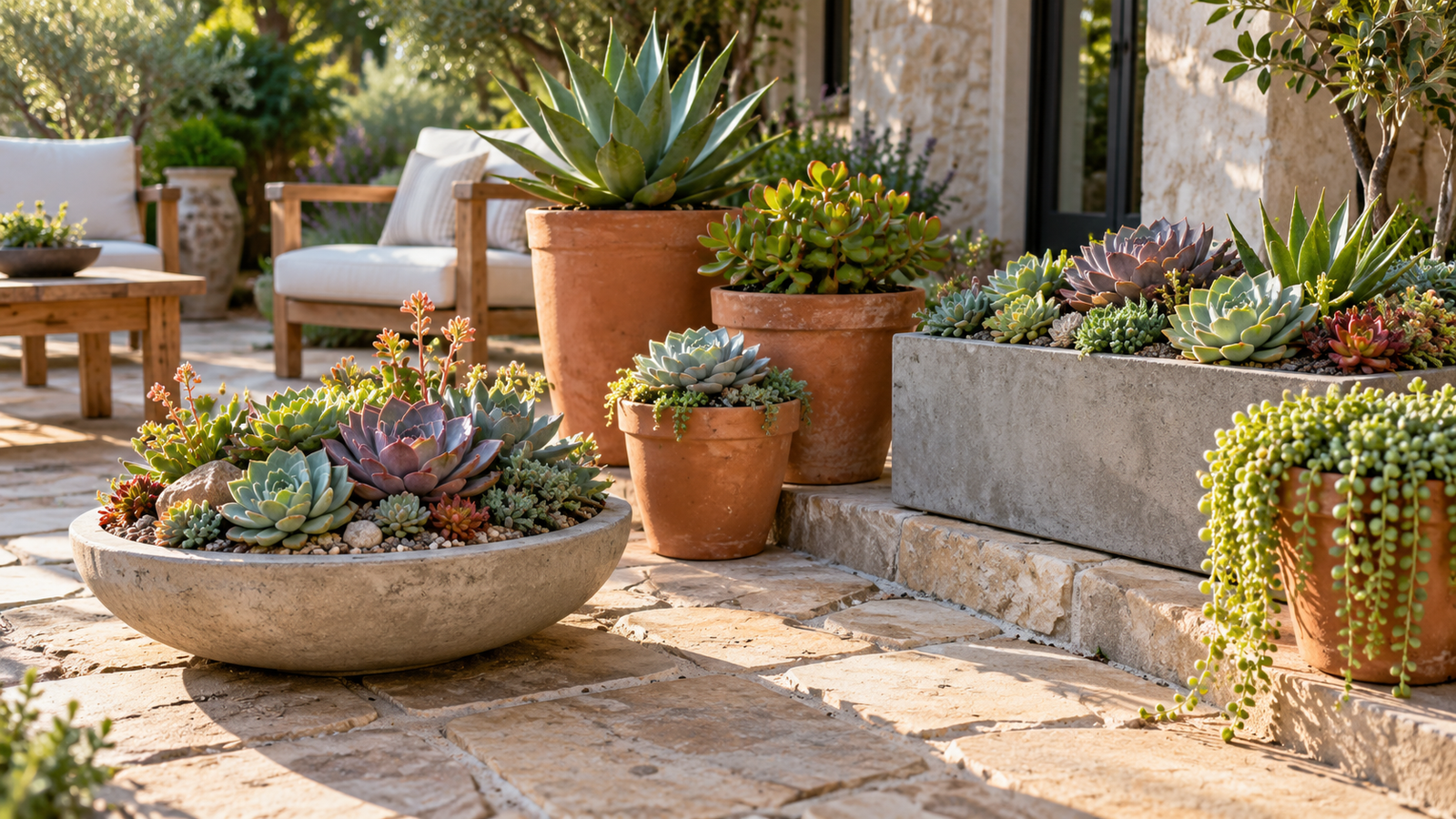
21 Outdoor Succulent Planter Ideas for Patios, Porches and Yards
Outdoor succulent planter ideas include mixed rosette bowls, terracotta groups, concrete troughs, vertical wall displays, and hanging baskets. Choose each design according to sunlight, rain exposure, drainage, and winter conditions. Explore 21 practical options, then use the planting and care...
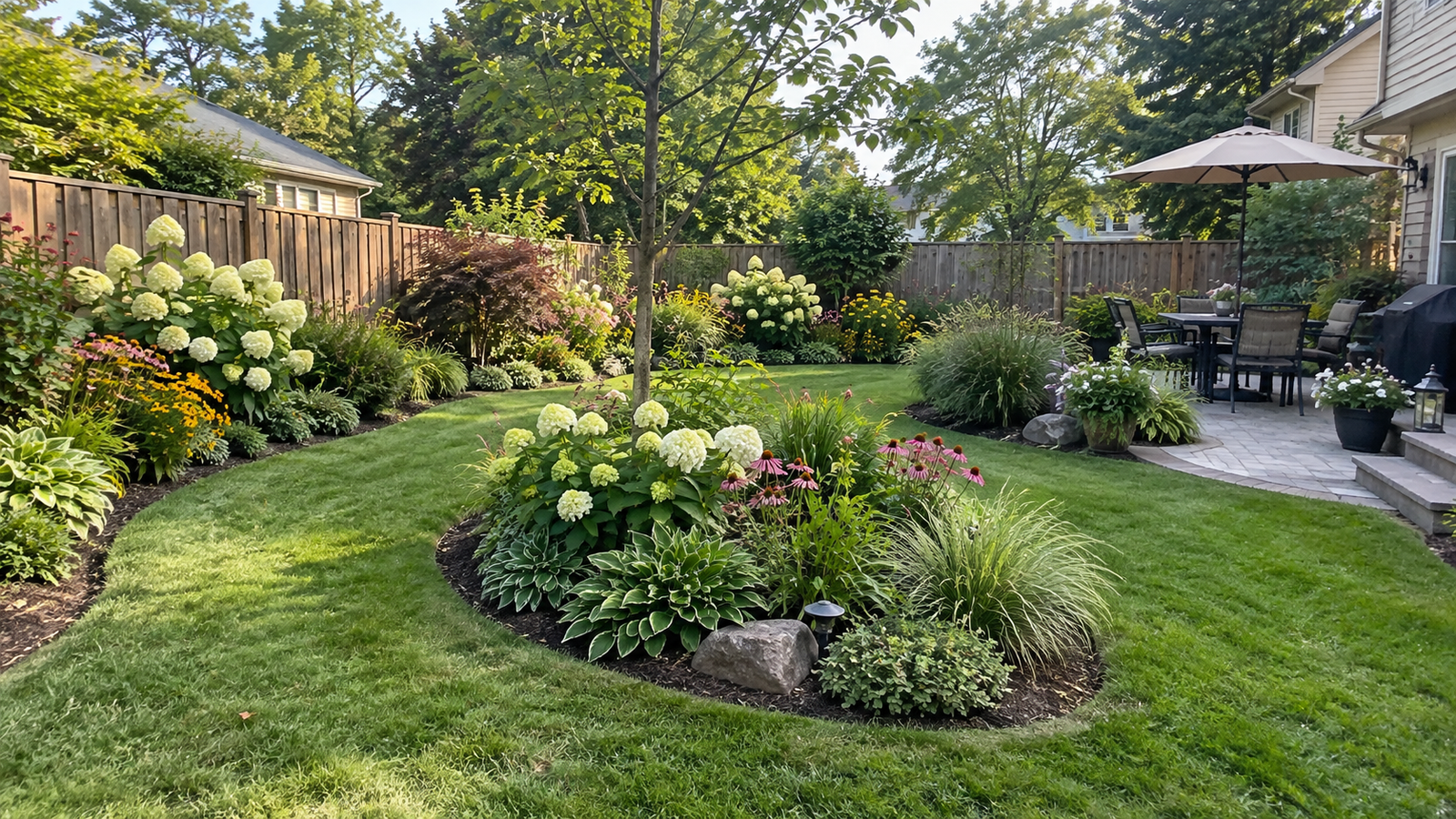
Backyard Plant Bed Ideas: 21 Layouts for Every Yard
The best backyard plant bed ideas preserve usable space while adding structure and color. Border beds frame lawns, island beds create focal points, fence beds offer screening, curved beds soften straight edges, and raised beds organize growing areas. Choose according...
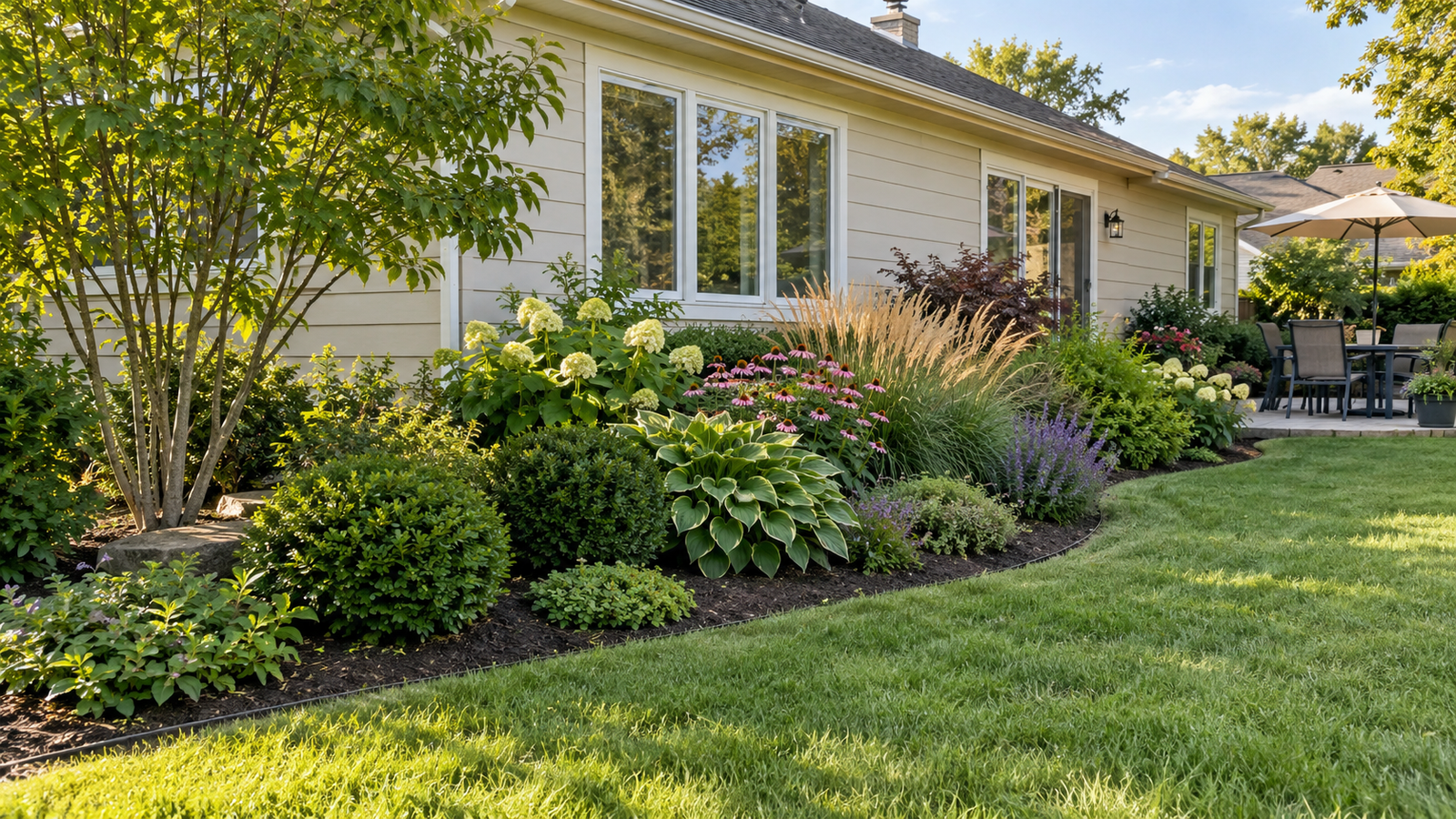
Backyard Foundation Planting Ideas: 21 Ways to Plant Along Your House
The best backyard foundation planting ideas use compact shrubs, flowering perennials, grasses, and groundcovers to soften exterior walls without obstructing windows, drainage, or access. Choose a layout that fits the available bed depth, then select plants for their mature size,...
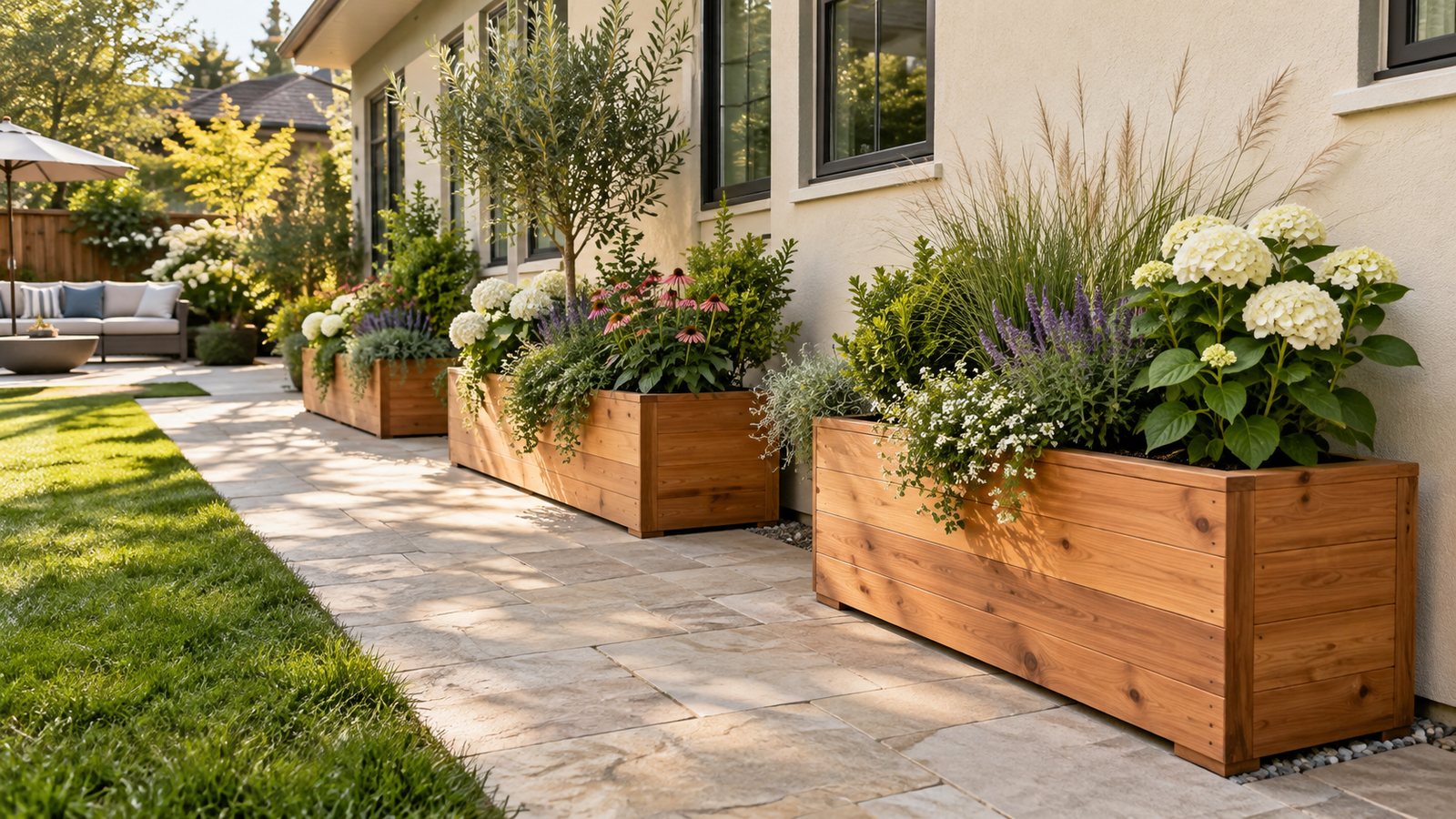
Backyard Planter Box Along House Ideas: 17 Practical Designs
The best backyard planter box along house ideas combine attractive planting with safe, practical placement. Freestanding troughs, cedar boxes, low window planters, and trellis containers can transform a plain wall without blocking access or trapping moisture. Choose a design that...
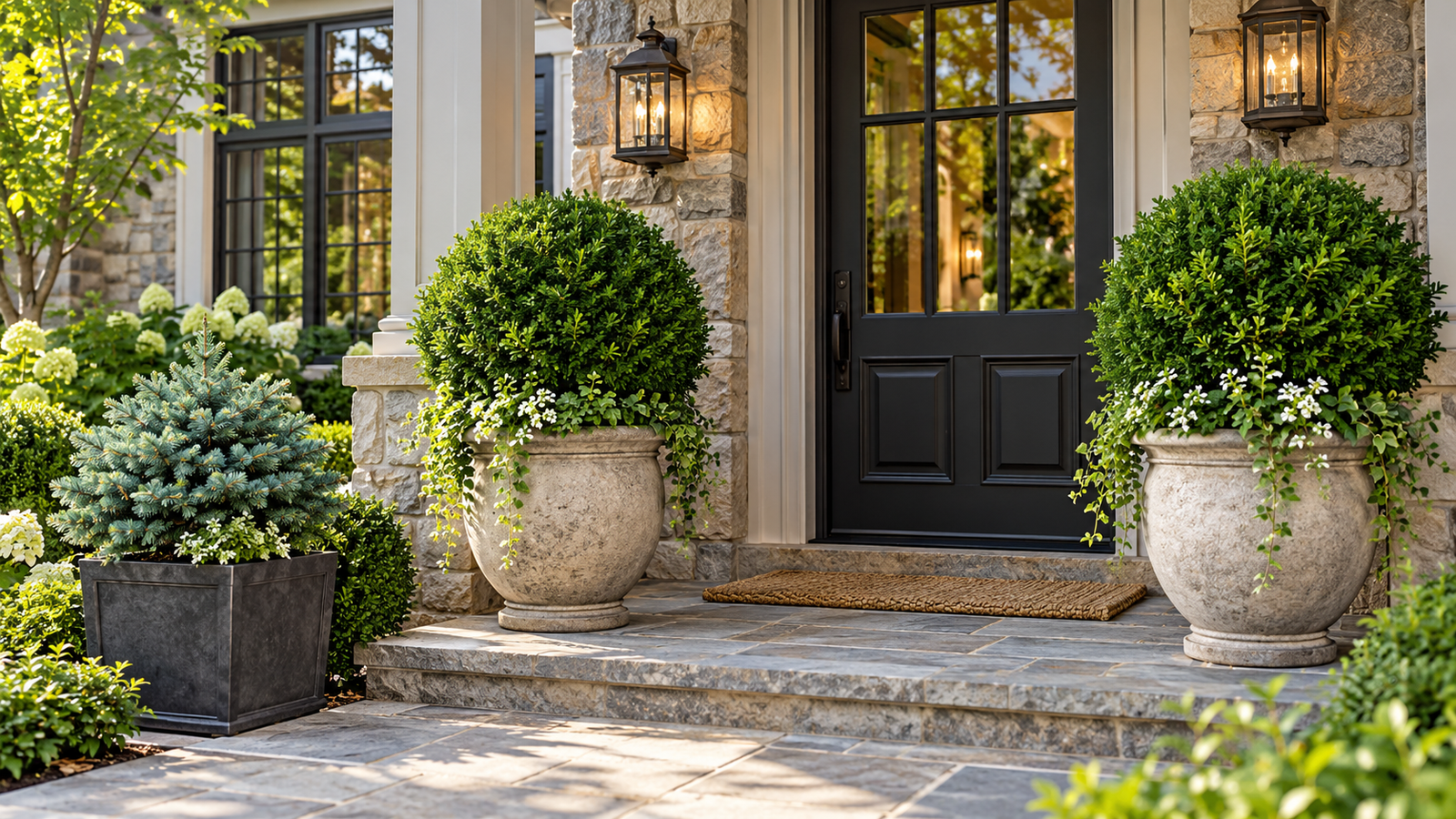
Evergreen Planter Ideas for Beautiful Outdoor Spaces Year-Round
Evergreen planter ideas bring lasting color, shape, and structure to front doors, patios, porches, and balconies. From paired entrance shrubs to low-growing junipers and decorative dwarf conifers, the right arrangement can make an outdoor space feel finished even when seasonal...
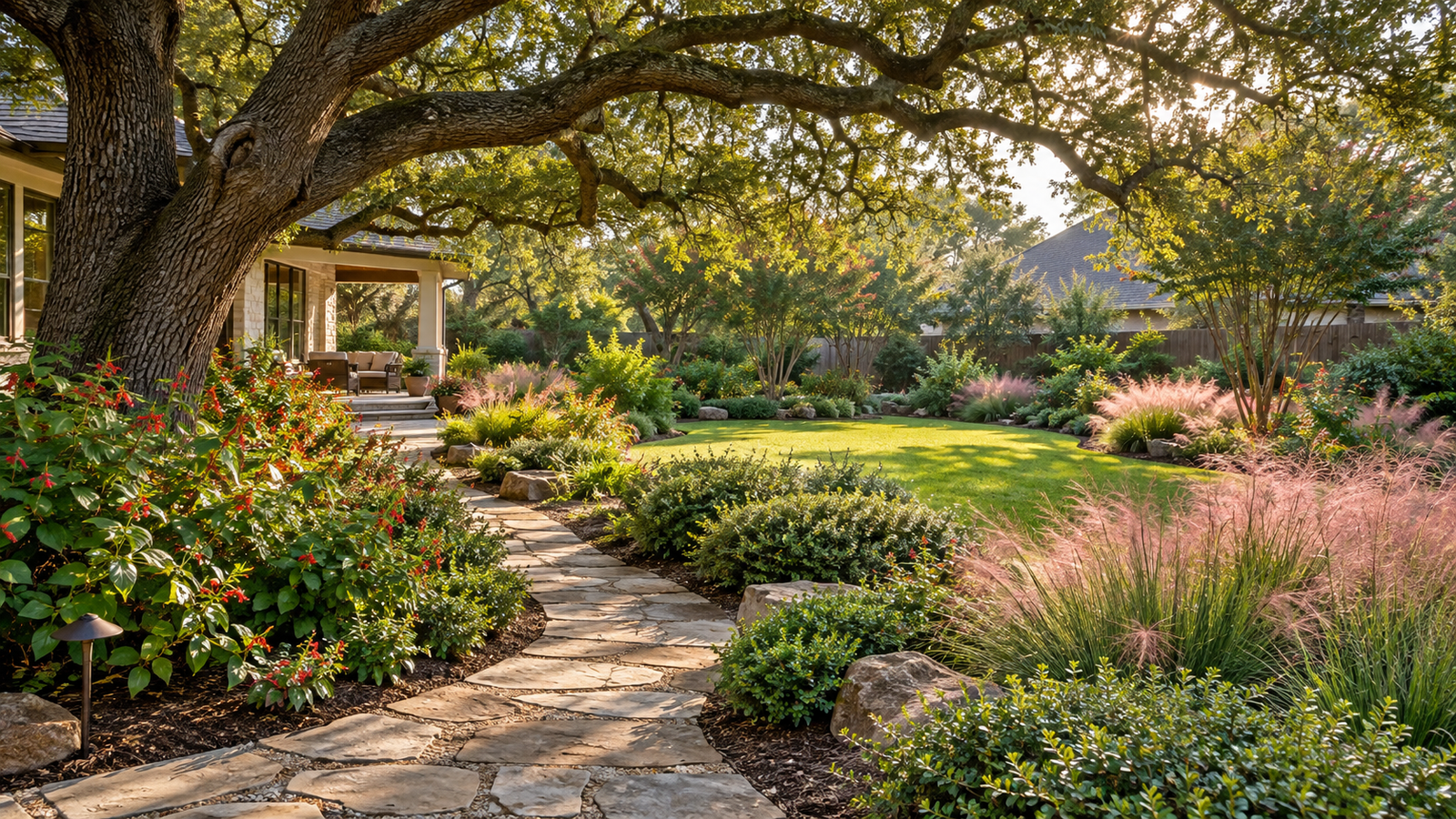
Houston Backyard Plant Ideas for Sun, Shade, Privacy, and More
The best Houston backyard plant ideas combine heat-tolerant flowers, dependable evergreen shrubs, shade-friendly natives, and plants matched to local soil. Yaupon holly provides structure, southern wax myrtle creates privacy, Turk’s cap flowers in partial shade, and Gulf muhly adds texture....
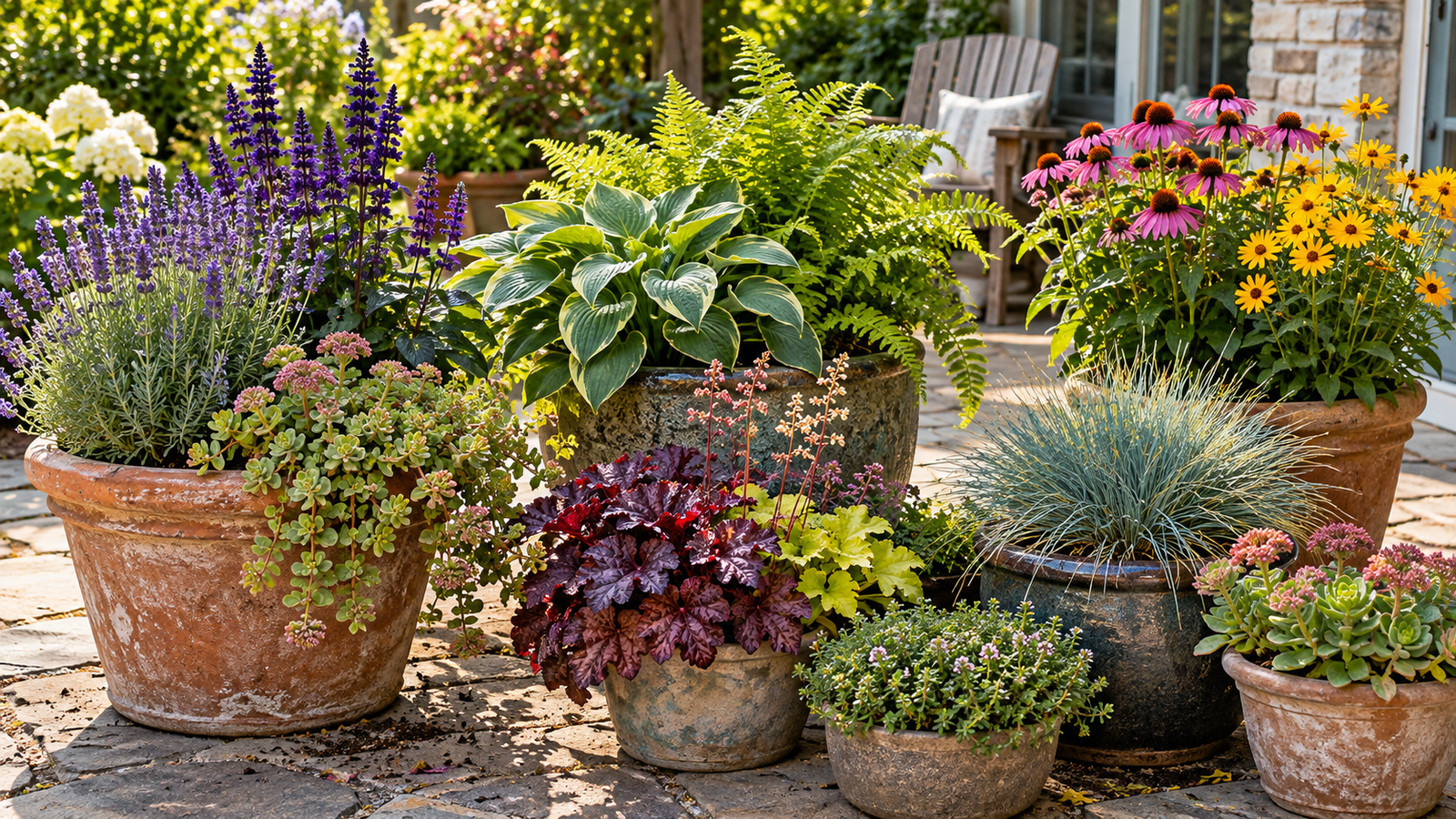
Perennial Planter Ideas
Perennial planter ideas work best when plants share the same sunlight, moisture, drainage, and growing-space requirements. Choose suitable plants and containers, and a display can return for several years with less seasonal replanting.
The secret is planning for mature growth rather...
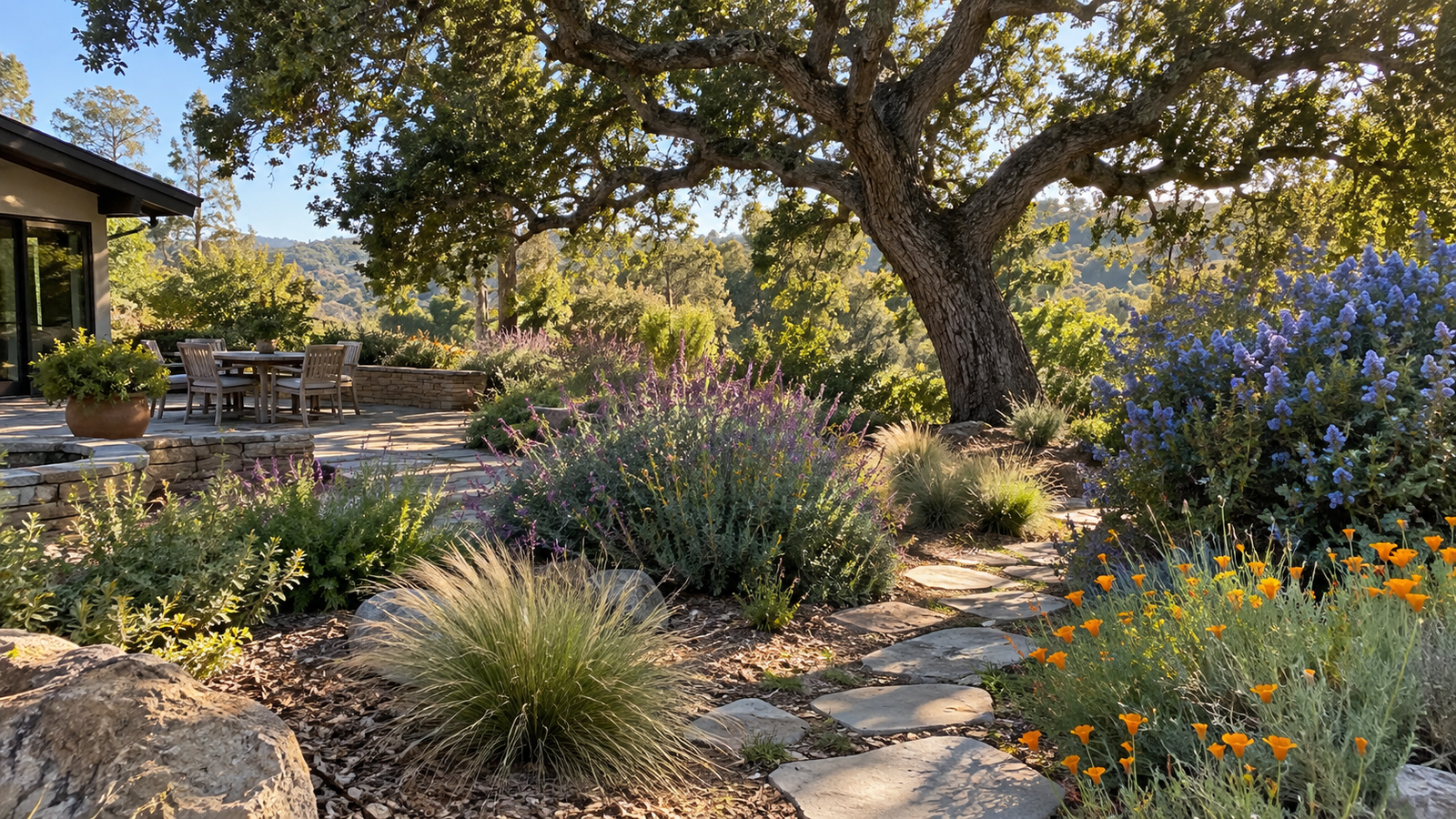
California Backyard Plant Ideas: 25 Water-Wise Choices
The best California backyard plants suit your local climate, soil, sunlight, and available water. Coast live oak, toyon, ceanothus, California fuchsia, deer grass, and native salvias can create attractive, functional landscapes where conditions match their needs. Group plants by water...
Palm Plant Ideas for Backyards: A Climate-Smart Planning Guide
Palm plant ideas for backyards work best when the palm matches your climate, mature space, sunlight, drainage, and landscape goal. Choose compact palms for small yards, clustering palms for privacy, container palms for flexibility, and solitary palms when you want...
Cinder Block Planter Ideas
Cinder block planter ideas offer a practical way to grow flowers, herbs, vegetables, succulents, or ornamental plants without complicated construction. Low raised beds, narrow fence planters, stepped corner designs, and compact vertical arrangements work especially well because they balance growing...