

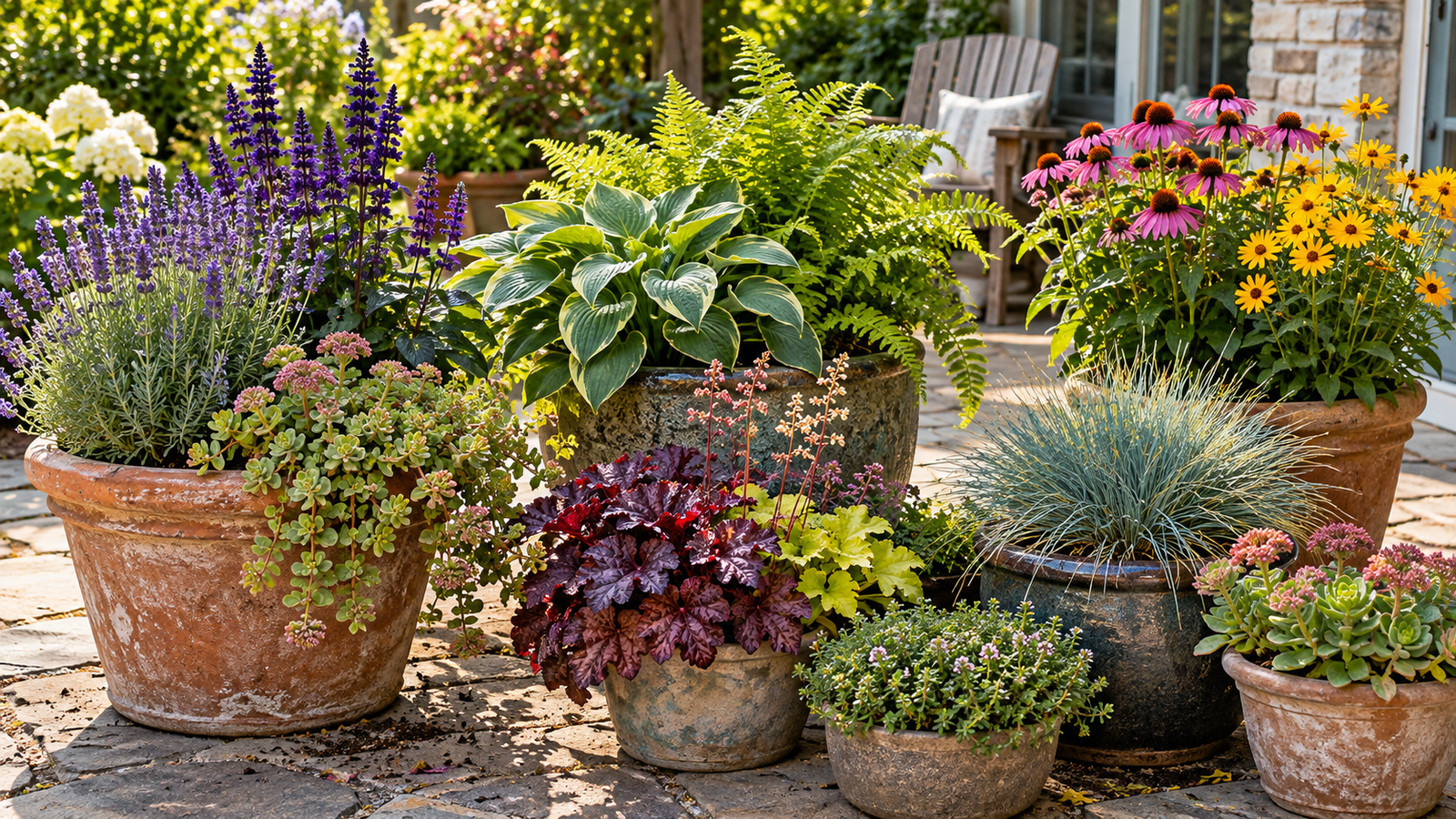
Perennial planter ideas work best when plants share the same sunlight, moisture, drainage, and growing-space requirements. Choose suitable plants and containers, and a display can return for several years with less seasonal replanting.
The secret is planning for mature growth rather than arranging young nursery plants only for immediate color.
Start with the location, check its light and climate, then decide on plants, pot size, and appearance. These 17 designs show how to build attractive arrangements that remain manageable as their roots expand.
What Makes a Good Perennial Planter?
A successful perennial planter supports healthy roots and looks interesting beyond one flowering season. Its plants should tolerate similar growing conditions, have room to mature, and contribute useful contrasts in height, texture, foliage, or bloom time.
Observe the intended location before buying anything. A sunny wall can radiate extra heat; a covered porch may stay dry during rain. Wind also increases water loss, especially on balconies.
| Location | Suitable Starting Choices |
|---|---|
| Sunny, freely draining | Lavender, sedum, creeping thyme |
| Sunny with moderate moisture | Compact salvia, coreopsis |
| Part shade | Heuchera, hardy geranium |
| Shaded, moderately moist | Hosta, suitable fern |
| Shaded, reliably moist | Astilbe, hosta |
One to three compatible plants are usually easier to manage than a crowded assortment.
Which Perennials Grow Best in Pots?
Compact perennials with manageable roots generally adapt best to containers.
Useful options include lavender for fragrance, salvia for upright flowers, sedum for low-water conditions, and heuchera for colorful foliage.
Hostas and ferns suit shade; hardy geraniums make mounding displays. Coreopsis and coneflowers suit roomy, sunny pots.
Astilbe suits cooler, reliably moist shade, while compact ornamental grasses add movement and structure. Creeping thyme makes an aromatic edging plant where drainage is excellent.
Check cultivars: one salvia may stay compact while another outgrows the pot.
Likewise, a plant described as perennial is not necessarily evergreen or winter-hardy in your region. Many herbaceous perennials disappear above ground during winter and regrow in spring.
What Are the Best Perennial Planter Ideas?
Use these designs as starting points, checking local climate and mature plant dimensions.
1. Sunny Lavender, Salvia and Sedum Planter
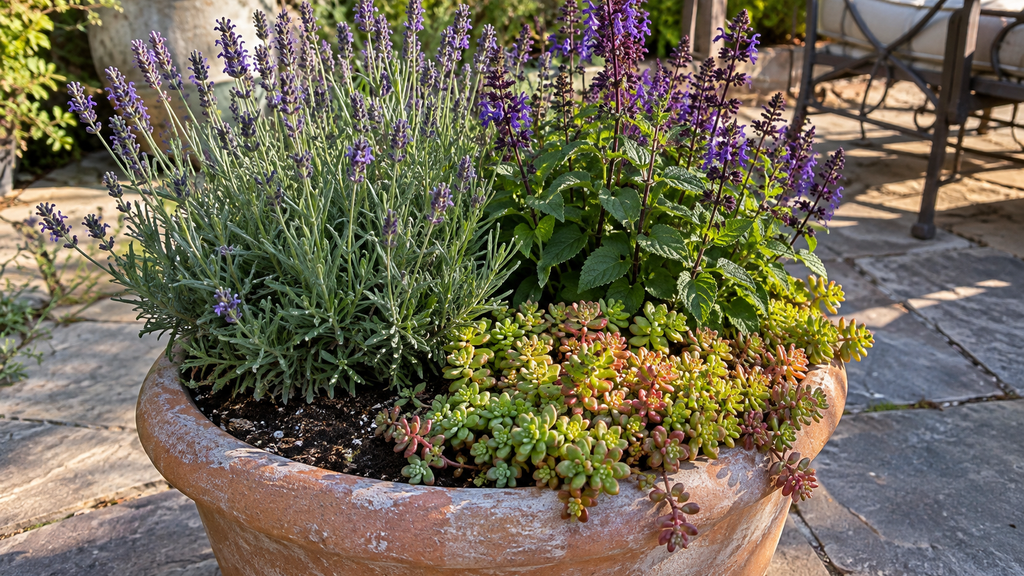
- Best for: Sunny patios
- Light: Full sun
- Moisture: Low to moderate
Use compact English lavender for fragrance, a suitably sized salvia for vertical flowers, and low-growing stonecrop for texture.
Place taller plants toward the back, with stonecrop near an open edge. Choose a generous container and freely draining potting mix.
Watch out: Salvia varieties differ in moisture needs. If your selections need different watering routines, arrange separate pots instead.
2. Coneflower Pollinator Planter
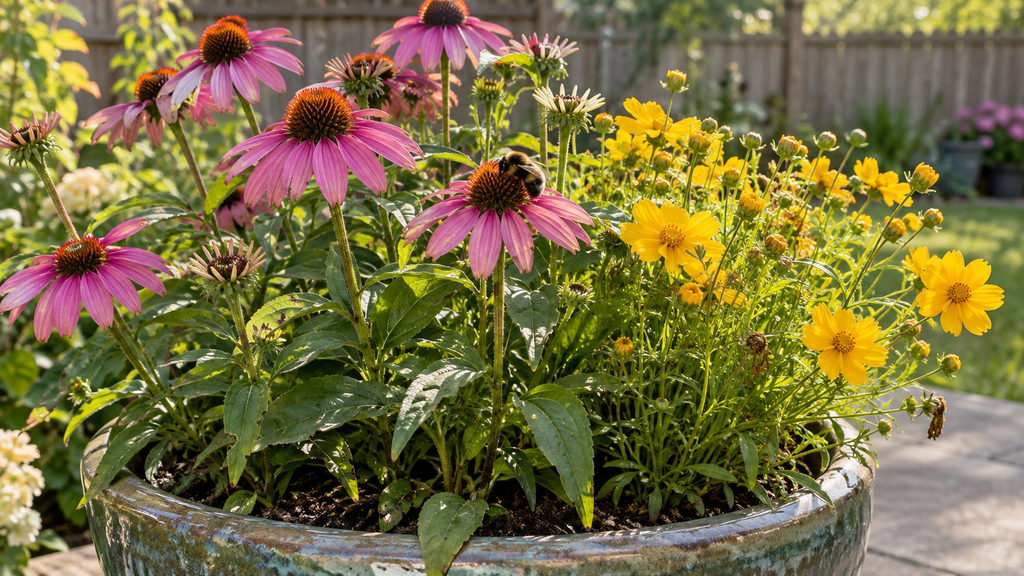
- Best for: Wildlife gardens
- Light: Full sun
- Moisture: Moderate
Make a compact coneflower the focal point, then add appropriately sized coreopsis or salvia if the planter has sufficient space.
Choose overlapping bloom periods to support visiting insects for longer. Leave room around the coneflower’s crown so companions do not crowd it.
Watch out: Large coneflower varieties can quickly dominate a small container.
3. Hardy Geranium Planter
- Best for: Cottage patios
- Light: Sun to part shade
- Moisture: Moderate
A hardy geranium offers relaxed mounds of foliage and flowers.
Use one spreading specimen in a wide pot, or pair a compact cultivar with compatible heuchera for contrasting leaves.
Watch out: Hardy geraniums are not the tender pelargoniums often sold as seasonal geraniums.
4. Hosta and Fern Shade Planter
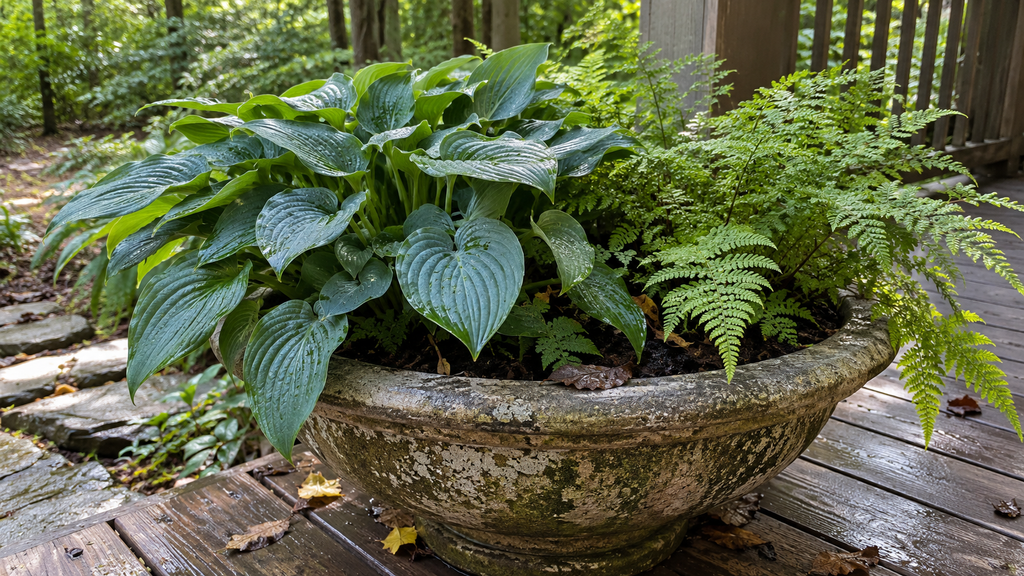
- Best for: Shaded porches
- Light: Part shade to shade
- Moisture: Moderate
Pair a compact hosta’s broad leaves with the finer texture of a moisture-compatible woodland fern.
Use a sufficiently wide container and potting mix that holds moisture without staying saturated.
Watch out: Roof-covered shade may receive almost no rain.
Explore additional hosta planter ideas for foliage combinations.
5. Heuchera Foliage Planter
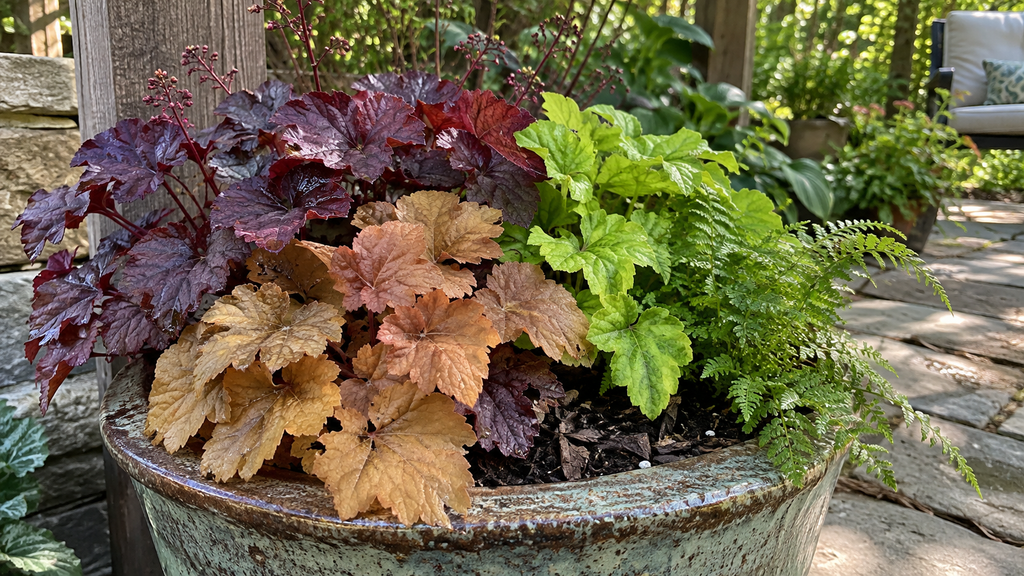
- Best for: Long-lasting foliage color
- Light: Cultivar-dependent
- Moisture: Moderate
Heuchera offers burgundy, bronze, lime, caramel, and purple leaves, making it useful even between flowering periods.
Contrast a dark-leaved variety with a compact, green fern that shares its growing conditions.
Watch out: Some cultivars scorch in strong afternoon sun.
6. Astilbe Shade Planter
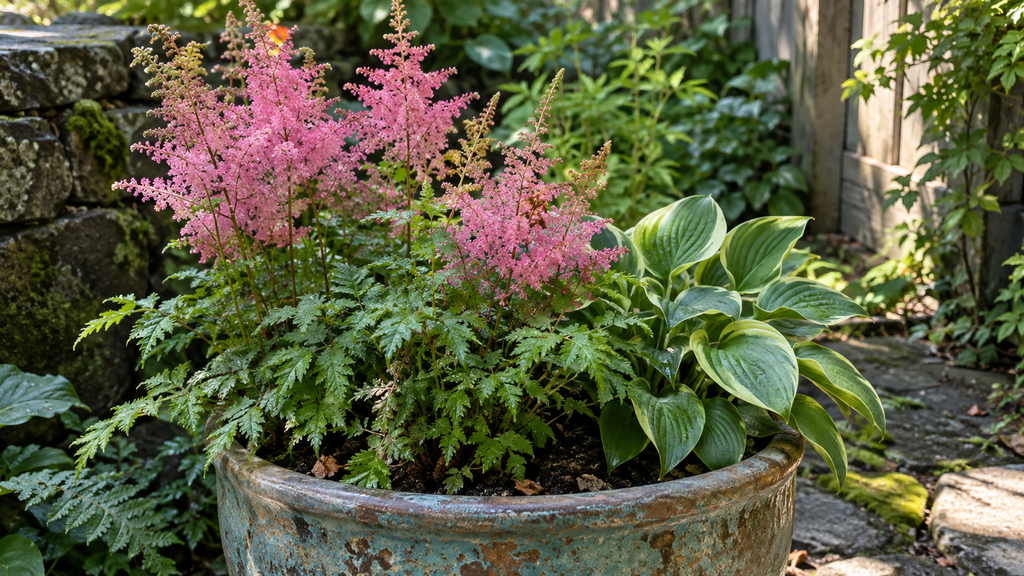
- Best for: Cool, shaded spaces
- Light: Part shade
- Moisture: Moderate to high
Astilbe adds feathery flower plumes above textured leaves.
Combine a compact selection with a moisture-loving hosta in a roomy container. Maintain dependable moisture while allowing excess water to drain.
Watch out: Repeated drying can damage astilbe; do not pair it with lavender.
7. Cottage-Style Perennial Planter
- Best for: Informal gardens
- Light: Sun to part shade
- Moisture: Moderate
Choose two or three compatible, compact varieties of hardy geranium, salvia, or catmint for a relaxed arrangement.
Repeat a limited color palette, but vary plant height and foliage shape. Leave some open space so the design fills out naturally during the growing season.
Watch out: Crowding several vigorous cottage-garden plants together creates short-lived results.
8. Ornamental Grass and Flower Planter
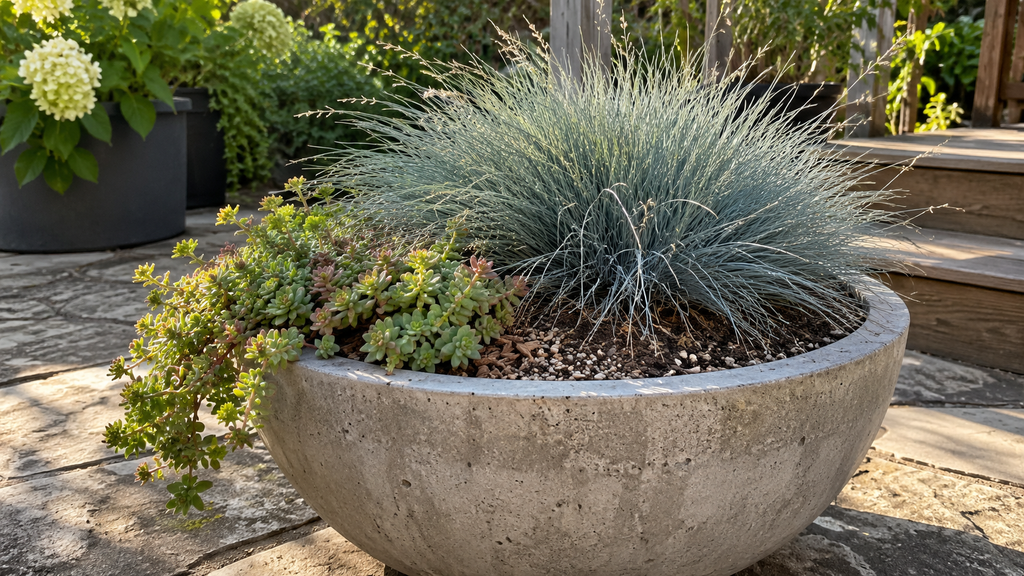
- Best for: Entrances
- Light: Species-dependent
- Moisture: Species-dependent
Use a compact grass as an upright focal point, with lower companions chosen for matching conditions.
Blue fescue and low-growing sedum may suit a sunny, freely draining pot; certain sedges work better in partial shade.
Watch out: Grass size and tolerance vary; blue fescue may struggle in hot, humid climates.
9. Drought-Tolerant Perennial Planter
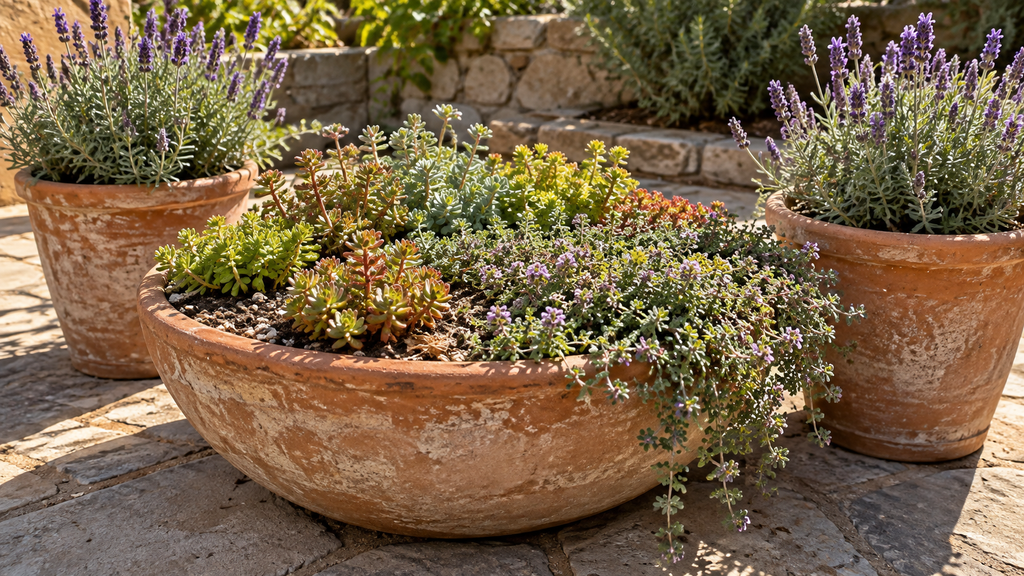
- Best for: Hot patios
- Light: Full sun
- Moisture: Low after establishment
Combine compatible varieties of sedum, creeping thyme, and lavender in a broad pot with excellent drainage, or display them in separate matching containers.
Their foliage and growth habits offer interest without relying on constant flowers.
Watch out: Drought-tolerant plants still need establishment watering, and wet winters can be harmful.
10. Native Pollinator Planter
- Best for: Wildlife-focused spaces
- Light: Species-dependent
- Moisture: Species-dependent
Choose locally native flowering perennials with manageable root systems and complementary bloom times.
A small group of pots may offer more diversity than one crowded container.
Look for flowers supplying nectar or pollen and consider leaving suitable seedheads through autumn.
Watch out: Native status is regional. Verify plants with a local native-plant organization before buying.
11. Single-Specimen Perennial Pot
- Best for: Simple displays
- Light: Plant-dependent
- Moisture: Plant-dependent
One well-chosen perennial makes watering and repotting easier.
Try miniature hosta ‘Blue Mouse Ears’ in appropriate shade, colorful compact heuchera, or lavender ‘Hidcote’ in a sunny, well-drained setting.
Watch out: Even compact cultivars eventually need root-space checks.
12. Trailing Perennial Planter
- Best for: Steps and raised pots
- Light: Plant-dependent
- Moisture: Plant-dependent
Let creeping thyme, suitable trailing sedum, or a compact spreading hardy geranium soften the edge of a container.
Place trailing growth toward selected sides rather than planting a rigid ring.
Watch out: Confirm mature spread; some groundcovers become too vigorous for confined space.
13. Small Balcony Perennial Planter
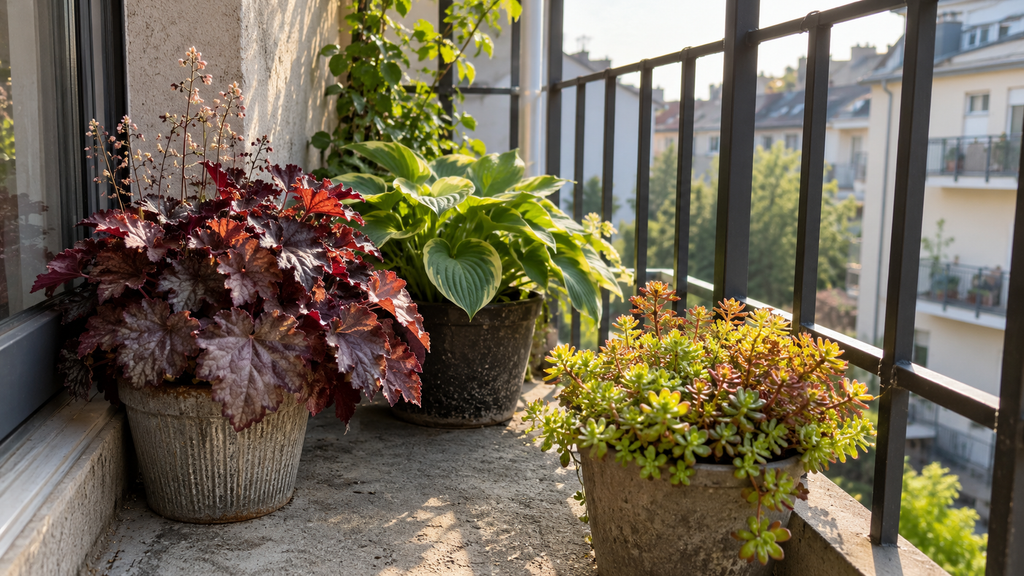
- Best for: Apartments
- Light: Exposure-dependent
- Planter: Stable and lightweight
Choose one compact perennial for easier care: miniature hosta for shade, heuchera for suitable partial shade, or low-growing sedum for a sunny balcony.
Coordinated individual pots allow different watering schedules without root competition.
Watch out: Consider wind, drainage runoff, total wet weight, and building load restrictions.
14. Large Porch Perennial Planter
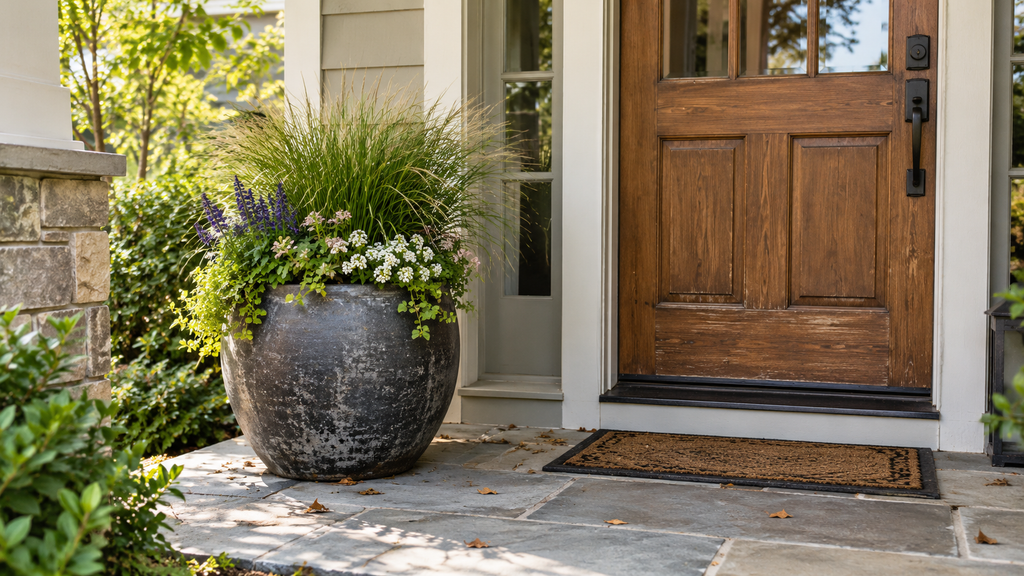
- Best for: Entrances
- Light: Location-dependent
- Planter: Large and stable
Start with one architectural perennial or compact grass.
Add low companions only if their water and light requirements match. Place the empty container first; filling it makes moving difficult.
Watch out: Keep the finished planting clear of walkways.
See our patio planter ideas for coordinated displays.
15. Fragrant Perennial Planter
- Best for: Seating areas
- Light: Usually sunny
- Moisture: Low to moderate
Place lavender, thyme, or a suitable catmint near a path, bench, or dining space where visitors can enjoy the fragrance.
Select plants with compatible soil requirements and leave comfortable clearance around furniture.
Watch out: Match each species to local climate and avoid overwatering drought-adapted plants.
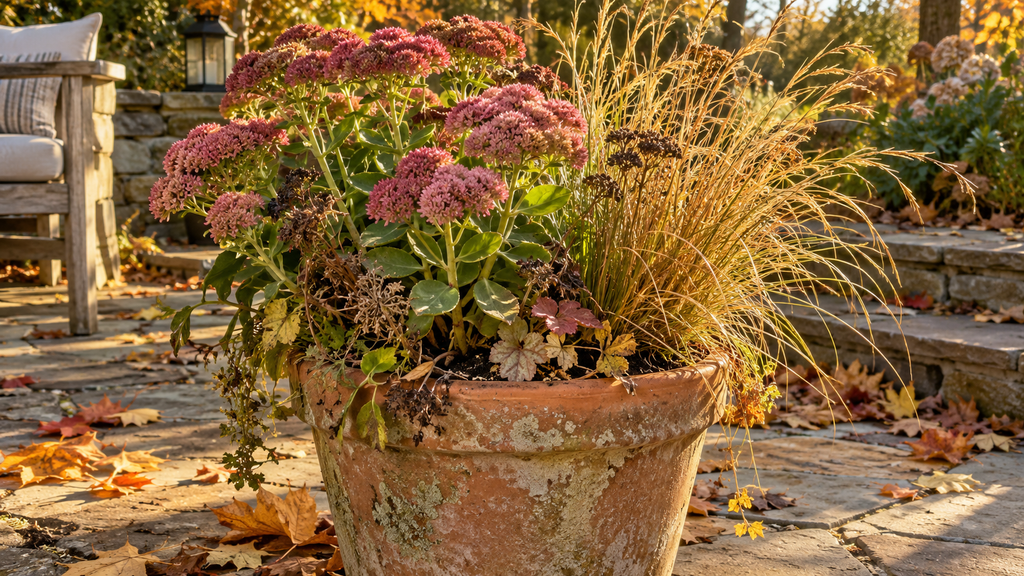
16. Fall-Interest Perennial Planter
- Best for: Autumn color
- Light: Usually sunny
- Moisture: Species-dependent
Combine a suitable late-flowering stonecrop, such as a compact Hylotelephium, with a small ornamental grass sharing its growing conditions.
Leave attractive stems standing if they remain healthy and stable.
Watch out: Avoid choosing a vigorous grass that outgrows the stonecrop.
17. Four-Season Perennial Planter
- Best for: Prominent year-round locations
- Planter: Large or grouped pots
Plan for changing interest rather than uninterrupted flowers.
Spring brings emerging shoots; summer offers blooms; autumn adds seedheads and foliage color; winter may provide persistent stems or suitable evergreen plants.
Watch out: Herbaceous perennials often die back naturally; leave winter interest to plants suited to your climate.
When Should You Plant Perennials?
Spring and early autumn are generally favorable planting periods for hardy perennials because moderate temperatures support establishment.
Spring provides a full growing season before winter, making it especially useful in cold regions.
Autumn can work where roots have time to establish before severe freezing.
Summer transplants need closer monitoring: water beforehand, plant during cooler hours, and protect stressed plants from extreme heat.
In warmer climates, consider rainfall and extreme heat rather than frost dates.
Which Perennials Grow Well Together?
Compatible perennials share similar sunlight, soil, water, mature-size, and winter-care needs.
| Combination | Shared Conditions | Main Consideration |
|---|---|---|
| Lavender + thyme | Sun, excellent drainage | Avoid prolonged wet soil |
| Compact salvia + coreopsis | Sun, moderate moisture | Check cultivar sizes |
| Hosta + suitable fern | Shade, moderate moisture | Allow root expansion |
| Astilbe + hosta | Part shade, dependable moisture | Prevent repeated drying |
| Sedum + thyme | Sun, lower moisture | Avoid winter waterlogging |
Which Plants Should Stay Separate?
Lavender and astilbe have substantially different moisture preferences.
Likewise, sun-loving coneflowers and shade-preferring hostas rarely belong in one permanent planting.
Vigorous mint can overwhelm smaller companions.
Separate pots preserve the design without conflicting care.
Can Annuals Join a Perennial Planter?
Yes, if they share growing conditions.
Use compact annuals temporarily and remove them as permanent roots expand.
What Pot Size Do Perennials Need?
Choose a planter according to the rootball, mature growth, and intended number of plants.
Miniature plants need less space than vigorous hostas or mixed arrangements.
| Planting Type | Illustrative Container Volume |
|---|---|
| Small compact specimen | Around 3–5 US gallons |
| Medium specimen | Around 4–6 US gallons |
| Two or three compact perennials | Around 7–10 US gallons |
| Large grass or specimen | Around 10+ US gallons |
These figures are planning examples, not universal minimums. Avoid an oversized container that holds excessive moisture.
Dense circling roots, rapidly drying soil, declining growth, or roots emerging heavily from drainage holes signal that the plant may need more space.
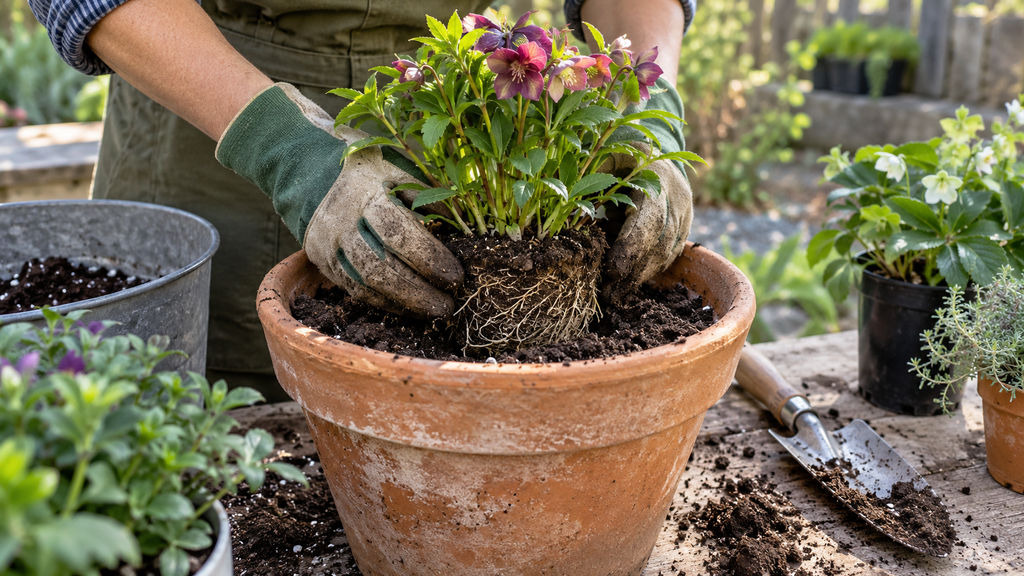
How Do You Plant Perennials in Pots?
Use a pot with drainage holes, suitable mix, and sufficient growing space.
- Position the container. Check light, stability, walking clearance, and access to water before filling it.
- Prepare potting mix. Choose a container-growing medium suited to the plants. Do not use a thick gravel layer to compensate for poor drainage.
- Test the layout. Arrange nursery pots before removing the plants. Allow space for mature foliage rather than filling every gap.
- Inspect roots. Gently loosen densely circling roots where appropriate without unnecessary damage.
- Set planting depth. Keep most nursery-grown perennials near their original growing level, following species-specific crown requirements.
- Fill and water. Firm mix lightly around roots, leave about 1–2 inches below the rim for watering, and wet the root zone thoroughly.
- Monitor establishment. Check moisture regularly until plants show stable new growth.
Spacing depends on mature spread: substantial specimens often perform better alone.
Which Planter Material Is Best?
Planter material affects root temperature, moisture loss, weight, and winter durability.
- Terracotta: Porous and dries quickly.
- Glazed ceramic: Retains moisture longer but can be heavy.
- Plastic and composite: Lightweight, although durability varies.
- Wood: Can deteriorate over time.
- Metal: May become hot in direct sunlight.
- Concrete: Stable but heavy.
Choose frost-resistant construction where containers remain outdoors through freezing weather.
Regardless of material, ensure drainage holes remain clear and avoid leaving the base submerged in water.
What Soil Do Perennials Need?
Quality container potting mix should provide drainage, air space, water retention, and root support.
Avoid dense garden soil that restricts root oxygen.
Adjust the medium to the species: lavender and many sedums prefer freer drainage, while astilbe needs a mix that holds more moisture without becoming saturated.
Acid-loving plants need an appropriate pH.
Do Perennials Need Fertilizer?
Established container plants may benefit from measured feeding, but first check light, drainage, moisture, and root congestion.
Fertilizer cannot fix waterlogged roots.
Follow product directions and avoid overfeeding.
How Often Should You Water Perennials?
Water according to actual root-zone moisture rather than a rigid schedule.
Heat, wind, pot material, soil mix, and root density change how quickly containers dry.
Feel beneath the surface or use a suitable moisture check.
When plants need water, apply it slowly enough to moisten the root zone and allow excess to drain.
Avoid keeping roots constantly saturated, but do not repeatedly let moisture-loving perennials dry severely.
Newly planted perennials need more attention than established ones.
Dormant winter plants use less water but still need occasional checks.
Can Perennials Survive Winter in Pots?
Many hardy perennials can overwinter in containers, but their roots face greater cold exposure than plants in open ground.
Winter survival depends on local climate, root hardiness, pot size, moisture, drainage, and repeated freezing and thawing.
| Winter Exposure | Practical Response |
|---|---|
| Occasional light frost | Choose suitably hardy plants |
| Exposed freezing patio | Group pots in a sheltered position |
| Repeated freeze–thaw cycles | Insulate suitable frost-resistant containers |
| Heavy winter rain | Keep drainage open; prevent standing water |
| Dry, windy conditions | Check moisture, especially for evergreens |
Some gardeners use a conservative rule of choosing plants hardy to roughly two USDA zones colder than their location for exposed pots.
It is not a guarantee; use regional hardiness guidance where USDA zones do not apply.
Some dormant hardy plants tolerate cold sheltered storage; tender and evergreen plants have different requirements.
Water only when necessary and when excess moisture can drain.
Never assume a plant hardy in the ground is equally hardy in a small exposed pot.
How Do You Maintain Perennial Planters?
Long-term maintenance includes checking drainage, removing damaged foliage, refreshing depleted mix, watching for pests, and adjusting plants as roots expand.
Retain attractive, healthy seedheads.
Why Did a Perennial Fail to Return in Spring?
Winter root damage, rot, drought, or delayed emergence are possible causes.
Check whether the species normally appears late.
A firm crown may still be dormant; soft decaying tissue suggests a different problem.
Avoid fertilizing before identifying the cause.
Should You Divide or Repot?
Move healthy root-bound plants into a suitably larger container.
Divide clump-forming species, such as many hostas or hardy geraniums, when appropriate for the plant and season.
Refresh depleted mix and check species guidance before dividing.
What Mistakes Harm Perennial Planters?
The most damaging mistakes are often preventable:
- No drainage holes
- Unsuitable soil
- Overcrowding
- Conflicting water requirements
- The wrong amount of sunlight
- Undersized pots
- Excessive fertilizer
- Fixed-schedule watering
- Ignoring winter exposure
Yellowing may reflect aging, drought, saturation, congestion, or disease—not simply nutrient deficiency.
Inspect moisture, roots, and growing conditions before changing care.
Avoid buying plants solely for their flowering appearance.
A slightly open arrangement with compatible roots will usually mature better than a container filled edge to edge on the first day.
Which Perennial Planter Ideas Suit Your Space?
Use the location as your decision filter, then choose the design that fits your available time and root space.
| Your Setting | Suitable Idea |
|---|---|
| Hot sunny patio | Lavender and compatible low-water companions |
| Shaded porch | Hosta and fern |
| Moist partial shade | Astilbe and hosta |
| Compact balcony | One miniature perennial |
| Pollinator-focused garden | Regionally native flowering plants |
| Fragrant seating area | Lavender or thyme containers |
| Prominent entrance | Compact grass or specimen planter |
| Autumn display | Late stonecrop with compatible grass |
Consider sunlight, watering capacity, and mature plant size.
If conditions conflict, use a group of separate pots instead of a mixed container.
For layout inspiration, see backyard patio planter ideas.
What Are Common Perennial Planter Questions?
Do Perennials Come Back Every Year in Pots?
Many return for several years with suitable root space, drainage, and winter protection.
Climate and species determine whether an individual plant survives outdoors.
What Are the Best Low-Maintenance Perennials for Pots?
Sedum, suitable lavender, heuchera, hardy geraniums, compact grasses, and hostas are useful choices.
Match each plant to the available light and moisture.
Which Perennials Grow Best in Sun and Shade?
Lavender, sedum, and coreopsis generally favor sun.
Hostas and many ferns perform better in shade; cultivar requirements may differ.
Can Perennial Planters Stay Outside All Winter?
Many hardy plants can, but exposed roots may need shelter or insulation.
Winter drainage and local temperatures are critical.
What Size Pot Do Perennials Need?
Choose for rootball size and mature growth rather than nursery size alone.
Vigorous specimens and mixed plantings need more room.
How Many Perennials Can Share One Container?
One to three compatible plants are a useful beginner guideline.
Their mature roots and the container’s dimensions determine the practical number.
Do Perennial Pots Need Drainage Holes?
Yes. Working drainage holes and suitable potting mix limit waterlogging and help maintain oxygen around the roots.
How Often Should You Water Potted Perennials?
Check moisture below the surface and water when the species needs it.
Frequency changes with heat, wind, pot size, and season.
Can Annuals and Perennials Share a Planter?
Yes, if their growing needs match.
Use compact annuals as temporary color and preserve room for perennial roots.
Why Didn’t My Potted Perennial Regrow?
Possible reasons include winter damage, rot, drought, or late dormancy release.
Inspect its crown and normal emergence timing before discarding it.
How Do We Evaluate Perennial Planters?
At Backyard Planter Ideas, we assess proposed combinations by their shared growing requirements, mature size, drainage, seasonal interest, and maintenance needs.
Designs should perform beyond their first photograph.
We use established horticultural guidance, including the Royal Horticultural Society and university extension resources, to inform general recommendations.
These are research-informed design examples, not claims of independent field trials.
Verify regional hardiness and plant suitability locally.
What Makes Perennial Planters Last?
Lasting perennial planters rely on compatible growing conditions, adequate drainage, practical watering, and enough space for maturing roots.
Choose plants for your actual location, not just their flowers, and revisit the arrangement when one specimen outgrows its companions.
Start with a manageable design and allow room for seasonal growth.
The best perennial planter ideas are those that remain attractive and workable year after year.
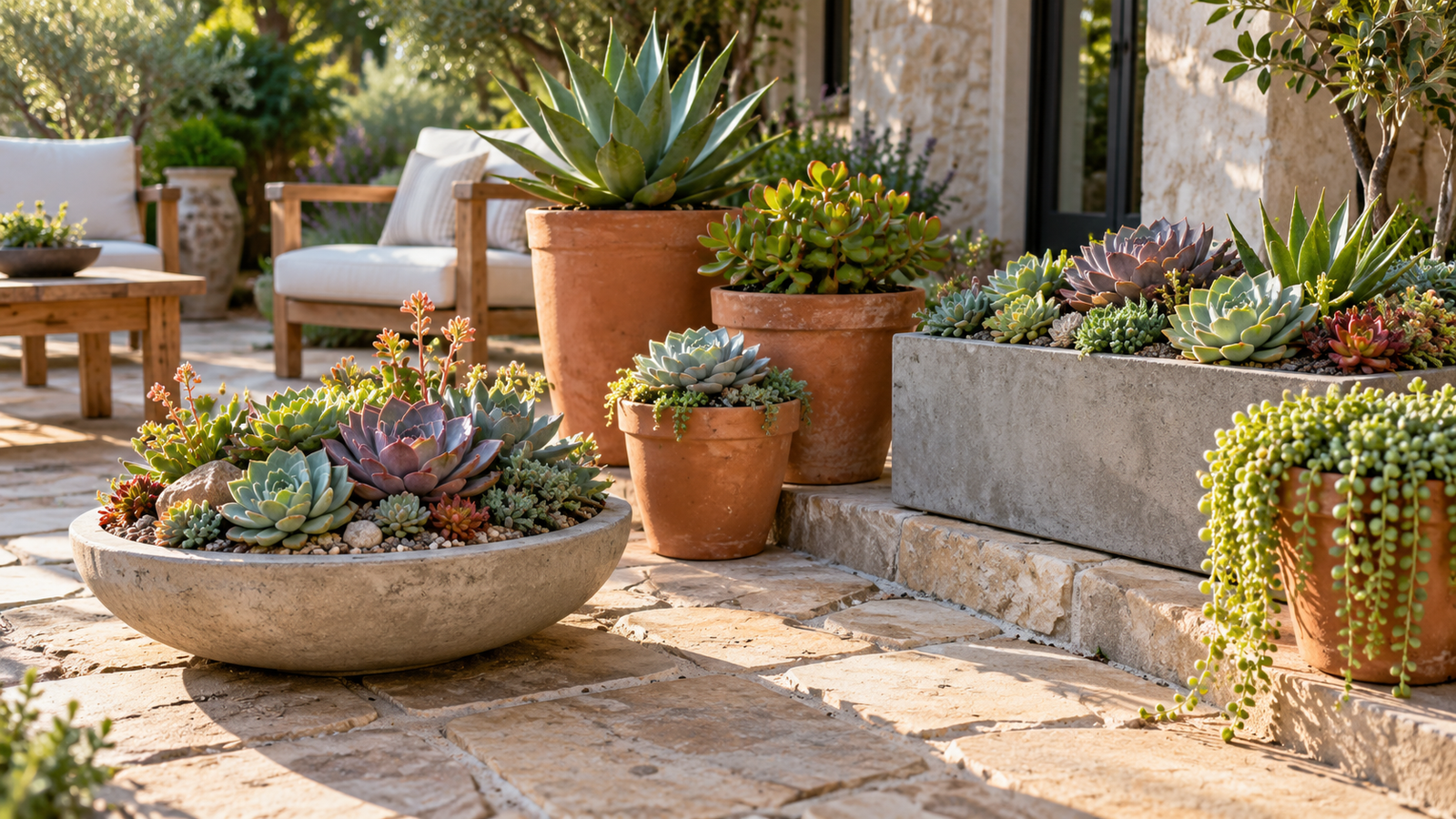
21 Outdoor Succulent Planter Ideas for Patios, Porches and Yards
Outdoor succulent planter ideas include mixed rosette bowls, terracotta groups, concrete troughs, vertical wall displays, and hanging baskets. Choose each design according to sunlight, rain exposure, drainage, and winter conditions. Explore 21 practical options, then use the planting and care...
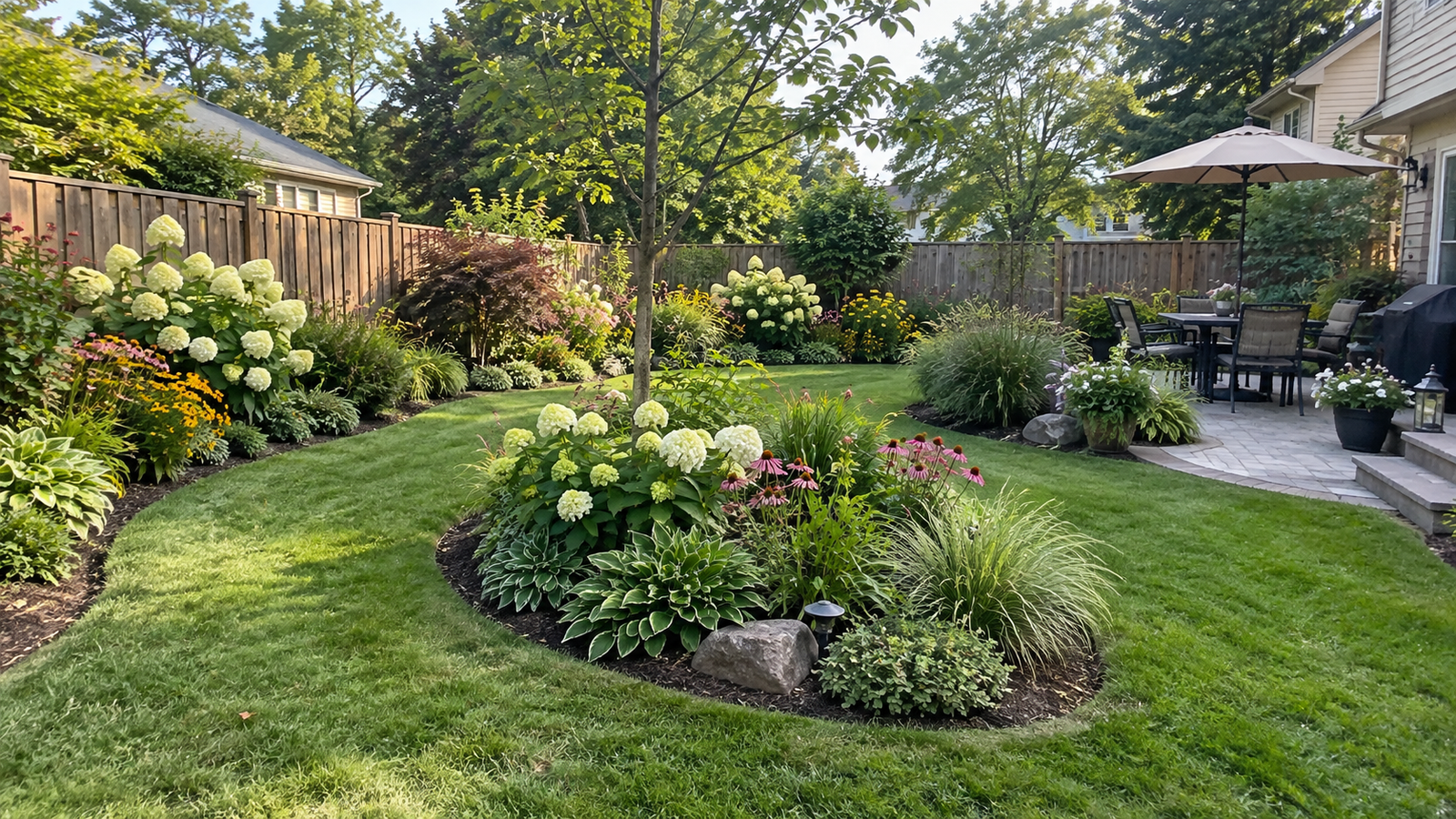
Backyard Plant Bed Ideas: 21 Layouts for Every Yard
The best backyard plant bed ideas preserve usable space while adding structure and color. Border beds frame lawns, island beds create focal points, fence beds offer screening, curved beds soften straight edges, and raised beds organize growing areas. Choose according...
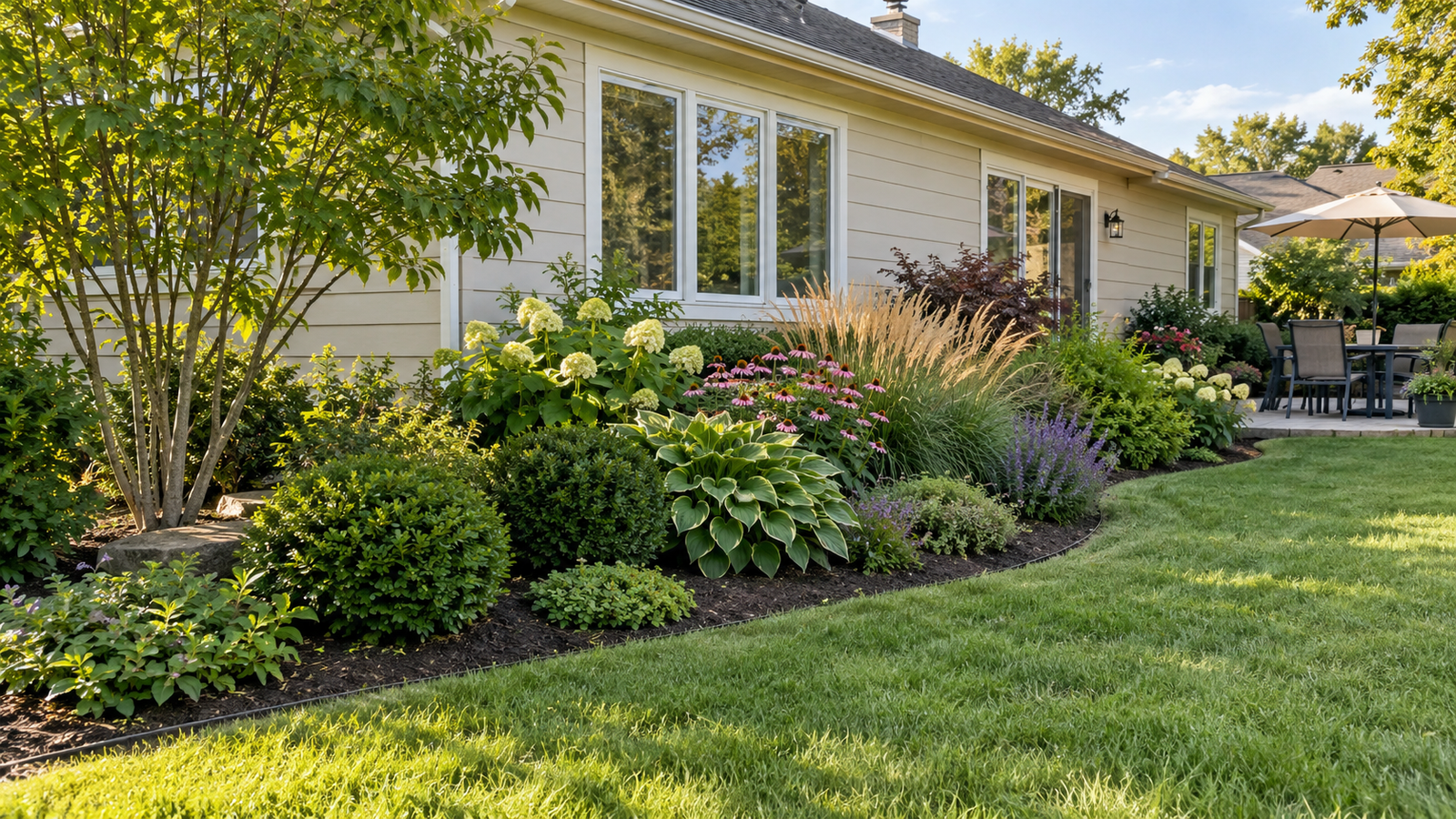
Backyard Foundation Planting Ideas: 21 Ways to Plant Along Your House
The best backyard foundation planting ideas use compact shrubs, flowering perennials, grasses, and groundcovers to soften exterior walls without obstructing windows, drainage, or access. Choose a layout that fits the available bed depth, then select plants for their mature size,...
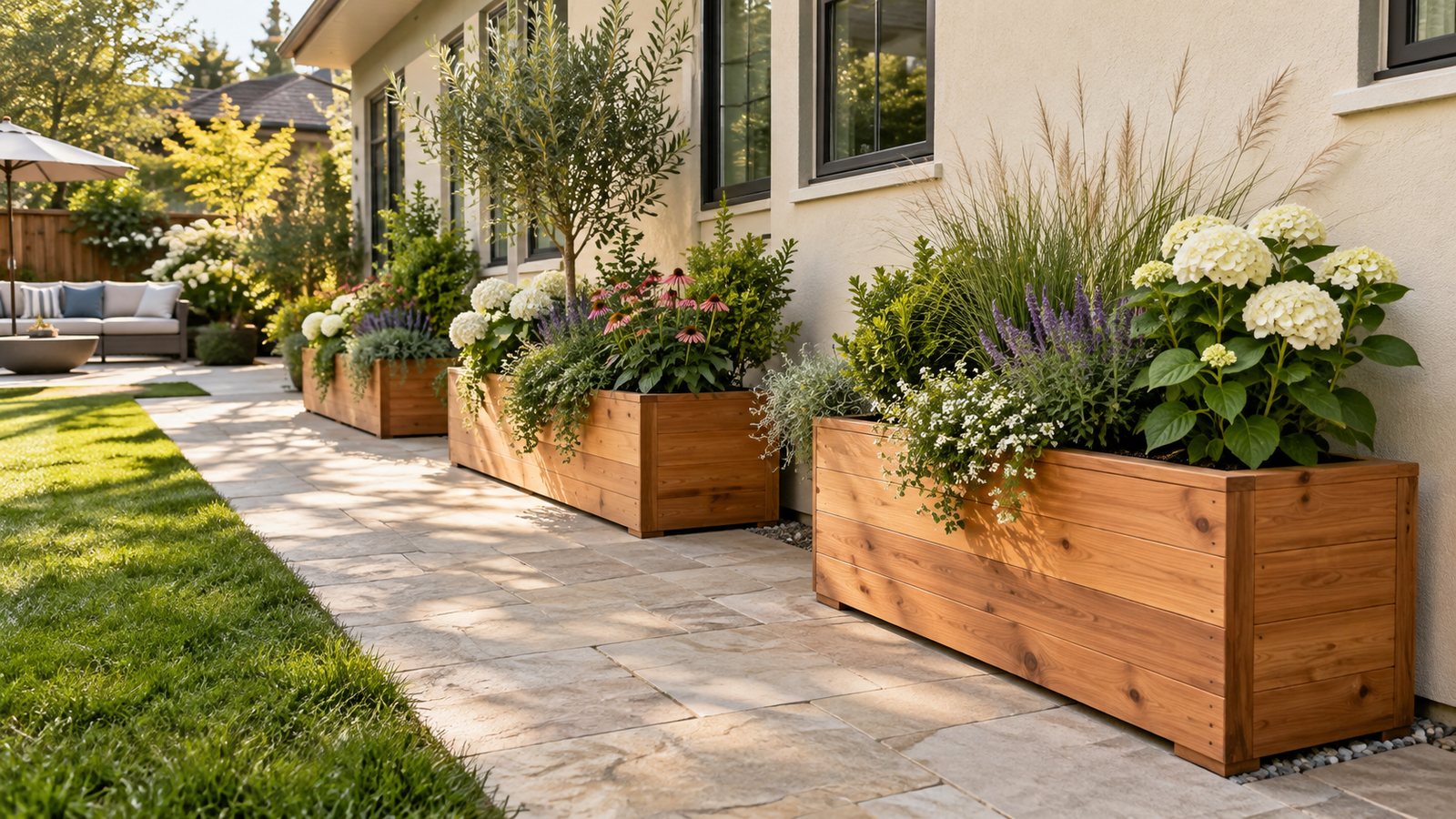
Backyard Planter Box Along House Ideas: 17 Practical Designs
The best backyard planter box along house ideas combine attractive planting with safe, practical placement. Freestanding troughs, cedar boxes, low window planters, and trellis containers can transform a plain wall without blocking access or trapping moisture. Choose a design that...
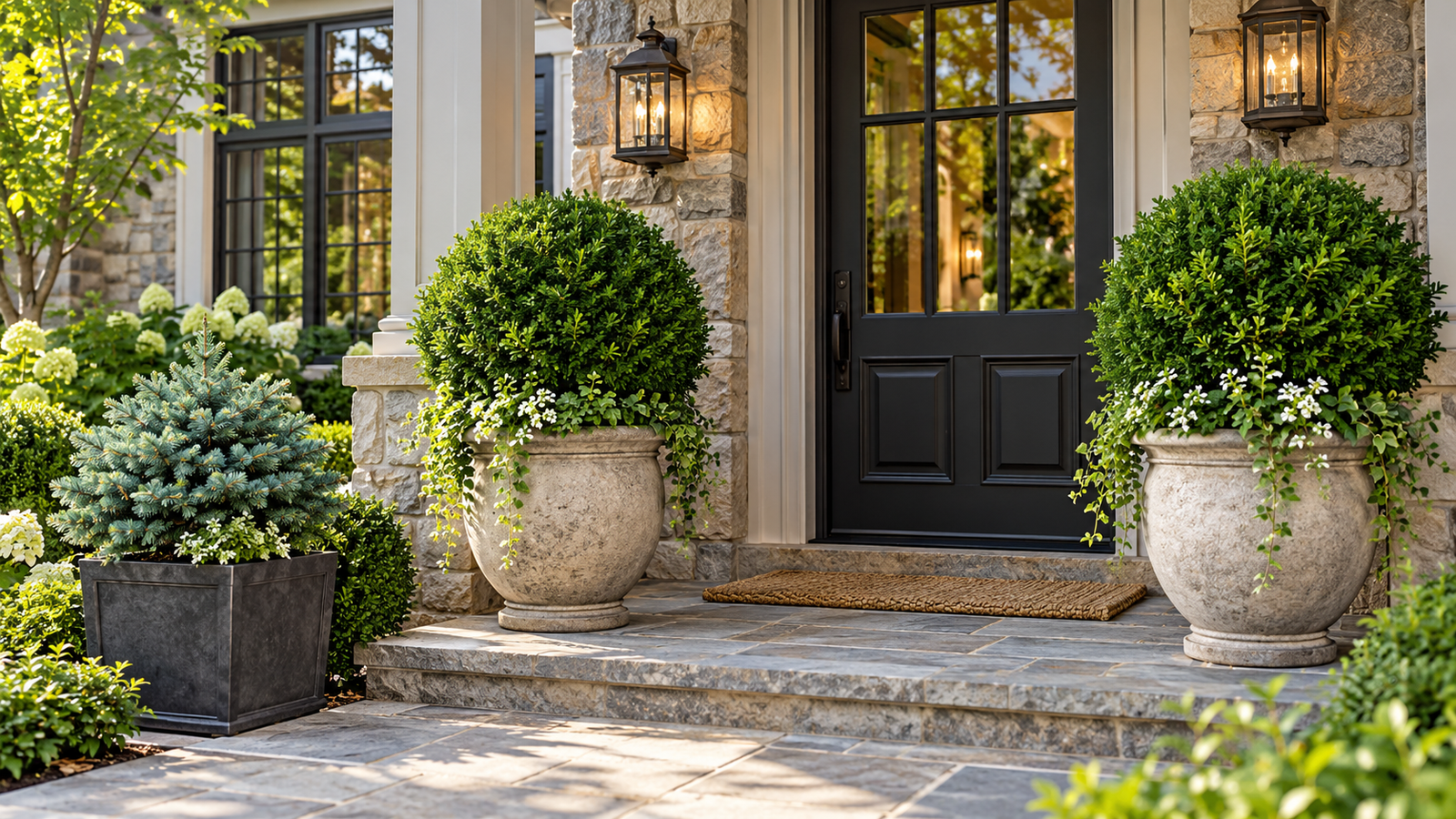
Evergreen Planter Ideas for Beautiful Outdoor Spaces Year-Round
Evergreen planter ideas bring lasting color, shape, and structure to front doors, patios, porches, and balconies. From paired entrance shrubs to low-growing junipers and decorative dwarf conifers, the right arrangement can make an outdoor space feel finished even when seasonal...
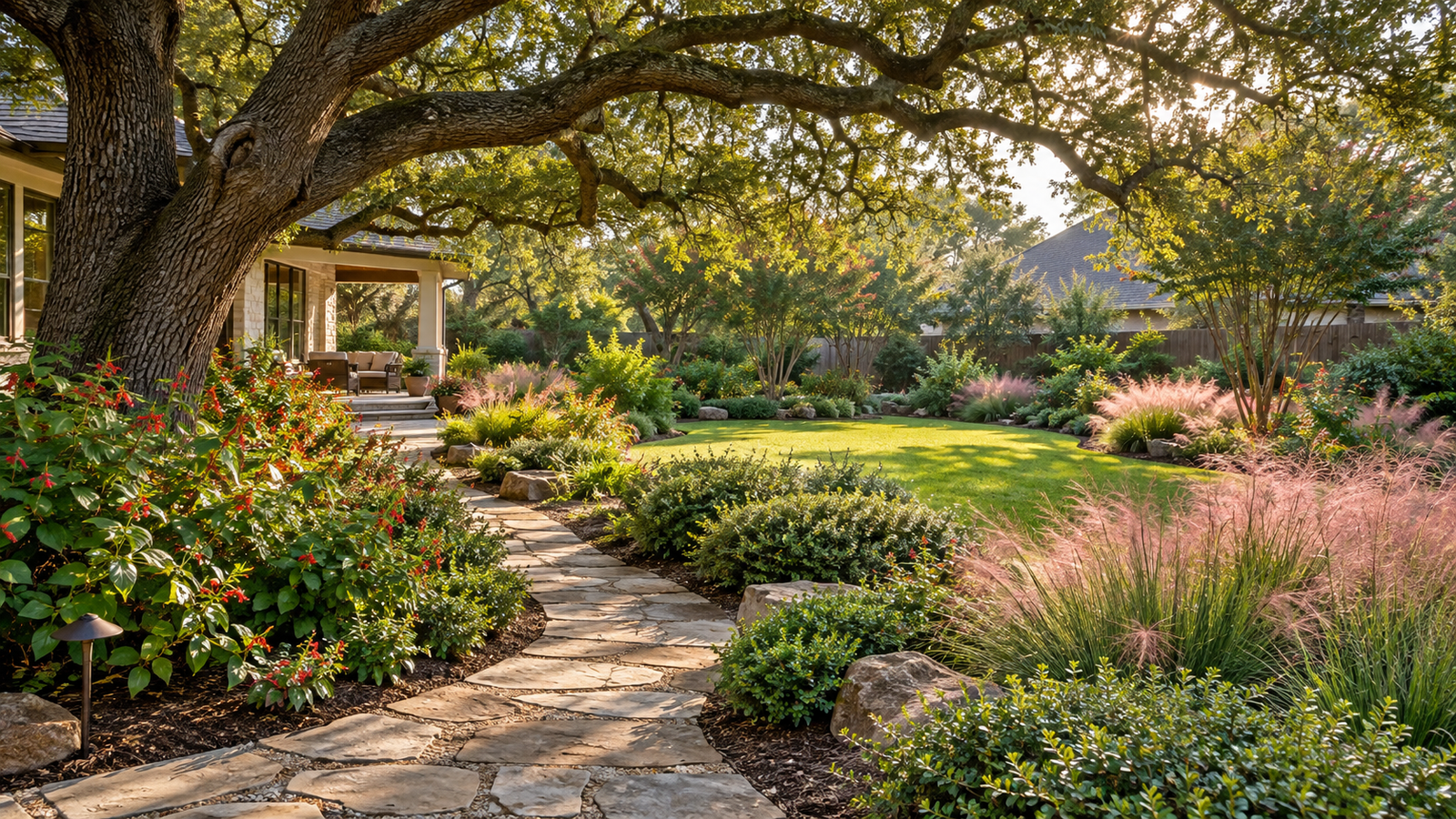
Houston Backyard Plant Ideas for Sun, Shade, Privacy, and More
The best Houston backyard plant ideas combine heat-tolerant flowers, dependable evergreen shrubs, shade-friendly natives, and plants matched to local soil. Yaupon holly provides structure, southern wax myrtle creates privacy, Turk’s cap flowers in partial shade, and Gulf muhly adds texture....
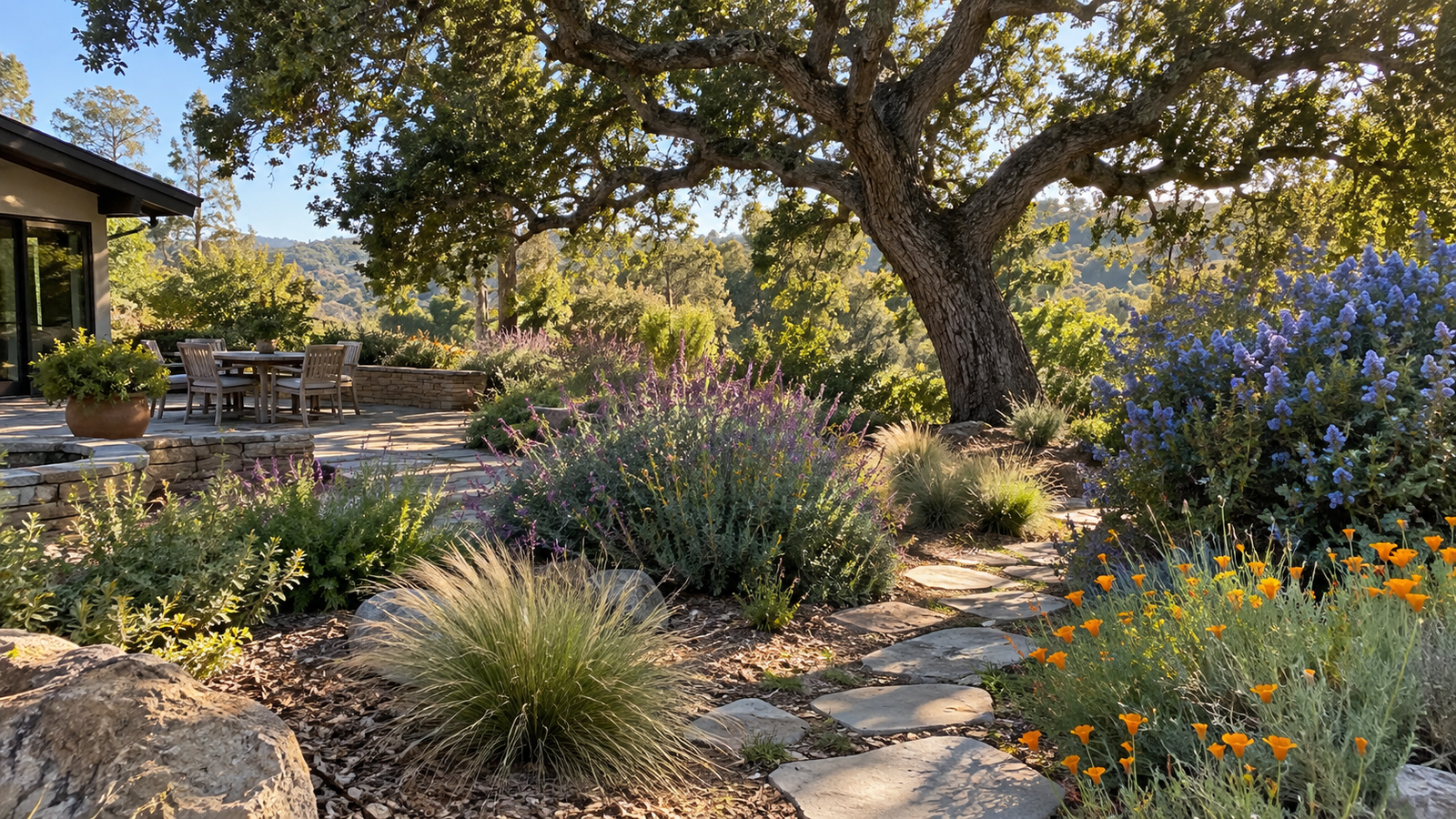
California Backyard Plant Ideas: 25 Water-Wise Choices
The best California backyard plants suit your local climate, soil, sunlight, and available water. Coast live oak, toyon, ceanothus, California fuchsia, deer grass, and native salvias can create attractive, functional landscapes where conditions match their needs. Group plants by water...
Palm Plant Ideas for Backyards: A Climate-Smart Planning Guide
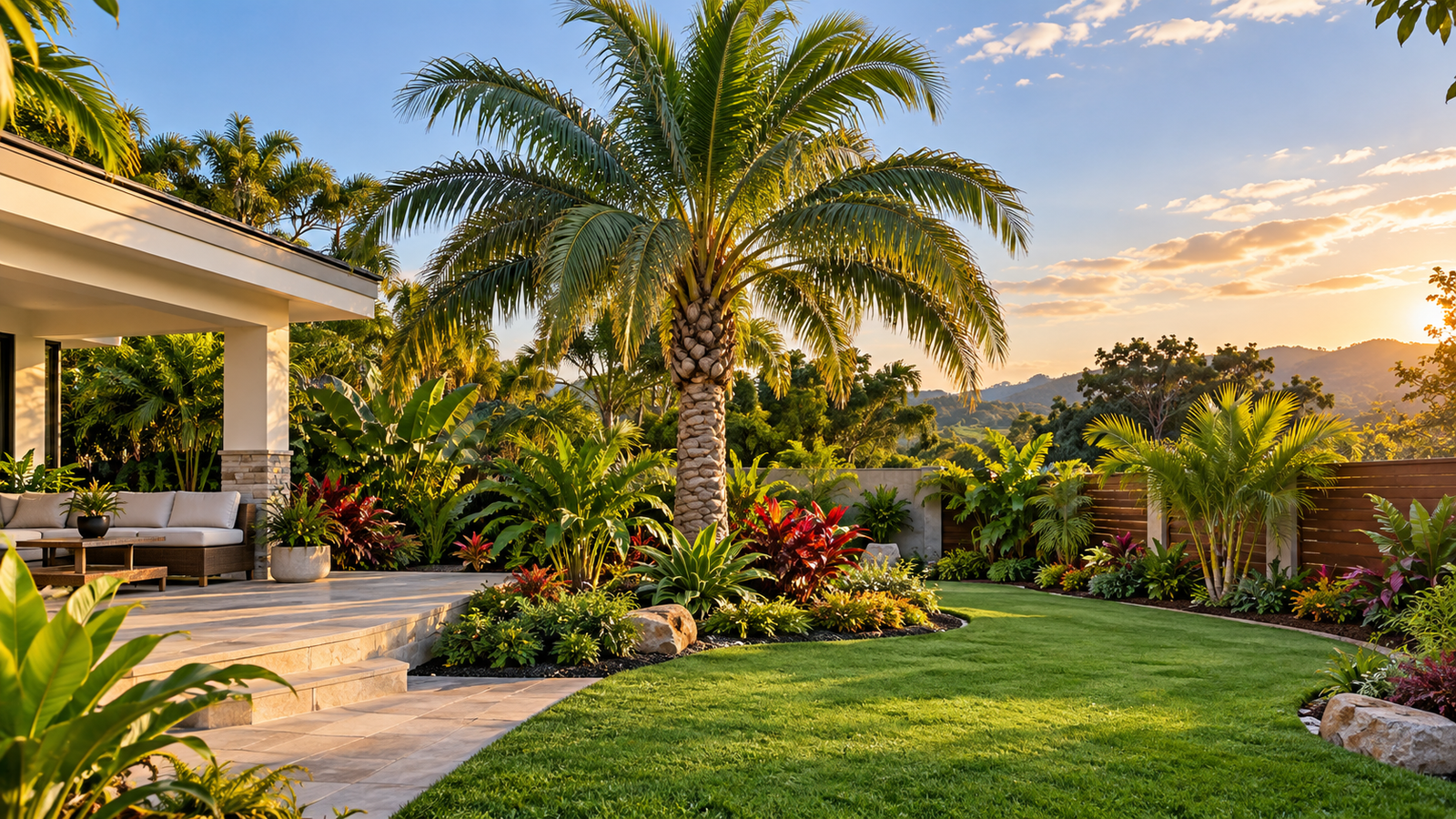
Palm plant ideas for backyards work best when the palm matches your climate, mature space, sunlight, drainage, and landscape goal. Choose compact palms for small yards, clustering palms for privacy, container palms for flexibility, and solitary palms when you want...
Backyard Planting Ideas With Coleus
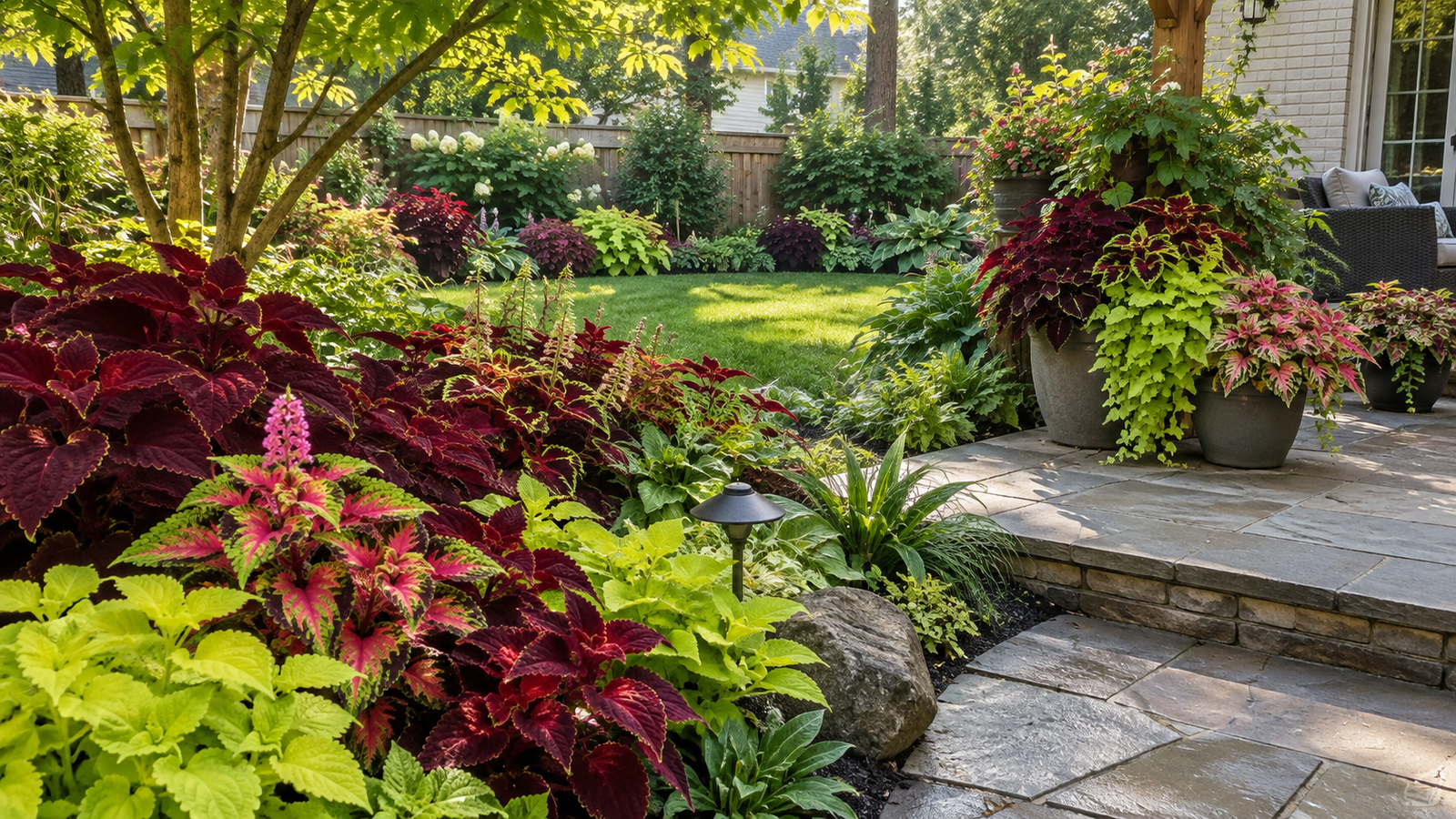
Backyard planting ideas with coleus include layered shade borders, mass plantings, pathway edging, patio pots, tropical foliage beds, under-tree containers, and burgundy or lime focal plants. Match the cultivar's mature size, growth habit, and light tolerance to the site first,...
Cinder Block Planter Ideas
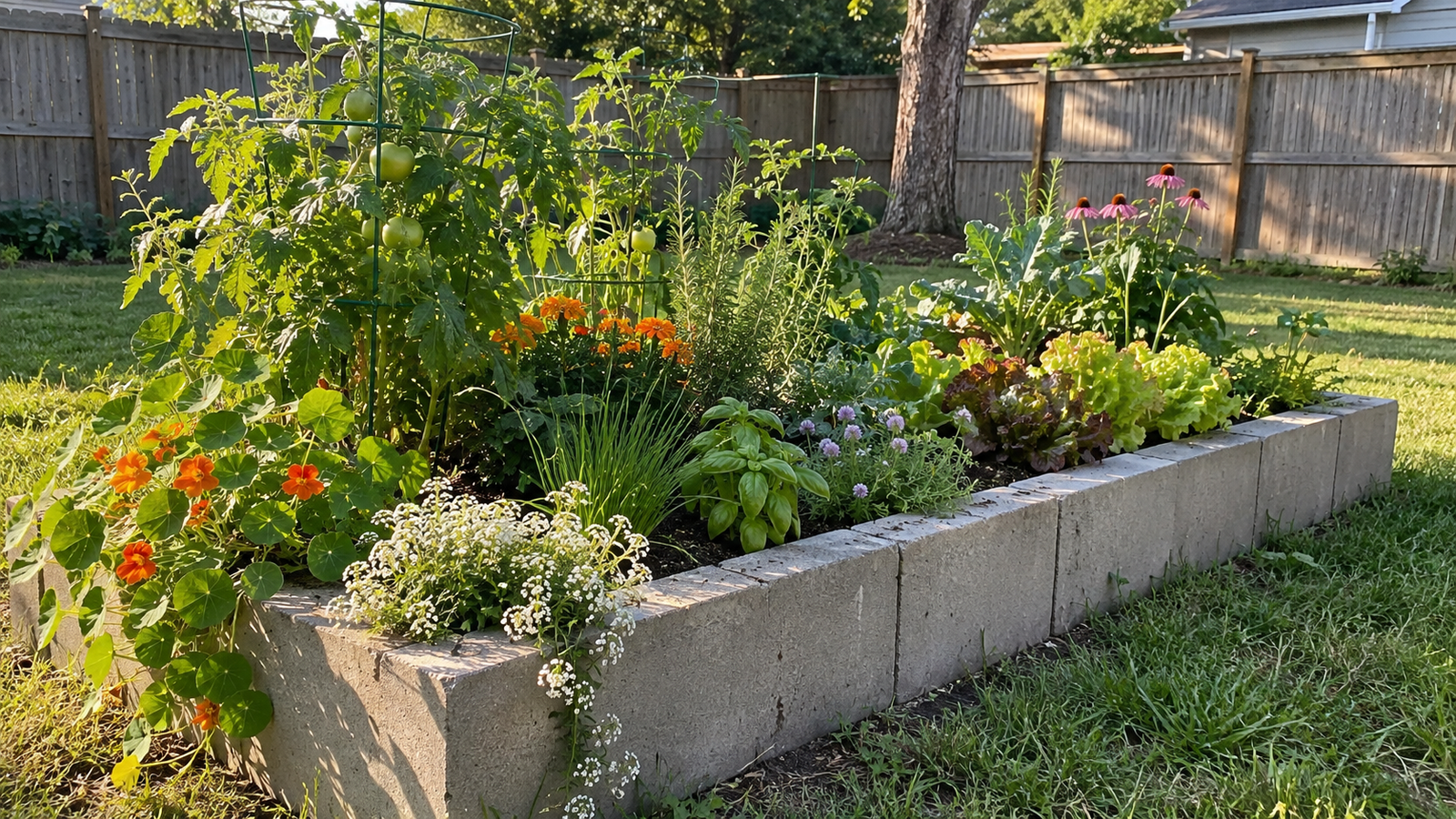
Cinder block planter ideas offer a practical way to grow flowers, herbs, vegetables, succulents, or ornamental plants without complicated construction. Low raised beds, narrow fence planters, stepped corner designs, and compact vertical arrangements work especially well because they balance growing...