

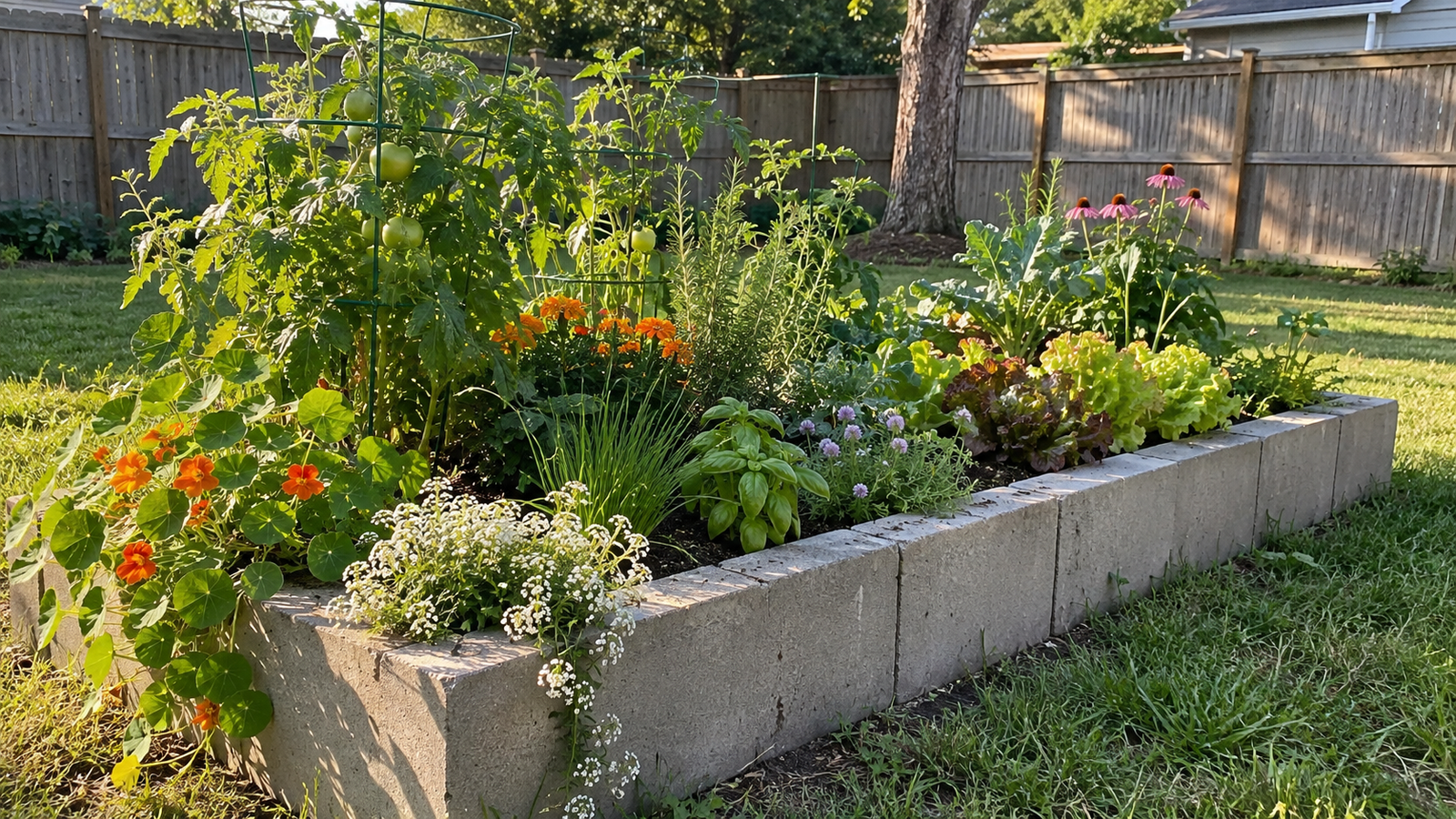
Cinder block planter ideas offer a practical way to grow flowers, herbs, vegetables, succulents, or ornamental plants without complicated construction. Low raised beds, narrow fence planters, stepped corner designs, and compact vertical arrangements work especially well because they balance growing space, drainage, accessibility, and stability.
Before choosing a design, consider your available space, sunlight, drainage, climate, maintenance access, and what you want to grow. Cinder blocks are modular and durable, but the hollow cells provide much less root space than the central area of a raised bed. Matching each planting zone to the right plants makes the finished planter easier to maintain.
Best Cinder Block Planter Ideas
The best cinder block planter depends on what your backyard needs.
A narrow yard may benefit from a fence-side planter, while an unused corner can support a stepped arrangement. A sunny open area is better suited to a raised vegetable bed, and a compact patio may benefit from vertical planting pockets.
For most homeowners, a low one-course raised bed is the most practical starting point. It offers useful growing space without requiring a tall or complicated masonry structure.
Choose a design that remains easy to reach, water, harvest, and maintain. A planter that looks impressive but blocks a path or becomes difficult to water will quickly become inconvenient.
How to Choose a Cinder Block Planter
Choose the layout according to the biggest limitation in your backyard.
A vertical planter saves floor space but provides less soil. A raised bed uses more ground area but gives vegetables and larger plants more root room. A narrow fence planter keeps the center of the yard open, while a stepped planter makes use of an empty corner.
Use vertical designs for compact plants, raised beds for vegetables, and individual blocks for small decorative projects.
Do not expect one planter to perform every function. A small vertical planter may be ideal for herbs and flowers but unsuitable for full-size tomatoes.
Two-Zone Cinder Block Planting Method
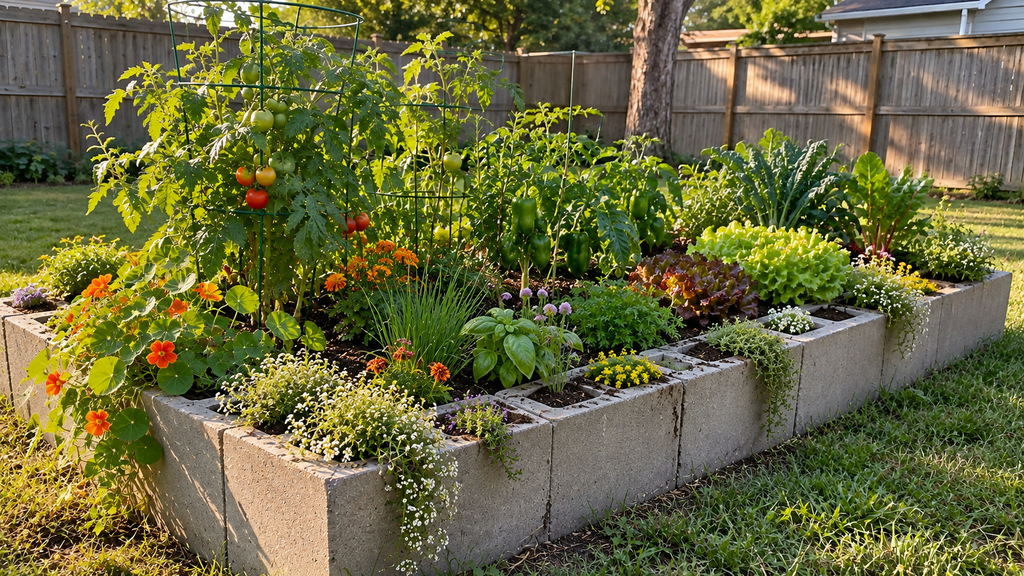
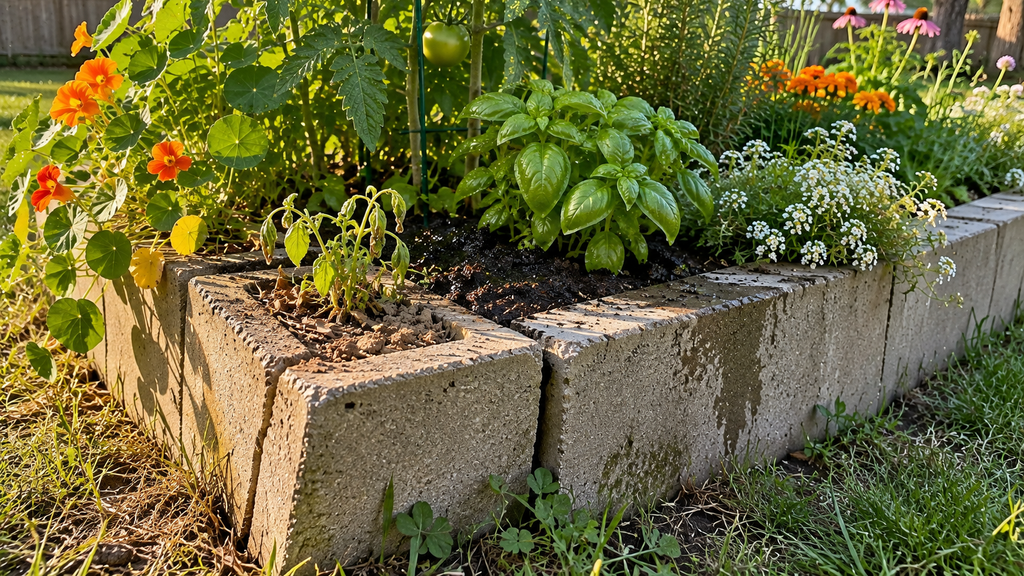
A cinder block planter usually contains two growing zones: the hollow block cells and the larger central bed.
Block cells contain relatively little soil and are more exposed to sun, wind, and temperature changes. They can dry quickly and provide limited room for mature roots.
Compact herbs, small flowers, sedums, sempervivums, and trailing plants generally work best in these cells.
The central bed contains more growing medium and usually holds moisture more consistently. Use it for tomatoes, peppers, beans, cucumbers, leafy greens, and larger flowering plants.
Do not assume both zones need identical watering. A small exposed cell can be dry while the central bed remains moist.
Space-Saving Cinder Block Planter Ideas
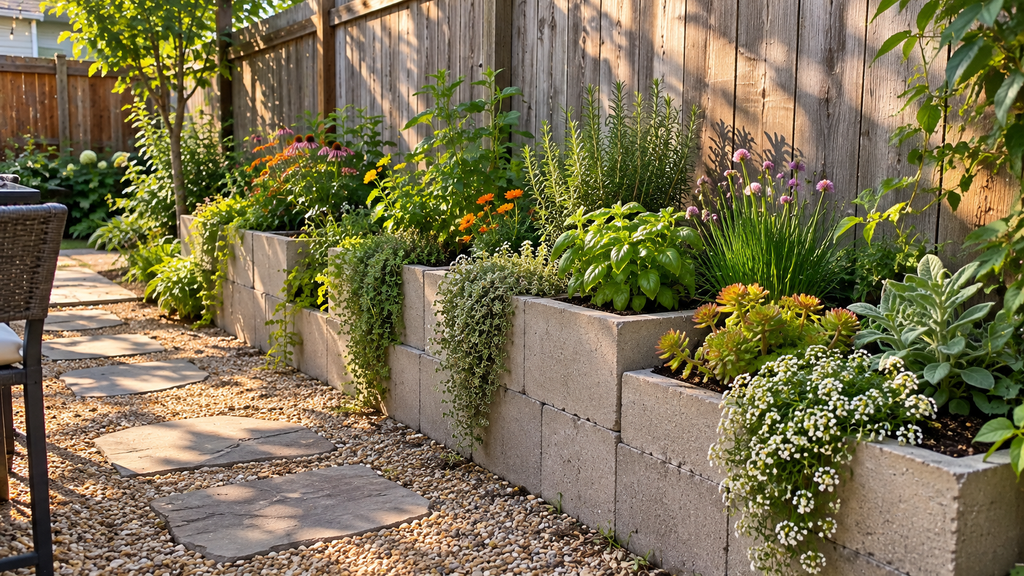
1. Vertical Pocket Planter
A low vertical cinder block planter works well on patios, in courtyards, and beside narrow backyard boundaries.
Stack two or three staggered levels and position selected blocks with their hollow cells facing upward.
Keep the structure relatively low and use a broad lower row for stability. Compact herbs, succulents, small flowers, and trailing plants are better choices than large vegetables.
Upper cells may need more frequent moisture checks because they receive more sun and wind.
2. Stepped Corner Planter
A stepped planter can turn an unused backyard corner into productive growing space.
Make the lower level widest and reduce each higher level gradually. Place taller plants toward the rear, medium plants through the middle, and compact or trailing plants toward the front.
Check drainage before building because fence corners sometimes collect water.
Leave enough room around the planter for future fence maintenance.
3. Narrow Fence Planter
A narrow planter along a fence keeps the center of the backyard available for paths, seating, lawn, children, or pets.
Because this type of bed is normally accessed from one side, keep it narrow enough to reach every plant comfortably.
Use the main soil area for vegetables or larger plants and selected block cells for compact herbs or flowers.
Avoid covering drainage outlets, irrigation controls, utilities, or fence posts that may need repair.
4. Individual Block Planters
Individual cinder blocks can work as simple standalone planters.
Place several beside a patio, walkway, outdoor steps, or seating area.
Using the same block orientation and repeating a few plant varieties usually looks more intentional than filling every hole with a different plant.
Individual block cells are best for compact plants rather than large vegetables.
Productive Cinder Block Planter Ideas
5. One-Course Raised Garden Bed
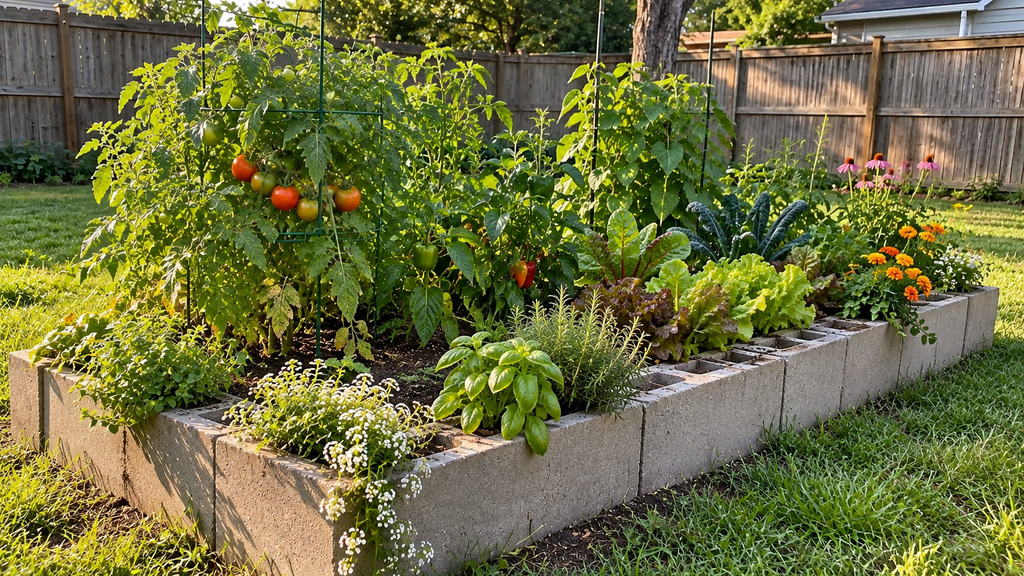
A one-course cinder block raised bed is one of the most useful designs for a typical backyard.
The blocks form the perimeter while the center becomes the main growing area.
Keep the bed narrow enough to reach the middle without stepping on the soil. Beds accessible from both sides can be wider than beds positioned against a fence.
Use the center for vegetables and larger flowers and selected perimeter cells for compact plants.
6. Herb Garden With Planted Cells
The hollow cells around a raised bed can create a convenient herb border.
Thyme, chives, oregano, parsley, and other compact herbs may work well when their sunlight and moisture requirements suit the location.
Place frequently harvested herbs along the easiest-to-reach side.
Grouping herbs with similar watering needs makes maintenance easier than placing a completely different herb in every opening.
7. Vegetable Planter
For vegetables, use the cinder blocks mainly as the frame and rely on the central growing area for root space.
Tomatoes, peppers, beans, cucumbers, leafy greens, and similar crops generally require more soil than an isolated block cell provides.
If the bed sits over suitable native soil, roots may continue downward. A planter built over concrete must provide enough growing depth entirely within the bed.
8. Pollinator Planter
A cinder block raised bed can support pollinators by combining larger flowering plants in the center with compact flowering plants around selected cells.
Choose species suited to your local climate and growing conditions.
Use several flower shapes, repeated plant groups, and blooms that appear at different points in the growing season.
Avoid invasive ornamental species.
Decorative Cinder Block Planter Ideas
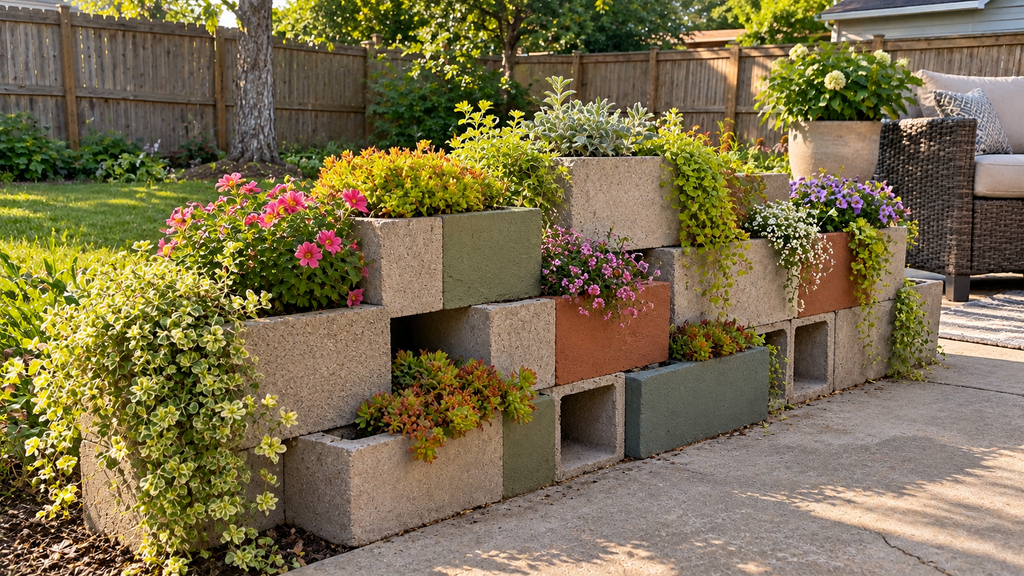
9. Succulent Pocket Planter
Succulents pair naturally with the rough appearance of cinder blocks.
Use a staggered layout and leave some openings unplanted so the structure does not appear overcrowded.
Drainage is especially important. Gravel alone will not fix a block cell that cannot release excess water.
Choose succulent varieties that are appropriate for your climate.
10. Painted Cinder Block Planter
Paint can turn plain blocks into a more intentional garden feature.
A single solid color, two repeating tones, or a simple geometric pattern usually looks cleaner than many unrelated colors.
Use a product designed for exterior masonry and follow its surface-preparation and curing instructions.
If edible plants are involved, check that the coating is appropriate for the intended application.
11. Raw Concrete Planter
Unfinished concrete works well in modern and minimalist backyards.
Combine it with gravel, timber, steel edging, paving, ornamental grasses, or repeated foliage.
Keep the overall layout simple. A clean rectangular bed often looks more cohesive than several unrelated block towers.
12. Layered Flower Planter
Arrange flowering plants by mature height rather than color alone.
Place taller plants toward the rear or center, medium-height flowers through the middle, compact plants in selected cells, and trailing plants near suitable edges.
Repeating several varieties creates a more unified design and can also simplify watering.
Functional Cinder Block Planter Ideas
13. L-Shaped Patio Planter
An L-shaped planter can define a patio corner without enclosing the main seating area.
Before filling it, check chair movement, gates, doors, barbecue access, hose routes, and walking paths.
Use taller plants along the outer boundary and compact plants near seating areas.
If the empty layout already restricts movement, reduce its footprint.
14. Low Privacy Planter
A low cinder block planter can improve privacy by raising the level from which screening plants grow.
Use ornamental grasses, tall flowers, narrow shrubs, or properly supported climbers to provide most of the screening.
Avoid creating unnecessary masonry height. Taller structures retain more soil and require greater attention to stability.
15. Mixed-Material Planter
Cinder blocks combine well with timber, gravel, brick, steel edging, ceramic pots, and trellises.
Repeating one of these materials elsewhere in the backyard helps the planter feel connected to the surrounding landscape.
Choose cinder blocks when durability, weight, modular construction, and geometric form are useful. Choose another material when portability, curves, or lightweight construction matter more.
Cinder Block Planters by Climate
Climate affects how cinder block planters perform.
In hot, dry areas, small cells can lose moisture quickly. In wet climates, drainage becomes more important. Strong wind can accelerate drying, while paving and exposed masonry can increase heat around small planting pockets.
In freeze-thaw climates, use masonry and exterior finishes suitable for local conditions and inspect the planter periodically for cracking or movement.
Plant selection should also be regional. A combination that performs well in one climate may struggle in very different rainfall, humidity, temperature, or winter conditions.
Best Plants for Cinder Block Planters
Choose plants according to mature size, root volume, sunlight, water requirements, and climate.
Block cells are better suited to thyme, chives, oregano, small annual flowers, sedums, sempervivums, and suitable trailing plants.
The central bed provides more space for tomatoes, peppers, beans, cucumbers, leafy greens, and larger flowering plants.
Do not choose a plant simply because the young plant fits inside the opening. Mature root space matters more.
Cinder Block Planter Size and Depth
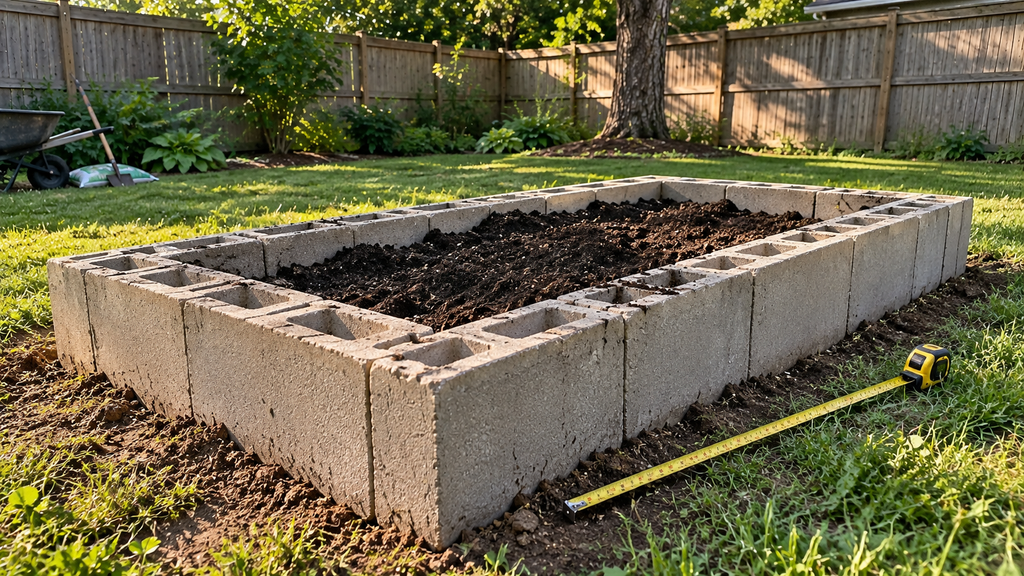
Measure the backyard and the actual blocks before buying materials.
A common U.S. concrete masonry unit is nominally about 8 × 8 × 16 inches, although actual dimensions are slightly smaller and sizes vary by manufacturer and country.
Beds accessible from both sides can generally be around three to four feet wide. One-sided beds should usually be narrower so the entire growing area remains within comfortable reach.
For open-bottom beds over suitable native soil, approximately 6 to 12 inches of raised growing depth can work for many common plants because roots can continue downward.
Beds over concrete or paving are different because the entire usable root zone must remain inside the planter. Leafy greens and smaller crops can use shallower soil than tomatoes, peppers, squash, and other larger plants.
Do not add unnecessary height. More height means more soil, more weight, higher cost, and greater structural demands.
How Many Cinder Blocks and Soil?
Calculate materials from the actual dimensions of the planter.
For an approximate block count:
Planter perimeter ÷ actual block length
Adjust for corners, block orientation, extra courses, and intentional gaps.
For the central soil volume:
Inside length × inside width × soil depth
Use internal growing dimensions rather than the outside dimensions of the completed planter.
Calculate soil for planted block cells separately.
Dry-laying the first course before ordering soil provides a more accurate measurement of the final growing area.
Cinder Block Planter Cost
The cost of a cinder block planter depends on its size, local block prices, soil volume, delivery, base preparation, plants, and optional finishes.
Use this basic calculation:
Block quantity × local block price + soil + delivery + base materials + optional finishes
Paint, irrigation, drainage work, leveling, or replacing unsuitable reclaimed blocks can increase the final cost.
A universal price is not very useful because masonry and bulk-soil prices vary significantly by location.
Calculate your quantities first, then use local prices.
Do Cinder Block Planters Need Mortar?
Not every cinder block planter needs mortar or adhesive.
A simple one-course bed on a firm, level base is different from a tall structure retaining a large volume of soil.
Dry-laid low designs are easier to adjust or remove later.
As the planter becomes taller, soil pressure, alignment, drainage, joint layout, and stability become more important.
Do not treat a tall retaining structure as an enlarged version of a simple garden bed. If a design is tall, built on a slope, or could create a safety risk if it moved, use appropriate structural guidance.
24-Hour Cinder Block Planter Test
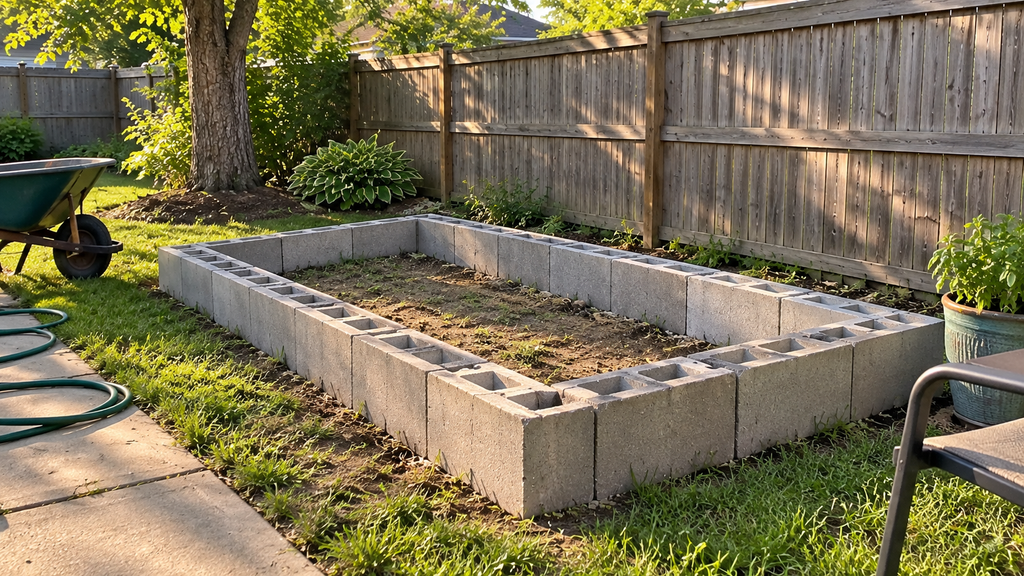
Before adding soil, build the empty footprint and leave it in place for a day.
Use the backyard normally and check whether every planting area can be reached comfortably.
Make sure gates open, chairs move freely, the hose reaches, a wheelbarrow can pass, and nearby fences or utilities remain accessible.
Observe sunlight and check whether water collects around the base.
Also consider whether the planter blocks an important view or makes a walking route feel narrow.
If the empty structure already feels inconvenient, change it before adding soil.
This simple test can prevent a much larger problem later.
How to Build a Cinder Block Planter
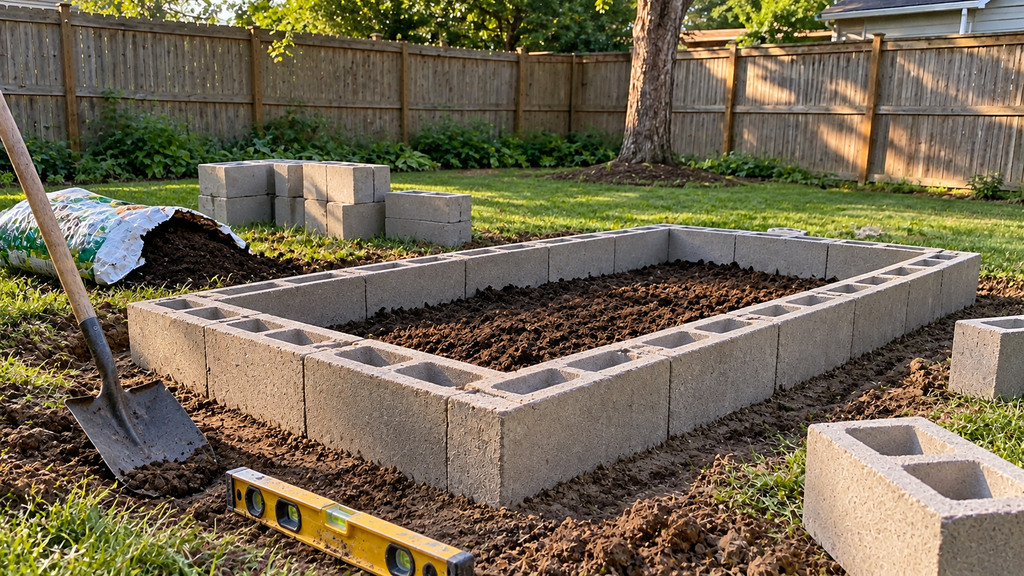
Start by deciding what the planter will grow and measuring the available space.
Prepare a firm, level base and dry-lay the complete first course.
Check access, sunlight, drainage, paths, gates, and nearby structures before filling.
For multi-course designs, arrange the blocks carefully and avoid unnecessary height.
If growing medium could fall through an exposed block cell, use a permeable support that retains the soil without blocking drainage.
Use suitable raised-bed soil in the main growing area and an appropriate container-style mix in isolated cells.
After filling and watering, check for pooling water, soil washing out, leaning blocks, uneven settlement, or poor drainage.
Correct these issues before plants become established.
Are Cinder Blocks Safe for Vegetables?
Modern products commonly called cinder blocks are generally concrete masonry units made from cement and aggregates.
For edible beds, new and intact blocks from a known manufacturer are the most sensible choice.
Avoid demolition debris, blocks previously exposed to chemicals, masonry from potentially contaminated areas, and salvaged blocks of unknown origin.
The existing ground soil also matters. Areas near old structures, heavy traffic, industrial locations, or unknown fill may require soil testing before growing food.
If you cannot verify the history of reclaimed blocks, use new material or another raised-bed frame.
Cinder Block Planters on Concrete or Decks
A cinder block planter can sit on ground-level concrete or paving if it provides enough soil depth and has a reliable drainage route.
Because roots cannot continue into native soil, plants in these beds depend entirely on the soil and moisture inside the planter.
Decks, balconies, and rooftops require more caution.
Cinder blocks are heavy before soil is added. Wet growing medium, plants, and irrigation water increase the total load significantly.
Do not place a large masonry planter on an elevated structure unless you know the structure can safely support it.
When weight is a concern, use a lighter container system.
When to Avoid Cinder Block Planters
Cinder blocks are not ideal for every backyard.
Consider another material when portability is important, the planter needs to remain temporary, weight is a concern, curved forms are required, or the site cannot provide a stable base.
Avoid tall vertical arrangements where wind, watering access, or structural stability creates problems.
Do not build along a fence if the planter prevents future repairs or blocks drainage, utilities, or irrigation.
The best planter material is the one that solves the actual gardening problem.
Cinder Block Planter Problems and Fixes
Soil Falls Out of the Cells
Use a permeable support underneath exposed cells. It should hold the growing medium while allowing excess water to drain.
Blocks Start Leaning
An uneven or settling base is often the cause. Correct the base instead of hiding movement with extra soil.
Block Cells Dry Too Quickly
Small soil volume, direct sun, and wind can accelerate drying. Check these cells separately and choose plants suited to compact root zones.
Central Bed Stays Too Wet
Check for poor drainage, compacted soil underneath the planter, or impermeable material blocking water movement.
The Bed Is Difficult to Reach
The planter may be too wide. Reduce the width or improve access so the center can be reached without stepping on the soil.
The Planter Looks Cluttered
Reduce the number of plant varieties, colors, block directions, and decorative materials. Repeating a few elements usually creates a cleaner result.
Cinder Block Planter FAQs
Do cinder block planters need drainage?
Yes. Both the main bed and planted block holes need a route for excess water to escape. Poor drainage can cause waterlogged soil and root problems.
Should I line a cinder block planter?
Usually not completely. Use permeable material only where necessary to retain soil inside exposed cells while still allowing drainage.
What can I plant in cinder block holes?
Compact herbs, small flowers, succulents, and trailing plants work best. Thyme, chives, oregano, sedums, and small annual flowers are useful choices.
Do plants in cinder block holes need more water?
Often, yes. Small cells contain less soil and can dry faster than the central bed, especially in sunny or windy locations.
What is the best soil for a cinder block planter?
Use a quality raised-bed mix in the main growing area and a lighter container-style mix in isolated cells. Avoid dense soil that compacts easily.
Should every cinder block hole be planted?
No. Planting selected cells reduces maintenance and often creates a cleaner design while reserving the limited root space for suitable plants.
Can you paint cinder block planters?
Yes. Use an exterior masonry coating and follow the manufacturer’s preparation and curing instructions.
Do cinder blocks make soil too hot?
They can contribute to warmer conditions in strong sun, particularly in small cells. Monitor moisture more closely during hot weather.
Can cinder block planters stay outside in winter?
Yes, when the masonry, drainage, base, and finishes are suitable for local conditions. Check for cracking or movement after severe freeze-thaw weather.
Are cinder blocks better than wood for raised beds?
Cinder blocks are durable and rot-resistant, while wood is lighter and easier to cut or move. The better choice depends on permanence, weight, appearance, and budget.
Best Cinder Block Planter for Most Backyards
For most homeowners who want a simple DIY design, a low one-course cinder block raised bed offers the best balance of stability, growing space, cost, drainage, and maintenance.
Use the central bed for vegetables and other plants needing substantial root space. Use selected perimeter cells for compact herbs, flowers, succulents, or trailing plants.
Before building, decide what you want to grow, measure the location, check sunlight and drainage, determine the required growing depth, dry-lay the blocks, test access, and calculate your material requirements.
Avoid unnecessary height and decorative complexity until the basic layout works.
The most successful cinder block planter is not the tallest or most complicated design. It is the one that fits the backyard, gives plants enough root space, drains properly, remains stable, and stays easy to maintain through multiple growing seasons.
21 Outdoor Succulent Planter Ideas for Patios, Porches and Yards
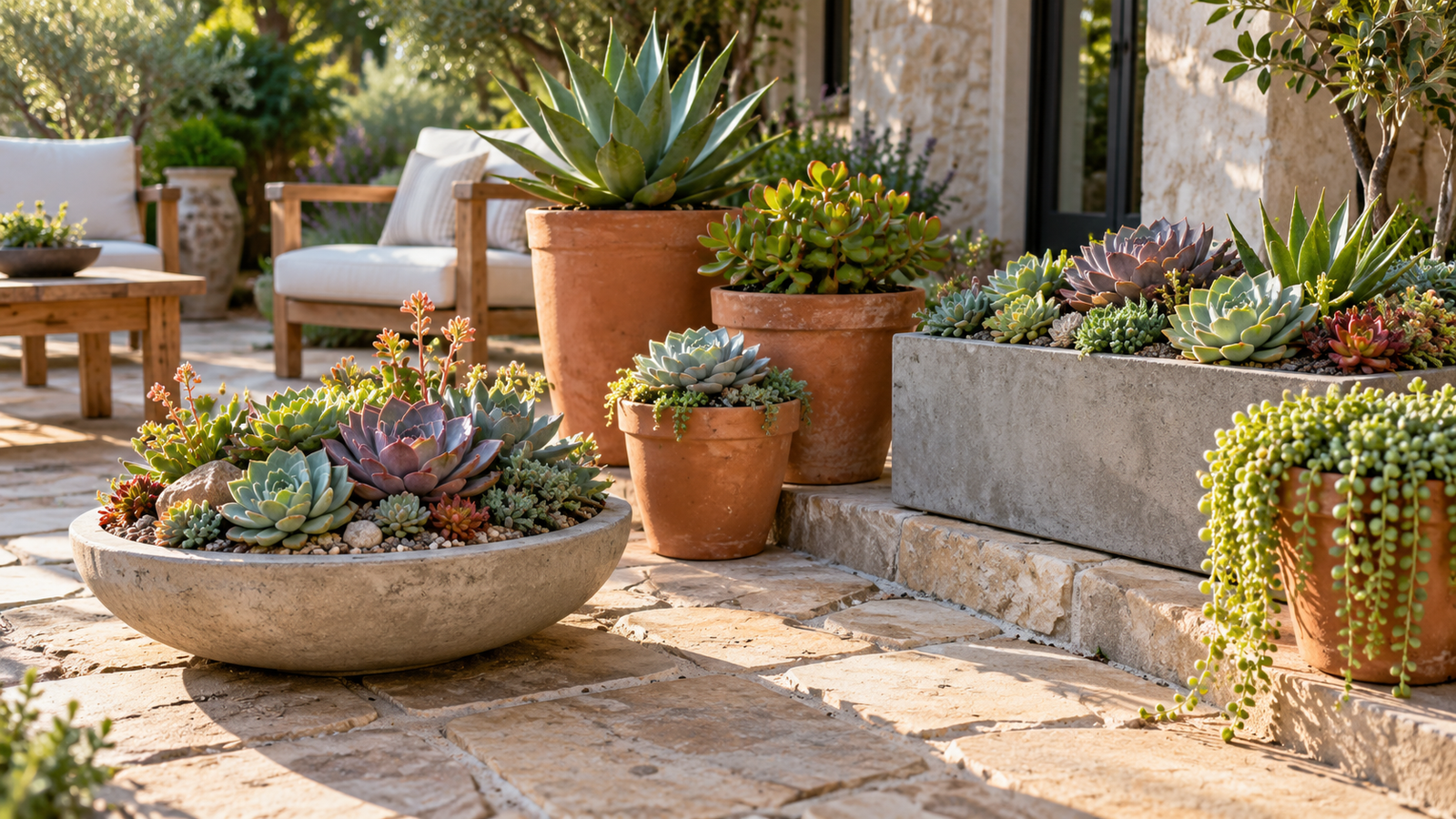
Outdoor succulent planter ideas include mixed rosette bowls, terracotta groups, concrete troughs, vertical wall displays, and hanging baskets. Choose each design according to sunlight, rain exposure, drainage, and winter conditions. Explore 21 practical options, then use the planting and care...
Backyard Plant Bed Ideas: 21 Layouts for Every Yard
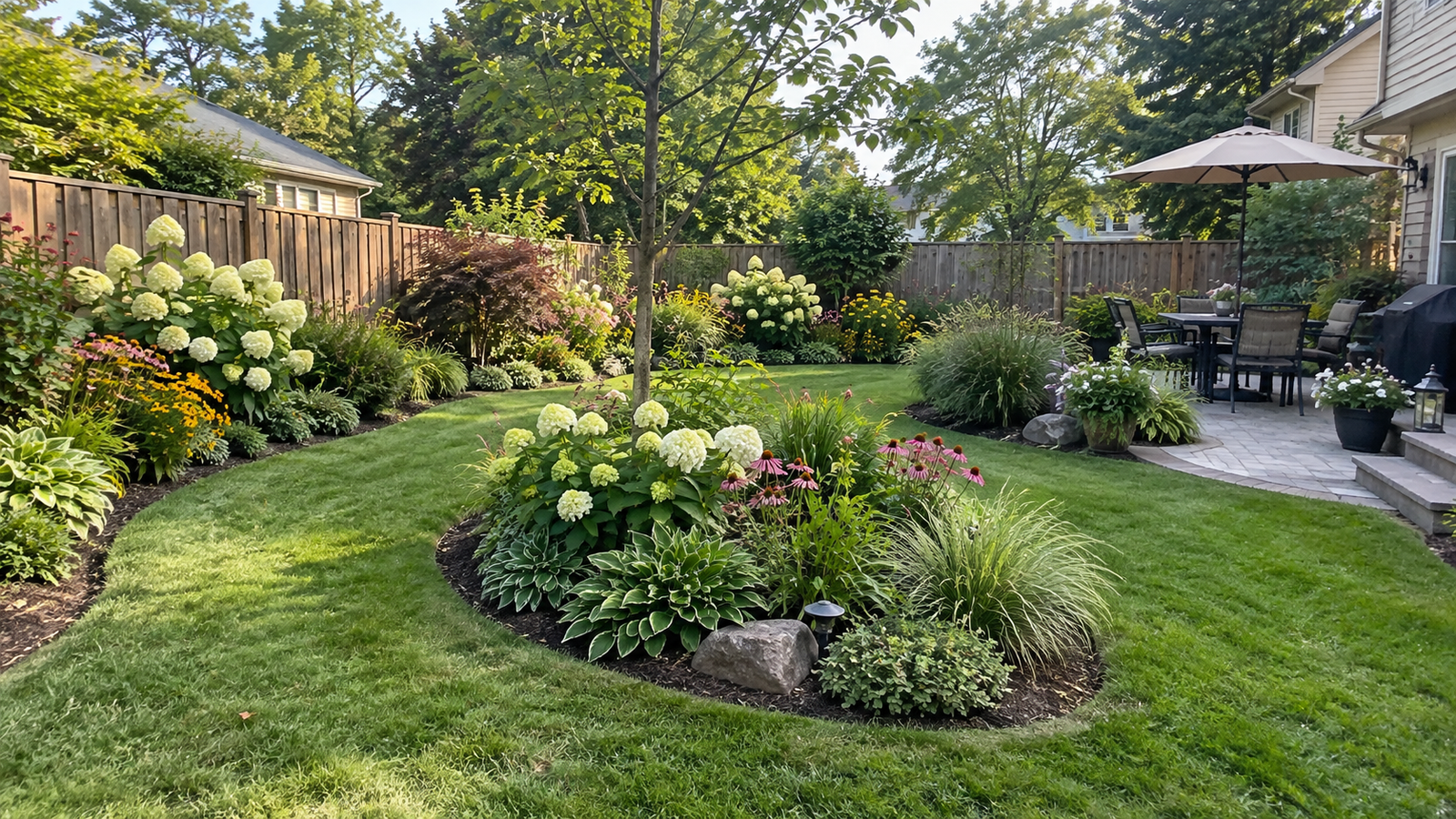
The best backyard plant bed ideas preserve usable space while adding structure and color. Border beds frame lawns, island beds create focal points, fence beds offer screening, curved beds soften straight edges, and raised beds organize growing areas. Choose according...
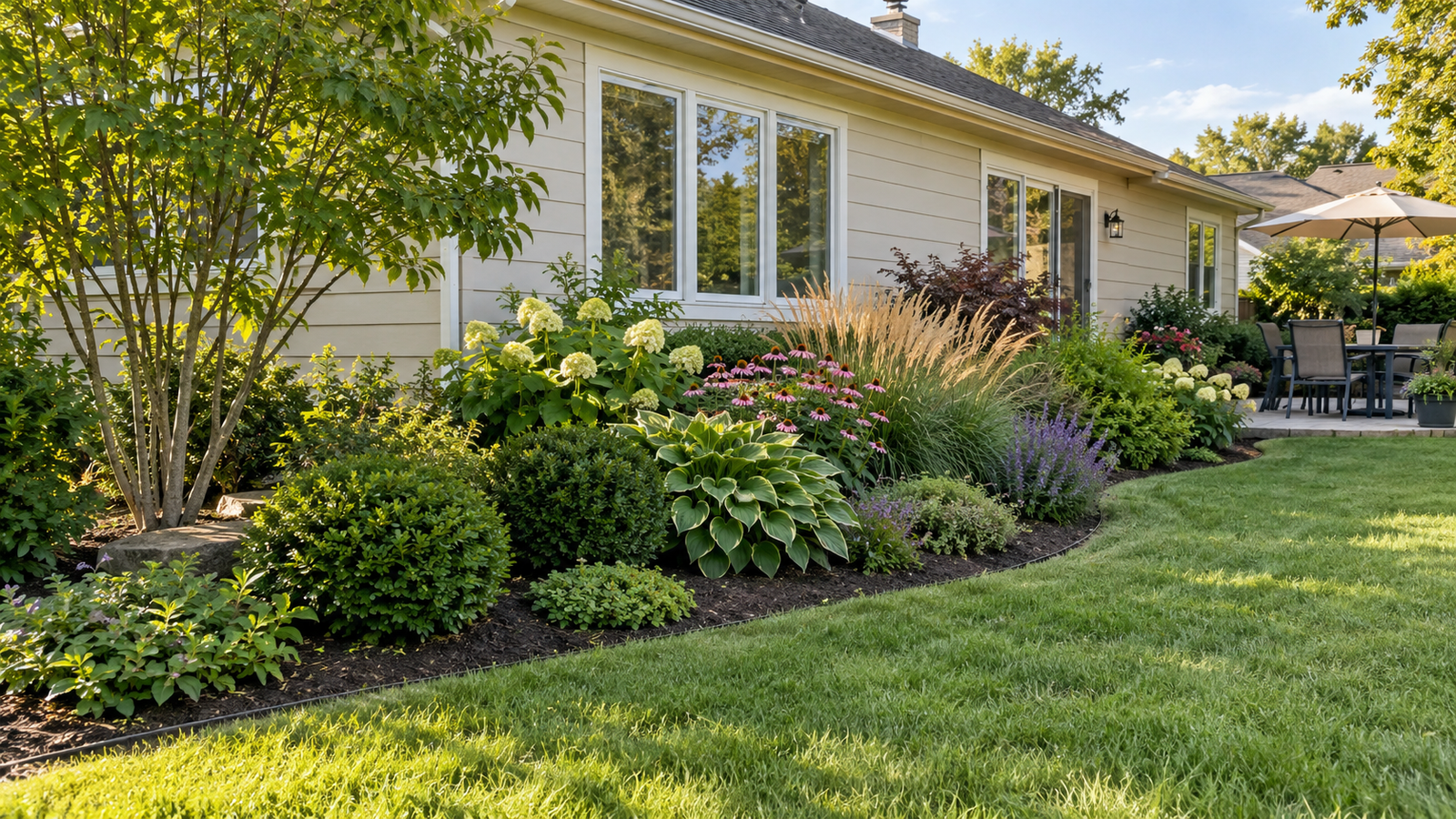
Backyard Foundation Planting Ideas: 21 Ways to Plant Along Your House
The best backyard foundation planting ideas use compact shrubs, flowering perennials, grasses, and groundcovers to soften exterior walls without obstructing windows, drainage, or access. Choose a layout that fits the available bed depth, then select plants for their mature size,...
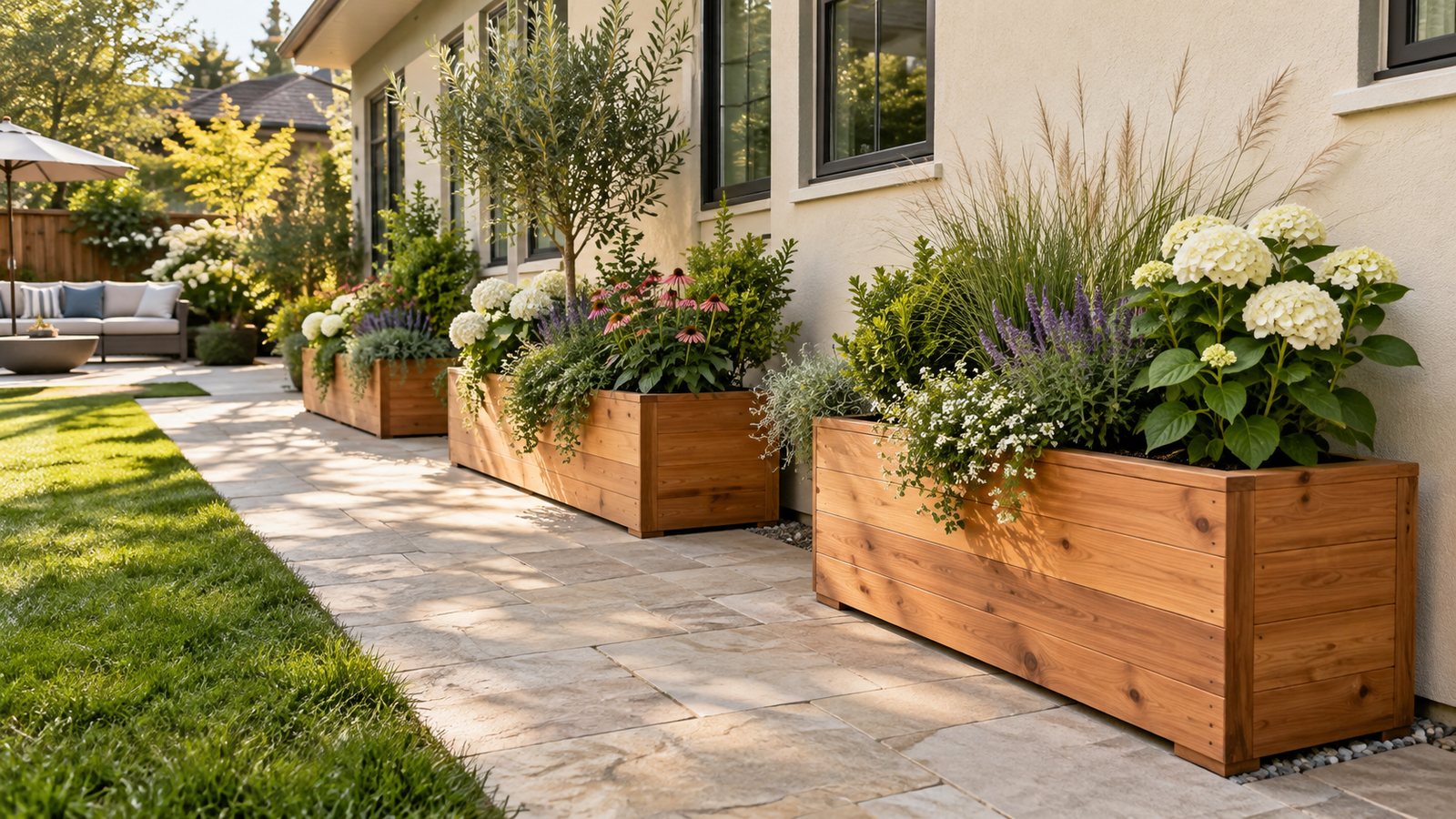
Backyard Planter Box Along House Ideas: 17 Practical Designs
The best backyard planter box along house ideas combine attractive planting with safe, practical placement. Freestanding troughs, cedar boxes, low window planters, and trellis containers can transform a plain wall without blocking access or trapping moisture. Choose a design that...
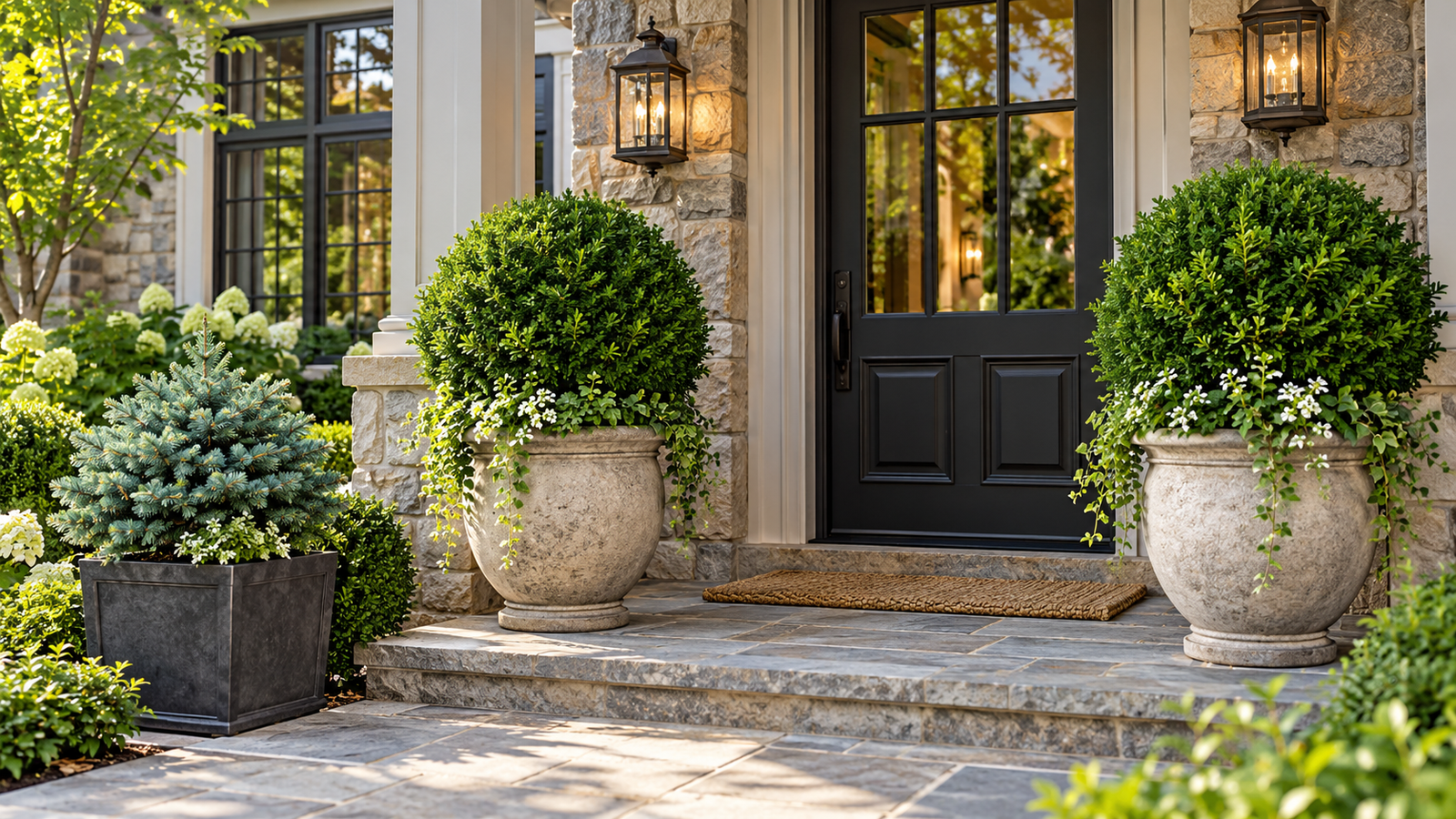
Evergreen Planter Ideas for Beautiful Outdoor Spaces Year-Round
Evergreen planter ideas bring lasting color, shape, and structure to front doors, patios, porches, and balconies. From paired entrance shrubs to low-growing junipers and decorative dwarf conifers, the right arrangement can make an outdoor space feel finished even when seasonal...
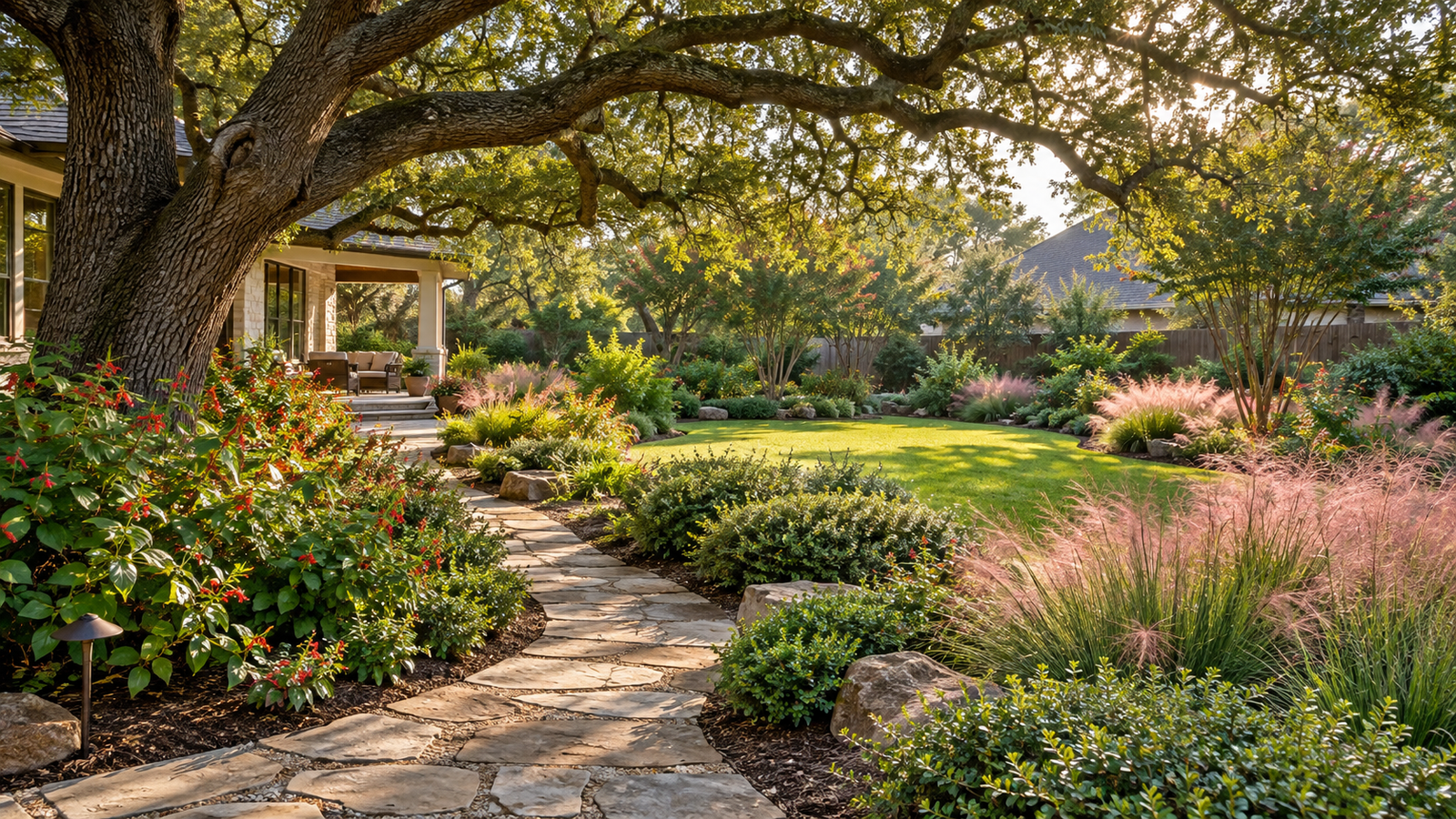
Houston Backyard Plant Ideas for Sun, Shade, Privacy, and More
The best Houston backyard plant ideas combine heat-tolerant flowers, dependable evergreen shrubs, shade-friendly natives, and plants matched to local soil. Yaupon holly provides structure, southern wax myrtle creates privacy, Turk’s cap flowers in partial shade, and Gulf muhly adds texture....
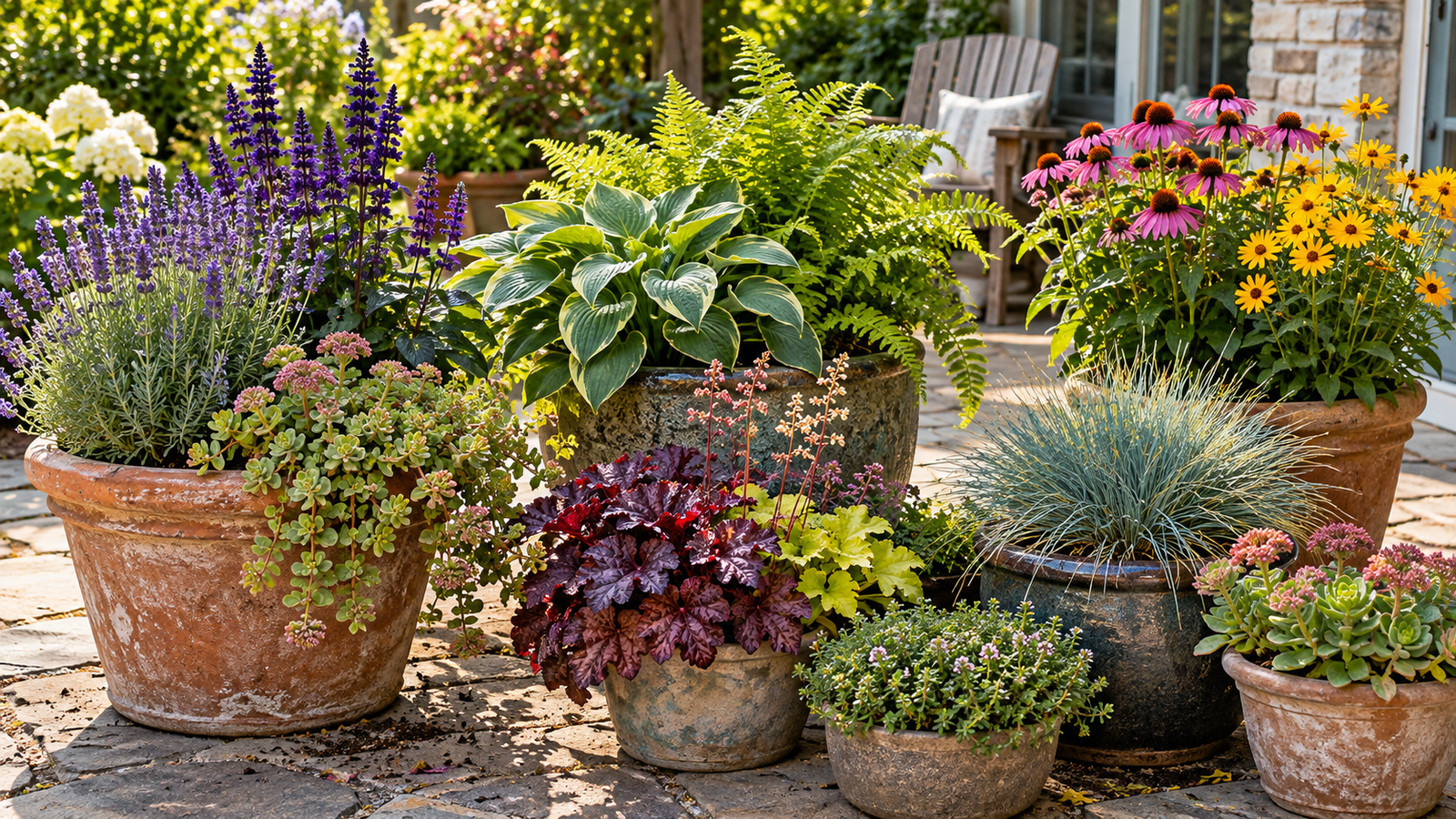
Perennial Planter Ideas
Perennial planter ideas work best when plants share the same sunlight, moisture, drainage, and growing-space requirements. Choose suitable plants and containers, and a display can return for several years with less seasonal replanting.
The secret is planning for mature growth rather...
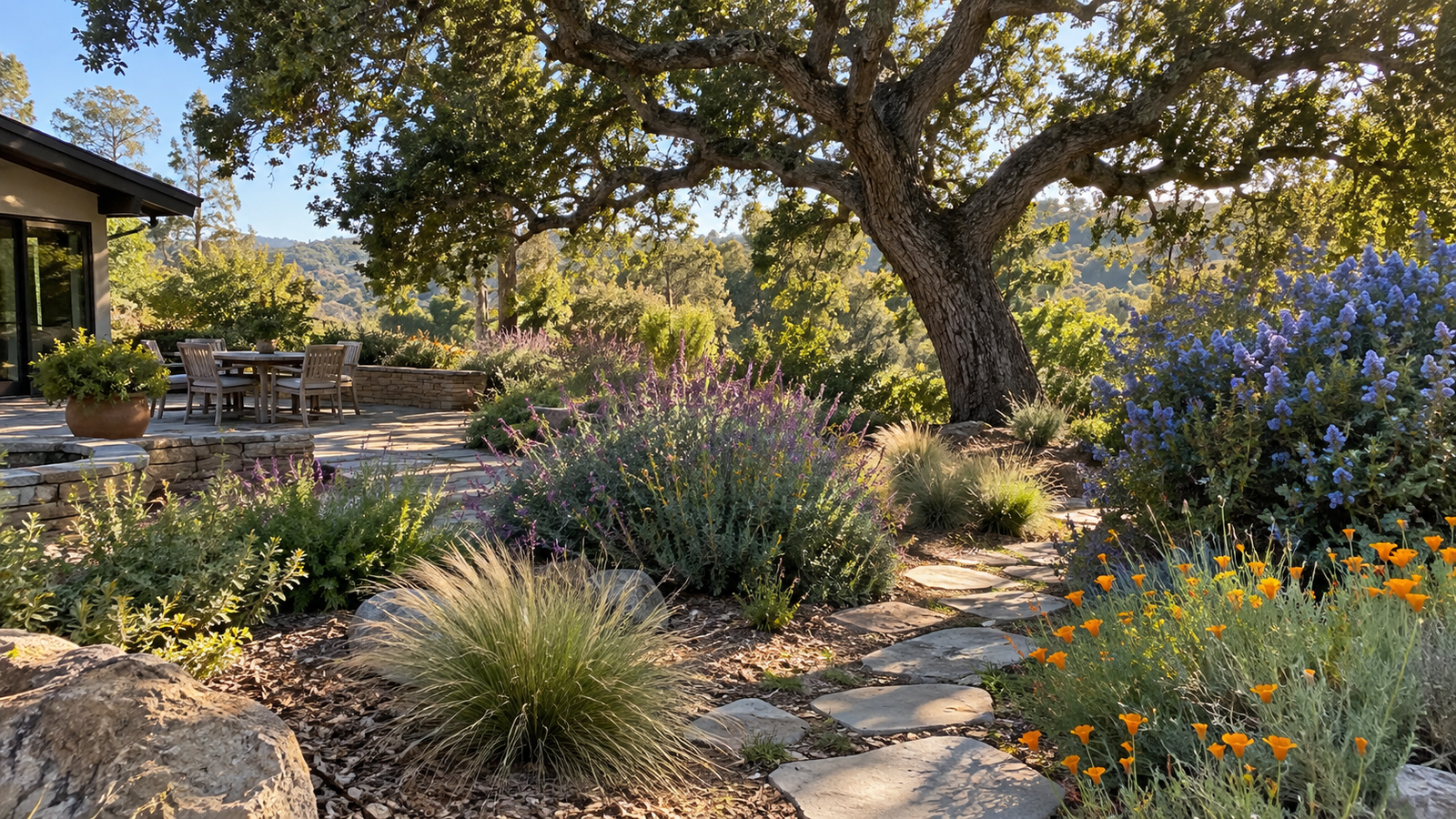
California Backyard Plant Ideas: 25 Water-Wise Choices
The best California backyard plants suit your local climate, soil, sunlight, and available water. Coast live oak, toyon, ceanothus, California fuchsia, deer grass, and native salvias can create attractive, functional landscapes where conditions match their needs. Group plants by water...
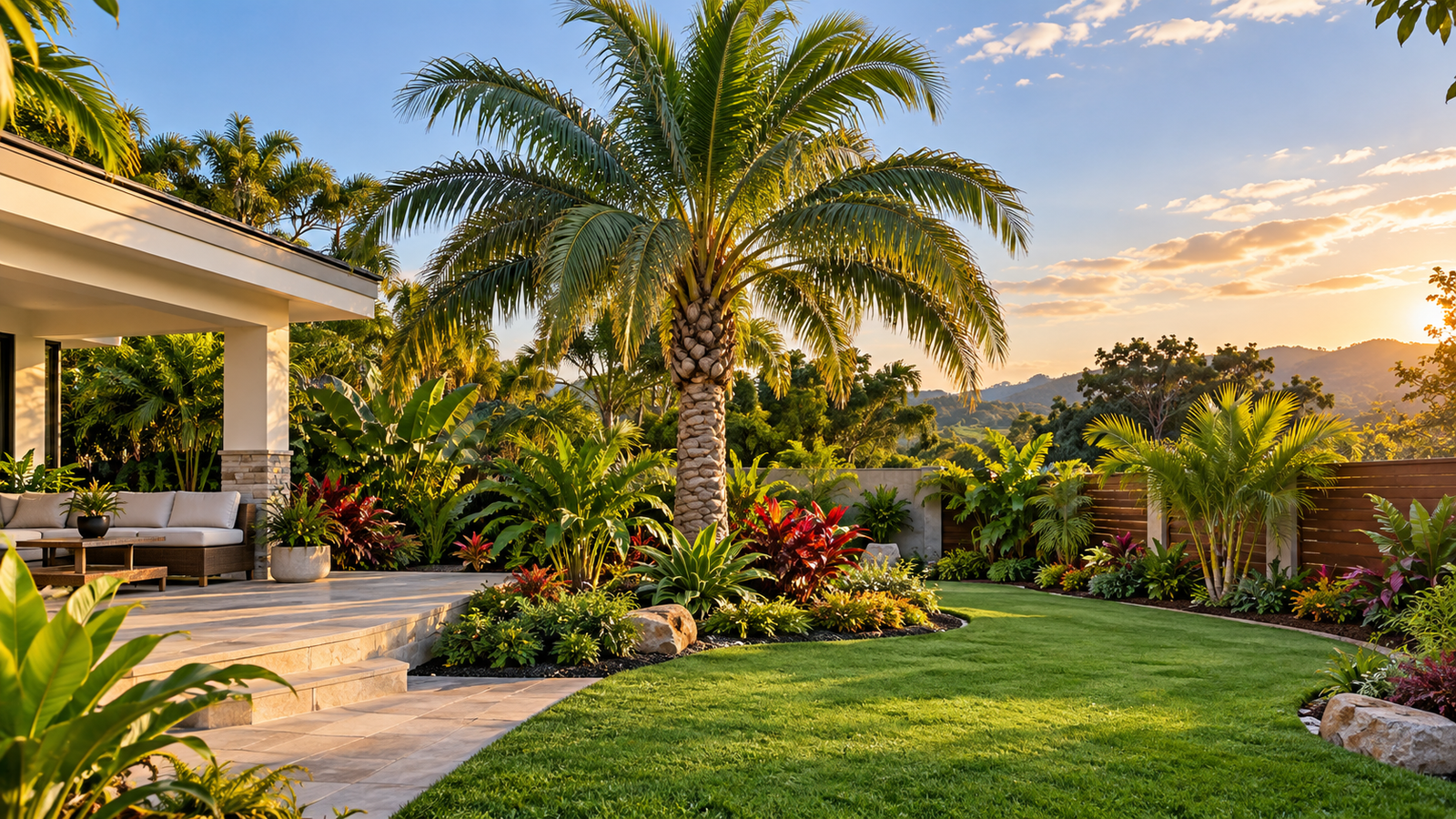
Palm Plant Ideas for Backyards: A Climate-Smart Planning Guide
Palm plant ideas for backyards work best when the palm matches your climate, mature space, sunlight, drainage, and landscape goal. Choose compact palms for small yards, clustering palms for privacy, container palms for flexibility, and solitary palms when you want...
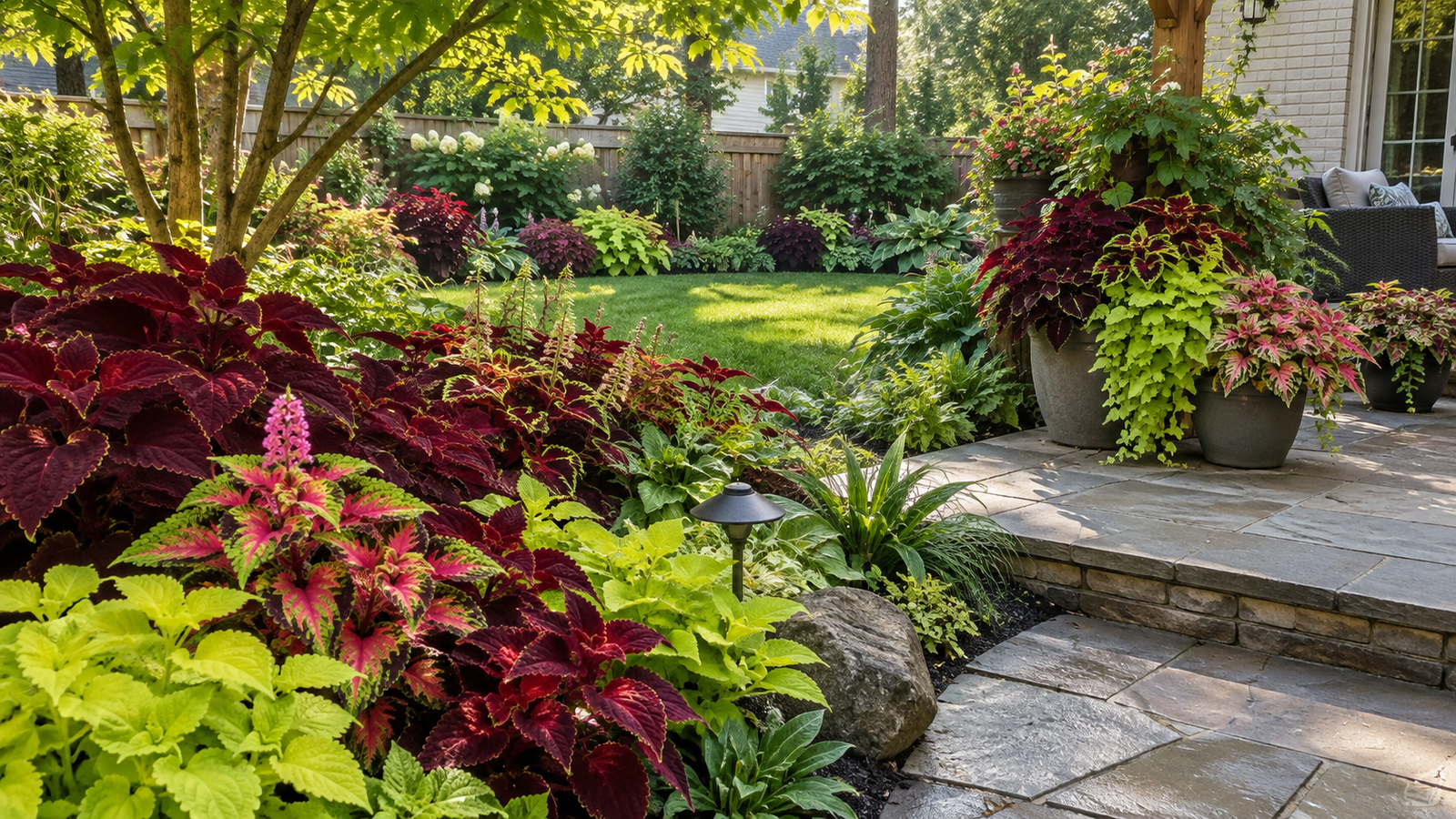
Backyard Planting Ideas With Coleus
Backyard planting ideas with coleus include layered shade borders, mass plantings, pathway edging, patio pots, tropical foliage beds, under-tree containers, and burgundy or lime focal plants. Match the cultivar's mature size, growth habit, and light tolerance to the site first,...