

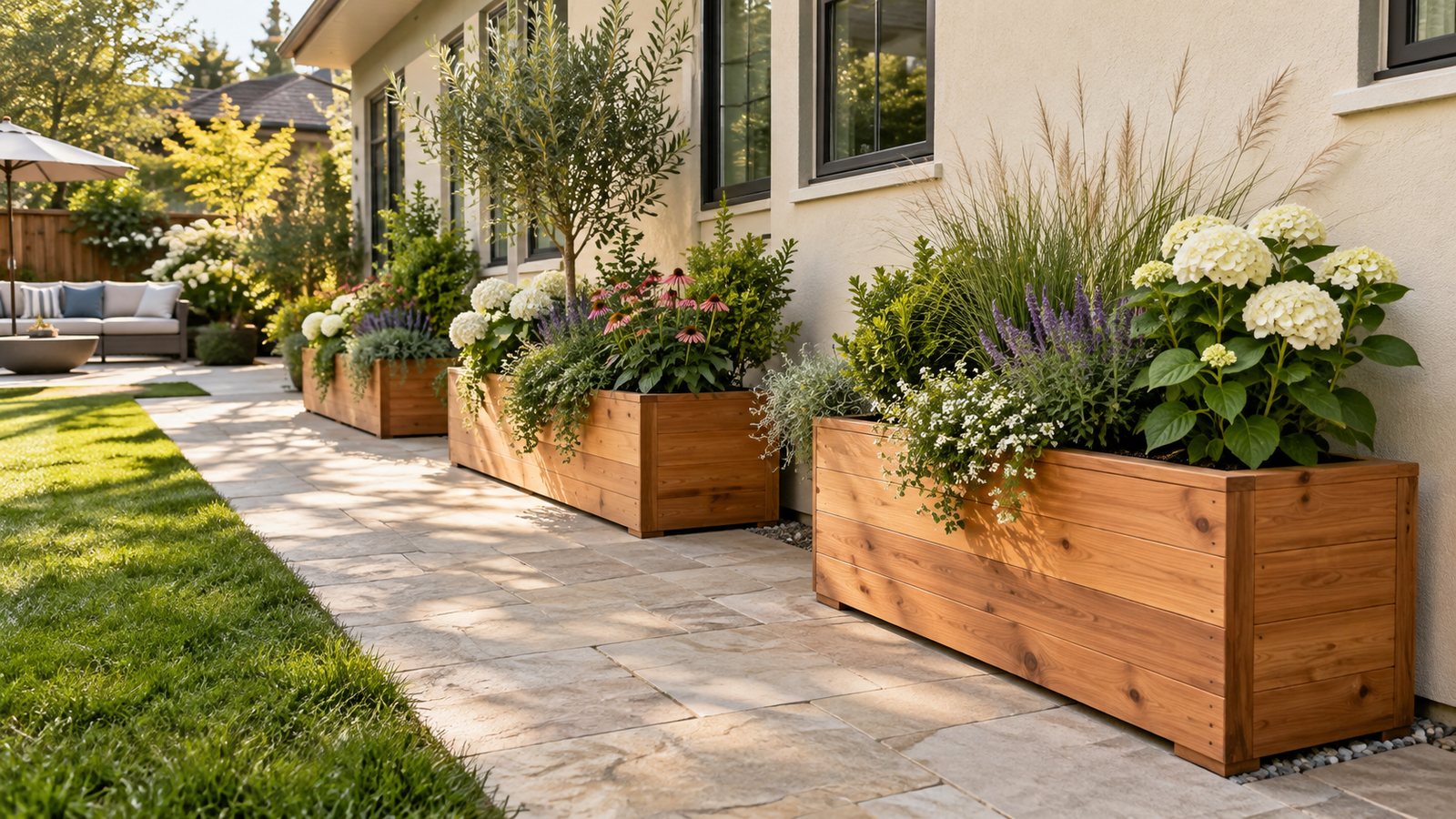
The best backyard planter box along house ideas combine attractive planting with safe, practical placement. Freestanding troughs, cedar boxes, low window planters, and trellis containers can transform a plain wall without blocking access or trapping moisture. Choose a design that suits the available space, sunlight, drainage, and mature size of your plants. Unlike permanent foundation beds, independent planter boxes let you control the growing medium, replace plants, and adjust the layout later.
Start with the house itself: note windows, vents, downspouts, doors, taps, and areas that need inspection.
Which Planter Design Fits Your House?
Match the container to the main constraint beside your house. Low boxes belong beneath windows, narrow troughs suit walkways, and taller planters add interest to uninterrupted walls.
| House or Yard Condition | Suitable Design | Check First |
|---|---|---|
| Narrow side yard | Slim rectangular trough | Clear walking width |
| Window above | Low flowering planter | Finished plant height |
| Blank wall | Tall or trellis planter | Stability and wind |
| Modern exterior | Metal or composite boxes | Heat and finish |
| Traditional exterior | Cedar planter boxes | Timber upkeep |
| Hot, exposed wall | Larger or self-watering box | Soil moisture |
| Shaded location | Foliage planter | Actual daylight |
| Sloping ground | Separate stepped boxes | Level support and runoff |
| Utility area | Lightweight movable box | Service access |
Measure before choosing a style. Your planning order should be wall access → planter dimensions → drainage → material → plants.
Which Backyard Planter Box Along House Ideas Work?
These 17 designs cover narrow paths, windows, patios, corners, and larger backyard walls. Treat each as a layout idea to adapt to your house rather than a fixed installation formula.
1. Use a Long Narrow Planter in a Tight Side Yard
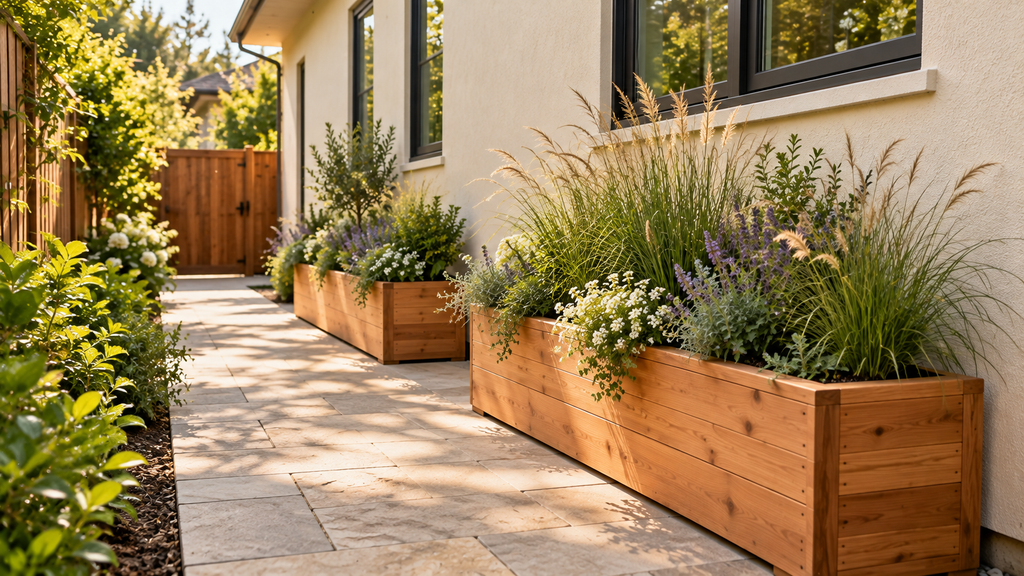
A slim rectangular planter adds a defined green edge without using much floor space. It suits paved side passages and garages. Plant compact grasses, small flowering perennials, or herbs that do not spread far beyond the rim. Two matching troughs are usually more manageable than one wall-length box: you can move them individually to inspect siding or clean paving.
2. Place a Low Planter Beneath a Window
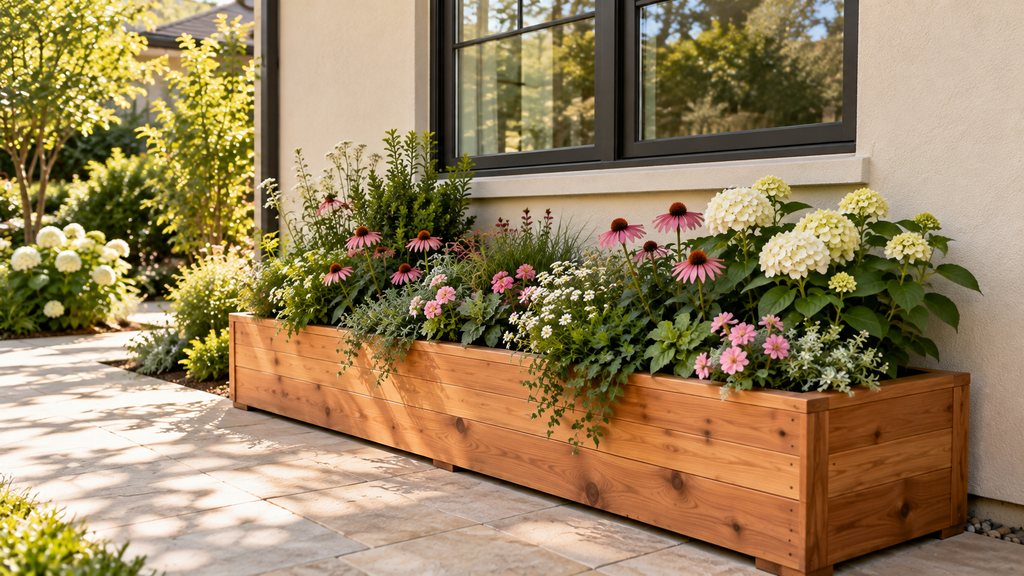
A low box frames a window with flowers or foliage while protecting natural light and access. Compact flowers and herbs help preserve window access. Calculate planter height + mature plant height before buying. Allow extra room for opening the window, washing glass, and maintaining trim.
3. Use a Tall Planter Beside a Blank Wall
Tall containers give a plain wall vertical structure even when the plants themselves are modest in size. Avoid combining a narrow, top-heavy container with tall plants in a windy corner. Check base width, loaded weight, and root volume. Leave a usable gap behind the planter so you can inspect the wall for debris, dampness, or damage.
4. Create a Row of Cedar Planter Boxes
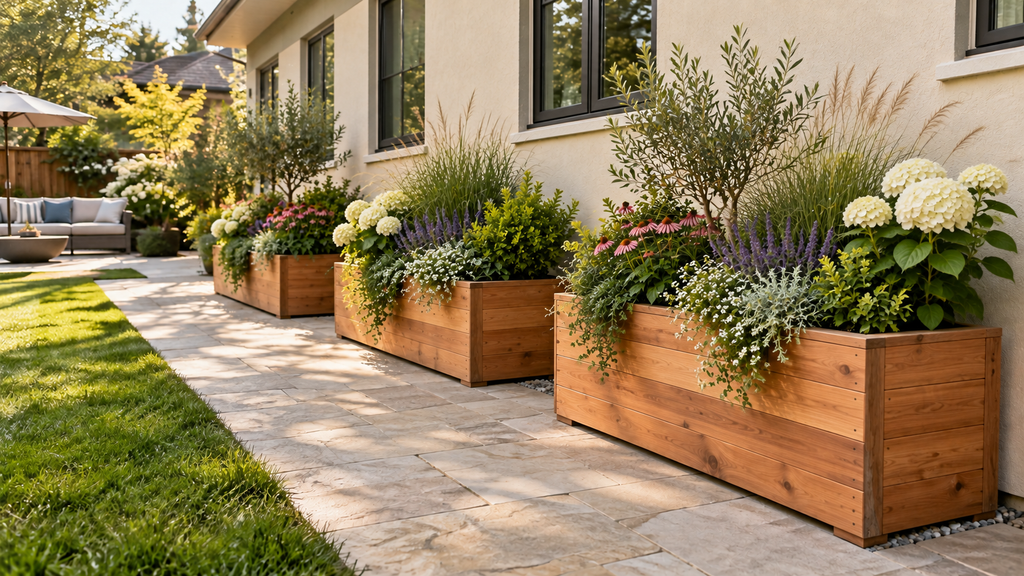
Cedar planters bring a warm, natural look to brick, stone, and painted siding. Choose similar heights and finishes, then vary the planting slightly for texture. Small gaps between boxes make cleaning and drainage inspection easier. Timber still weathers outdoors, so check fasteners, corners, and any protective finish periodically.
5. Use Slim Metal Planters for a Modern Look
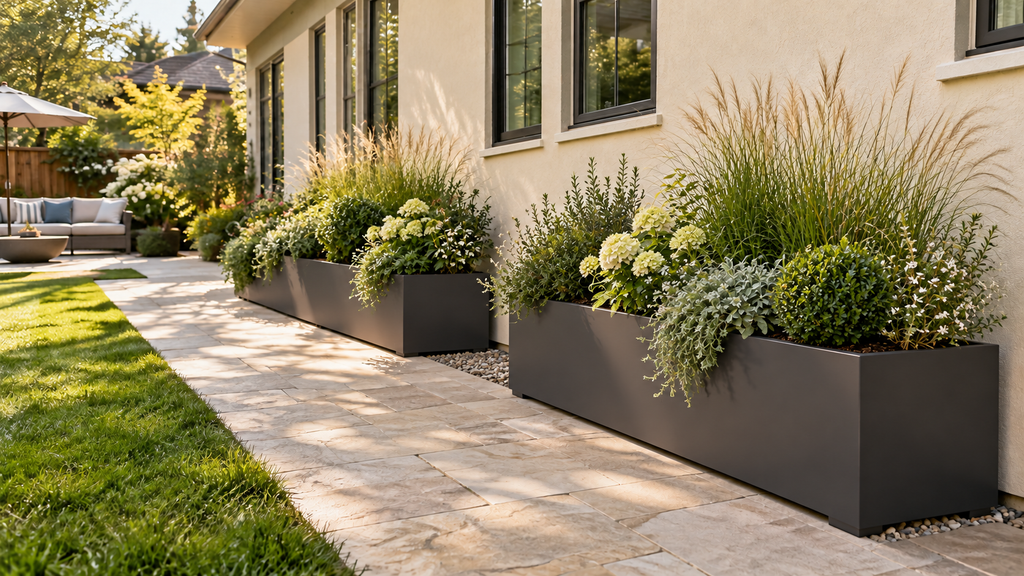
Metal troughs create clean lines beside concrete paving, light stucco, and contemporary siding. Look for outdoor-rated finishes, reliable drainage, and a base that remains stable when filled. Dark metal exposed to strong afternoon sun can heat the growing medium, so monitor moisture and root-zone conditions.
6. Add a Trellis Planter Beside a Blank Wall
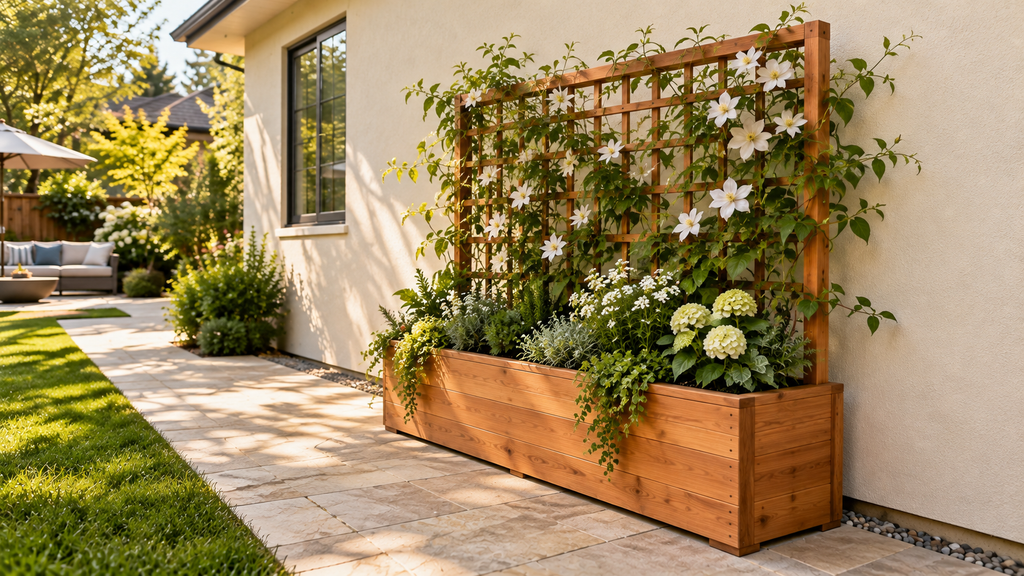
A freestanding trellis brings vines and privacy planting upward without requiring climbers to attach to the building. Select a climbing plant appropriate for your climate, container volume, and light exposure. The trellis must handle mature plant weight and wind; do not assume a lightweight decorative panel is sufficient. Keep growth away from windows, ventilation openings, gutters, and downspouts.
7. Build an Herb Planter Near the Back Door
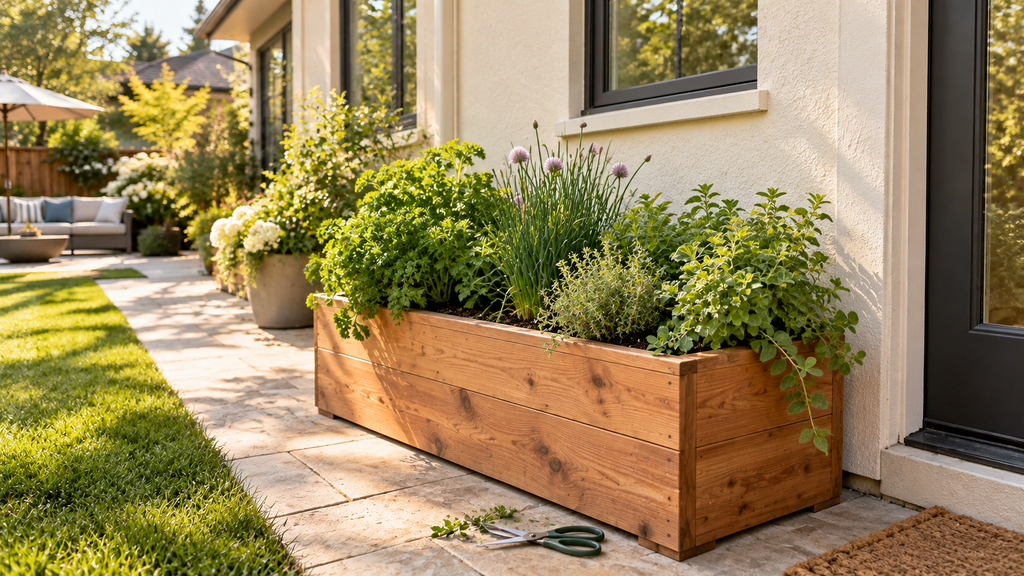
A box near the kitchen entrance makes harvesting easy and keeps frequently used herbs close at hand. Parsley with chives, or thyme with oregano, can be sensible combinations where their growing needs align. Keep herbs with different moisture preferences in separate boxes rather than forcing them into one watering schedule.
8. Choose an Elevated Planter
An elevated box brings the planting surface closer to working height, making harvesting, deadheading, and replanting less awkward. Check the manufacturer’s load rating or the strength of the supporting frame. Position the legs on firm, level ground and keep the space beneath accessible for cleaning.
9. Use a Self-Watering Planter on a Hot Wall
A self-watering container stores water in a reservoir and can help plants cope with dry spells or rain-sheltered locations. Confirm that the overflow has a safe outlet and does not discharge against the foundation. Choose plants compatible with the system’s moisture pattern; species that prefer very dry roots may not suit every reservoir design.
10. Put Planter Boxes on Locking Casters
Rolling boxes give you flexibility when you repaint siding, inspect utilities, or rearrange a paved patio. Use outdoor-rated casters sized for the fully loaded container, including saturated growing medium and plants. A level, firm surface is essential; wheels are unsuitable on many slopes or loose gravel areas. Lock the casters when the planter is in place.
11. Arrange Two Boxes Around an Exterior Corner
Two rectangular planters set at right angles create an L-shaped effect while remaining separate. Place a taller accent plant near a clear wall section and lower flowers along the other side. Do not hide corner downspouts, meters, or vents. Independent boxes are easier to shift for cleaning than a custom fixed L-shaped structure.
12. Use Stepped Boxes on Sloping Ground
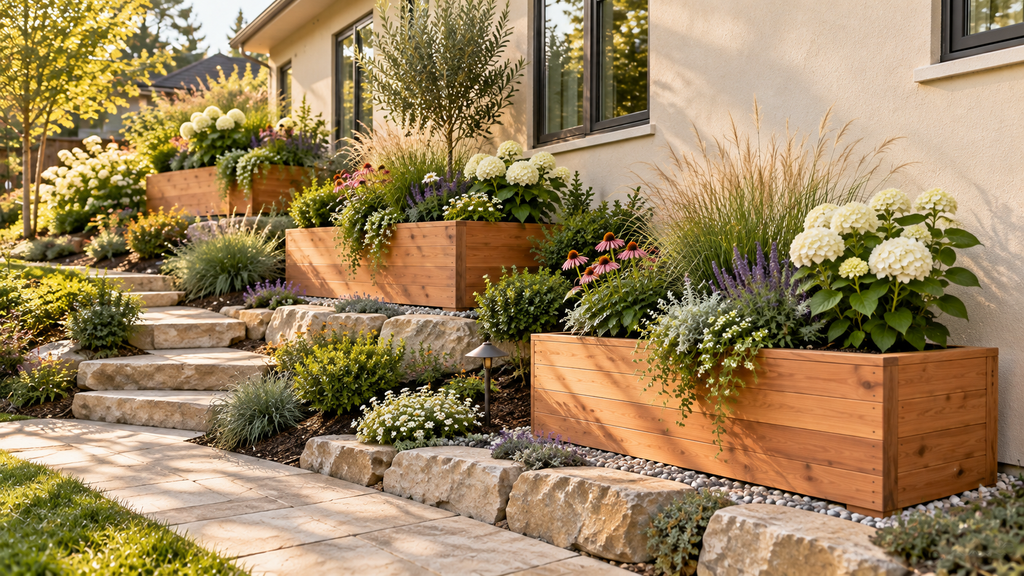
Separate level planters can follow a gentle change in ground height without requiring one long box to sit unevenly. Prepare stable supports for each container rather than wedging a box into position with loose stones. Watch where water flows during heavy rain: overflow from an upper box should not flood the one below or run toward the house.
13. Create a Pollinator Planter Strip
A row of flowering containers can welcome bees and other pollinators without converting the entire area into a garden bed. Choose locally appropriate, container-suitable plants with overlapping bloom periods. Use a few complementary species rather than crowding many plants into shallow boxes. Provide enough growing medium and water for sustained flowering.
14. Fill Long Planters With Ornamental Grasses
Grasses add movement and soften the horizontal line of a house wall. Check mature height, clump width, and root requirements before planting. Compact types work beneath windows; taller selections belong near blank wall sections. Some grasses spread vigorously or outgrow limited soil volume, so research the particular species.
15. Combine One Tall Planter With Two Lower Boxes
A tall container flanked by two shorter boxes creates a focal point without needing a long planting bed. Set the tallest element where it will not block a window or vent. Echo its finish or foliage color in the lower boxes so the group feels intentional. Keep the containers independent and allow access behind them.
16. Choose Lightweight Planters for Flexibility
Outdoor-rated resin, fiberglass, and some composite containers offer a substantial appearance without the weight of stone or concrete. Compare UV resistance, wall thickness, drainage features, and warranty details for the actual product. Lightweight does not mean windproof, and a filled container may still be heavy.
17. Create a Mixed-Height Container Border
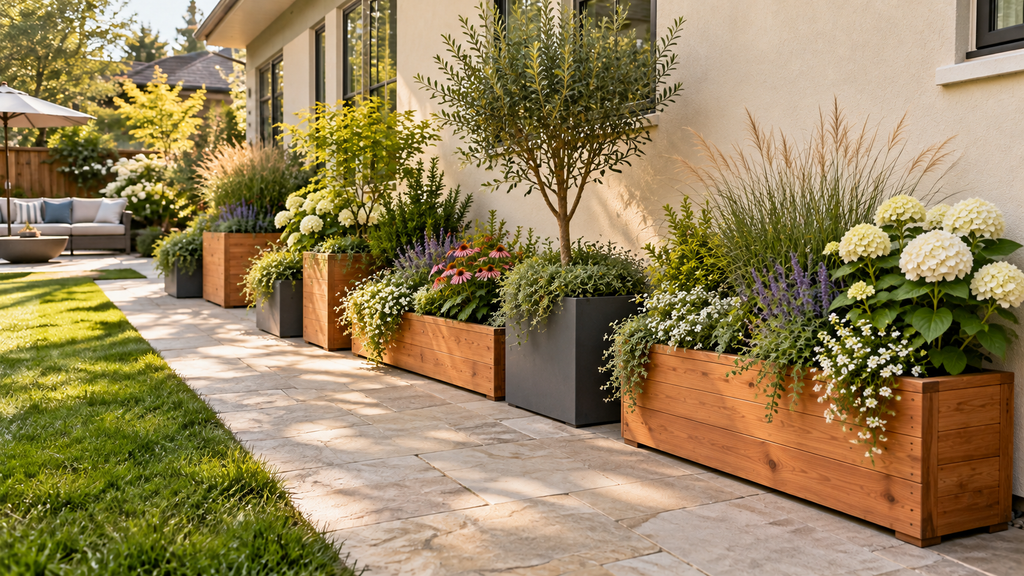
A small collection of coordinated boxes can resemble a foundation garden while retaining the flexibility of separate containers. Try tall foliage → flowering trough → herb box → flowering trough → tall foliage. Repeat a limited palette of materials and plants to keep the arrangement cohesive. Leave purposeful gaps around downspouts, windows, and inspection points.
How Far Should Planters Be From the House?
There is no universal clearance for every freestanding planter. You need enough room to inspect siding or masonry, remove trapped leaves, see where water drains, and service nearby openings. A gap of roughly 6–12 inches (15–30 cm) can be a starting layout test in some situations, not a building-code rule. Wet soil should remain inside the container. Never block brick weep holes, ventilation openings, or drainage outlets. Poorly directed overflow can contribute to moisture problems near a foundation. Preserve the building’s existing drainage strategy and follow relevant local requirements and exterior-material guidance.
What Planter Box Size Is Best?
Size planters for the roots and mature shape of your plants, as well as the room available beside the building.
| Plant Group | Illustrative Usable Soil Depth |
|---|---|
| Small annual flowers | 6–8 inches |
| Many compact herbs | 8–12 inches |
| Compact perennials | Often 10–16 inches or more |
| Ornamental grasses | Often 12–18 inches or more |
| Compact shrubs | Species-dependent; typically more root volume |
These are planning examples, not minimums for every species. Check individual requirements and the full root volume, not depth alone. For a rectangular box, multiply internal length × internal width × usable soil depth. A box measuring 48 × 12 × 12 inches internally holds 6,912 cubic inches, or 4 cubic feet (about 113 liters) of growing medium before allowing for a false bottom or reservoir. Also estimate weight: Empty container + moist growing medium + plants + retained water + accessories Decks, balconies, raised stands, and other structures may need a qualified load assessment.
How Should Planter Boxes Drain?
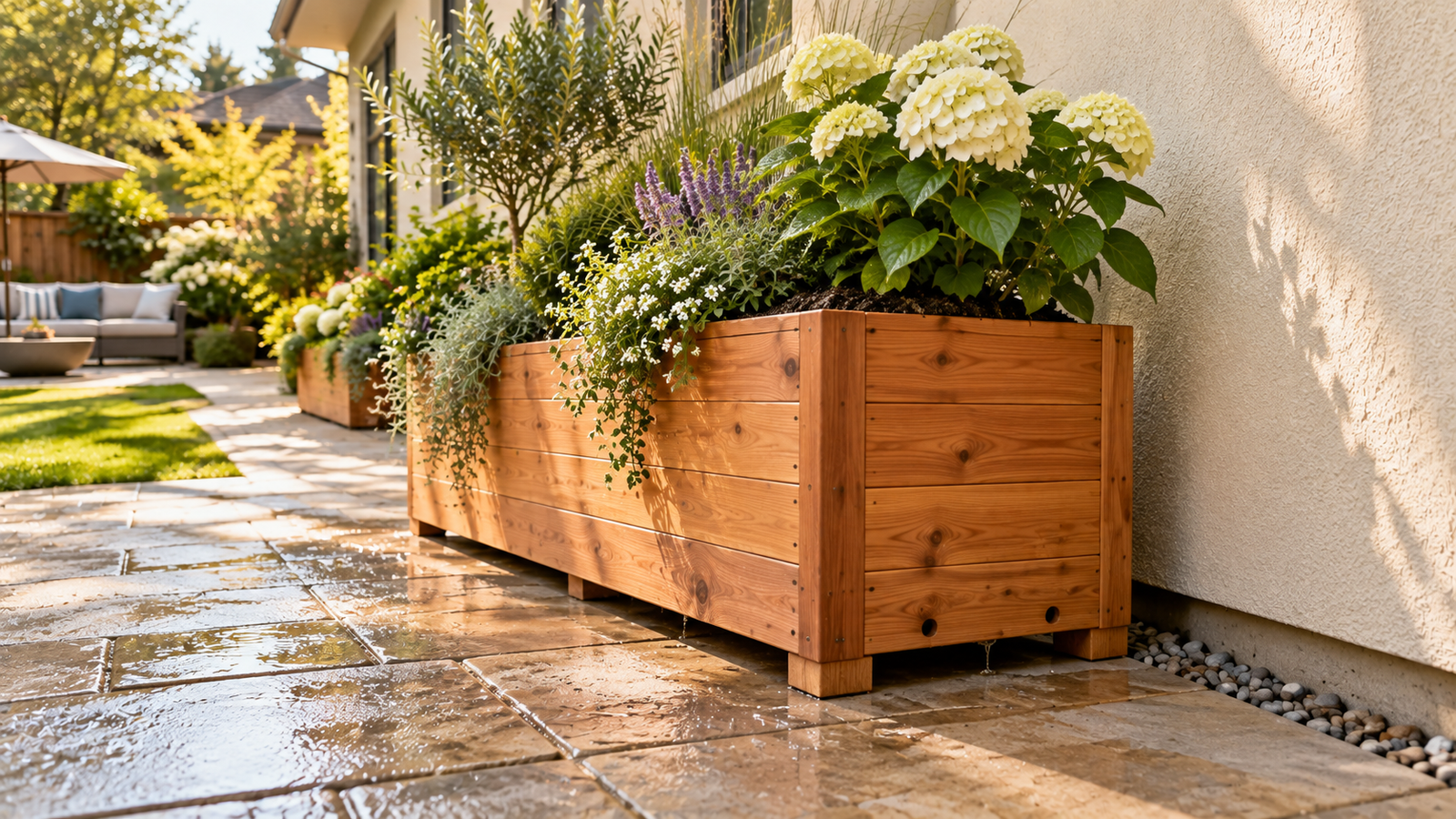
Excess water must leave the root zone and travel away from the house. Think through the whole route: Growing medium → drainage openings → supporting surface → runoff away from the wall Keep drainage holes open, and use stable planter feet or spacers where the base might seal against paving. A thick gravel layer at the bottom does not fix inadequate drainage openings and can reduce usable root space.
What Should Planter Boxes Sit On?
Paving, stable gravel, prepared ground, and structurally suitable decking can all work. The surface must remain level, withstand the filled weight, and prevent water collecting beneath or behind the container. Gravel alone cannot correct a ground surface that slopes toward the foundation.
How Can You Prevent Water Stains?
Drainage may leave mineral deposits, soil marks, or fertilizer stains on paving. Elevate boxes appropriately, clear debris from outlets, and clean surrounding surfaces. If using saucers, empty them before water stagnates. Never seal ordinary drainage holes simply to protect a patio. Before filling the planter, pour water through the empty container in its intended position and observe where it travels. Change the position if it pools behind the box or runs toward the house.
Which Planter Material Is Best?
Choose materials according to climate, visual style, mobility, and maintenance demands.
| Material | Advantage | Trade-Off |
|---|---|---|
| Cedar or outdoor timber | Warm, customizable appearance | Weathering and possible decay |
| Powder-coated metal | Modern, slim profile | Heat and potential corrosion |
| Outdoor resin | Lightweight and movable | Quality and UV resistance vary |
| Fiberglass or composite | Large decorative forms, often lighter | Cost and construction vary |
| Concrete or stone | Solid appearance and stability | Heavy and difficult to move |
Where walls need periodic repainting or repair, select a planter that can be relocated without major work.
What Soil Is Best for Planters?
Use growing medium formulated for containers rather than dense garden soil. Container mixes are intended to balance moisture retention, drainage, and air around roots within a restricted space. Select the mix for the plant type, climate, container volume, and watering system. Leave space below the rim for watering instead of filling the box to the top. Long-term perennials and shrubs may eventually need top-ups, renewed growing medium, root management, or repotting.
Which Plants Grow Best Near a House?
Choose plants by actual light, local climate, root volume, and mature size. A variety that thrives in a garden bed may outgrow a narrow box against siding.
| Conditions | Plants to Consider |
|---|---|
| Sunny, well-drained | Lavender, thyme, compact salvia |
| Sunny with regular watering | Basil, suitable annual flowers |
| Partial shade | Heuchera, begonias, selected sedges |
| Shade | Suitable ferns and shade-tolerant sedges |
| Pollinator-focused | Locally native, container-suitable flowers |
These are examples, not guarantees for every region. Check the particular species before buying. For a planter viewed from the yard, position upright plants at the back, medium foliage or flowers in the middle, and low or trailing plants toward the front. Group species with similar watering needs and leave space for mature growth rather than planting for instant fullness.
How Does Wall Direction Affect Plants?
Exterior walls create small microclimates. Brick and paving can reflect heat, deep eaves can block rain, and corners can channel wind. Observe the area at different times before selecting plants. In much of the Northern Hemisphere, south-facing walls often receive strong sun; west-facing walls may have intense afternoon heat; east-facing sites get morning sun; and north-facing walls are frequently shadier. Actual conditions vary by latitude, season, nearby trees, and hemisphere. Sunny planters may need greater soil volume and closer moisture checks. Shaded containers can dry more slowly, while boxes sheltered by an overhang may stay dry despite rain elsewhere. In cold climates, check frost resistance; in wet seasons, keep outlets free of debris.
How Should You Arrange Planter Boxes?
Repeat one or two elements—material, planter shape, flower color, or foliage texture—so separate boxes read as a coordinated landscape. Place taller elements beside blank wall sections and lower planting beneath windows. Three practical patterns are:
- Narrow walkway: Two slim troughs with compact foliage and a clear path between planter and yard edge.
- Window wall: One low flowering box under the window, paired with a taller container along uninterrupted wall.
- Exterior corner: Two separate boxes set at right angles, with utilities and downspouts fully accessible.
For a wall with several features, plan the sequence around them: Blank wall → tall planter → low planter → service gap → downspout
Leave negative space rather than trying to fill every available inch.
What Are the Best Budget Planter Ideas?
A coordinated pair of simple boxes can look better than many mismatched containers. Simple timber troughs or suitable reused containers may reduce costs if they are structurally sound and drain properly. Estimate the full project: Boxes + growing medium + plants + drainage accessories + optional stands or trellises
Spend first on stable construction, appropriate root volume, and functional drainage; add decorative features later.
How Do You Maintain Planter Boxes?
Check moisture, outlets, and plant growth regularly. Water the growing medium rather than spraying the wall. Prune foliage before it presses against siding or blocks access. Inspect wooden joints, metal finishes, legs, and caster locks; remove dead leaves and roots obstructing drainage. When possible, shift movable planters to look for standing water, stains, insects, or damage behind them.
What Planter Mistakes Should You Avoid?
The most expensive mistakes are usually practical rather than decorative. Do not let wet soil touch the house, direct overflow toward the foundation, cover vents or weep holes, or block utility equipment. Avoid choosing plants by their nursery size alone. Check mature height, width, root needs, and exposure. Do not use an undersized box for a large shrub, place a heavy container on an unverified deck, or combine plants with incompatible watering requirements.
How Do You Test a Planter Layout?
Use the Backyard Planter Ideas Wall-Safe Planter Test before purchasing or filling containers:
- Mark each planter footprint with tape, rope, or cardboard.
- Add mature plant height to the proposed box height.
- Check doors, windows, vents, taps, meters, and downspouts.
- Verify that water can move away from the house.
- Observe morning, midday, and afternoon light.
- Estimate the planter’s filled and watered weight.
- Allow for mature plant spread and pruning access.
- Check that people and equipment can still pass.
- Plan how to clean, water, repot, and inspect the area.
- Adjust the layout before permanent placement or planting.
The final question is simple: Will this arrangement still be safe, accessible, and attractive when the plants are mature?
Planter Boxes vs. Foundation Beds: Which Is Better?
Planter boxes work best when you want controlled growing medium, modular layouts, easier redesign, and more predictable access to the building. Foundation beds may suit established in-ground landscaping and plants requiring larger root systems, provided the site has suitable soil and grading. Keep soil and mulch away from moisture-sensitive walls. For many houses, two or three freestanding rectangular planters provide a useful middle ground: the appearance of a planted border without permanently filling the space next to the foundation.
FAQs About Planter Boxes Along a House
Can you put a planter box directly against a house?
Place freestanding planters near the wall without trapping wet soil or runoff against it. Leave room for drainage, airflow, inspection, and repairs.
How far should planter boxes be from a house?
A 6–12 inch gap is one possible planning starting point, not a universal rule. Adjust clearance for wall construction, utilities, drainage, and mature growth.
How deep should a planter box be for flowers, herbs, or shrubs?
Small flowers may suit 6–8 inches of growing medium, while many herbs use 8–12 inches. Shrubs and larger perennials generally need more root volume.
What are the best plants for planter boxes beside a house?
Compact grasses, herbs, flowers, and small shrubs can work. Match the species to sunlight, climate, container depth, and mature size.
Can planter boxes cause foundation or siding damage?
Yes, if wet material remains against siding or water flows toward the building. Contain the soil and direct overflow away from the foundation.
What should outdoor planter boxes sit on?
Stable paving, gravel, prepared ground, or suitable decking can work. Check filled weight, level support, and the direction of drainage.
Are wooden or metal planter boxes better beside a house?
Wood has a natural appearance but weathers over time. Metal looks modern, though heat exposure and corrosion resistance need attention.
What is the easiest planter box layout to maintain?
Two or three separate rectangular boxes are usually simpler than one oversized structure. They are easier to move, replant, clean, and inspect behind.
Sources and Further Reading
- University of Maryland Extension — Container Gardening
- University of Maryland Extension — Types of Containers
- U.S. Department of Energy — Foundation Grading
The strongest backyard planter box along house ideas do more than decorate a wall. They provide healthy root space, controlled drainage, and convenient access for home maintenance. Choose containers that suit both the plants and the building, then test the complete layout before filling the boxes.
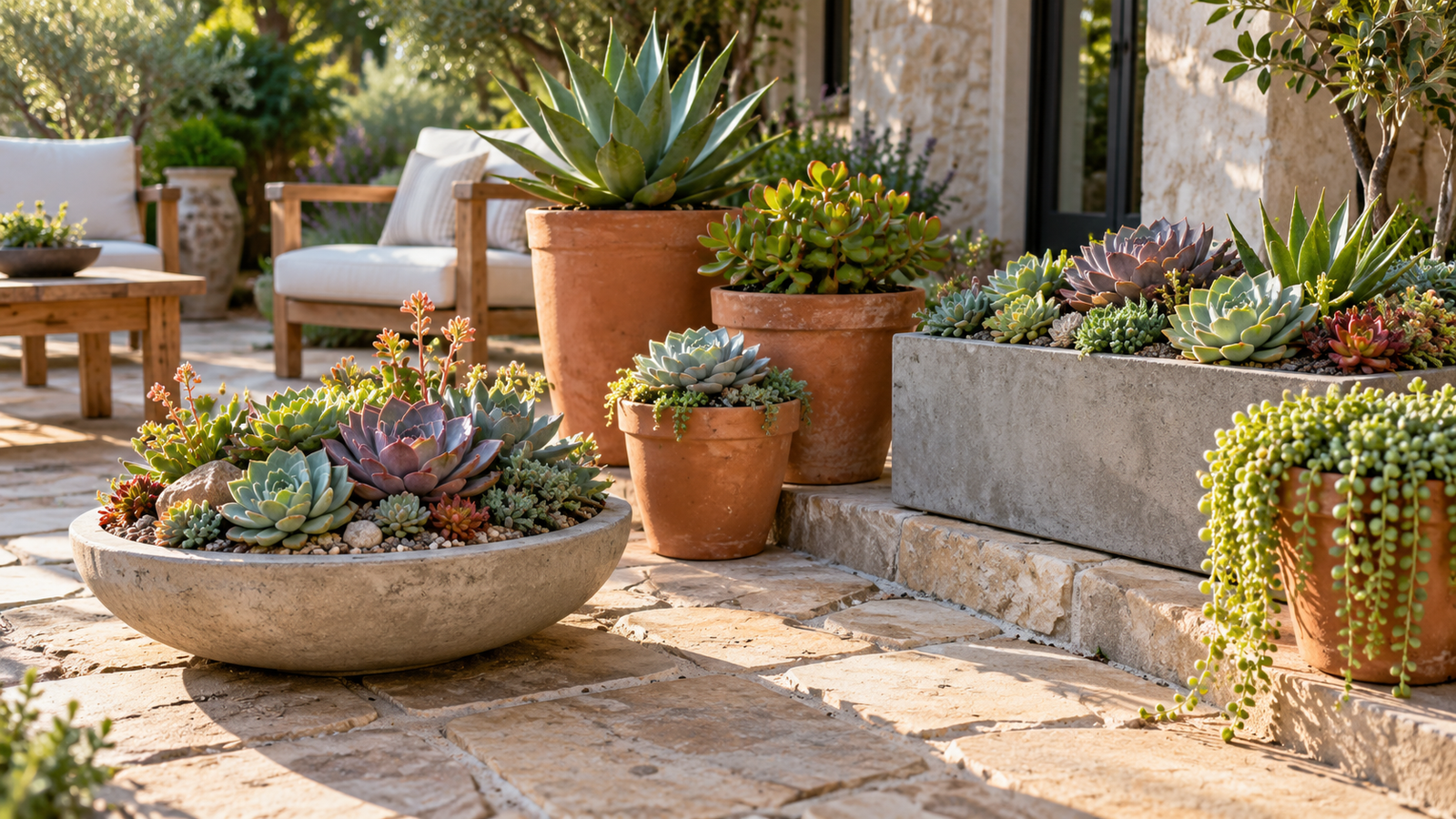
21 Outdoor Succulent Planter Ideas for Patios, Porches and Yards
Outdoor succulent planter ideas include mixed rosette bowls, terracotta groups, concrete troughs, vertical wall displays, and hanging baskets. Choose each design according to sunlight, rain exposure, drainage, and winter conditions. Explore 21 practical options, then use the planting and care...
Backyard Plant Bed Ideas: 21 Layouts for Every Yard
The best backyard plant bed ideas preserve usable space while adding structure and color. Border beds frame lawns, island beds create focal points, fence beds offer screening, curved beds soften straight edges, and raised beds organize growing areas. Choose according...
Backyard Foundation Planting Ideas: 21 Ways to Plant Along Your House
The best backyard foundation planting ideas use compact shrubs, flowering perennials, grasses, and groundcovers to soften exterior walls without obstructing windows, drainage, or access. Choose a layout that fits the available bed depth, then select plants for their mature size,...
Evergreen Planter Ideas for Beautiful Outdoor Spaces Year-Round
Evergreen planter ideas bring lasting color, shape, and structure to front doors, patios, porches, and balconies. From paired entrance shrubs to low-growing junipers and decorative dwarf conifers, the right arrangement can make an outdoor space feel finished even when seasonal...
Houston Backyard Plant Ideas for Sun, Shade, Privacy, and More
The best Houston backyard plant ideas combine heat-tolerant flowers, dependable evergreen shrubs, shade-friendly natives, and plants matched to local soil. Yaupon holly provides structure, southern wax myrtle creates privacy, Turk’s cap flowers in partial shade, and Gulf muhly adds texture....
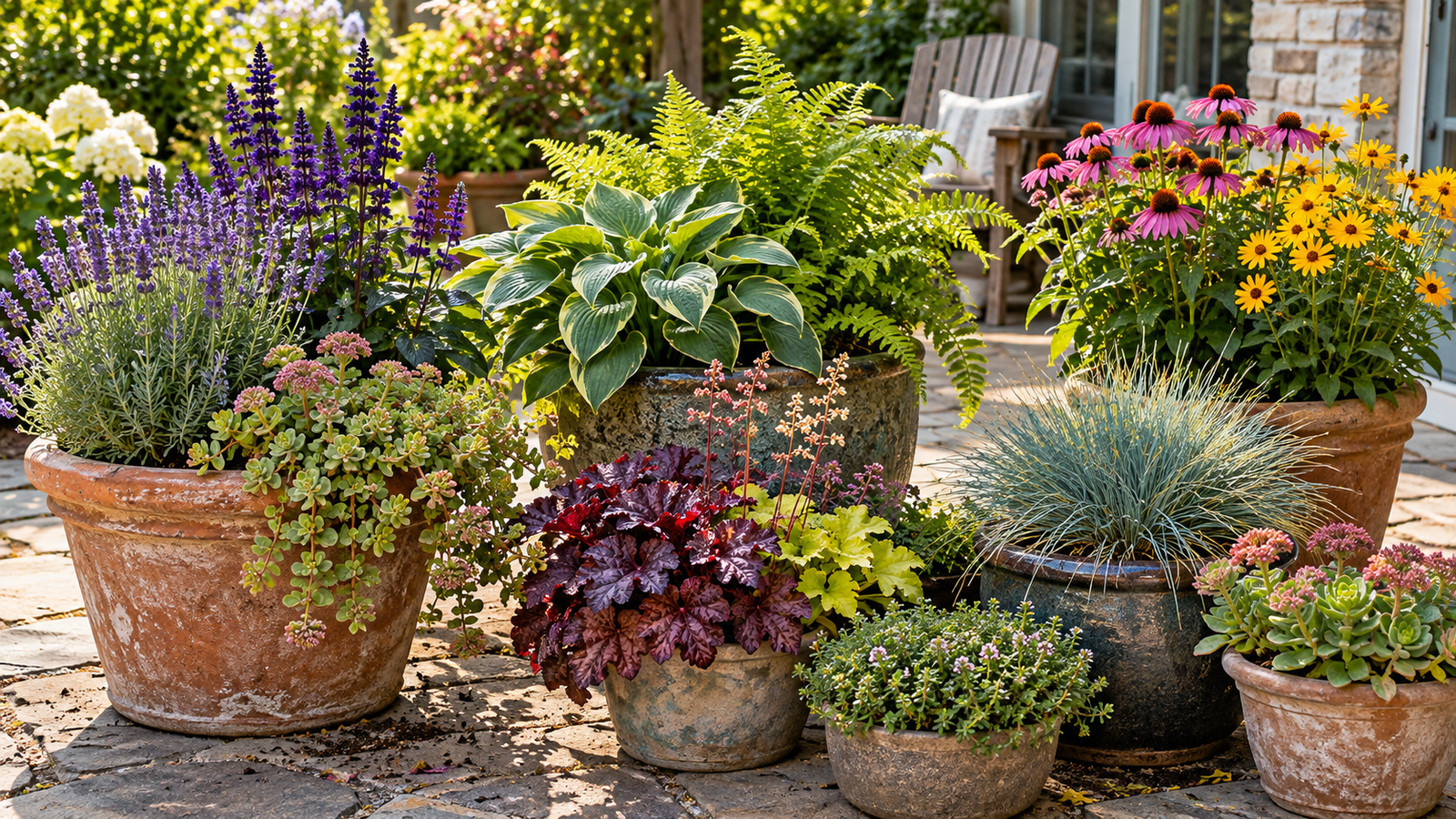
Perennial Planter Ideas
Perennial planter ideas work best when plants share the same sunlight, moisture, drainage, and growing-space requirements. Choose suitable plants and containers, and a display can return for several years with less seasonal replanting.
The secret is planning for mature growth rather...
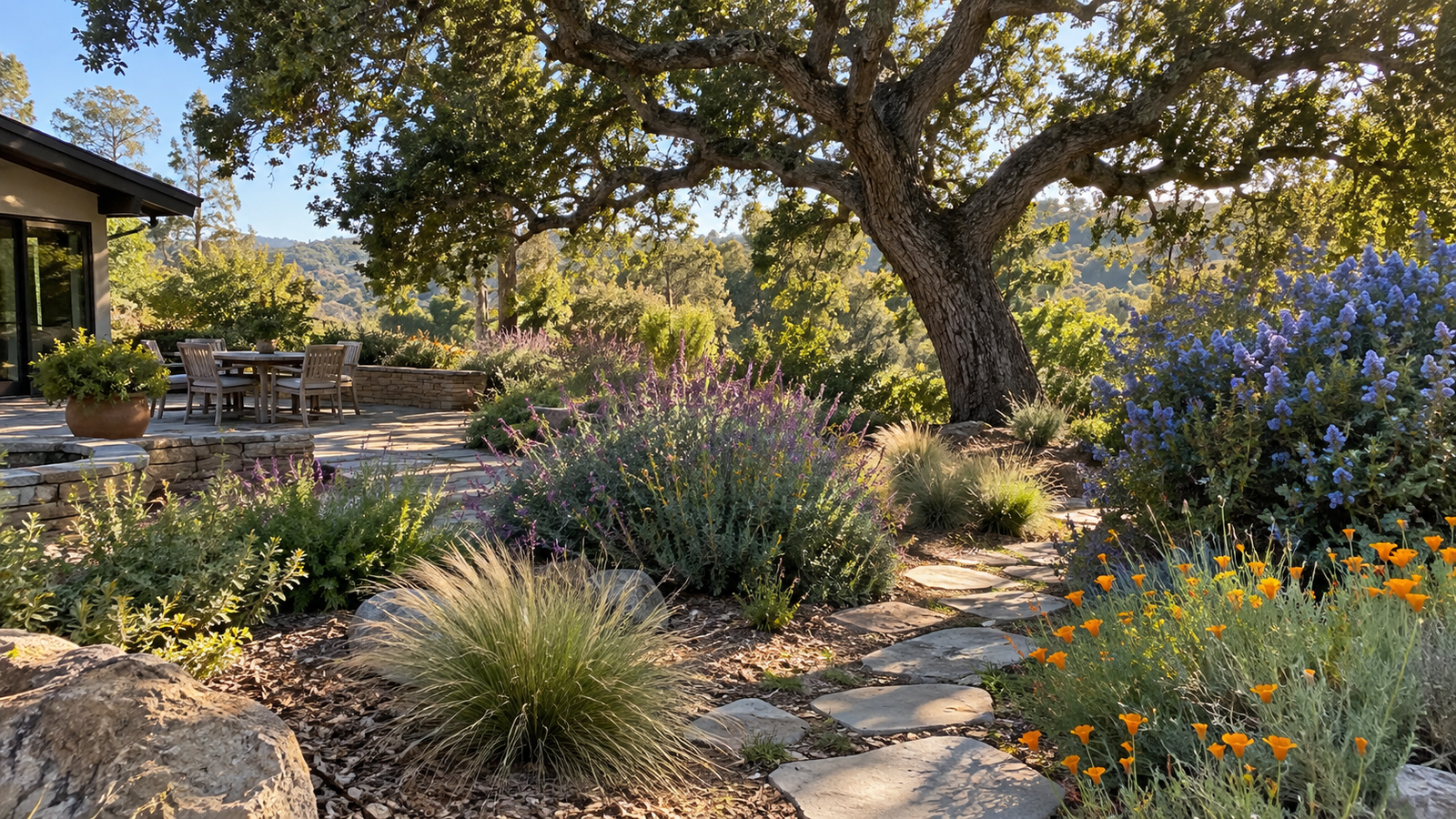
California Backyard Plant Ideas: 25 Water-Wise Choices
The best California backyard plants suit your local climate, soil, sunlight, and available water. Coast live oak, toyon, ceanothus, California fuchsia, deer grass, and native salvias can create attractive, functional landscapes where conditions match their needs. Group plants by water...
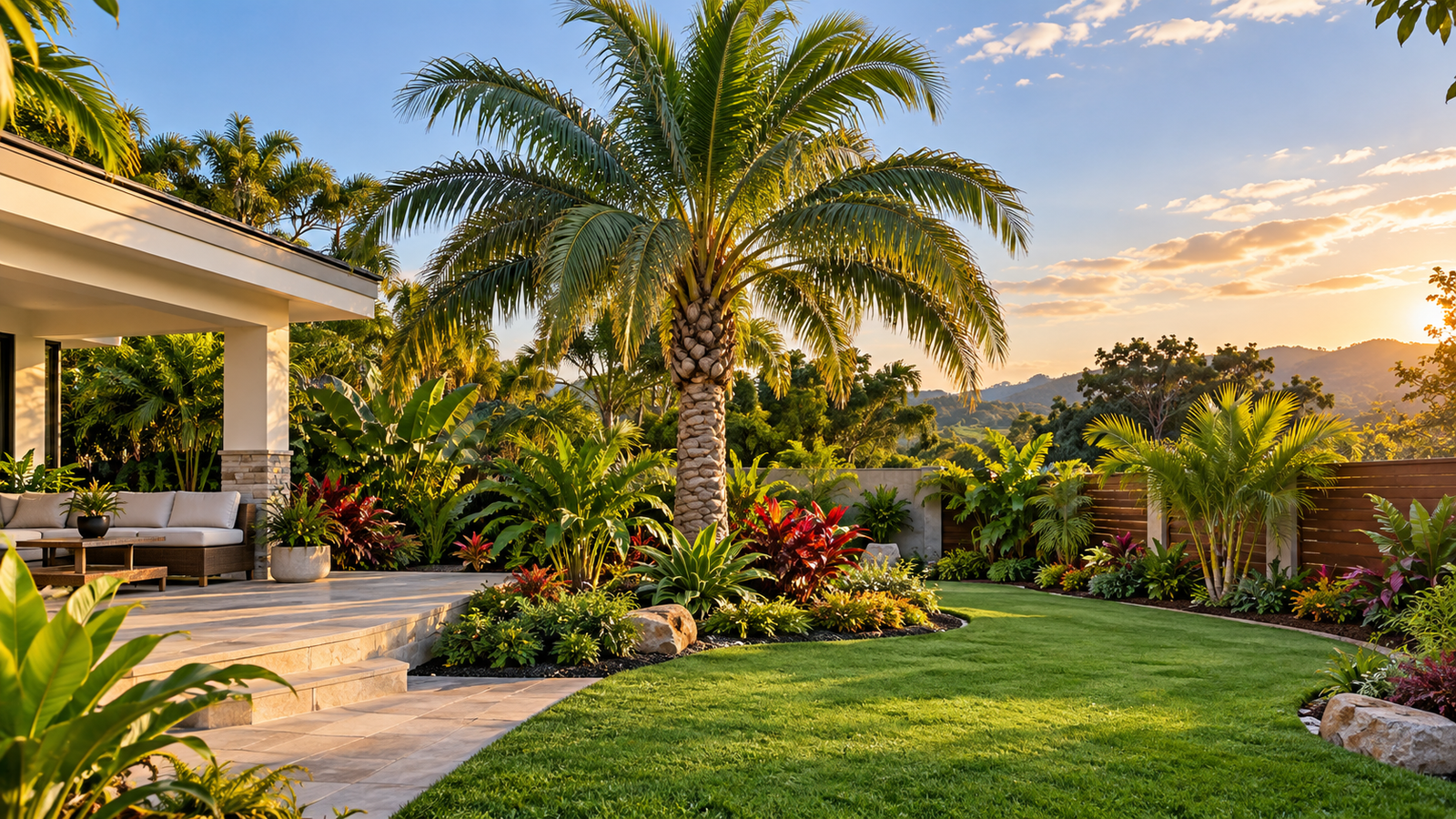
Palm Plant Ideas for Backyards: A Climate-Smart Planning Guide
Palm plant ideas for backyards work best when the palm matches your climate, mature space, sunlight, drainage, and landscape goal. Choose compact palms for small yards, clustering palms for privacy, container palms for flexibility, and solitary palms when you want...
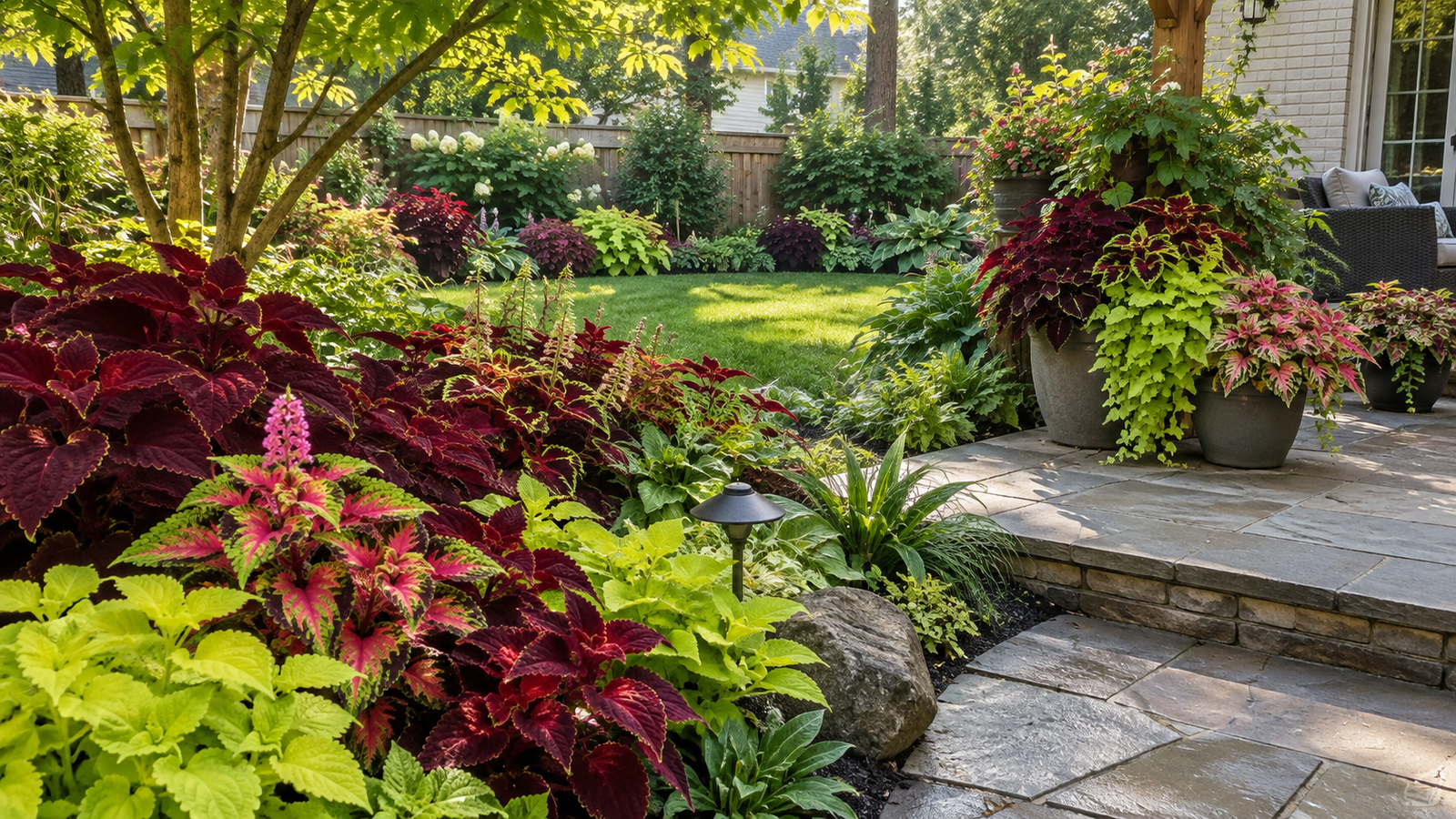
Backyard Planting Ideas With Coleus
Backyard planting ideas with coleus include layered shade borders, mass plantings, pathway edging, patio pots, tropical foliage beds, under-tree containers, and burgundy or lime focal plants. Match the cultivar's mature size, growth habit, and light tolerance to the site first,...
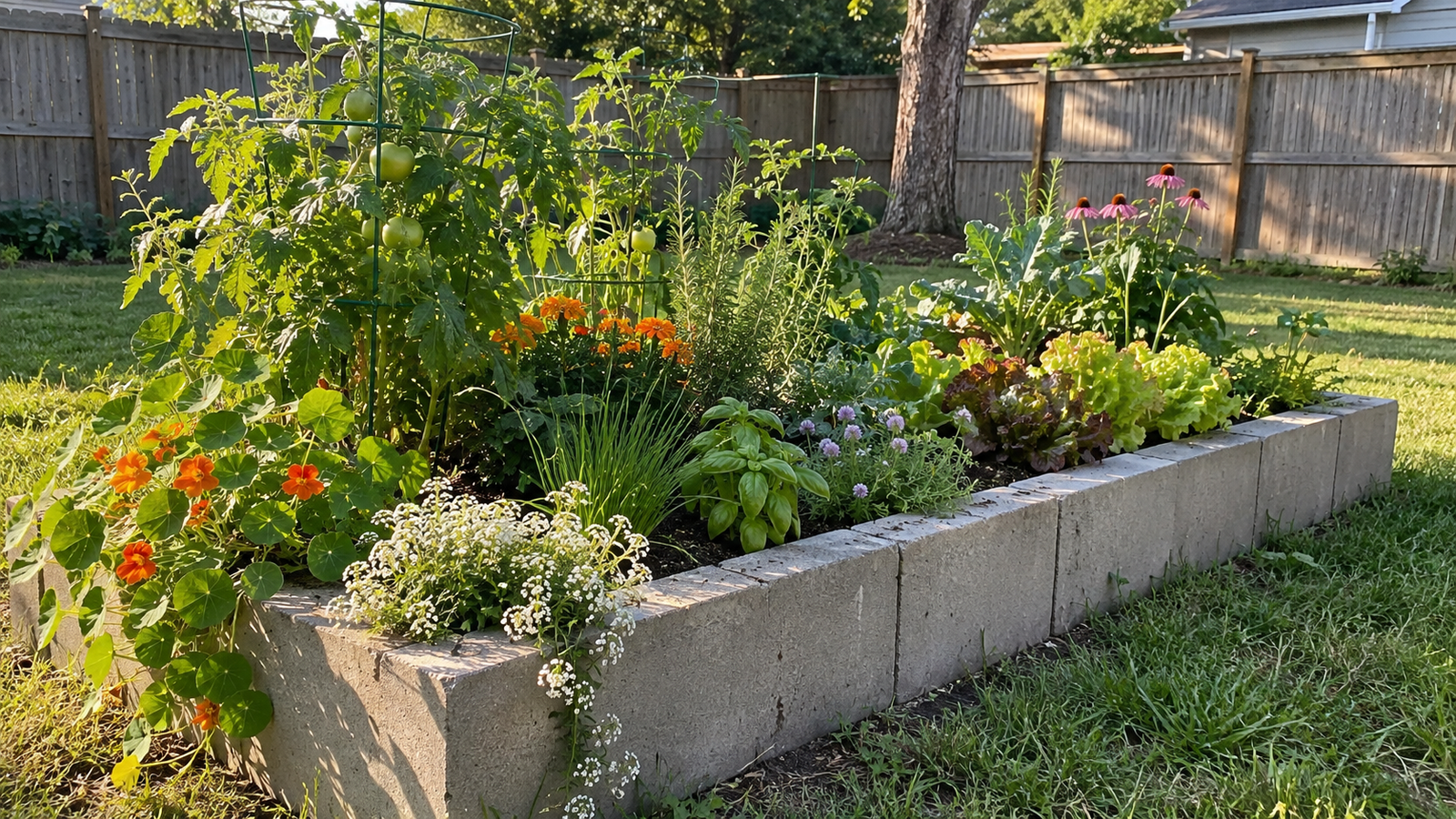
Cinder Block Planter Ideas
Cinder block planter ideas offer a practical way to grow flowers, herbs, vegetables, succulents, or ornamental plants without complicated construction. Low raised beds, narrow fence planters, stepped corner designs, and compact vertical arrangements work especially well because they balance growing...