

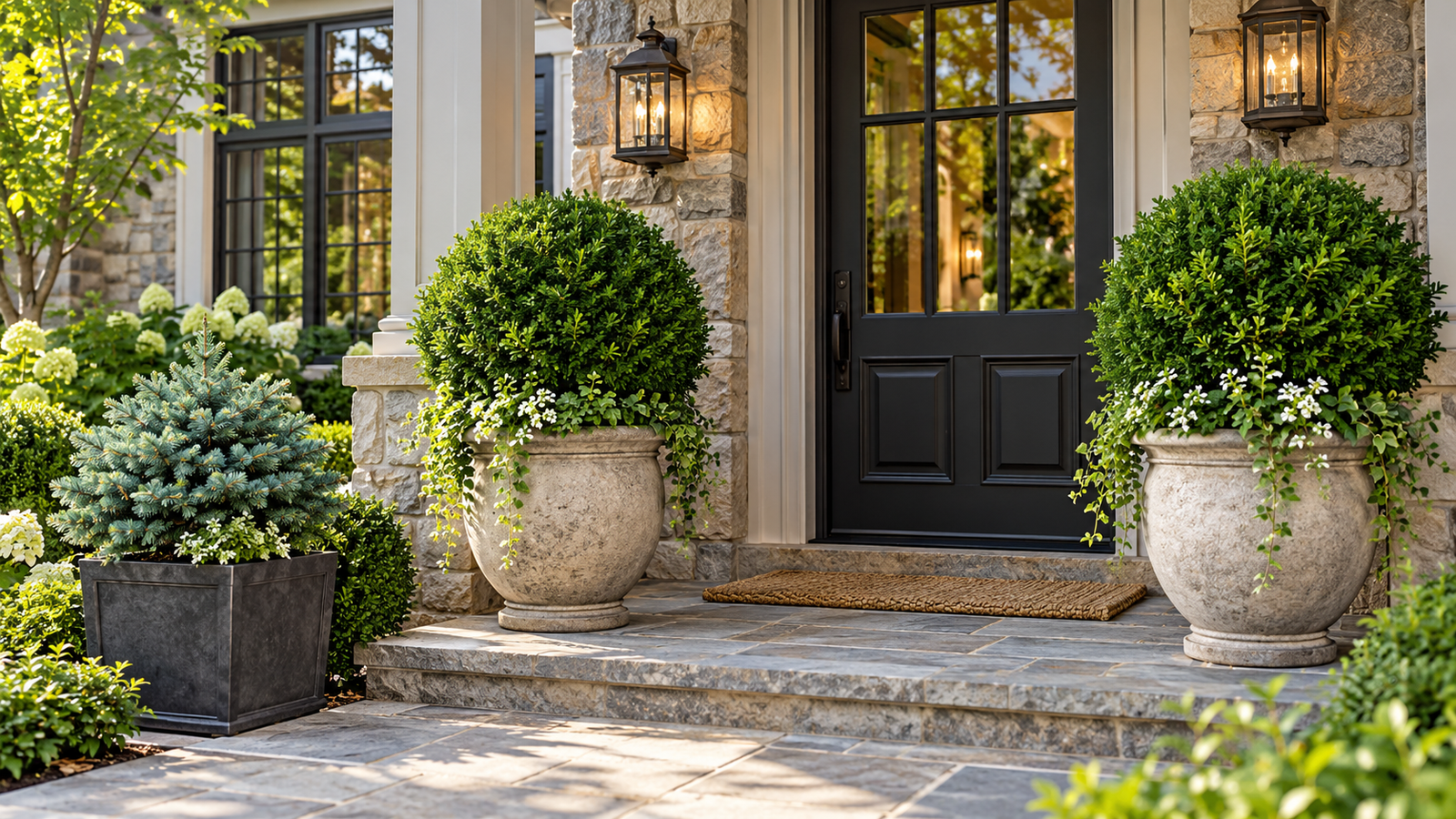
Evergreen planter ideas bring lasting color, shape, and structure to front doors, patios, porches, and balconies. From paired entrance shrubs to low-growing junipers and decorative dwarf conifers, the right arrangement can make an outdoor space feel finished even when seasonal flowers fade.
Choose plants for their mature size, light needs, climate, and root space before selecting pots. Living evergreens need drainage and ongoing root care, unlike temporary displays made from cut greenery.
What Are the Best Evergreen Planter Ideas?
Match the planter’s shape and scale to its setting. These 12 designs are starting points; plant suitability depends on local growing conditions.
1. Frame a Front Door With Matching Evergreens
Place two compact evergreen shrubs in matching containers on either side of a sufficiently wide entrance. Globe arborvitae, where locally suitable, creates a soft rounded outline that complements straight door frames and steps. Repeat a color from the home’s exterior.
Measure with the door open, leaving clearance for visitors, steps, and handrails. Check mature shrub width, not nursery size. On narrow landings, one planter works better than a cramped pair.
2. Use a Dwarf Conifer as a Patio Focal Point
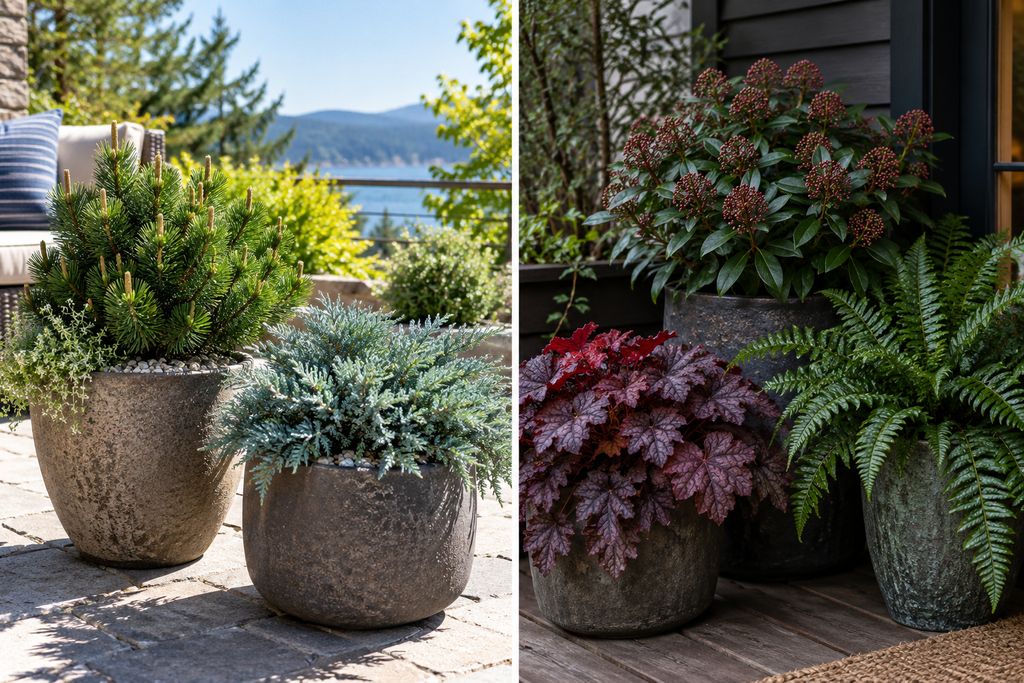
A single dwarf conifer can anchor a patio without elaborate companion planting. Dwarf mountain pine (Pinus mugo ‘Mops’) forms a compact, rounded shape and generally favors a sunny position with well-drained growing medium. Place it beside a seating group or at the end of a clear sightline.
Choose a broad, stable pot and leave room for branches to spread. Dwarf means relatively compact growth, not permanently tiny proportions. Check moisture and roots as the plant develops.
3. Pair an Evergreen With Seasonal Flowers
Use one compact evergreen as a permanent centerpiece, then add compatible bulbs, annuals, or colorful foliage for seasonal change. Change companion plants by season for color.
Match light and watering needs without crowding the evergreen’s roots. Remove spent flowers gently. If annuals require more water than the evergreen, group them in separate pots around it.
4. Create a Boxwood or Topiary Planter
Clipped evergreen shrubs give entrances, gates, and formal patios a tidy architectural look. A rounded boxwood in a square container creates a strong contrast between foliage and pot shape; a clipped cone makes a taller accent. One specimen can be enough.
Check regional pest pressure before planting boxwood. Box blight and box tree caterpillar cause serious problems in affected areas. Inspect plants and check local advice. Where boxwood is unsuitable, consider a compact holly or another locally appropriate clipped shrub, checking its own growing needs.
5. Use Compact Juniper for Texture
Blue Star juniper (Juniperus squamata ‘Blue Star’) offers blue-gray foliage and a low, mounding silhouette. Set it in a wide container where its soft-looking branches can spread naturally. The unusual color contrasts especially well with charcoal, weathered stone, or pale concrete.
Provide appropriate sun and drainage, and leave room for branches without obstructing walkways. Confirm the cultivar: junipers come in upright, creeping, and mounding forms with different mature sizes.
6. Plant a Dwarf Spruce for Structure
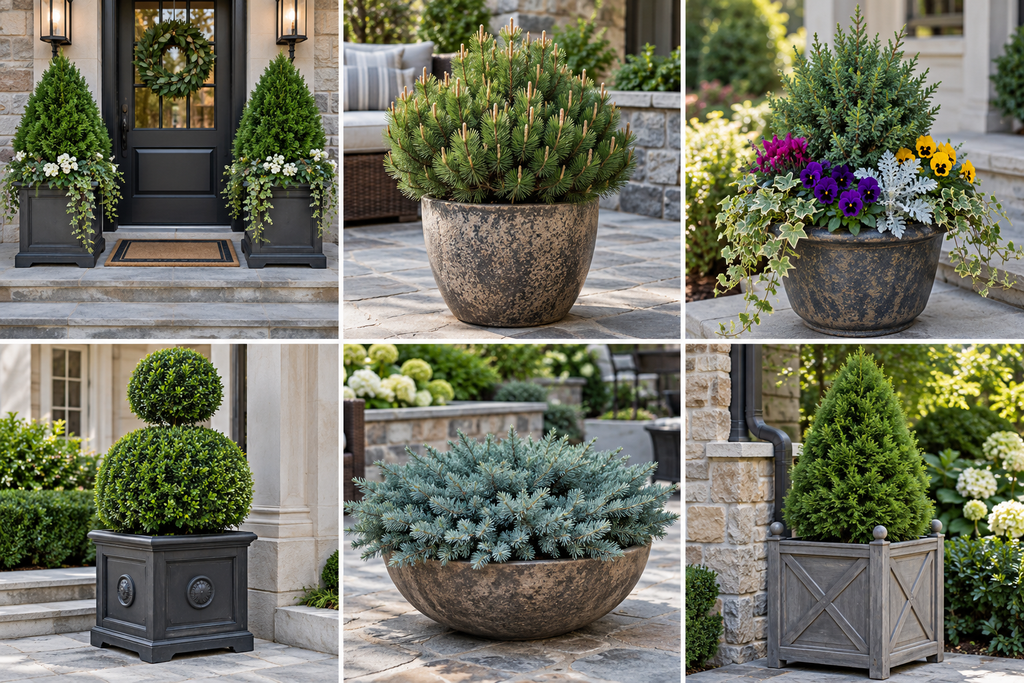
Dwarf Alberta spruce (Picea glauca ‘Conica’) brings a distinctive conical outline to spacious entrances and patios. Its naturally dense growth provides an upright accent without the constant clipping required by formal topiary. A plain container helps preserve the clean, tree-like silhouette.
Despite its name, this spruce can outgrow a small porch pot. Check eventual size, local heat, winter exposure, and root-space needs. Avoid sites with stressful reflected heat.
7. Group Evergreens at Different Heights
For a fuller display, group three separate evergreen containers rather than crowding several shrubs into one. Combine an upright form at the back, a rounded evergreen in the middle, and a low-growing variety at the front. Repeat one material or color across the pots to tie the arrangement together.
Stagger heights, maintain drainage access, and stabilize tall pots against wind. Separate containers allow individual watering and repotting.
8. Use a Low Evergreen in a Wide Planter
A broad rectangular container filled with a suitably low-growing evergreen can soften a patio edge or sit below a window without blocking the view. Spreading juniper is one possible choice for a sunny, well-drained location. The horizontal shape helps visually connect long walls, railings, or built-in seating.
Check mature spread and leave window and walkway clearance. Low foliage does not guarantee shallow roots; the planter still needs adequate internal depth.
9. Add Trailing Plants Around an Evergreen
A few trailing companions can soften a planter’s hard rim while keeping the evergreen as the focal point. Use an upright or rounded compact shrub in the center, with compatible foliage spilling lightly over the edges. This is particularly effective in tall pots where the container itself would otherwise dominate the arrangement.
Avoid crowding roots, match light and moisture needs, and trim growth away from paths and drainage holes. Check whether trailing species are locally invasive.
10. Create a Mixed-Foliage Evergreen Container
For a sheltered spot with suitable partial shade, combine a compact skimmia with compatible heuchera or an evergreen fern. Glossy leaves, contrasting foliage colors, and delicate fronds provide visual interest even when nothing is blooming. Choose a spacious planter and keep enough open growing medium around each plant.
Bright sheltered shade may suit the combination; a dark covered corner may not. Some heuchera lose foliage in cold weather. Do not combine shade-loving plants with sun-loving pine.
11. Use Evergreen Planters for Privacy
A row of upright evergreens can create a soft screen along a patio or outdoor seating boundary. Containers are useful where planting directly in the ground is not practical, but privacy shrubs require more root space and stability than small decorative plants.
Choose cultivars by mature dimensions and leave watering access. Tall foliage catches wind; wet containers are heavy. Use broad bases, check balcony load limits, and avoid blocking exits.
12. Refresh Evergreen Planters Through the Seasons
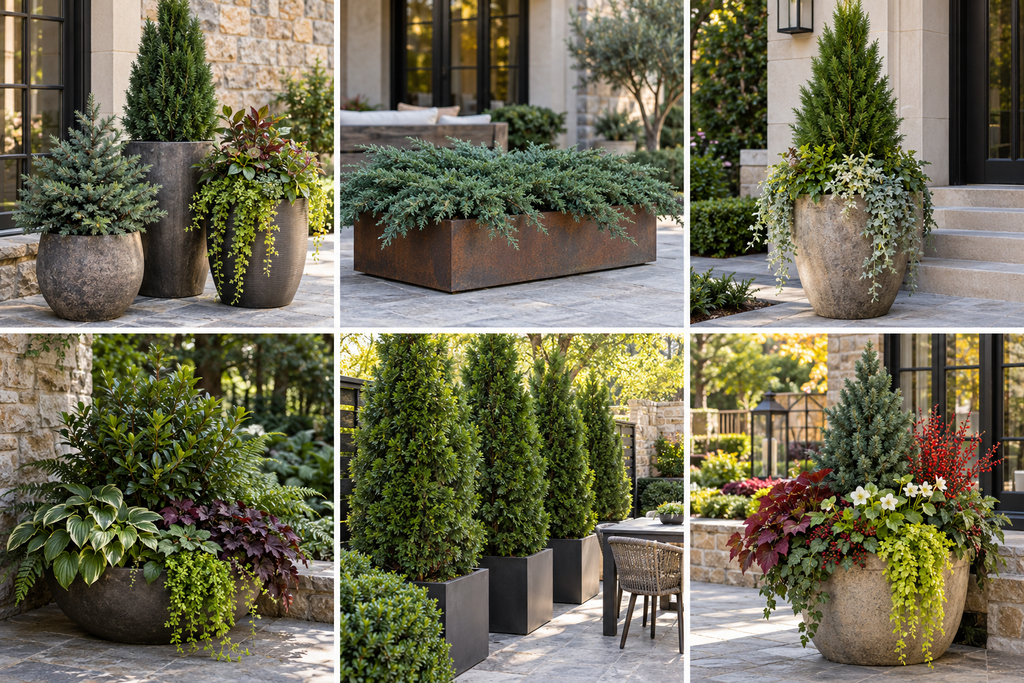
Keep the evergreen as the lasting element and update the surrounding display as the seasons change. Spring bulbs, summer flowers, and cool-season foliage can each provide a different look without replacing the shrub itself. Coordinate colors with nearby pots for a more intentional display.
Avoid disturbing established roots. Use separate pots when the main container is crowded or companions need different conditions.
Which Evergreens Grow Best in Pots?
Compact evergreens tend to remain manageable in containers longer than large, vigorous shrubs, but suitability still depends on climate, exposure, mature dimensions, and root growth. Confirm the botanical name and cultivar when shopping; plants sold under similar common names can behave quite differently.
| Evergreen | Growth habit | Potential location | Key consideration |
|---|---|---|---|
| Dwarf mountain pine ‘Mops’ | Rounded, compact | Sunny patio | Mature spread and drainage |
| Blue Star juniper | Low, mounding | Wide sunny pot | Space for spreading branches |
| Globe arborvitae ‘Danica’ | Rounded, dense | Suitable entrance | Climate and moisture |
| Dwarf Alberta spruce ‘Conica’ | Upright, conical | Spacious focal point | Eventual size and exposure |
| Japanese skimmia | Compact broadleaf | Sheltered partial shade | Moisture and site suitability |
| Soft shield fern | Arching evergreen fronds | Shaded container | Moisture and winter conditions |
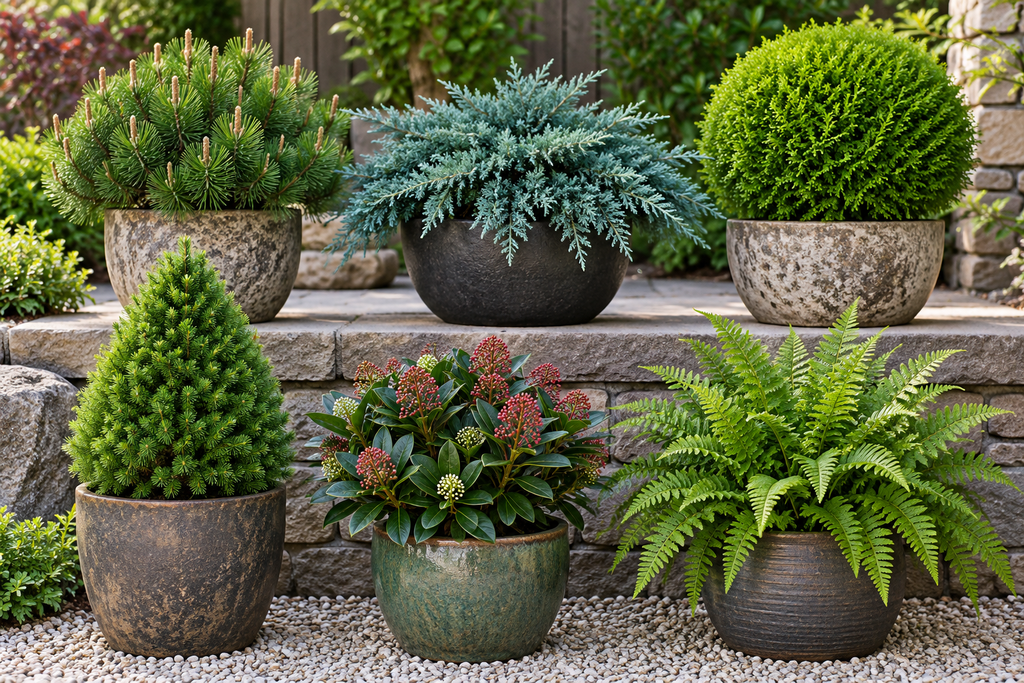
Check local guidance for hardiness, mature size, and future repotting needs.
Which Evergreen Planter Ideas Suit Your Space?
For a front door, choose compact plants that do not obstruct the door swing or steps. A narrow porch often looks better with one upright specimen than with matching oversized pots. On an open patio, a broad dwarf conifer can become a focal point without blocking views. Shaded corners need plants that tolerate available light, not simply plants marketed as indoor or shade-loving. A balcony demands extra attention to loaded weight and wind exposure.
Position empty pots first to check movement, reflected heat, runoff, and watering access. Allow for mature foliage.
Which Evergreens Prefer Sun or Shade?
Observe sunlight throughout the day before choosing species.
Which Evergreens Work in Full Sun?
Dwarf mountain pine and many compact junipers generally prefer bright locations with suitable drainage. Some globe arborvitae cultivars also work well in sunny conditions where the climate suits them. Direct sunlight increases evaporation from containers, particularly on hot paving. Check root-zone moisture regularly rather than assuming sun-tolerant plants are drought-proof.
Which Evergreens Grow on Shaded Porches?
Suitable skimmia cultivars and evergreen ferns can be good options for sheltered partial shade. Heuchera adds leaf color when its light and moisture needs match. Shade tolerance does not mean a plant can grow in near darkness.
Which Evergreen Combinations Work?
Choose combinations by light, moisture, and root-space compatibility. Consider dwarf pine with suitable sun-loving companions, or skimmia with shade foliage. Two matching shrubs suit formal entrances; one plant per pot is simpler to maintain.
Contrast foliage without sacrificing root space. Group separate pots when watering needs differ.
Are Evergreen Planters Safe?
Check plant toxicity, invasiveness, and container stability before buying.
Are Evergreen Planters Safe Around Pets?
Some ornamental evergreens are harmful if eaten. Yew (Taxus), boxwood (Buxus), English holly, and English ivy warrant particular caution around animals. Verify each plant through a reliable veterinary toxicity reference before buying, and remember that leaves or berries may fall from raised containers. If a pet may have swallowed a toxic plant, contact a veterinarian promptly.
Can Evergreen Planter Plants Be Invasive?
English ivy and wintercreeper (Euonymus fortunei) are invasive in some regions. Container planting does not remove every risk: stems, seeds, or discarded cuttings can reach surrounding ground. Consult local restrictions and favor non-invasive alternatives suited to your climate. Dispose of removed plant material responsibly.
How Do You Choose the Right Planter?
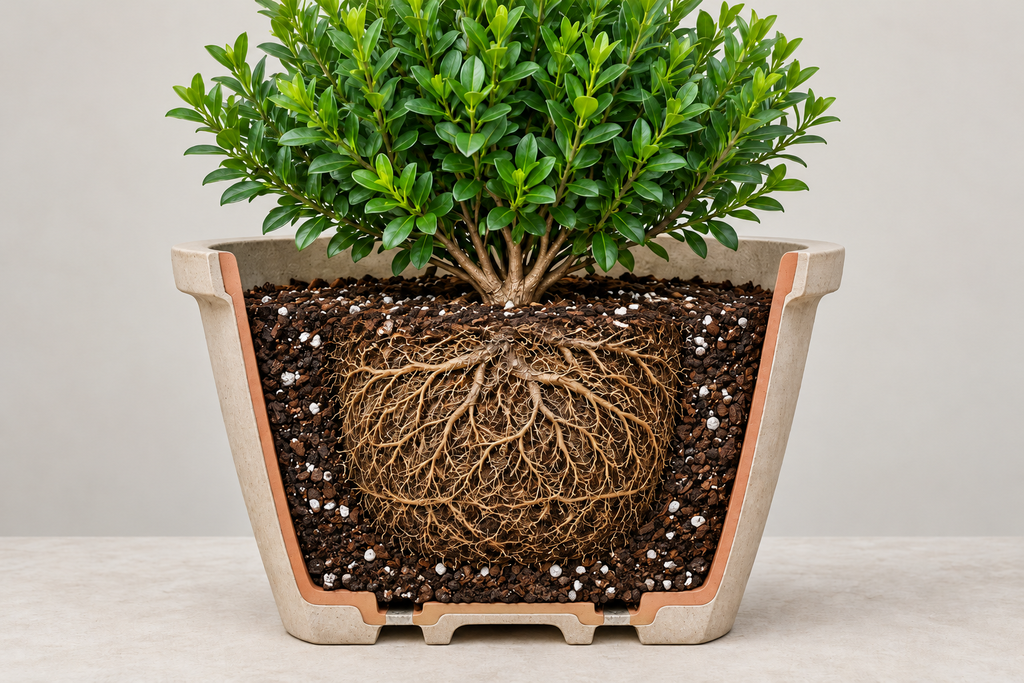
Judge pots by usable root space, drainage, and stability; decorative urns may have shallow inner chambers.
What Size Planter Do Evergreens Need?
Measure the plant’s root ball and the container’s internal width and depth. Provide appropriate growing room without putting a tiny root system into a huge mass of growing medium that stays wet. Wider openings make future repotting easier. Account for the mature shrub’s above-ground spread, too: a stable base matters when branches become heavier.
Which Planter Materials Work Best for Evergreens?
Terracotta offers a natural look but dries relatively quickly and may crack in frost. Resin and fiberglass are lighter and easier to move, although tall plants may make them top-heavy. Concrete is stable but difficult to relocate. Metal containers can heat in strong sun; wood weathers, and ceramic frost resistance varies. Choose a material appropriate for your exposure and climate.
How Do You Keep Evergreen Planters Stable?
Place containers on firm, level surfaces with drainage outlets unobstructed. Consider the total weight of the pot, wet medium, and plant, especially on balconies. Keep heavy or top-heavy planters away from stair edges, glass doors, and narrow paths. Recheck stability as the evergreen grows.
What Do Evergreen Planters Cost?
Costs vary by cultivar, plant size, and material. Topiary, tall screens, and matching pairs generally cost more than a single compact evergreen.
For a budget-friendly option, start with one healthy, locally suitable plant and a durable container with working drainage. Allow for growing medium, watering, occasional feeding, winter protection where necessary, and eventual repotting. A bargain planter that cracks or tips over is rarely good value.
How Do You Plant Evergreens in Pots?
Prepare the site and drainage before removing the nursery pot.
Do Evergreen Planters Need Drainage Holes?
Yes. Functional drainage holes allow excess water to leave the root zone. Test the outlets before filling the pot, and ensure runoff will not create slippery paving or damage nearby surfaces. Gravel in the bottom does not replace drainage holes or fix a poorly draining growing medium.
What Soil Should You Use for Evergreen Planters?
Use a quality container-growing medium that balances aeration, moisture retention, and drainage. Dense garden soil can compact in pots. Many conifers favor a freely draining mix, while skimmia and some shade foliage need consistent but not waterlogged moisture. Follow species-specific guidance when choosing or adjusting the medium.
What Are the Steps for Planting an Evergreen?
- Check the pot. Confirm root space, drainage, and stability.
- Inspect the plant. Look for damaged or severely congested roots when removing the nursery pot.
- Set the depth. Position the root ball so the root crown is not buried beneath extra growing medium.
- Backfill carefully. Fill gaps and firm the medium gently without compacting it heavily.
- Water thoroughly. Moisten the root zone and allow excess water to escape.
- Monitor establishment. Check moisture, foliage, and container stability over the following weeks.
Handle sensitive roots gently. Add companion plants only if adequate space remains.
How Do You Care for Evergreen Planters?
Weather, pot size, and species influence care; avoid rigid watering schedules.
How Should You Water Evergreen Planters?
Check the medium below its surface; it can remain wet deeper down even when the top looks dry. Water when the plant needs moisture and let the surplus drain. Wind, sunshine, and smaller containers can increase drying. During unfrozen winter periods, check moisture rather than neglecting pots completely.
Do Evergreen Planters Need Fertilizer?
They may benefit from occasional feeding, but brown or yellow foliage does not automatically indicate nutrient deficiency. Check water, drainage, roots, light, and growing-medium condition first. If feeding is appropriate, use a suitable product at the label rate. Excess fertilizer can add stress rather than solve the underlying problem.
When Should You Repot an Evergreen?
Roots circling the pot, growing through drainage holes, unusually rapid drying, or declining growth can indicate congestion. Spring is often a practical time to repot, although the best timing depends on species and climate. Move the plant into an appropriately sized container and refresh the medium as needed.
Should You Repot or Replace an Evergreen?
Repot a healthy plant when its roots need more room. Consider transplanting it elsewhere if the entire shrub has become too large for the setting. If foliage is declining because of disease, decay, or unsuitable conditions, diagnose that problem first; a larger pot alone may not help.
Can Evergreen Planters Survive Winter?
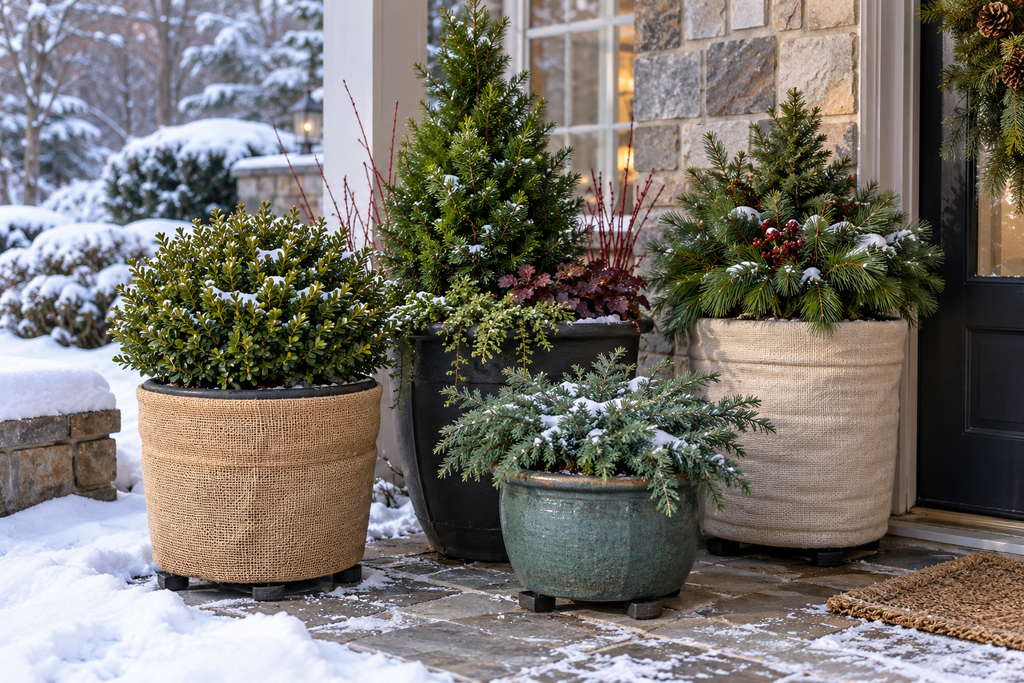
Yes, provided the species suits the climate and both roots and container can tolerate outdoor conditions. Roots in exposed pots may face harsher temperatures than roots protected by surrounding ground. Wind and winter moisture also influence survival.
How Do You Protect Evergreen Roots From Freezing?
Choose reliably hardy plants and containers rated for freezing conditions. In colder locations, move vulnerable pots to sheltered positions or insulate them when practical. Keep drainage outlets open and avoid leaving containers standing in water. Extra hardiness provides a useful margin, not a guarantee against extreme weather.
Should You Water Evergreen Planters in Winter?
Evergreen foliage can lose moisture even during cold weather. Check the growing medium when it is unfrozen; water only when needed and when excess can drain freely. Do not water frozen or already saturated root zones.
Can Decorative Planters Crack in Freezing Weather?
Yes. Freeze-thaw cycles may damage certain terracotta and ceramic pots, particularly if they absorb water. Check the manufacturer’s frost-resistance guidance before leaving decorative containers exposed throughout winter.
Why Is My Potted Evergreen Brown?
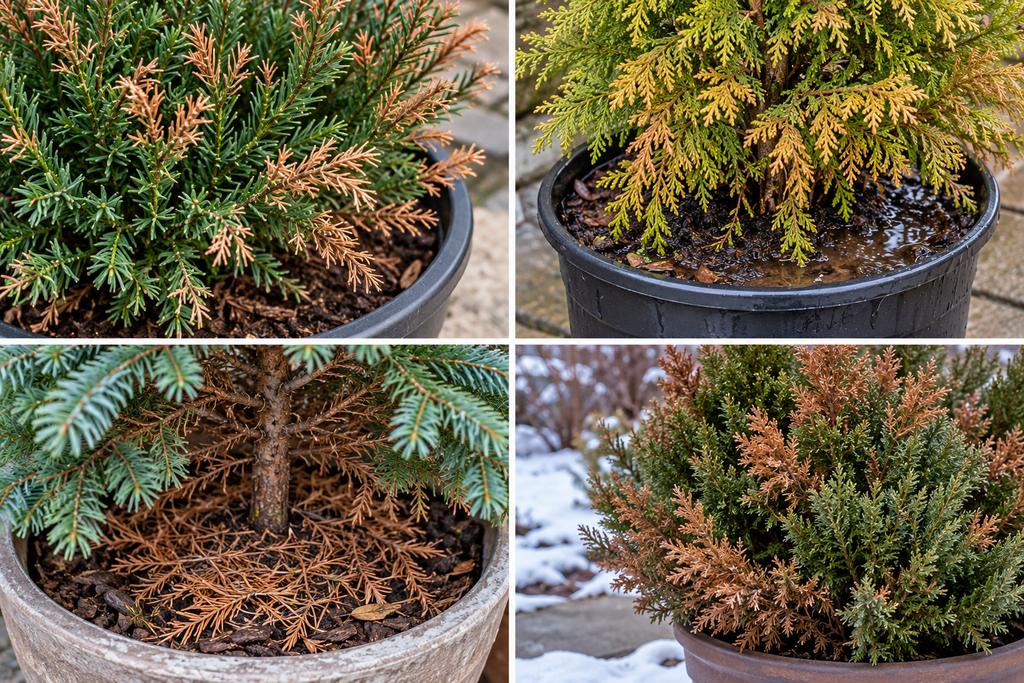
Browning may result from drought, waterlogging, winter desiccation, heat, crowded roots, pests, or disease. Some older interior needles naturally turn brown and drop, so the pattern matters more than color alone.
Check moisture below the surface, confirm that drainage outlets work, and review recent weather. Dry outer foliage following cold wind suggests a different problem from widespread decline in persistently wet medium. Inspect roots when practical and look for visible insects or disease symptoms. Do not immediately add fertilizer or water without investigating. If new growth keeps browning or damage spreads, seek local advice specific to the plant.
What Should You Check Before Buying?
Use a quick checklist to avoid choosing a beautiful display that cannot thrive where you want it:
- Identity: Scientific name and cultivar, not just a general common name.
- Size: Mature height, width, and growth habit.
- Exposure: Available sunlight, summer heat, wind, and local hardiness.
- Container: Internal root space, usable depth, stable base, and drainage.
- Safety: Pet toxicity and regional invasive-plant guidance.
- Maintenance: Watering access, eventual repotting, and filled weight.
Measure the route to the installation point before purchasing an especially large pot. The container must fit through gates and doorways and be movable safely.
How Do You Test an Evergreen Planter?
Position the empty container where it will live. Check door clearance, walkway width, wind exposure, drainage runoff, and available light. Compare the intended plant’s mature dimensions with the space. Once planted, record the plant name, pot dimensions, watering habits, and any signs of stress. Photos taken from the same angle over time can help you assess growth. Only describe a planting method as personally tested if you have genuine results to support that claim.
FAQs About Evergreen Planter Ideas
Which Evergreen Stays Small in a Planter?
Blue Star juniper and certain dwarf mountain pines grow relatively slowly, making them useful for compact displays. They still expand and may eventually need repotting or root management.
What Are the Best Evergreen Planters for a Front Door?
Matching pots with compact, climate-suitable shrubs create symmetry. For tight entrances, use one upright evergreen instead. Prioritize door clearance, mature width, drainage, and wind stability.
Can Evergreen Shrubs Live in Pots for Many Years?
Yes. With suitable growing conditions, consistent root care, and repotting when necessary, many evergreens can remain container-grown for years. Their suitability depends on the species and available root space.
Do Outdoor Evergreen Planters Need Drainage Holes?
Yes. Water must be able to escape, particularly during heavy rain and winter. Decorative gravel cannot substitute for functional drainage holes.
How Often Should You Water an Evergreen Planter?
There is no universal schedule. Check moisture around the roots, then adjust for the plant’s needs, pot material, weather, and season. Do not water simply because the soil surface appears dry.
Which Evergreen Planter Should You Choose?
For an entrance, consider compact matching shrubs; for a sunny patio, a dwarf pine or low juniper may offer lasting structure. In suitable partial shade, broadleaf evergreens and ferns provide contrasting texture. If you want the simplest care, start with one well-matched plant in a stable, properly drained container.
The best design remains attractive, healthy, and manageable as it grows.
Sources and Further Reading
- Royal Horticultural Society: Growing Plants in Containers
- RHS: Growing Skimmias
- RHS: How to Repot a Plant
- RHS: Box Alternatives
- University of Illinois Extension: Container Drainage Options
- University of Illinois Extension: Overwintering Plants in Containers
- ASPCA: Toxic and Non-Toxic Plants
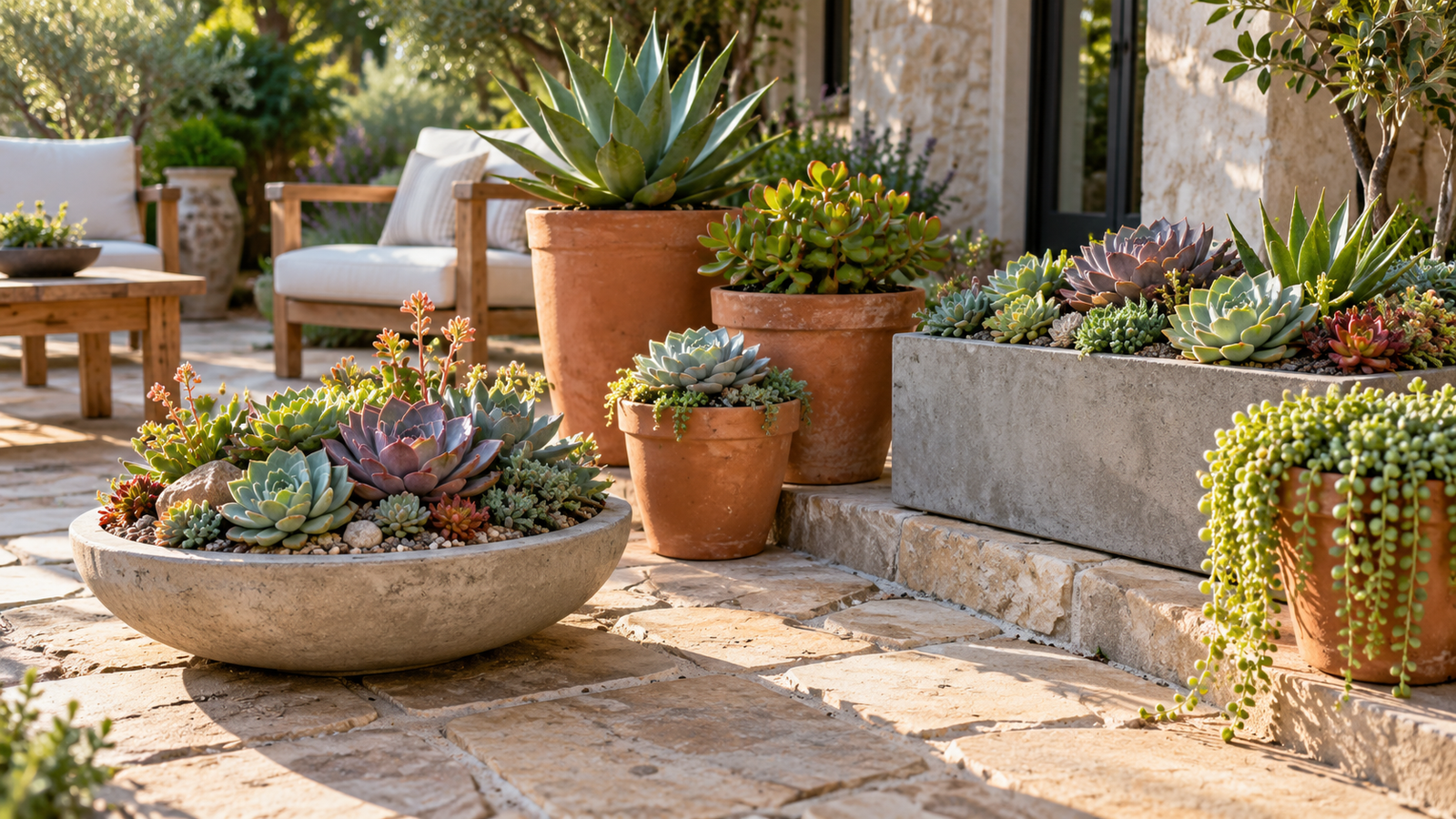
21 Outdoor Succulent Planter Ideas for Patios, Porches and Yards
Outdoor succulent planter ideas include mixed rosette bowls, terracotta groups, concrete troughs, vertical wall displays, and hanging baskets. Choose each design according to sunlight, rain exposure, drainage, and winter conditions. Explore 21 practical options, then use the planting and care...
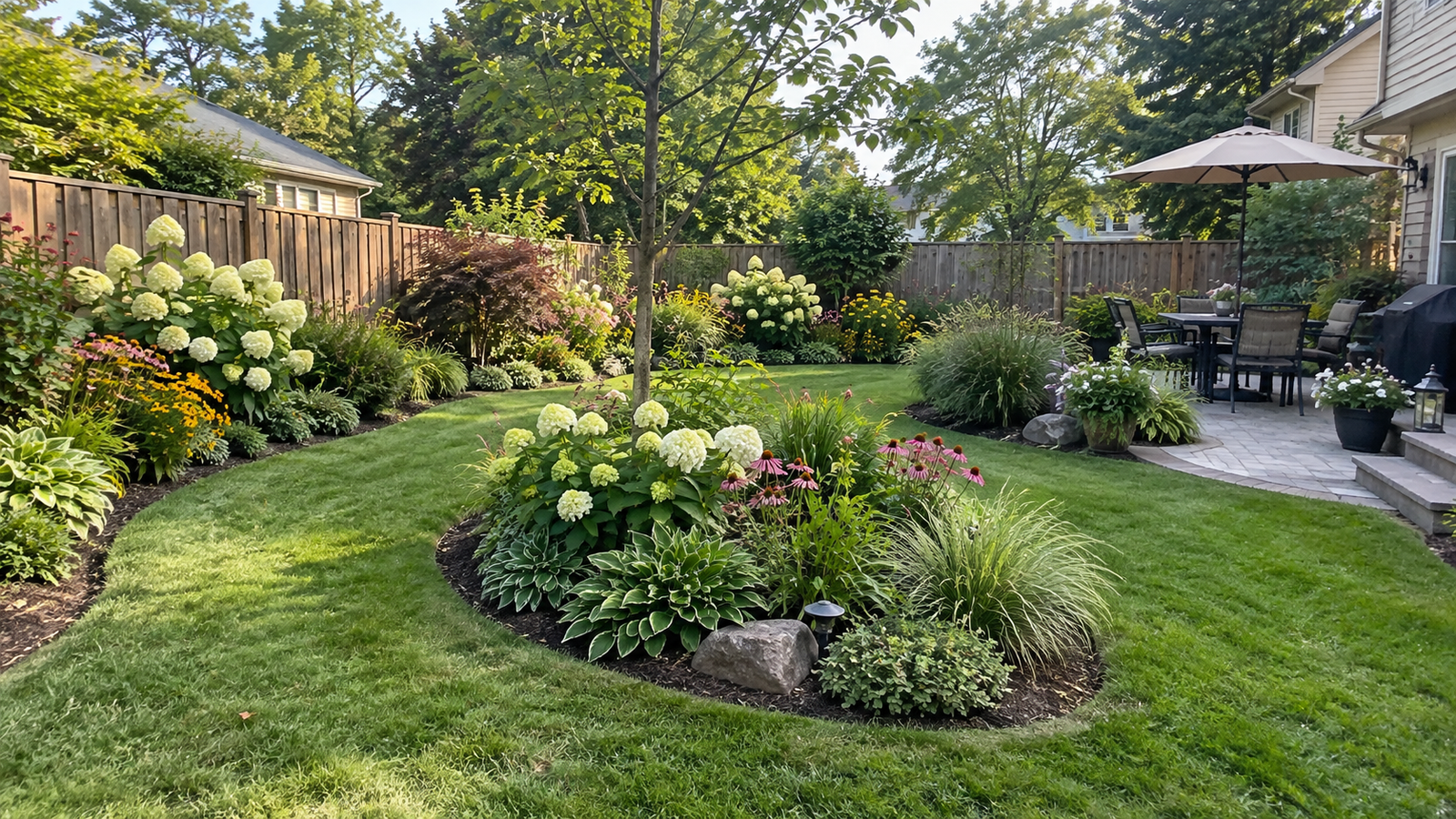
Backyard Plant Bed Ideas: 21 Layouts for Every Yard
The best backyard plant bed ideas preserve usable space while adding structure and color. Border beds frame lawns, island beds create focal points, fence beds offer screening, curved beds soften straight edges, and raised beds organize growing areas. Choose according...
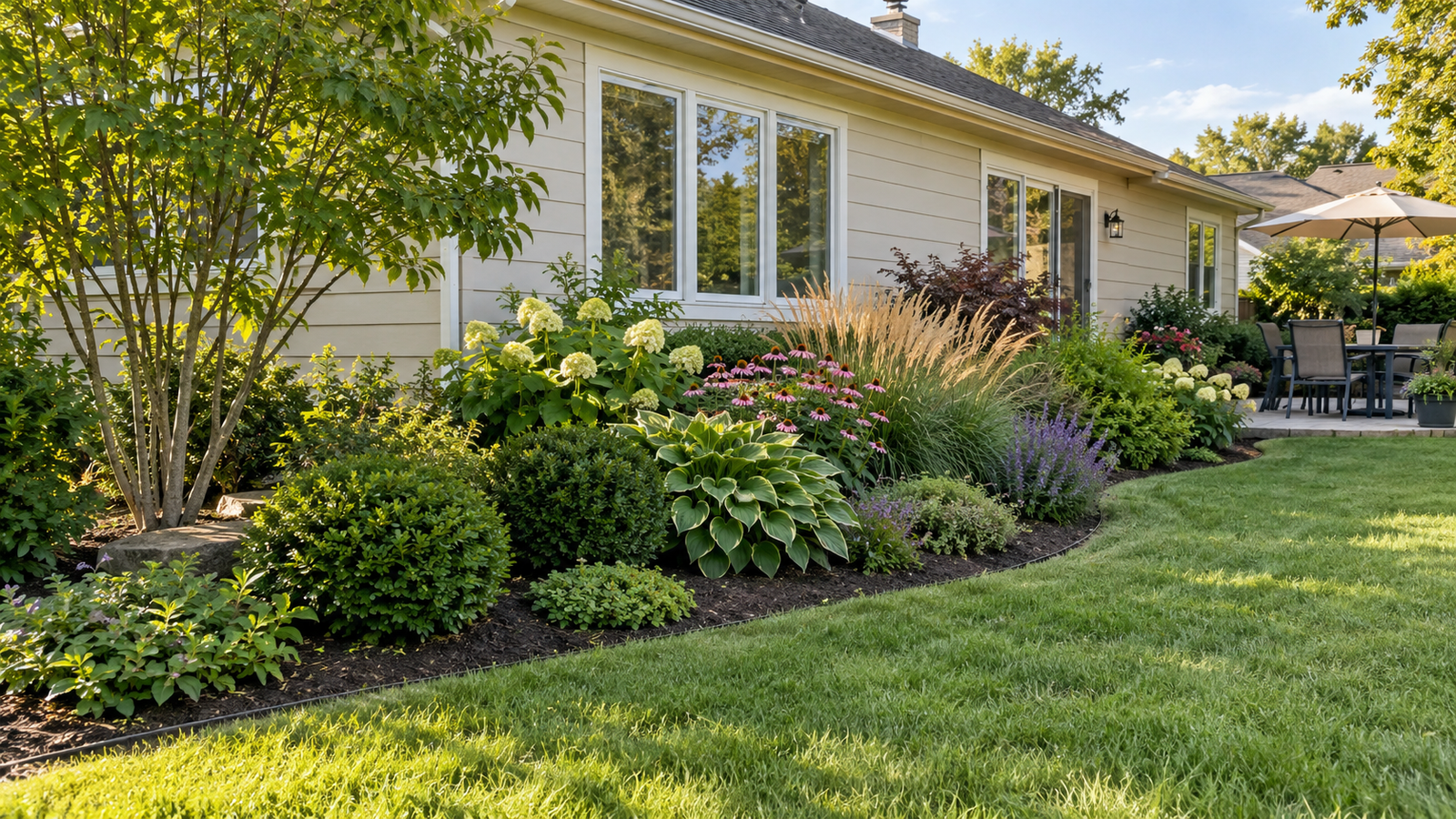
Backyard Foundation Planting Ideas: 21 Ways to Plant Along Your House
The best backyard foundation planting ideas use compact shrubs, flowering perennials, grasses, and groundcovers to soften exterior walls without obstructing windows, drainage, or access. Choose a layout that fits the available bed depth, then select plants for their mature size,...
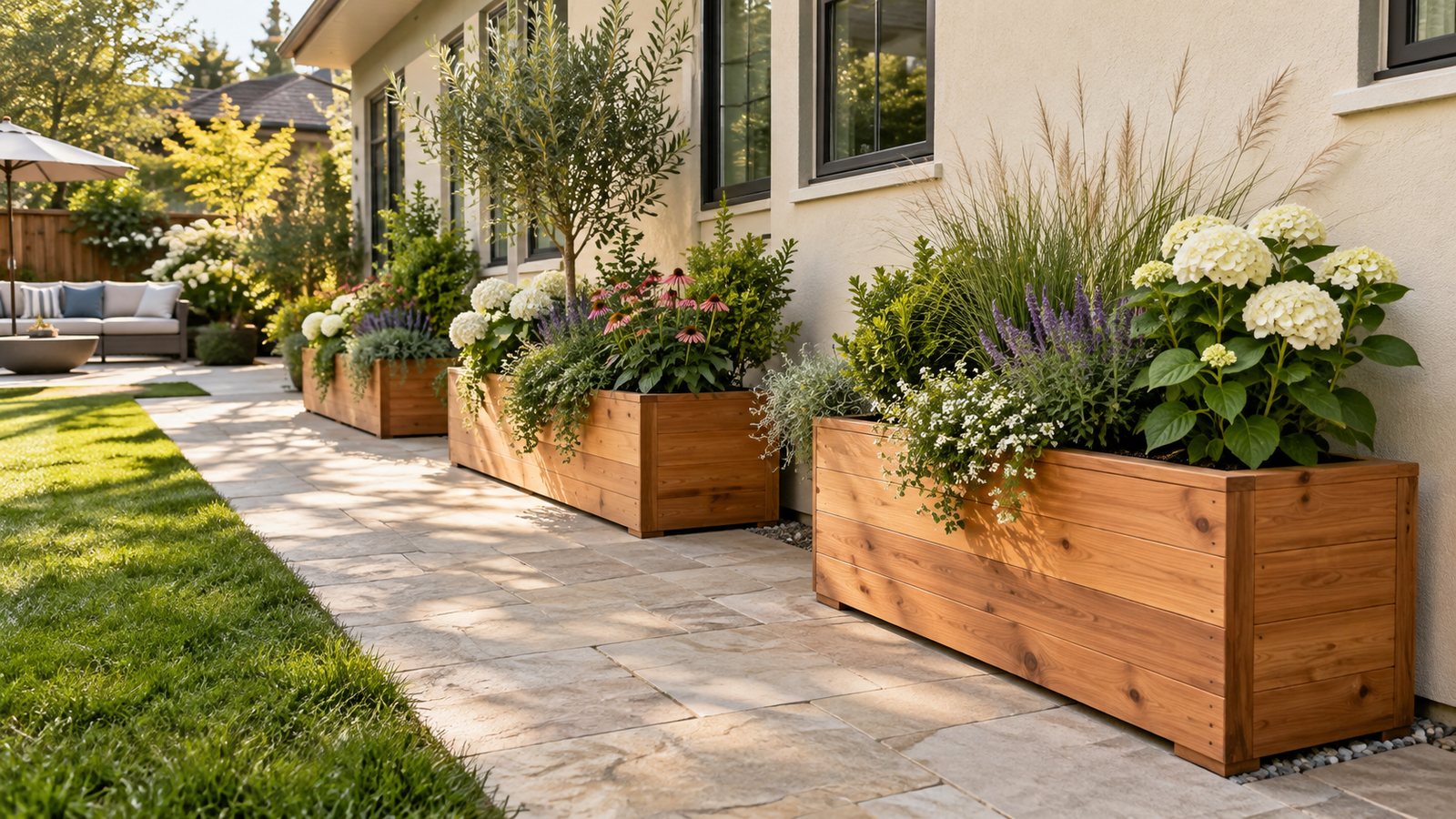
Backyard Planter Box Along House Ideas: 17 Practical Designs
The best backyard planter box along house ideas combine attractive planting with safe, practical placement. Freestanding troughs, cedar boxes, low window planters, and trellis containers can transform a plain wall without blocking access or trapping moisture. Choose a design that...
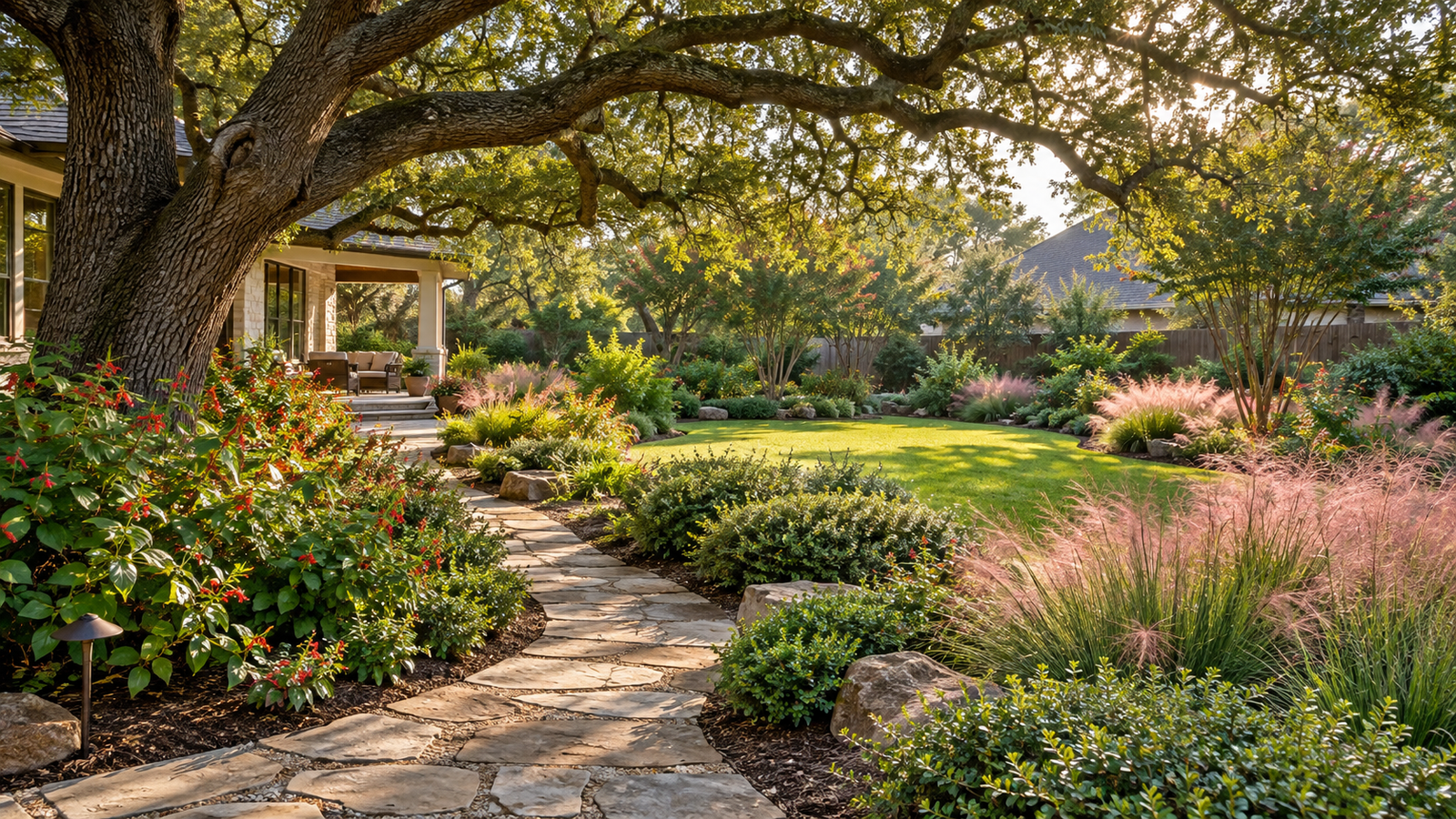
Houston Backyard Plant Ideas for Sun, Shade, Privacy, and More
The best Houston backyard plant ideas combine heat-tolerant flowers, dependable evergreen shrubs, shade-friendly natives, and plants matched to local soil. Yaupon holly provides structure, southern wax myrtle creates privacy, Turk’s cap flowers in partial shade, and Gulf muhly adds texture....
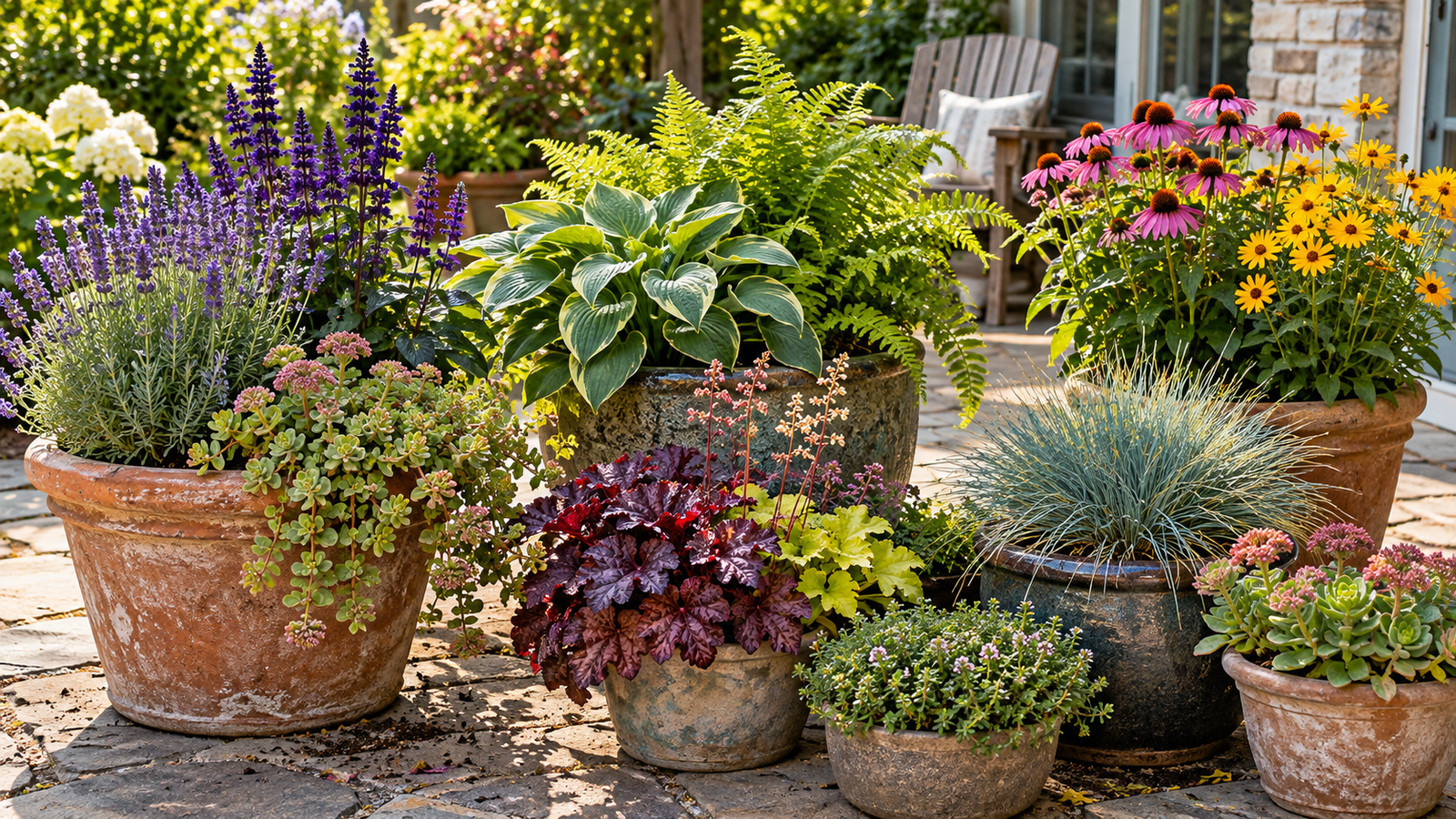
Perennial Planter Ideas
Perennial planter ideas work best when plants share the same sunlight, moisture, drainage, and growing-space requirements. Choose suitable plants and containers, and a display can return for several years with less seasonal replanting.
The secret is planning for mature growth rather...
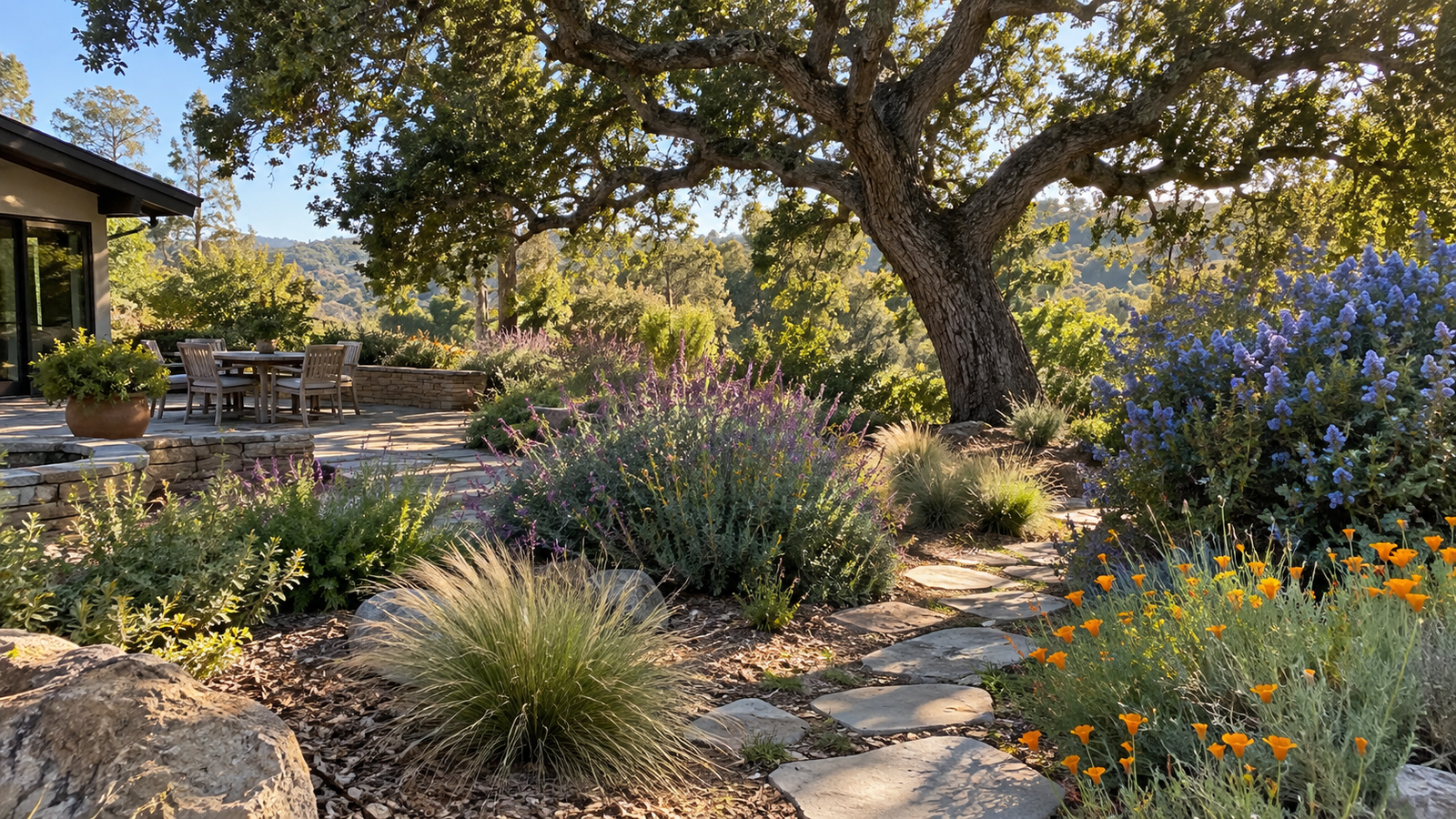
California Backyard Plant Ideas: 25 Water-Wise Choices
The best California backyard plants suit your local climate, soil, sunlight, and available water. Coast live oak, toyon, ceanothus, California fuchsia, deer grass, and native salvias can create attractive, functional landscapes where conditions match their needs. Group plants by water...
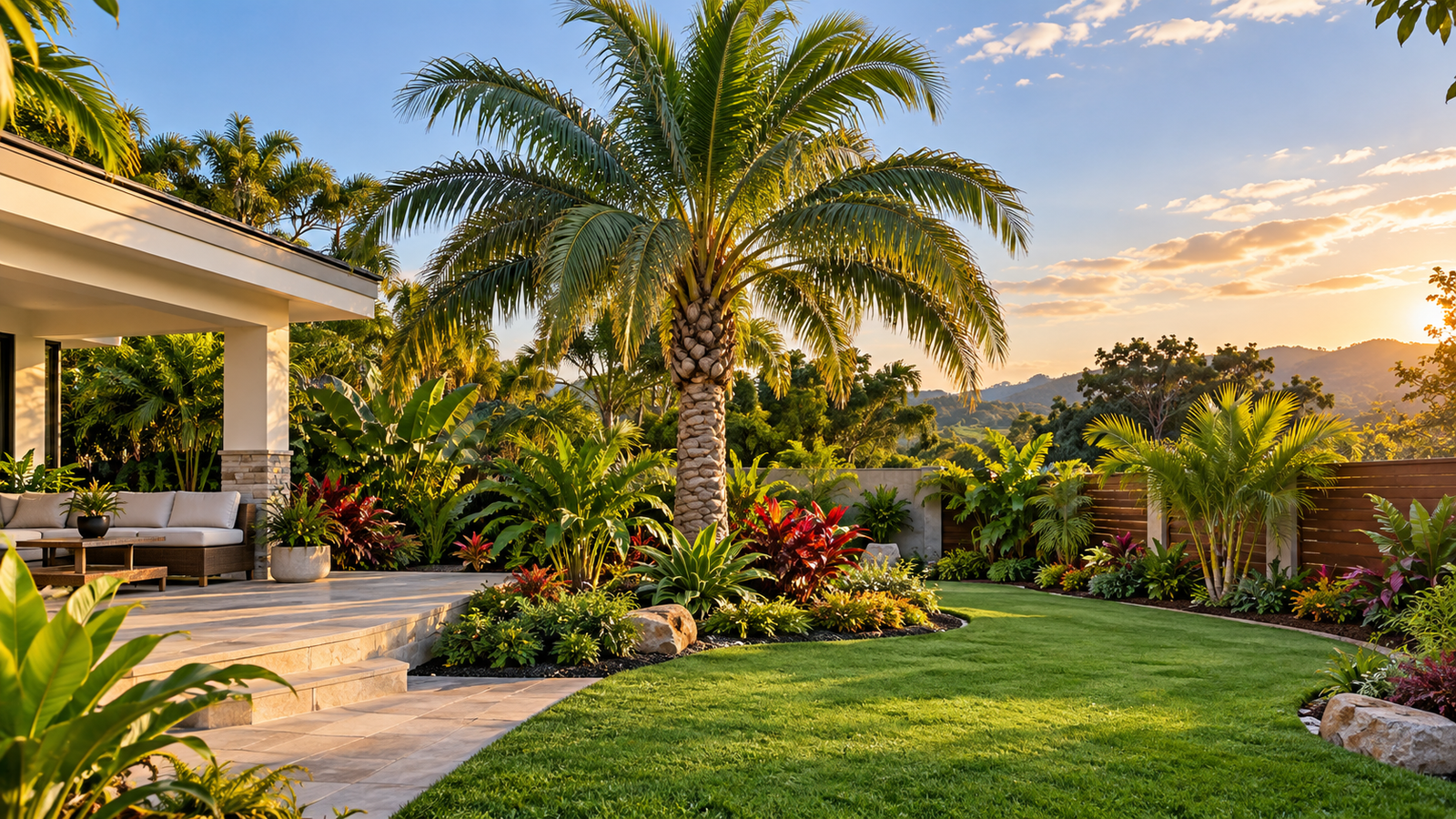
Palm Plant Ideas for Backyards: A Climate-Smart Planning Guide
Palm plant ideas for backyards work best when the palm matches your climate, mature space, sunlight, drainage, and landscape goal. Choose compact palms for small yards, clustering palms for privacy, container palms for flexibility, and solitary palms when you want...
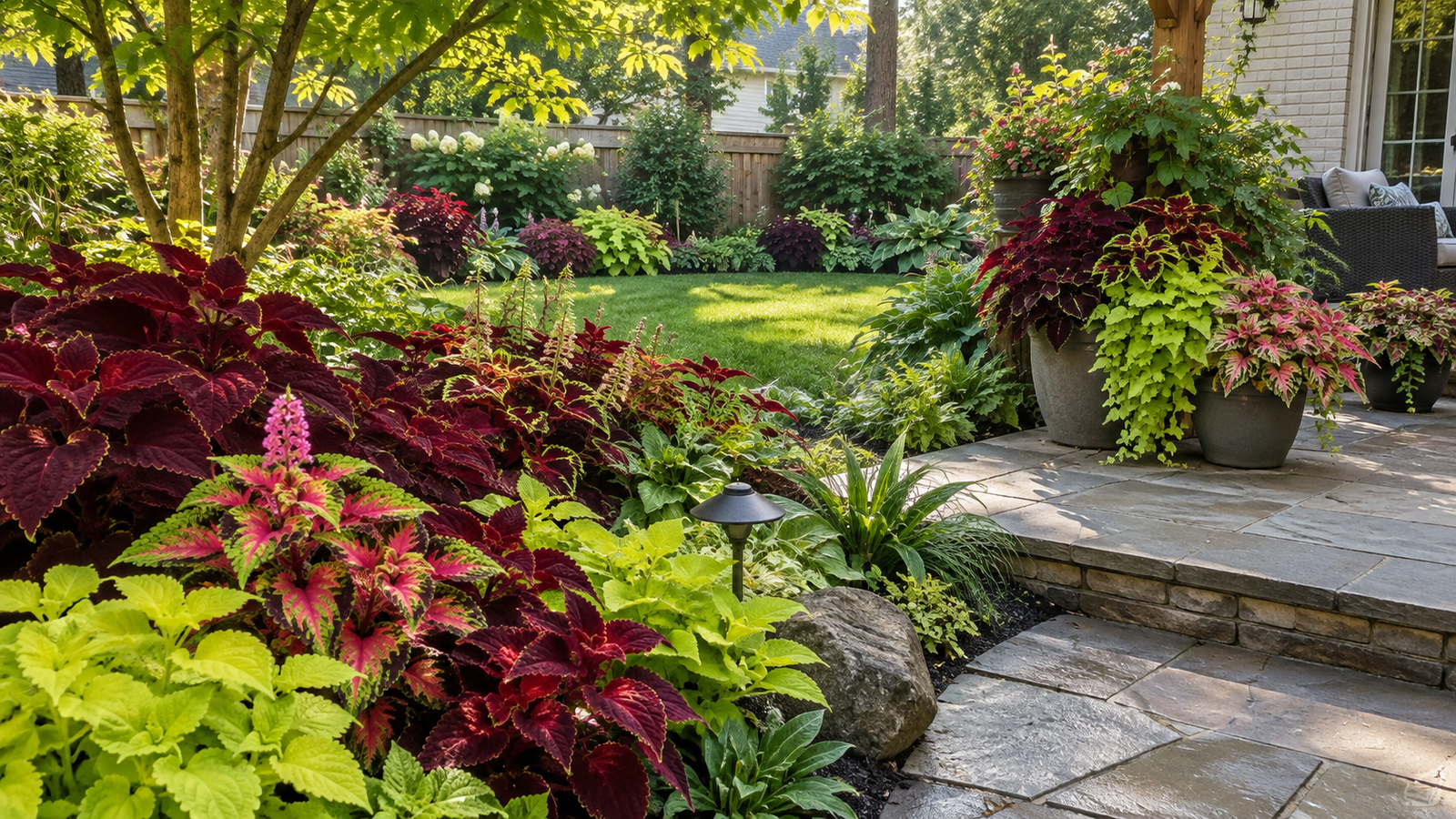
Backyard Planting Ideas With Coleus
Backyard planting ideas with coleus include layered shade borders, mass plantings, pathway edging, patio pots, tropical foliage beds, under-tree containers, and burgundy or lime focal plants. Match the cultivar's mature size, growth habit, and light tolerance to the site first,...
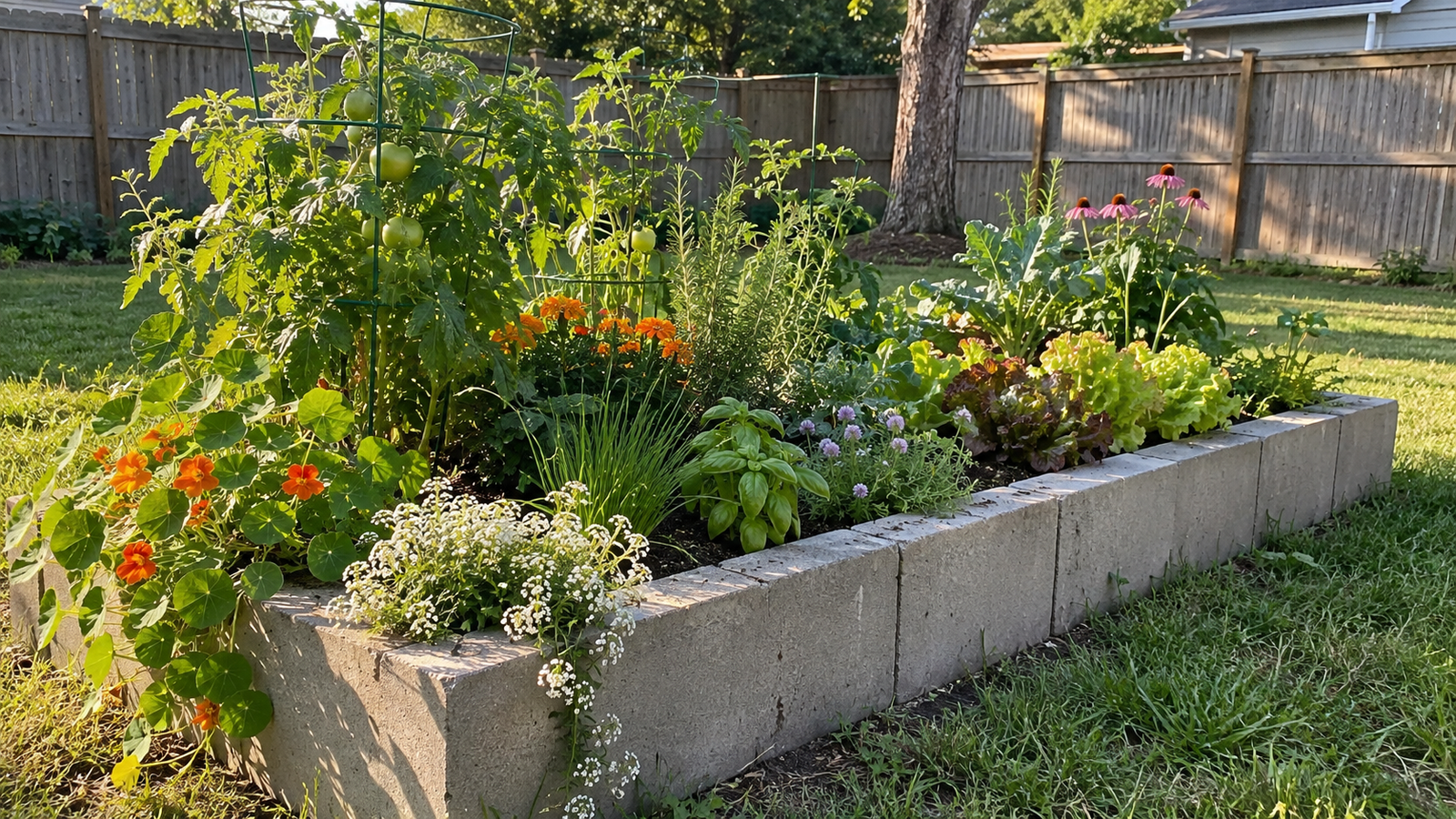
Cinder Block Planter Ideas
Cinder block planter ideas offer a practical way to grow flowers, herbs, vegetables, succulents, or ornamental plants without complicated construction. Low raised beds, narrow fence planters, stepped corner designs, and compact vertical arrangements work especially well because they balance growing...