

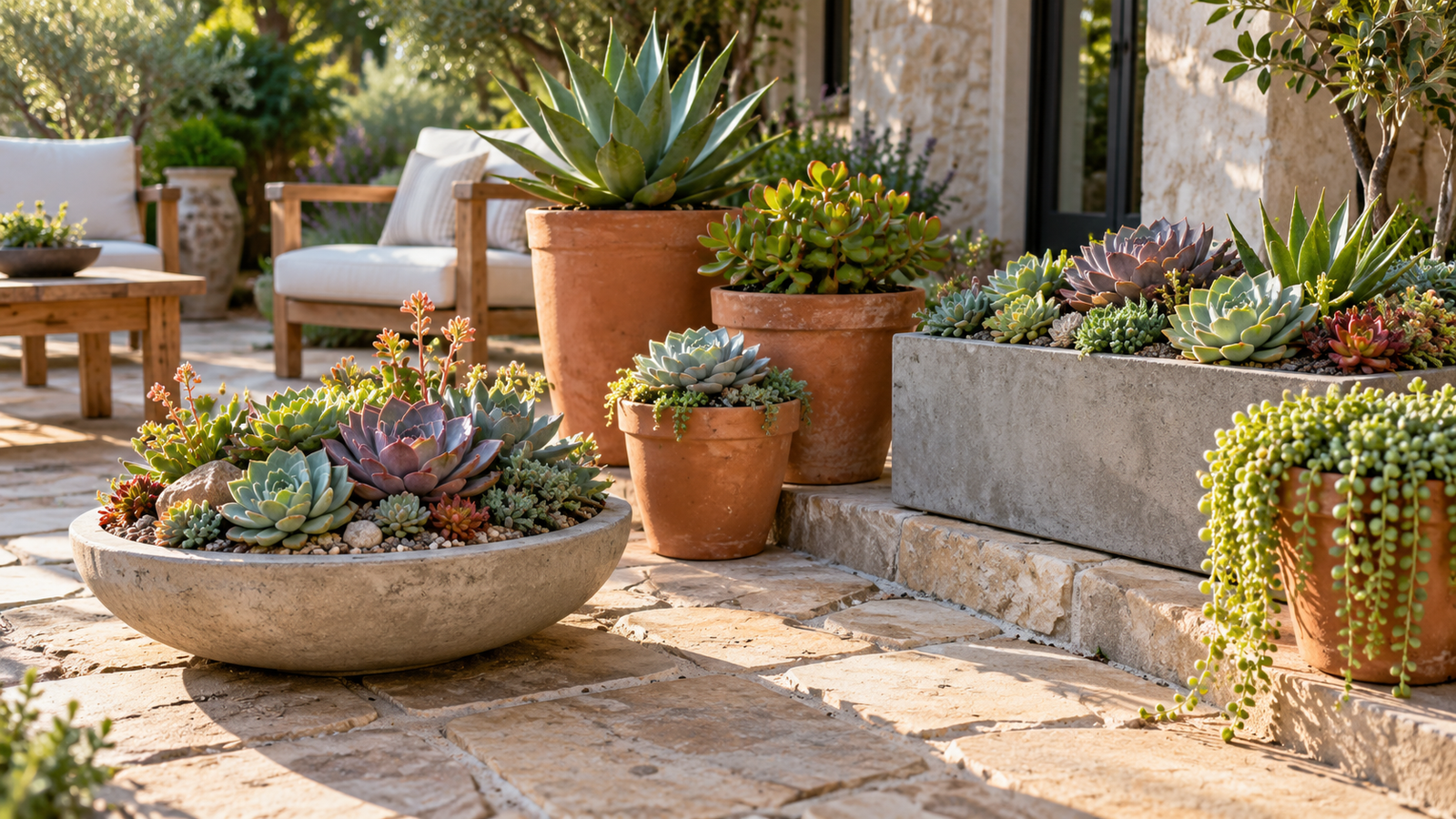
Outdoor succulent planter ideas include mixed rosette bowls, terracotta groups, concrete troughs, vertical wall displays, and hanging baskets. Choose each design according to sunlight, rain exposure, drainage, and winter conditions. Explore 21 practical options, then use the planting and care guidance to keep them attractive beyond one season.
What Makes a Good Succulent Planter?
A good outdoor succulent planter drains freely, stays stable, and holds species that need similar light, water, and temperatures. An uncovered patio receives rain; a porch under a roof may remain dry for weeks. Reflective walls and paving can intensify afternoon heat.
Leave space around growing rosettes, protect walking routes, and check whether a balcony, shelf, or wall can support the container when wet.
| Outdoor location | Suitable planter | Main consideration |
|---|---|---|
| Patio table | Low rosette bowl | Clear views and a stable base |
| Small porch | Slim box or separate pots | Unblocked entry and drainage |
| Sunny wall | Concrete trough | Reflected heat and weight |
| Balcony | Lightweight movable pots | Load limits and runoff |
| Windy corner | Low, wide heavy pot | Resistance to tipping |
| Cold region | Hardy trough or portable pots | Plant and pot winter tolerance |
Are Outdoor Succulents Safe Around Pets?
Safety depends on the exact plant. Aloe vera is toxic to cats and dogs if eaten, according to the ASPCA. The ASPCA lists Blue Echeveria (Echeveria glauca) as non-toxic, but that does not establish the safety of every succulent. Keep sharp Agave leaves away from children, pets, and narrow paths. Secure tall or top-heavy containers against knocks.
Which Outdoor Succulent Planter Ideas Work?
These 21 designs cover small tables, exposed patios, formal entrances, and space-saving walls.
1. Create a Mixed Succulent Bowl
A wide, shallow bowl presents several rosette shapes without obstructing a patio table. Place one larger rosette slightly off center, add two smaller plants, and reserve an open patch for future growth. A sunny, cold-hardy combination can use Sempervivum and a modest area of compatible hardy Sedum.
Best for: patio tables and compact shelves.
2. Group Terracotta Succulent Pots
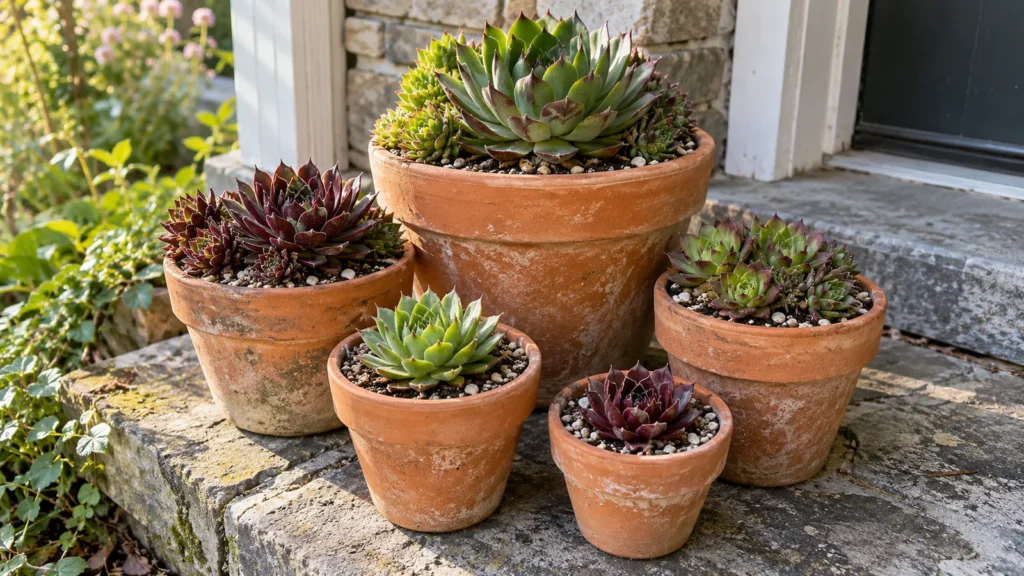
Arrange three or five terracotta pots at different heights to create a coordinated display without combining their root systems. Put a taller plant behind lower rosettes and repeat one pot color or plant form throughout the group.
Unglazed clay loses moisture through its porous walls, especially in hot wind. Check small pots individually rather than assuming every pot dries at the same rate.
Best for: porch steps and courtyard corners.
3. Feature One Large Succulent
Select a plant for its mature spread, not just its nursery size. A suitable Agave can provide strong structure in a climate where that particular species survives, but many have rigid, sharp leaf tips.
Keep the mature leaf span clear of doors, seating, and walkways.
Best for: spacious porches and entrance focal points.
4. Fill a Concrete Succulent Trough
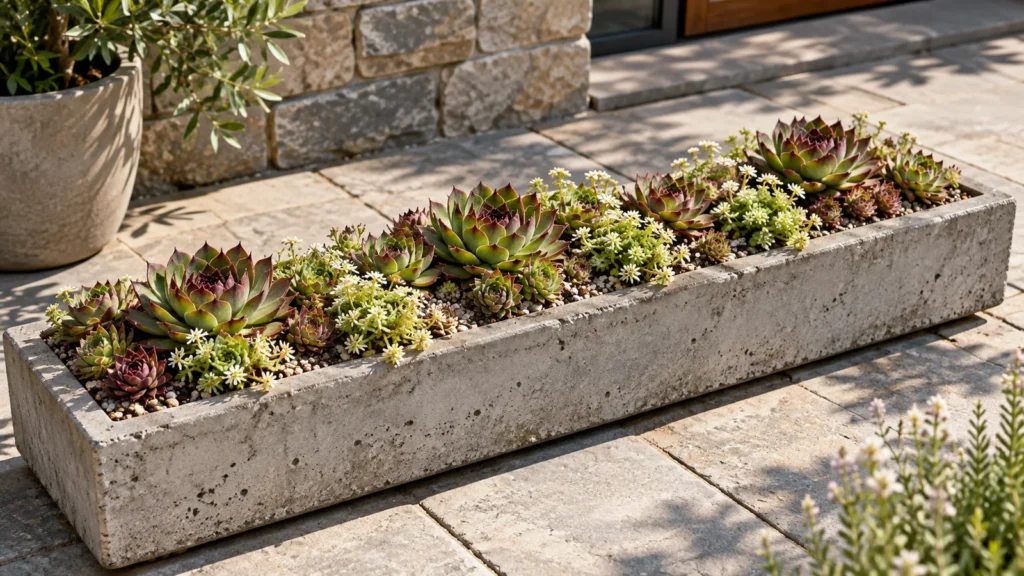
A long, low concrete trough suits modern paving and straight-edged patios. In a sunny, well-drained setting, Sempervivum with limited patches of Sedum album can create a hardy arrangement with contrasting textures.
Place the empty trough in its final position before filling it. Concrete, damp mix, stones, and mature plants add substantial weight.
Best for: modern patios and low boundary walls.
5. Use a Thriller-Filler-Spiller Design
Give a decorative container three visual roles: one upright focal plant, several lower fillers, and a trailing succulent near the rim. Arrange them for the main viewing direction while keeping crowns above the soil.
If the focal succulent needs different watering or winter protection, display it in a separate inner pot.
Best for: porch corners and statement containers.
6. Trail Succulents From a Tall Pot
Position a trailing plant toward the front or side, leaving space for growth instead of winding fragile stems around other rosettes. Burro’s tail (Sedum morganianum) suits warm, sheltered, frost-free positions; its fleshy leaves detach readily when brushed.
For a very deep decorative vessel, use a correctly sized draining nursery pot inside rather than surrounding a small root system with an unnecessarily large mass of wet mix.
Best for: sheltered patios and raised entrances.
7. Build a Succulent Planter Box
A rectangular box creates a narrow planting strip beside decking, fences, or a seating area. Stagger compact rosettes in loose groups, place lower growers toward the visible edge, and leave room to reach the soil for moisture checks.
Choose weather-resistant materials and provide unobstructed drainage. Raise wooden boxes slightly above decking to reduce persistent dampness beneath them. Check structural support and avoid letting runoff discharge onto a neighbor’s property or a slippery walking surface.
Best for: decks and narrow outdoor boundaries.
8. Make a Vertical Succulent Wall
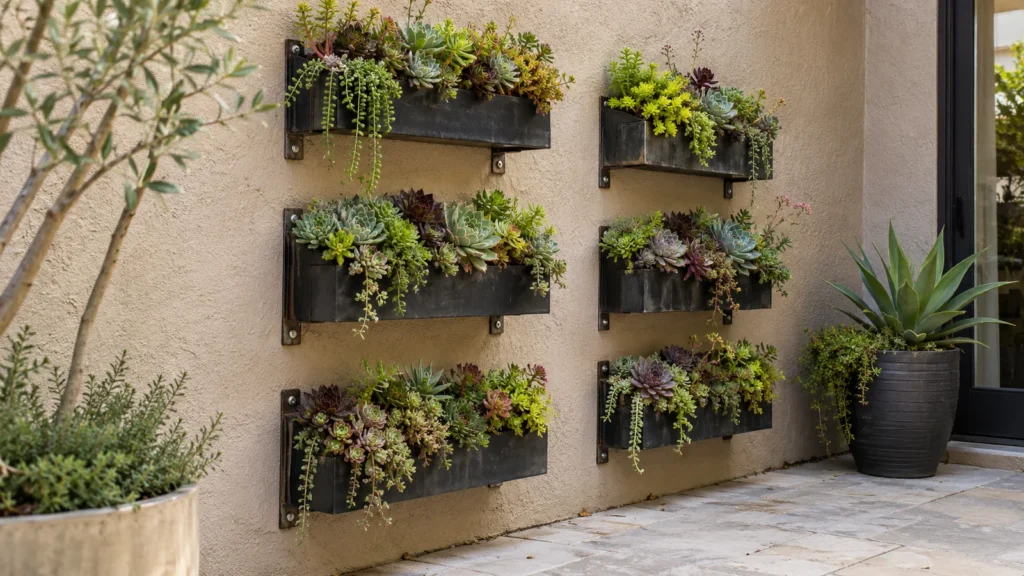
Wall-mounted modules or individual pockets turn a blank fence into growing space while leaving the patio floor clear. Removable modules make damaged plants easier to replace than a permanently sealed wall.
A vertical system has uneven moisture: upper pockets may dry rapidly while lower ones collect runoff. Secure all supports for the full wet weight, protect vulnerable wall surfaces, and provide safe drainage.
Best for: small courtyards and balconies.
9. Repurpose a Birdbath Planter
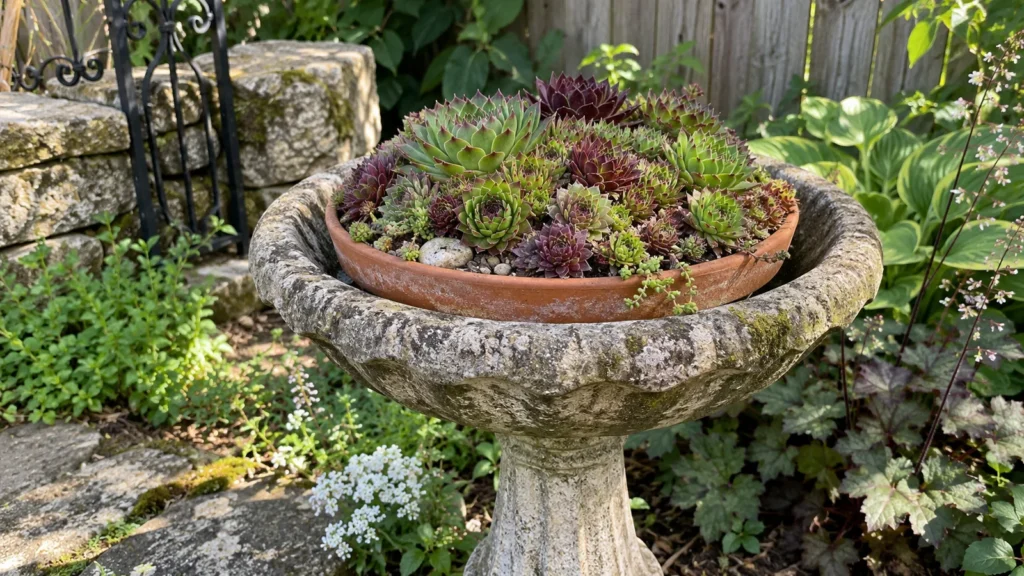
An unused birdbath lifts a compact succulent arrangement closer to eye level. Set a larger rosette off center and add smaller plants around it, allowing part of the basin to remain visible.
Most birdbaths were designed to hold water, which makes ordinary planting risky. If safe drilling is not possible, place a removable draining bowl inside and empty any collected water. If wildlife previously used the bath, provide another water source.
Best for: cottage gardens and courtyard focal points.
10. Create a Driftwood Succulent Planter
Look for a stable piece with a broad cavity, then tuck one or two miniature rosettes into a removable pot hidden inside the wood.
Soil packed into a narrow hollow can dry too quickly or trap water against the wood. Check the timber for decay and use responsibly sourced material.
Best for: rustic patios and gravel displays.
11. Plant Succulents in an Outdoor Urn
Use one upright central plant, compact rosettes around its base, and just enough trailing growth to soften one edge. A matched pair of urns can frame a broad doorway without blocking access.
The urn must have functional drainage and a stable base. Check its winter weather rating: even a hardy plant may survive a frost that cracks a water-filled ceramic container.
Best for: formal entrances and traditional porches.
12. Give Each Succulent Its Own Pot
Group them on a low shelf or paved ledge, repeat one material, and vary rosette size, leaf color, and growth habit. Each specimen retains its own soil volume and care schedule.
This is particularly useful when combining the look of frost-tender Echeveria with hardy Sempervivum. Move the tender plants inside before cold weather while the hardy pots remain outdoors.
Best for: collectors and flexible small patios.
13. Stack a Tiered Succulent Planter
Place larger or heavier specimens on the lower level and use compact rosettes in smaller upper pockets.
Inspect how the tiers drain. Water from the top can keep a lower pocket wetter than expected. A wide, stable base and reachable planting compartments matter more than total height, particularly in wind or near frequently used paths.
Best for: courtyard corners and compact porches.
14. Hang a Succulent Basket
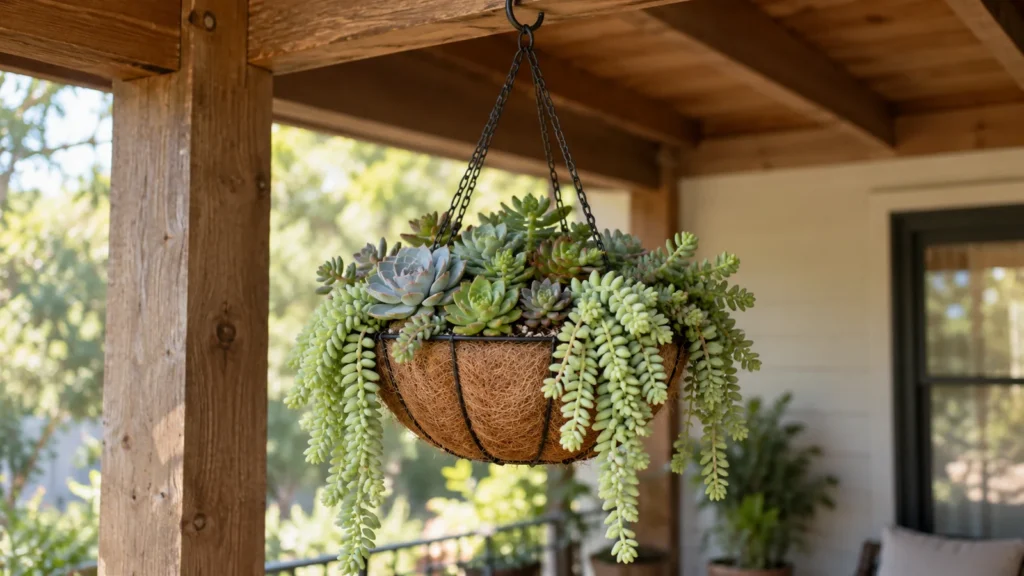
Combine a few compact plants in the middle with compatible trailing varieties around selected edges.
Hanging containers face wind and often dry faster than grounded pots. Use anchors rated for wet weight and inspect the chain or cord periodically. Position the basket so nobody walks into it and water cannot drip onto seating or slippery flooring.
Best for: sheltered balconies and covered patios.
15. Fill a Strawberry Pot With Succulents
Fill openings with small rosettes that will not quickly outgrow them, and use the top opening for a slightly larger matching plant.
Pocket orientation affects drying: a sunny outer pocket may need attention before one on the shaded side. Check root-zone moisture separately and ensure drainage at the bottom remains open.
Best for: small courtyards and narrow patio corners.
16. Try a Hardy Hypertufa Trough
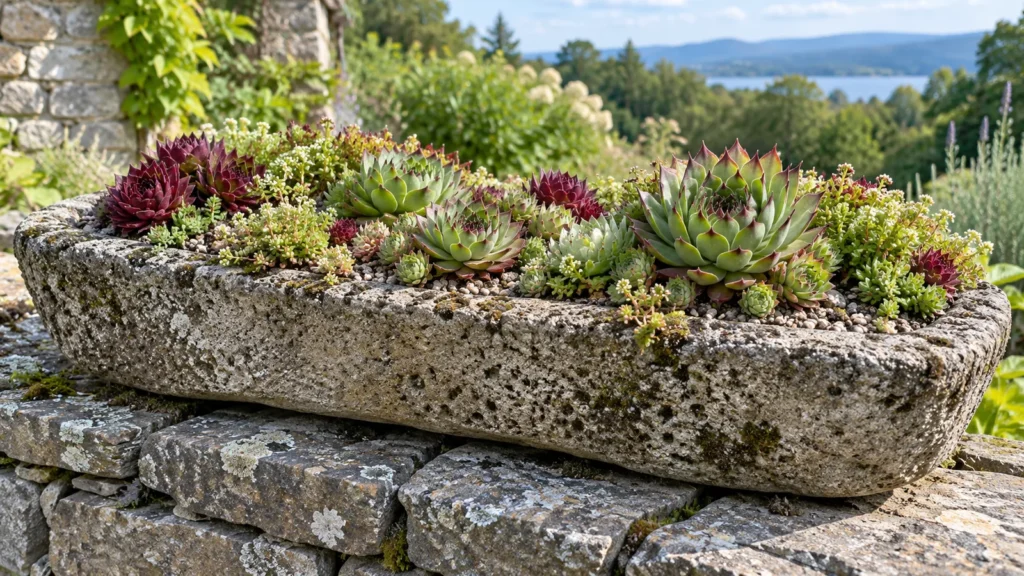
Hypertufa has a rough, stone-like finish that complements alpine-style plantings. Arrange Sempervivum rosettes between small groups of suitable hardy Sedum, leaving a little exposed grit to show their shapes. Choose a bright site with effective drainage and space for offsets to spread.
Confirm that the trough’s construction withstands local freeze-thaw conditions, rather than assuming every hypertufa mixture is equally durable.
Best for: sunny low walls and cooler gardens.
17. Arrange Succulents by Color
Create a limited palette using blue-green, silver, burgundy, or warm green foliage. Vary the size and texture of the leaves so similar colors do not merge into one flat patch. Compatible Sempervivum cultivars can produce an attractive hardy mosaic without mixing plants with conflicting requirements.
Color is not fixed. Light, season, and growing conditions can change leaf tones, so avoid purchasing plants solely for their appearance in one photograph.
Best for: decorative patio tables and focal pots.
18. Make a Rock-and-Succulent Garden
Position one larger rock off center, cluster two or three compact succulents nearby, and leave visible ground between them.
Stones are decoration, not a replacement for drainage holes. Avoid burying rosette crowns or covering all the soil with a thick top layer that makes moisture difficult to check. Use rocks that fit safely without crowding roots.
Best for: gravel gardens and modern tabletops.
19. Choose a Modern Black Planter
A matte black planter creates strong contrast with pale blue, gray-green, or red-tipped rosettes. Use one dominant specimen and a restrained supporting group, leaving space around the rim rather than filling every gap.
Dark surfaces can absorb considerable heat in exposed locations. On a very hot patio, consider morning sun, afternoon protection, or a lighter inner pot.
Best for: contemporary patios and minimalist entrances.
20. Build a Tabletop Succulent Garden
Select a low, stable bowl with small rosettes, keeping the final arrangement below normal conversation sight lines. Leave the edges clear of trailing stems that might catch on sleeves, plates, or serving dishes.
Choose a container that is easy to lift for watering and cleaning. Small soil volumes can dry rapidly outdoors, while an unprotected bowl can become waterlogged in heavy rain.
Best for: outdoor dining tables and small balconies.
21. Layer Large and Small Planters
Build a larger outdoor display around one dominant container, two medium pots, and a few smaller accents. Set the biggest pot near a wall or seating boundary, stagger the others forward, and repeat one foliage tone or planter material for cohesion.
Independent pots make it easier to move frost-sensitive species, replace struggling plants, or adjust sunlight exposure as the seasons change.
Best for: wide patios and outdoor seating areas.
Which Succulents Grow Best Outdoors?
Choose plants by local winter lows, rainfall, sun exposure, and mature size. Many Sempervivum and hardy Sedum suit sunny outdoor containers, while most commonly sold Echeveria need frost protection. Some Agave and Aloe species tolerate outdoor conditions, but hardiness varies widely and cannot be assumed from the genus alone.
| Planter arrangement | Possible plants | Important condition |
|---|---|---|
| Hardy rosette bowl | Sempervivum cultivars | Sun and sharp drainage |
| Cold-climate trough | Sempervivum with Sedum album | Room for spreading growth |
| Frost-free color bowl | Compatible Echeveria | Bright, sheltered exposure |
| Trailing sheltered pot | Sedum morganianum | Frost protection and gentle handling |
| Architectural focal pot | Suitable Agave species | Species-specific size and safety |
Can Different Succulents Share a Pot?
Yes, if their light, watering, growth rate, and winter requirements match. Compare the care of named species, not just their appearance. Fast-spreading groundcovers may overtake slow rosettes. When plants require conflicting care, group separate inner pots together for the same visual effect without forcing a shared root environment.
How Do You Arrange Succulents?
Start with one focal rosette, add smaller companions, and preserve open growing space. In a wall-facing planter, put taller plants behind lower ones. For a bowl viewed from all sides, check the composition from several angles before planting. Set crowns above the finished soil surface.
Example: A 40 cm Outdoor Succulent Bowl
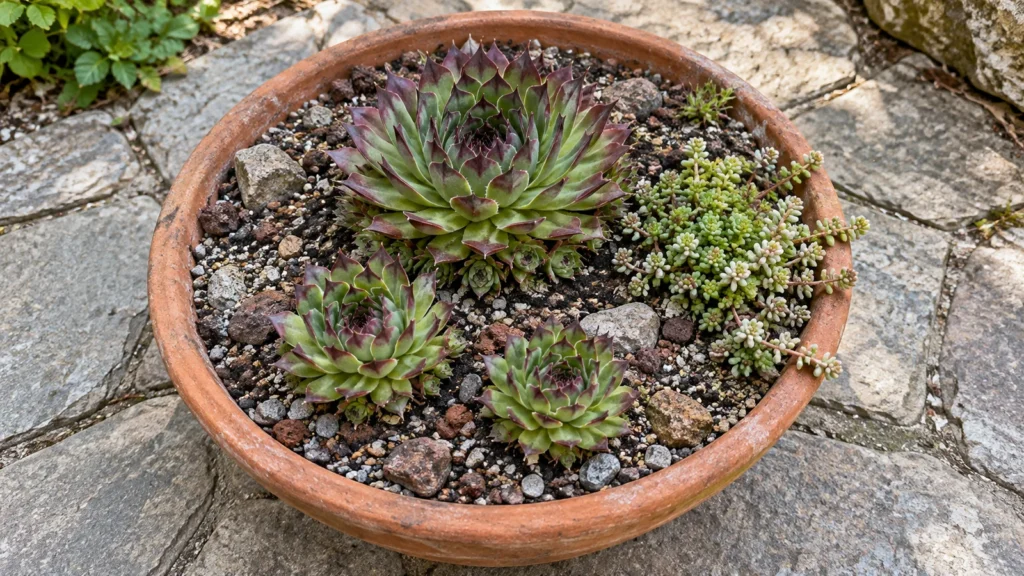
For an illustrative sunny, hardy arrangement, use a draining bowl approximately 40 cm wide, one larger Sempervivum, two smaller Sempervivum plants, and a modest patch of Sedum album.
- Fill the container with an appropriate fast-draining succulent mix, leaving space below the rim for watering.
- Position the largest rosette just behind center and the two smaller rosettes asymmetrically in front.
- Set the Sedum near one side, leaving open soil for spreading and future offsets.
- Firm the mix gently, keep crowns clear, and water according to the plants’ condition and the moisture of the mix.
Adjust the arrangement to the actual plant sizes, growth habits, and climate.
Which Succulent Planter Material Is Best?
No single material works everywhere. Consider how fast the container dries, how easily it moves, whether its surface overheats, and whether it survives local winter weather.
| Material | Main advantage | Main drawback |
|---|---|---|
| Terracotta | Porous and classic | Dries quickly; some crack in frost |
| Concrete | Stable and architectural | Very heavy when filled |
| Glazed ceramic | Broad choice of finishes | May retain moisture longer |
| Wood | Fits rustic trough designs | Can decay when persistently wet |
| Metal | Clean lines and reused designs | Can overheat in direct sun |
| Resin | Lightweight and portable | May need extra stability |
| Hypertufa | Natural stone-like texture | Weather resistance varies |
A planter without holes can still act as a decorative outer shell if a smaller draining container fits inside it. Empty collected water promptly.
What Soil Do Outdoor Succulents Need?
Use a fast-draining cactus or succulent container mix suitable for the chosen plants, rather than dense garden soil. Outdoor planters must handle rainfall as well as watering, so functional holes in the base are essential. A mesh screen over an unusually large hole can retain mix without sealing the opening.
Do not add a gravel layer under the potting mix as a drainage substitute. Water can remain in the finer soil above that layer, as University of Illinois Extension explains. Decorative grit on the surface is optional; keep it thin enough to inspect moisture and avoid burying crowns.
How Much Sun Do Succulents Need?
Light requirements vary by species and climate. Many hardy Sempervivum grow well in sunny positions, while some tender rosettes need relief from intense afternoon heat. A porch beside pale paving or a reflective wall may receive more heat than its compass direction suggests.
How Do You Prevent Succulent Sunburn?
Acclimate nursery-grown succulents gradually. Begin in a bright, sheltered spot and increase direct exposure as appropriate for the species. Pale, scorched patches after a sudden move suggest excessive light; shift the pot to a more suitable place.
How Often Should You Water Succulents?
Check moisture within the root zone rather than watering every seven days. Water when the mix has dried sufficiently for the particular plant, then let excess run out. Rainfall, wind, pot material, temperature, and plant size all affect the interval. A small terracotta pot may dry sooner than a large glazed bowl beside it.
Empty saucers and decorative outer pots.
How Do You Maintain Succulent Planters?
Inspect planters after storms, prolonged rain, heatwaves, and windy periods. Remove dead leaves, check for pests, clear drainage outlets, and make sure trailing stems are not obstructing paths.
When Should You Repot an Arrangement?
Replant when roots have filled the available space, drainage has deteriorated, or one vigorous species crowds out the others. Separate established offsets where appropriate, preferably during an active growing period.
Can Succulent Planters Stay Outside?
Only when both the plant and planter tolerate the local winter. Many Sempervivum and suitable hardy Sedum survive freezing conditions in sharply drained containers, but most common Echeveria should be protected from frost.
| Plant group | Winter approach |
|---|---|
| Sempervivum | Often suitable outdoors; protect drainage |
| Hardy Sedum | Check species and local conditions |
| Echeveria | Bring most varieties into frost-free shelter |
| Agave and Aloe | Verify the exact species before winter |
For tender plants, prepare a bright, suitable protected space before cold weather arrives. In rainy winters, shelter can matter as much as temperature. The Royal Horticultural Society emphasizes winter drainage and protection for vulnerable succulents.
Why Do Succulent Planters Fail?
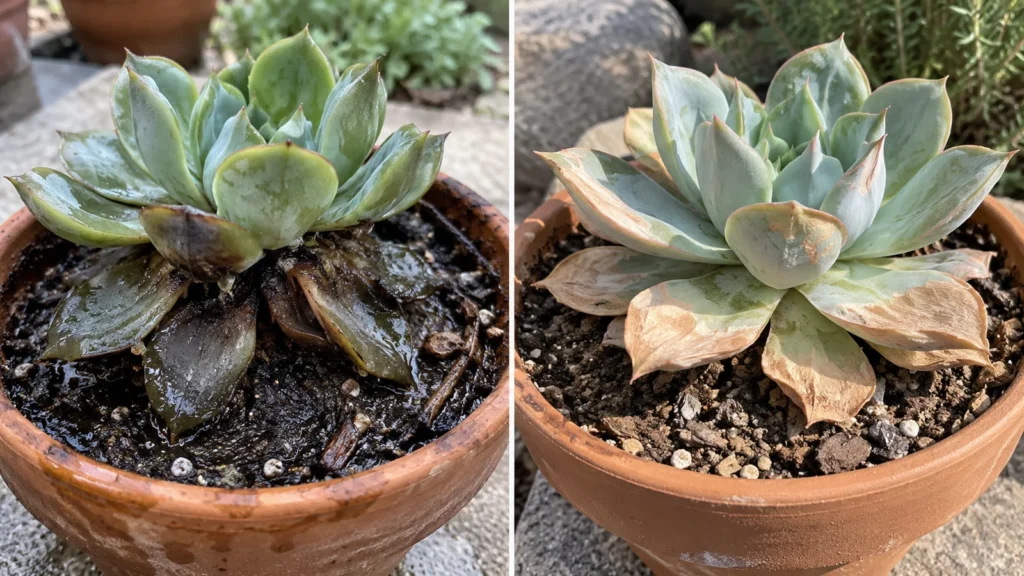
Most failures arise from poor drainage, unsuitable light, cold exposure, or overcrowding. Inspect conditions before applying a remedy. A plant with soft growth may be rotting rather than thirsty, while an elongated stem often signals insufficient light.
| Warning sign | Possible cause | First response |
|---|---|---|
| Soft, collapsing leaves or stem | Excess moisture or rot | Examine roots and drainage |
| Mix remains wet for days | Rain exposure or poor drainage | Check outlets and potting mix |
| Long, weak new growth | Inadequate light | Improve exposure gradually |
| Bleached, dry patches | Sudden strong sunlight | Provide appropriate shelter |
| Crowded, shaded rosettes | Spreading or mature growth | Divide or rearrange plants |
| Planter leans or tips | Wind or uneven weight | Stabilize or change location |
If rot is present, remove badly affected tissue with clean tools and correct the moisture problem before replanting any salvageable sections. Do not assume every damaged succulent can recover. When uncertain, isolate the affected pot and inspect it regularly.
What Should You Check Before Planting?
Choose the exact location, then confirm suitable sunlight, effective drainage, species compatibility, and enough mature growing space. Check the filled container’s stability and support, especially on balconies, fences, and hanging brackets.
For designs centered on larger yards, compare these arrangements with our backyard succulent planter ideas. You can also browse the outdoor planter ideas collection for other plant and container styles, or find broader layouts in backyard patio planter ideas.
What Are Common Succulent Planter Questions?
What are the best outdoor succulent planter ideas for small patios?
Choose compact bowls, grouped pots, narrow boxes, or secure vertical pockets. These provide visual variety while leaving circulation space clear. Match the design to actual sunlight and rain exposure.
Which container is best for outdoor succulents?
A stable container with drainage holes and enough room for roots is best. Terracotta, concrete, ceramic, and resin can all work if their weather resistance and weight suit the site.
Can I mix different succulents in one planter?
Yes, when the species share light, water, and temperature requirements. Put plants with conflicting winter needs into separate pots and group the containers together instead.
Do outdoor succulent planters need drainage holes?
Yes, root-zone drainage is essential. If a decorative pot has no holes, grow the plants in a removable draining inner pot and empty any water that collects around it.
Can succulent planters survive heavy rain?
Some can if the plants tolerate the climate and the mix drains effectively. Shelter portable pots during prolonged wet weather when the growing medium remains saturated.
How often should I water outdoor succulents?
Water according to root-zone dryness, not a fixed weekly schedule. Small pots, wind, heat, rain, and seasonal growth all change how quickly a container needs attention.
Do outdoor succulents need full sun?
Not all of them. Many hardy types like strong light, but some rosette succulents need afternoon protection in hot regions. Increase sun exposure gradually for newly purchased plants.
Can succulents survive winter in outdoor pots?
Cold-hardy Sempervivum and suitable Sedum often can with excellent drainage. Most common Echeveria need frost-free protection; always verify the individual species and container.
Backyard Plant Bed Ideas: 21 Layouts for Every Yard
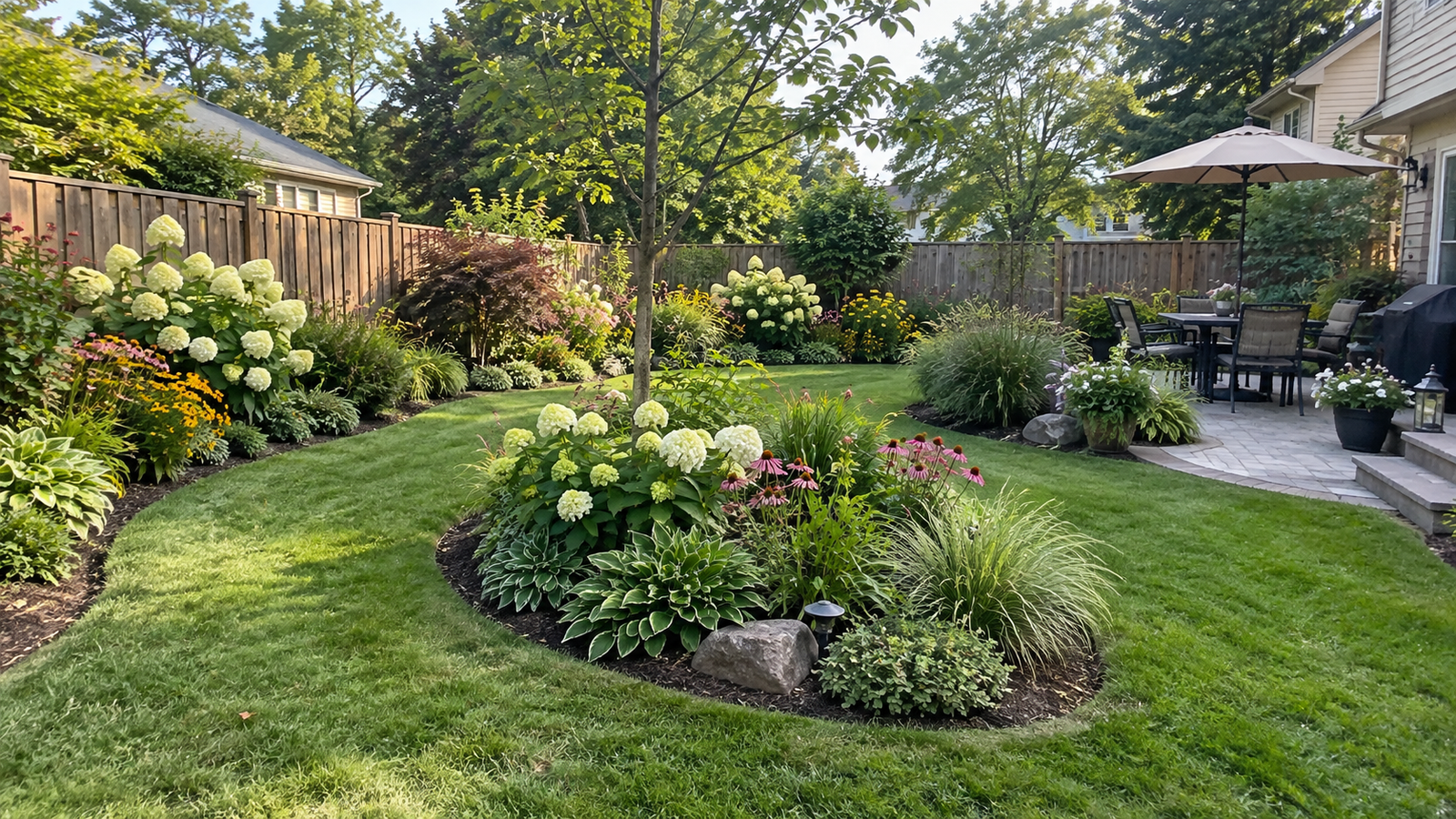
The best backyard plant bed ideas preserve usable space while adding structure and color. Border beds frame lawns, island beds create focal points, fence beds offer screening, curved beds soften straight edges, and raised beds organize growing areas. Choose according...
Backyard Foundation Planting Ideas: 21 Ways to Plant Along Your House
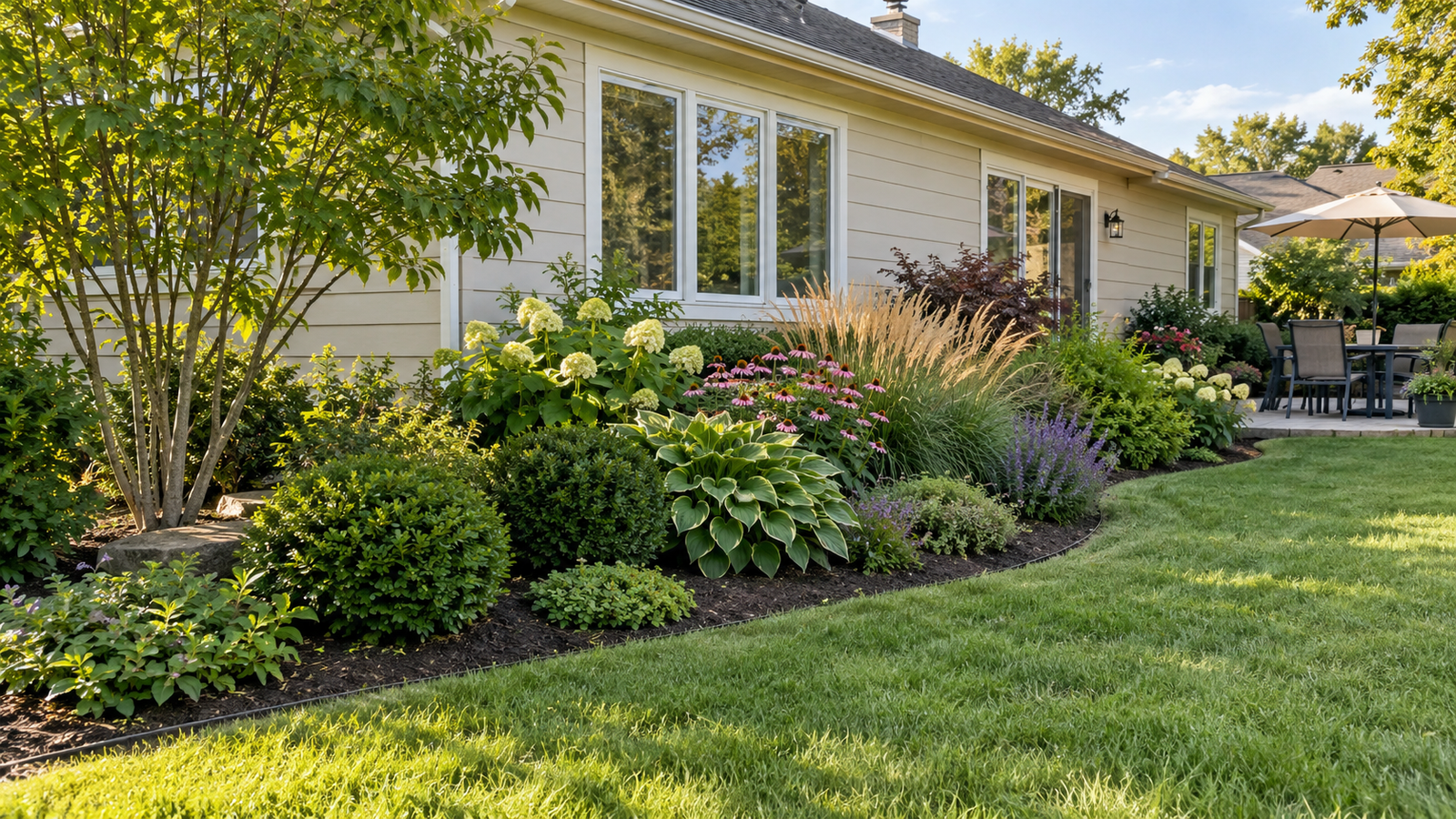
The best backyard foundation planting ideas use compact shrubs, flowering perennials, grasses, and groundcovers to soften exterior walls without obstructing windows, drainage, or access. Choose a layout that fits the available bed depth, then select plants for their mature size,...
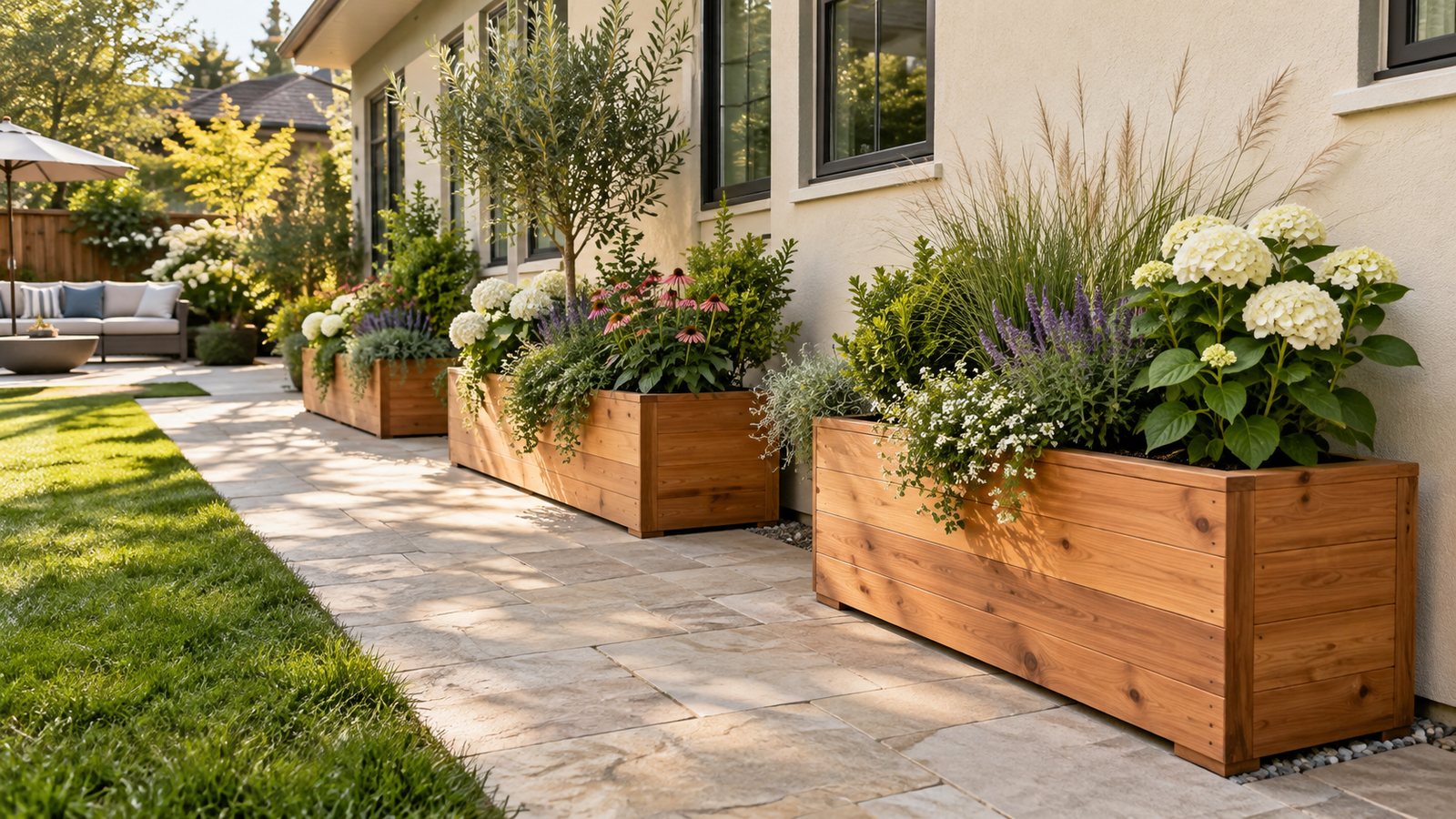
Backyard Planter Box Along House Ideas: 17 Practical Designs
The best backyard planter box along house ideas combine attractive planting with safe, practical placement. Freestanding troughs, cedar boxes, low window planters, and trellis containers can transform a plain wall without blocking access or trapping moisture. Choose a design that...
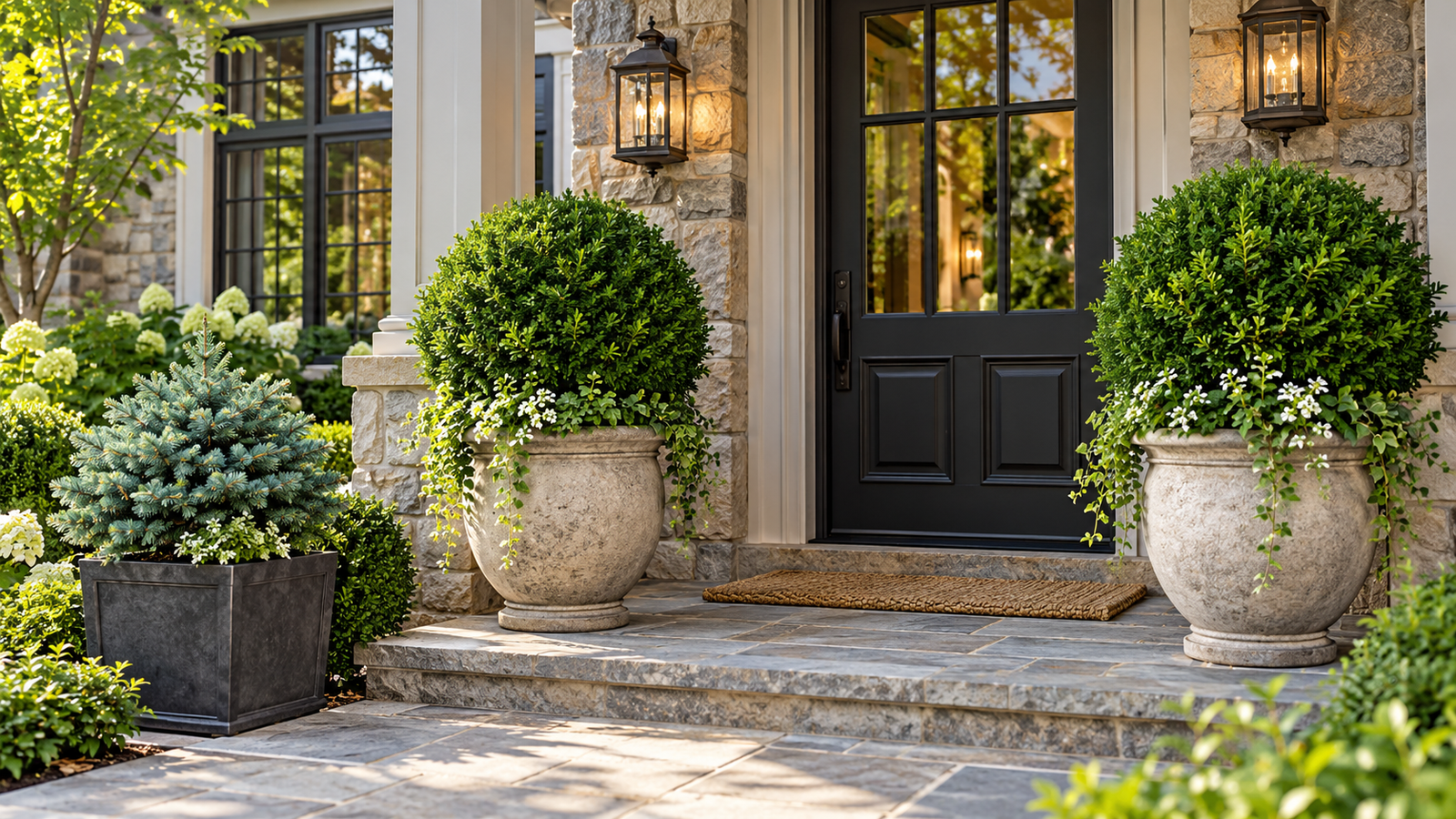
Evergreen Planter Ideas for Beautiful Outdoor Spaces Year-Round
Evergreen planter ideas bring lasting color, shape, and structure to front doors, patios, porches, and balconies. From paired entrance shrubs to low-growing junipers and decorative dwarf conifers, the right arrangement can make an outdoor space feel finished even when seasonal...
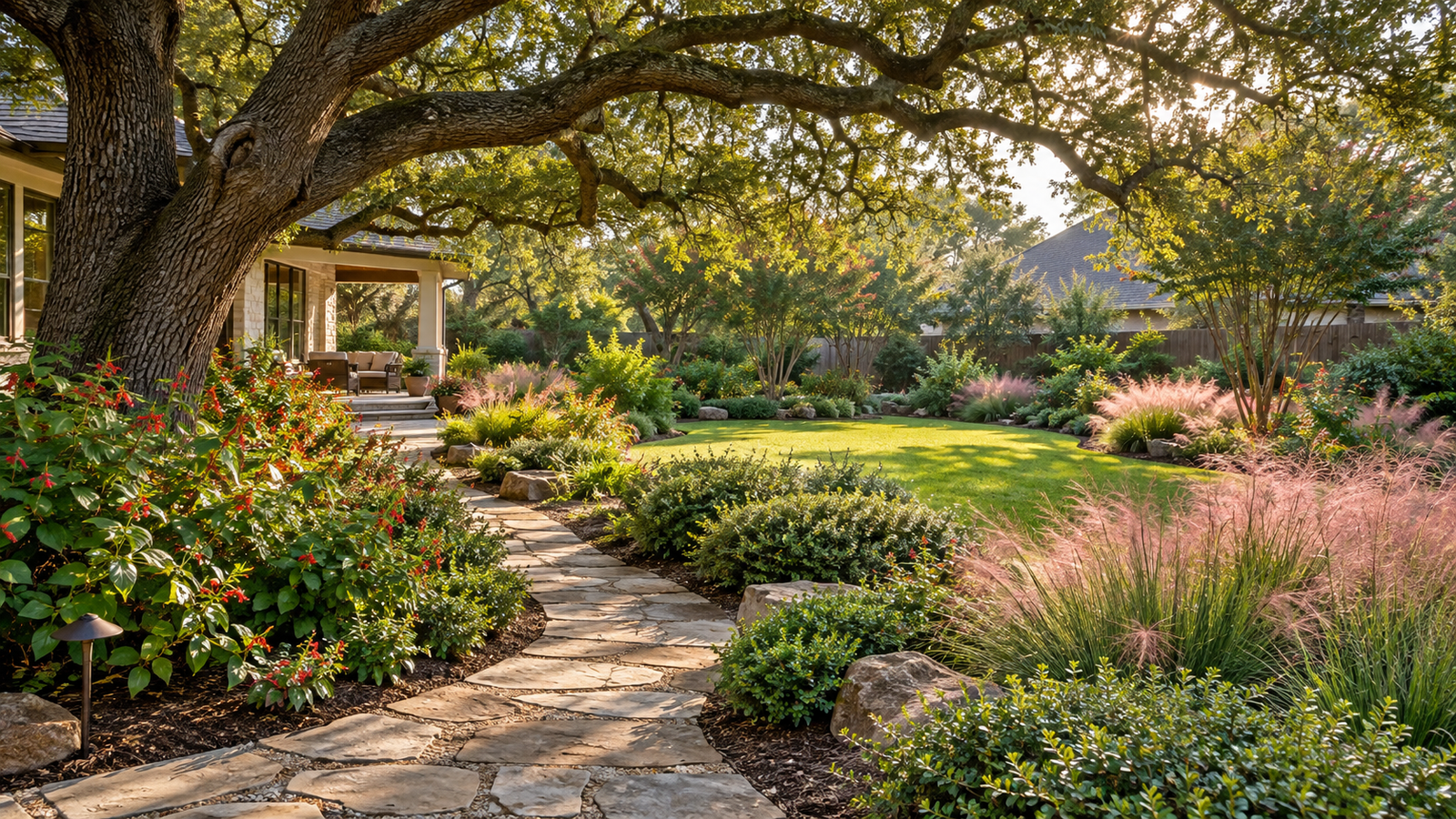
Houston Backyard Plant Ideas for Sun, Shade, Privacy, and More
The best Houston backyard plant ideas combine heat-tolerant flowers, dependable evergreen shrubs, shade-friendly natives, and plants matched to local soil. Yaupon holly provides structure, southern wax myrtle creates privacy, Turk’s cap flowers in partial shade, and Gulf muhly adds texture....
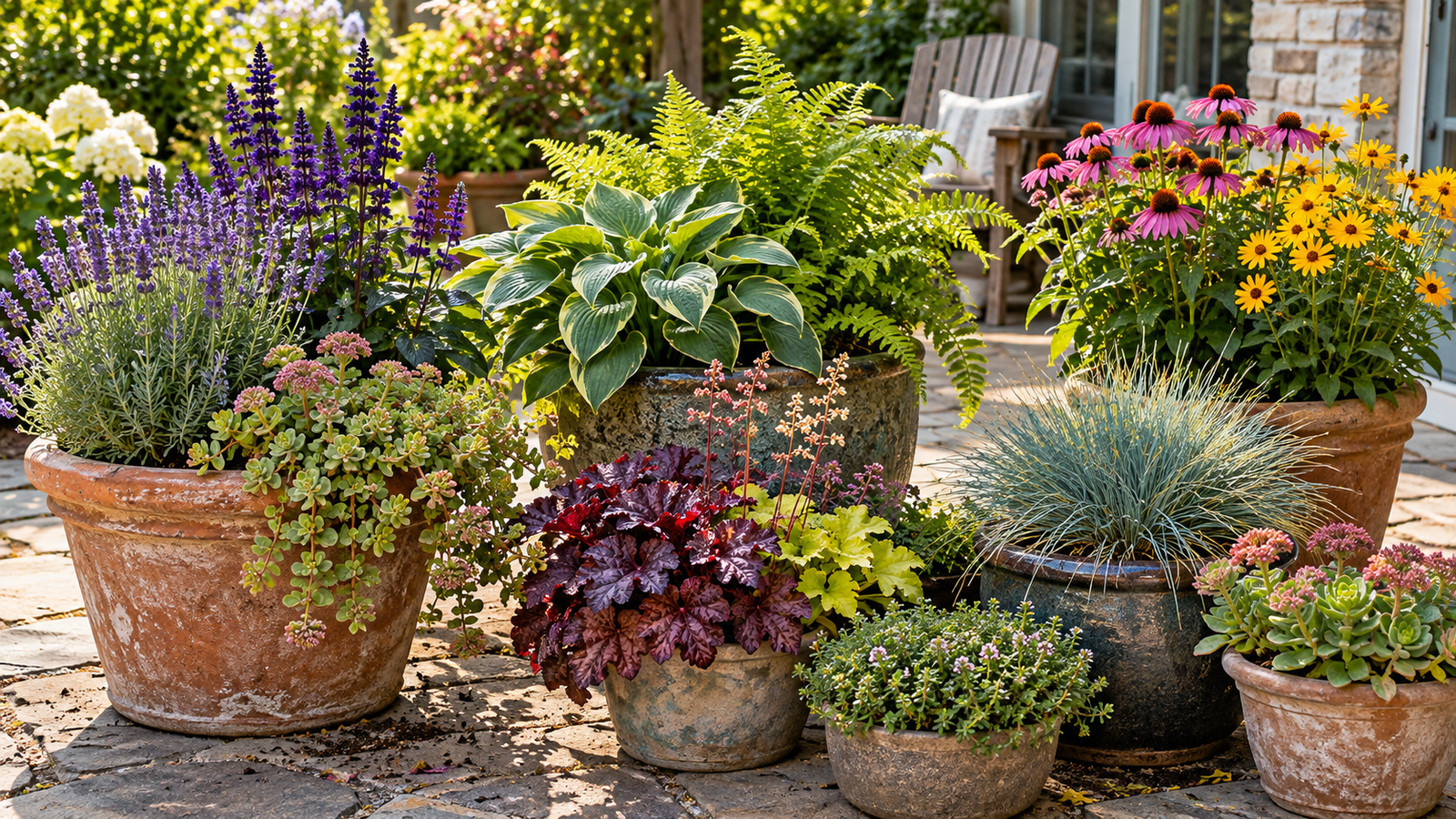
Perennial Planter Ideas
Perennial planter ideas work best when plants share the same sunlight, moisture, drainage, and growing-space requirements. Choose suitable plants and containers, and a display can return for several years with less seasonal replanting.
The secret is planning for mature growth rather...
California Backyard Plant Ideas: 25 Water-Wise Choices
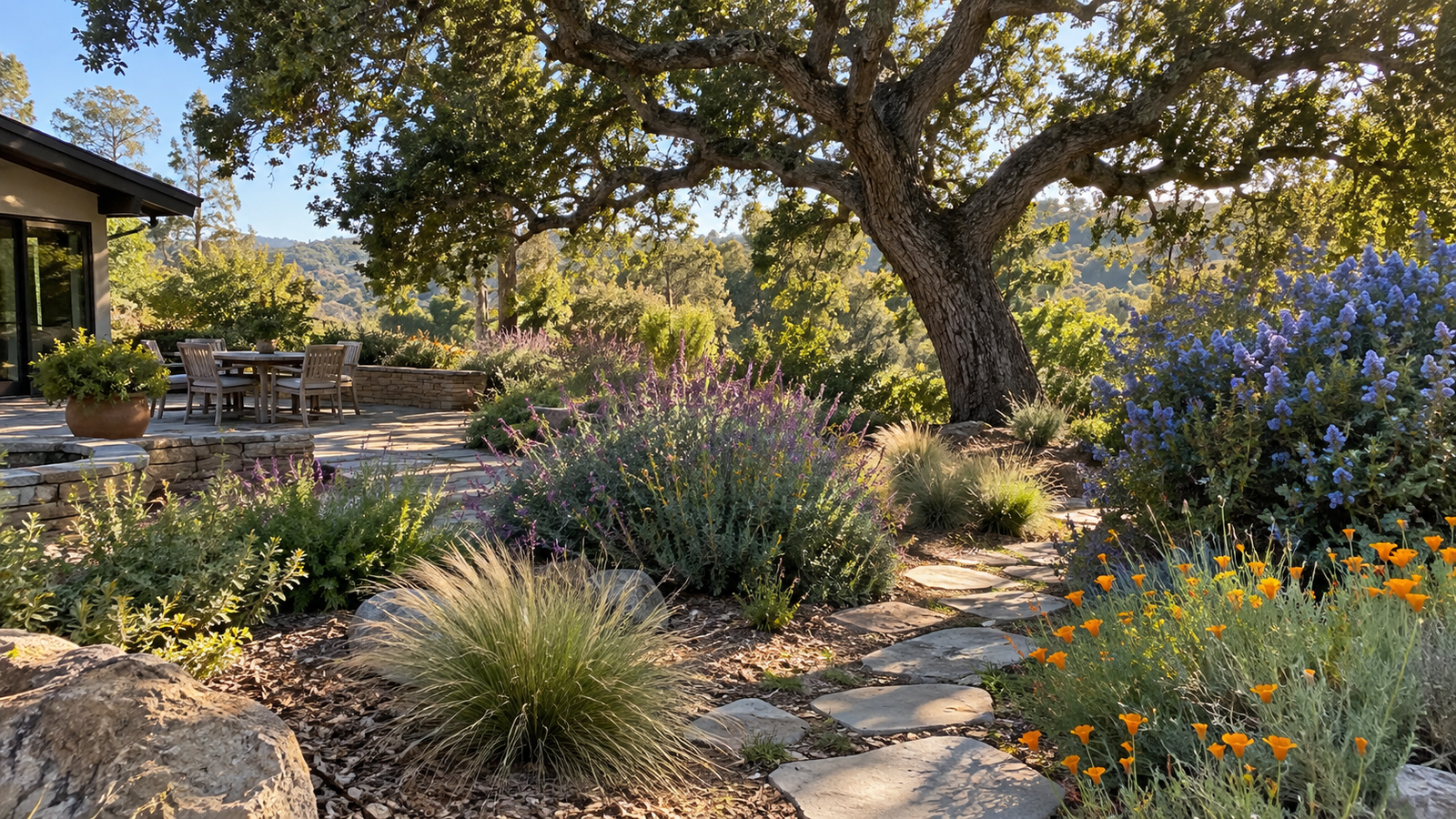
The best California backyard plants suit your local climate, soil, sunlight, and available water. Coast live oak, toyon, ceanothus, California fuchsia, deer grass, and native salvias can create attractive, functional landscapes where conditions match their needs. Group plants by water...
Palm Plant Ideas for Backyards: A Climate-Smart Planning Guide
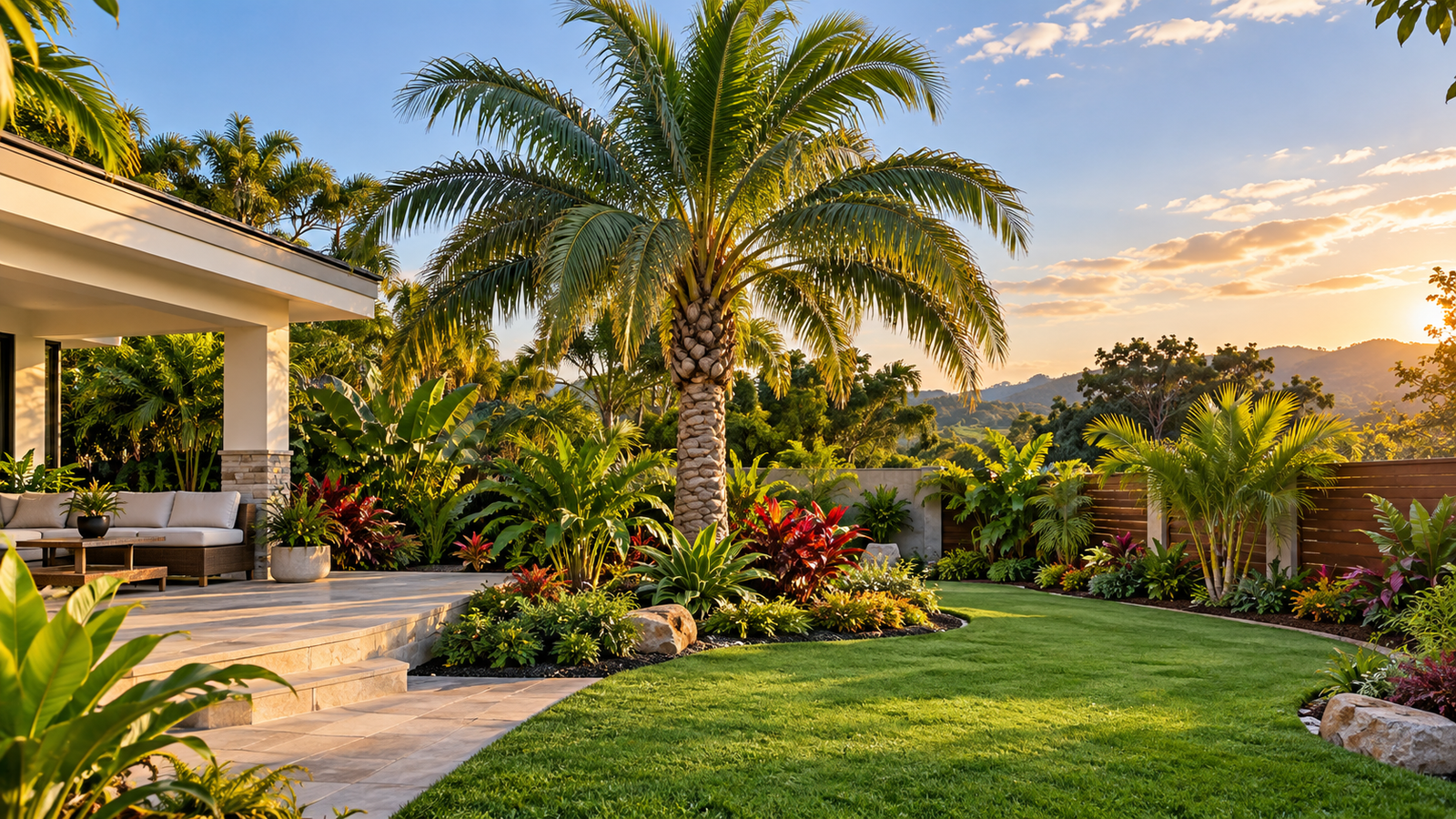
Palm plant ideas for backyards work best when the palm matches your climate, mature space, sunlight, drainage, and landscape goal. Choose compact palms for small yards, clustering palms for privacy, container palms for flexibility, and solitary palms when you want...
Backyard Planting Ideas With Coleus
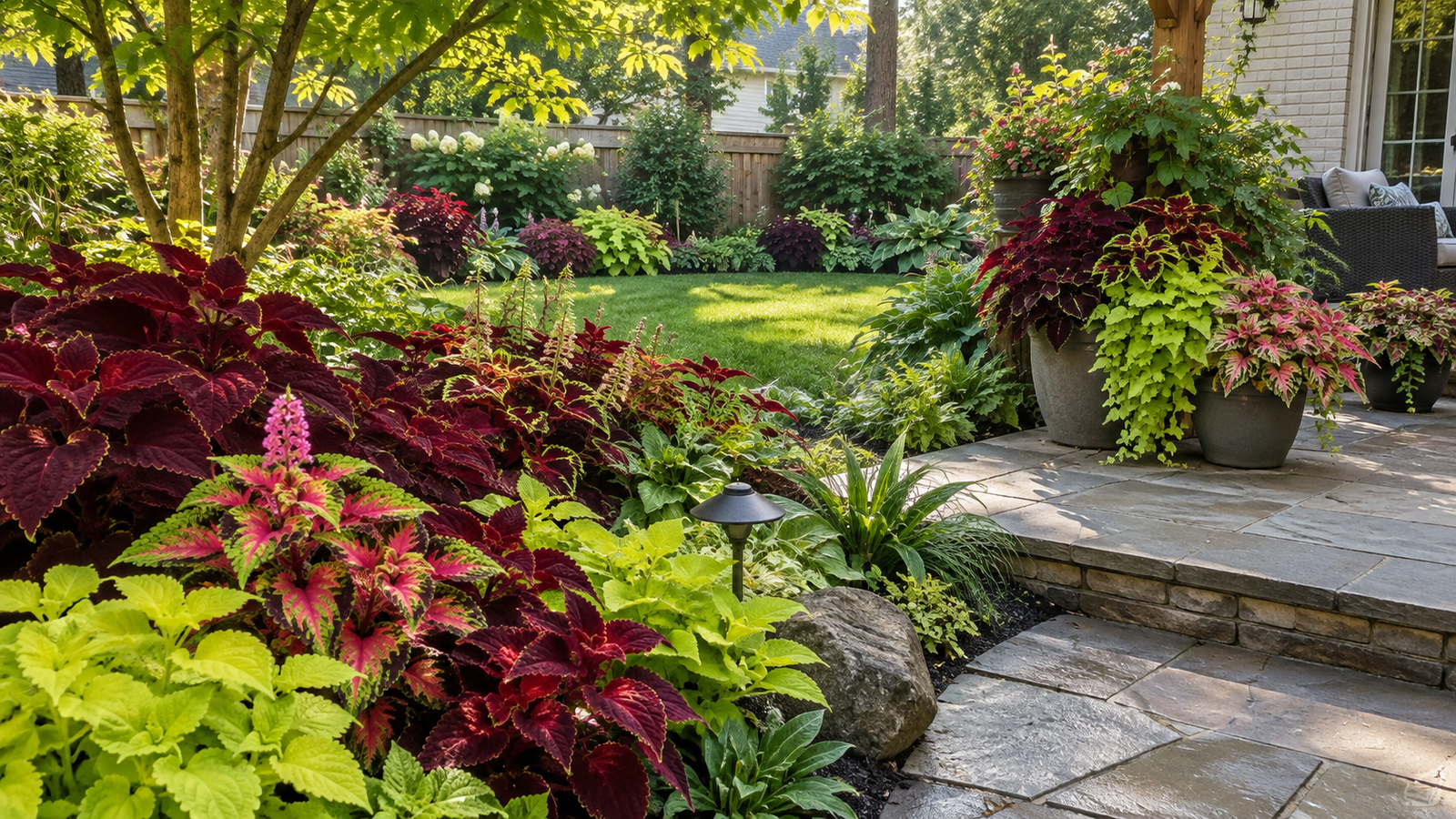
Backyard planting ideas with coleus include layered shade borders, mass plantings, pathway edging, patio pots, tropical foliage beds, under-tree containers, and burgundy or lime focal plants. Match the cultivar's mature size, growth habit, and light tolerance to the site first,...
Cinder Block Planter Ideas
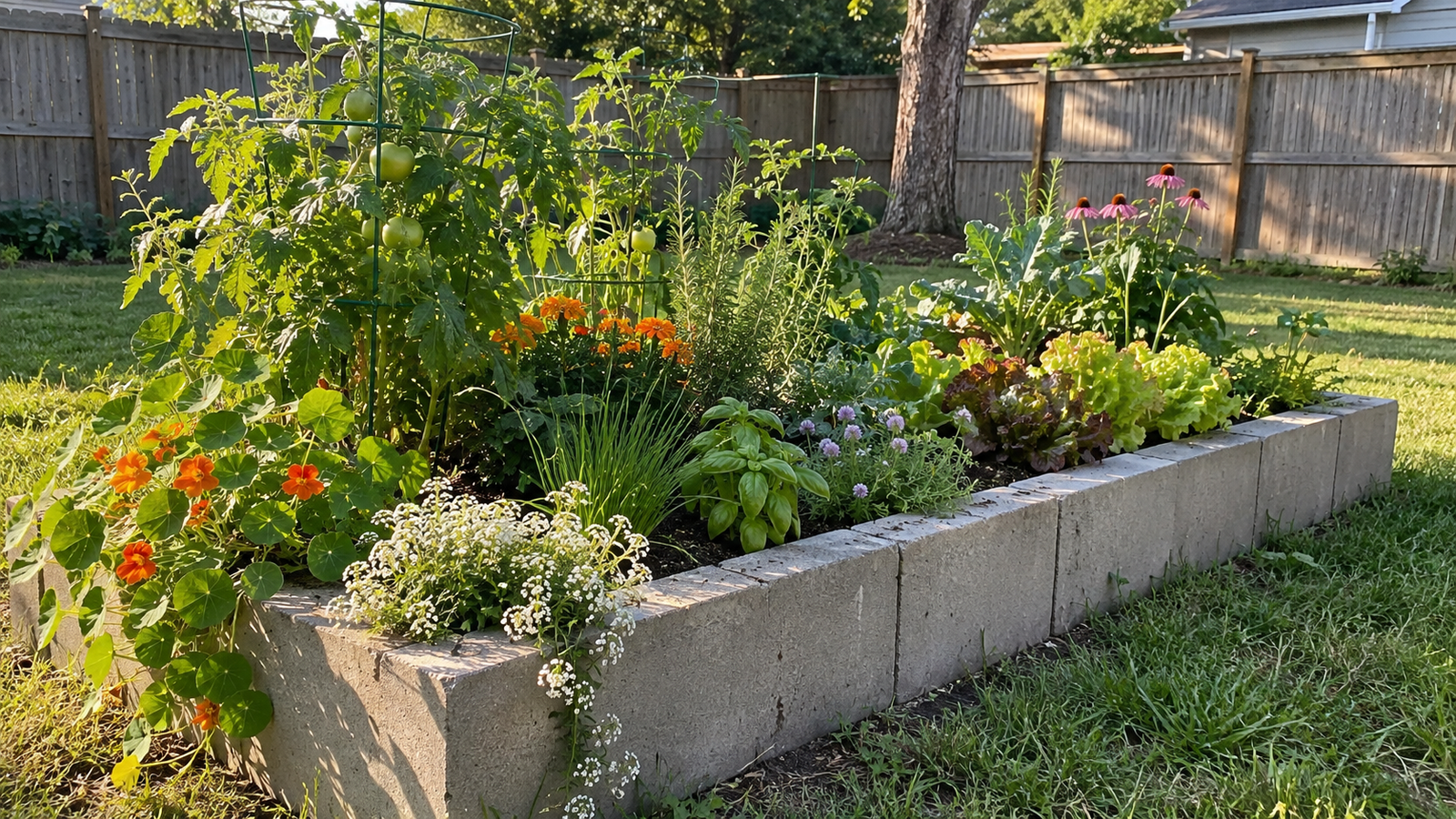
Cinder block planter ideas offer a practical way to grow flowers, herbs, vegetables, succulents, or ornamental plants without complicated construction. Low raised beds, narrow fence planters, stepped corner designs, and compact vertical arrangements work especially well because they balance growing...