

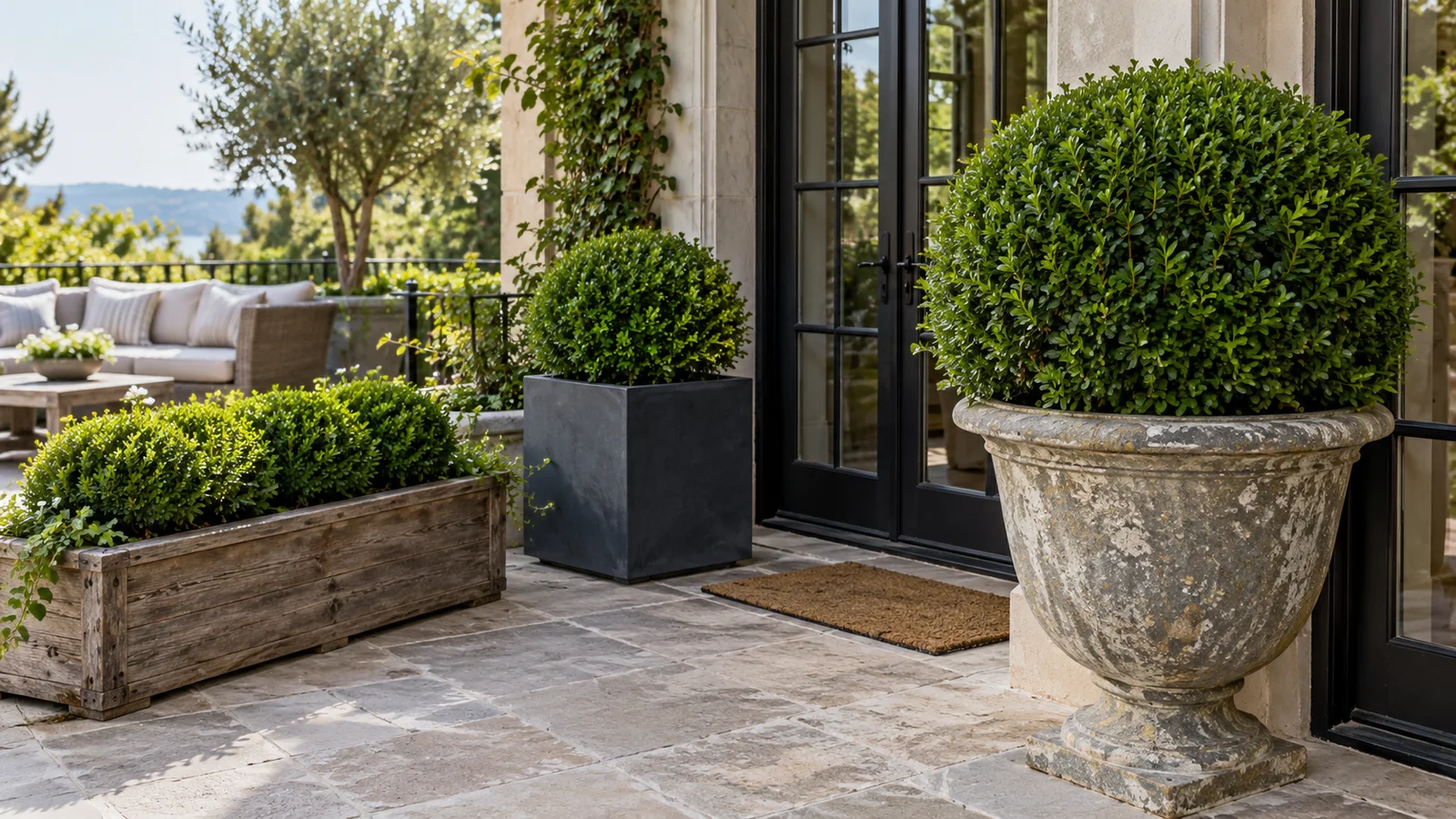
Boxwood planter ideas bring year-round greenery to front doors, patios, courtyards, and garden pathways. These evergreen shrubs grow well in outdoor containers when they have enough root space, a free-draining growing medium, and consistent moisture. Choose compact varieties suited to your home and climate.
Stone urns, black cubes, and wooden boxes offer different styles while boxwood provides lasting structure. This guide covers 18 practical designs, suitable cultivars, 2026 trends, planting methods, maintenance, common problems, and alternatives.
Do Boxwoods Grow Well in Planters?
Yes. Boxwoods (Buxus species) are broadleaf evergreens with small, dense leaves that respond well to clipping. They form rounded balls, cones, low hedges, and natural mounds. Containers add greenery to paved areas.
The main difference between potted and in-ground boxwood is root access. Container roots depend on the soil, water, and nutrients inside a limited space. They also face hotter summer temperatures and colder winter conditions than roots surrounded by garden soil. The Royal Horticultural Society recommends a container at least 18 inches (45 cm) across for long-term boxwood planting, with larger plants needing more space.
Container-grown boxwood is useful for:
- Matching shrubs on either side of an entrance.
- Creating evergreen boundaries on patios or roof terraces.
- Holding a compact topiary shape through different seasons.
- Moving an arrangement when redesigning a seating area.
Boxwoods are not maintenance-free. They need watering, pruning, and pest inspection. Boxwood is also toxic if eaten by pets, so avoid accessible placements where animals chew plants. For a first arrangement, start with a naturally rounded shrub rather than an elaborate spiral that needs frequent shaping.
Which Boxwoods Are Best for Containers?
The best container varieties are compact, predictable growers that suit the available light and regional temperatures. Green Gem and Green Mound naturally form low rounded shrubs; Green Velvet works for larger spheres; Green Mountain offers a more upright shape suitable for cones. Winter Gem can be used for informal evergreen containers where its eventual spread is accommodated.
| Cultivar | Approximate mature landscape size | Best use |
|---|---|---|
| Green Gem | 2 ft tall and wide | Small globe planters |
| Green Mound | 2–3 ft tall and wide | Low patio accents |
| Green Velvet | 3–4 ft tall and wide | Matching entrance shrubs |
| Green Mountain | Up to 5 ft tall, about 3 ft wide | Upright topiary |
| Winter Gem | Around 2–4 ft tall and wide | Informal troughs |
These are approximate landscape sizes. Verify the cultivar name on nursery labels. Green Mountain may need a larger pot than Green Gem.
Choose using three checks:
- Shape: A naturally rounded shrub needs less pruning to remain a globe.
- Hardiness: Container roots can be less cold-tolerant than the above-ground shrub.
- Local disease pressure: Cultivars differ in susceptibility, but none is completely immune to boxwood blight.
Do not select a plant solely because its nursery pot looks full. Inspect inner branches, leaf undersides, and roots, particularly where boxwood blight or box tree moth is reported.
What Are the Best Boxwood Planter Ideas?
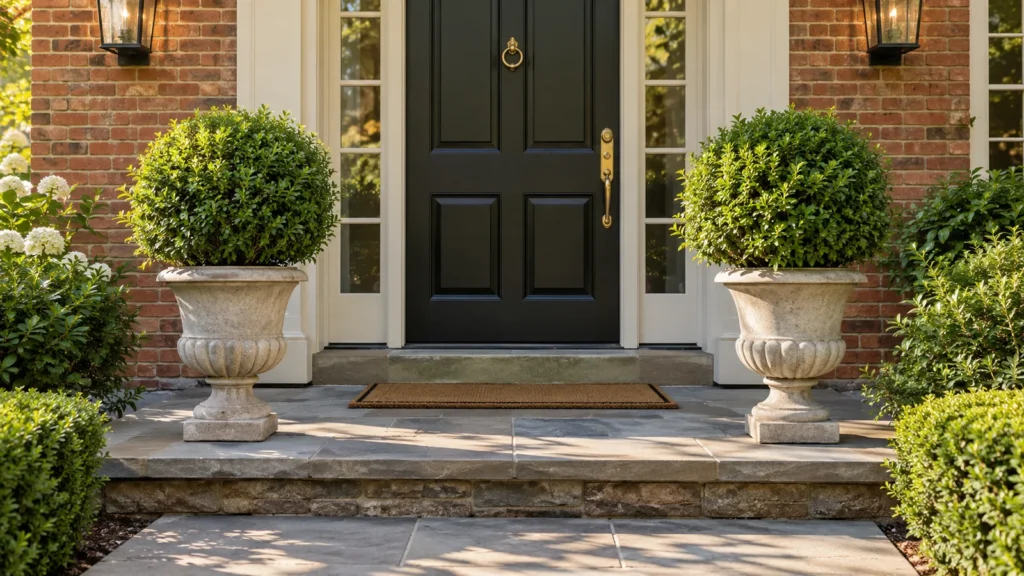
Choose one purpose: frame an entrance, define a boundary, or create a focal point. Repeat materials for symmetry or vary pots for a relaxed garden. Leave enough room to walk, water, and inspect foliage as the plants mature.
Front Door and Entrance Designs
1. Matching stone urns. Place one clipped boxwood globe on each side of a traditional front door. Similar shrubs create symmetry, while pale stone complements brick and painted façades. Check that neither planter blocks the door swing.
2. Tall modern planters. Pair round foliage with charcoal or white rectangular containers. This contrast suits minimalist homes, but choose a stable, broad base rather than a narrow decorative shell that could tip in wind.
3. Compact square pots. Use low black or concrete cubes around a small porch or bungalow entrance. A dwarf boxwood stays proportional without hiding windows or door hardware.
4. Front-step groupings. Stagger matching pots beside a generously sized staircase. Keep landings, handrails, and the entire walking route unobstructed, including after the shrubs grow.
5. Pedestal topiary. Elevate a rounded boxwood in an architectural urn at a gate or courtyard corner. Verify the pedestal can bear the combined weight of the plant, wet soil, and container.
Patio and Courtyard Designs
6. Single black cube. One boxwood sphere against a pale wall provides a strong contemporary focal point. It is ideal when several small containers would make the patio feel crowded.
7. Weathered terracotta pots. Combine naturally rounded boxwood with warm clay, pale paving, and simple outdoor furniture. Use frost-resistant terracotta in climates with freezing winters.
8. Three geometric planters. Group pots in different heights but one material. Keep boxwood cultivars similar so foliage texture remains consistent while the container shapes provide variety.
9. Seating-area corners. Anchor two edges of an outdoor lounge with substantial boxwood planters. Position them beyond moving chairs and maintain enough clearance for everyday use.
10. Small courtyard centerpiece. Choose one large, well-proportioned planter instead of many tiny pots. A Green Gem or other compact variety can create structure without demanding constant clipping.
Troughs, Borders, and Seasonal Displays
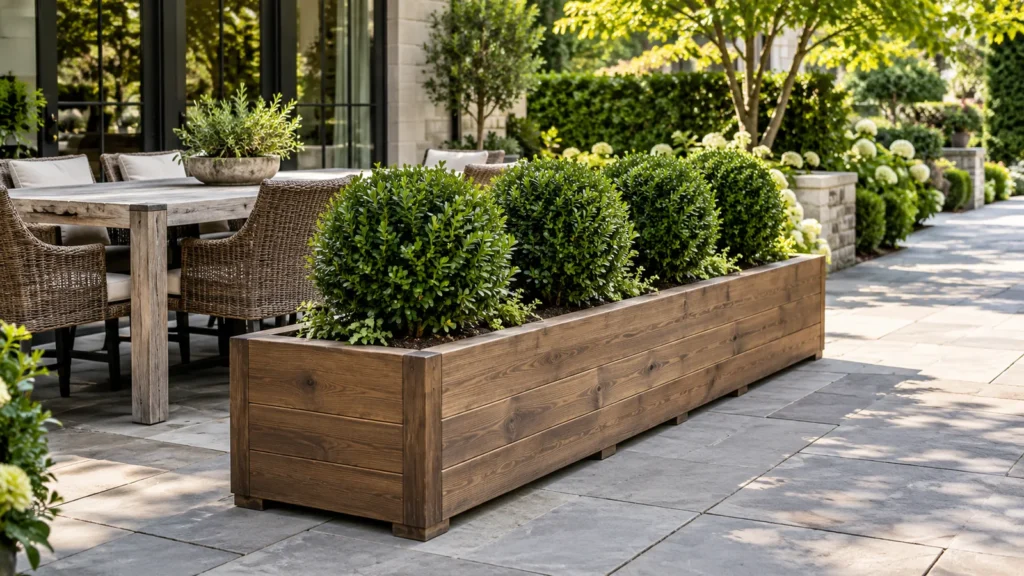
11. Rustic wooden boxes. Grow compact boxwoods in cedar or well-built reclaimed-wood containers. Visible grain brings warmth to farmhouse-style patios, but drainage and a sturdy base are essential.
12. Rectangular hedge trough. Set several matched boxwoods in a deep, wide planter to edge a terrace. Do not copy tight in-ground hedge spacing into a box without providing sufficient shared root volume.
13. Patio dividers. Arrange long troughs between dining and walking zones. Low shrubs define the area visually without pretending to offer complete privacy.
14. Layered wall planters. Place substantial evergreen containers near a wall and smaller ornamental grasses in front. Variation in height introduces depth without an overcrowded mixed root zone.
15. Cottage flower groupings. Surround a rounded boxwood with separate pots of pansies, violas, or begonias. This maintains evergreen structure while seasonal colors change.
16. Shaded foliage groupings. Pair boxwood visually with heuchera and ferns in compatible light. Separate pots make their different moisture requirements easier to manage.
17. Simple sculptural topiary. Clip a naturally rounded type into a sphere or train an upright cultivar into a cone. Complex spirals need more time and careful shaping.
18. Year-round porch arrangements. Keep the boxwood permanently planted and change nearby decorations: spring bulbs, autumn gourds, or loosely attached winter lights. Avoid decorations that damage or shade foliage.
For paired entrances, buy matching cultivars and sizes. On relaxed patios, vary heights. Always allow for mature widths.
What Are the 2026 Boxwood Planter Trends?
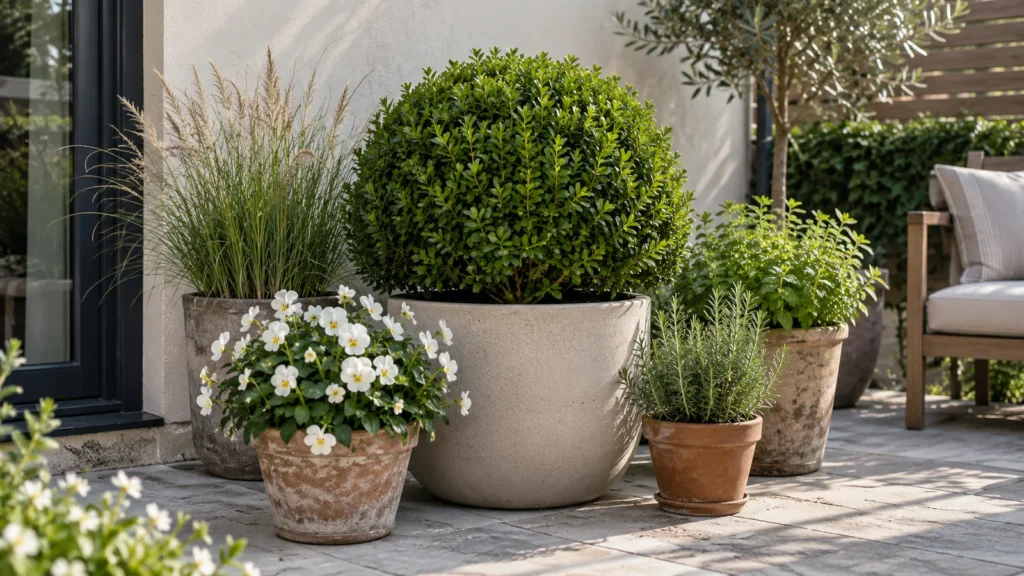
The 2026 garden-design conversation emphasizes flexibility, purposeful planting, and personal expression. Garden Media Group’s published 2026 Garden Trends Report describes Botanical Bento, meaning small modular garden arrangements. Boxwood is a natural evergreen anchor for that approach because surrounding containers can be replaced or rearranged without disturbing its roots.
The report also highlights purpose-driven gardening and an ash-washed pink color direction called Kusumi Faded Petal. These trends do not establish which boxwood planter sells best. Avoid trendy pots that overheat or restrict roots.
Four useful interpretations:
- Modular groupings: One boxwood alongside separate herb, flower, and grass pots.
- Oversized focal containers: One well-sized permanent planter rather than numerous small ones.
- Naturalistic contrast: Clipped spheres balanced by loose foliage and pollinator-friendly flowers.
- Durable materials: Reused wooden boxes, long-lasting composites, and quality secondhand urns.
Muted blush accessories or seasonal flowers can soften an otherwise neutral entrance. Keep boxwood in place as trends change. A mix of evergreen structure and flowering companions also offers more visual interest across seasons than identical shrubs alone.
Where Should Boxwood Planters Go?
Boxwoods generally tolerate full sun to partial shade, but the safest location depends on climate. In hot regions, morning sunshine with protection from intense afternoon heat often reduces leaf scorch and rapid soil drying. In mild, cooler climates, many cultivars can grow in fuller sun if moisture stays reliable. Deep shade may be tolerated, although growth can become less dense.
Assess the exact surface and nearby walls before placing a pot. Dark containers on sunny paving can develop hot root zones; exposed balconies receive drying winds; enclosed porches may lack sufficient light. Avoid downspouts and other spots where rainwater repeatedly collects around a planter’s base. Give matching entrance shrubs comparable exposure.
A good site provides:
- Sunlight appropriate for the cultivar and season.
- Free drainage, without water trapped beneath the pot.
- Shelter from the most severe drying wind.
- Space for the shrub’s mature width and routine access.
Spring and early autumn are often the easiest planting periods in temperate climates. In hot regions, choose a mild planting period. Container boxwood can also be positioned in front of the house, but keep walkways, vents, windows, and access points clear.
Which Planter Materials Work Best?
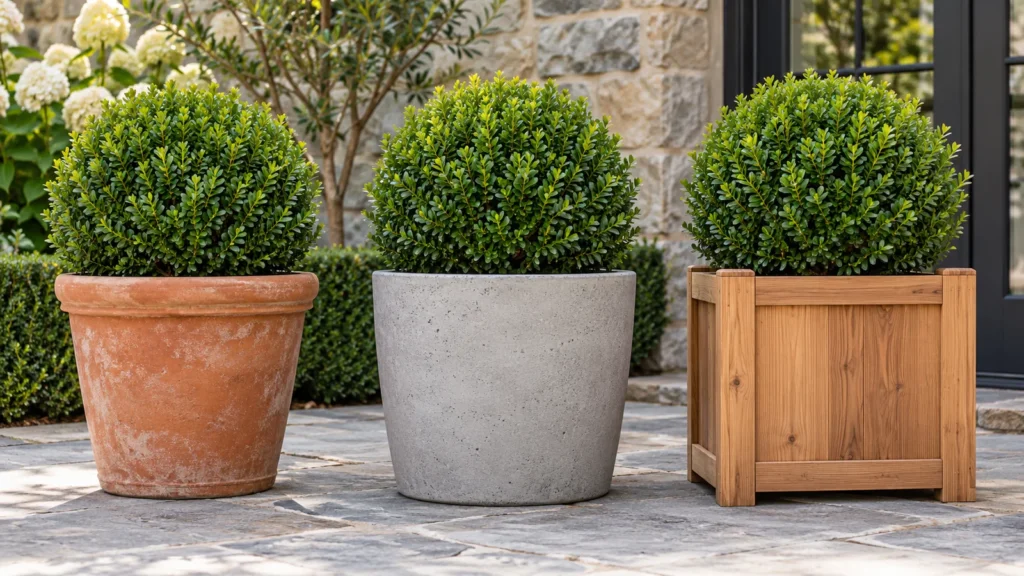
Fiberglass, composite, concrete, terracotta, wood, metal, and outdoor-rated plastic can all hold boxwood successfully. The best choice depends on weight, local weather, price, and whether you intend to move the container. Composites are portable, concrete is stable, and cedar is customizable.
Every material has a trade-off. Unglazed terracotta dries faster and may crack during freezes. Metal can heat in strong sun. Wood requires protection from decay, while inexpensive plastic sometimes becomes brittle under ultraviolet exposure. Check internal dimensions, not only exterior height.
| Material | Main advantage | Consideration |
|---|---|---|
| Fiberglass/composite | Lightweight, durable options | Check product quality |
| Concrete | Stable, architectural | Heavy to relocate |
| Terracotta | Classic porous finish | Faster drying; frost risk |
| Cedar wood | Customizable, natural | Maintenance and drainage |
| Plastic | Affordable, lightweight | Heat and UV durability |
| Metal | Contemporary appearance | Possible root-zone overheating |
For long-term shrubs, a durable planter of suitable depth is better value than a decorative pot requiring replacement after one season. Consider empty and watered weight before choosing a balcony or raised deck location, and confirm the structure can safely support it.
What Goes Under Boxwood Planter Soil?
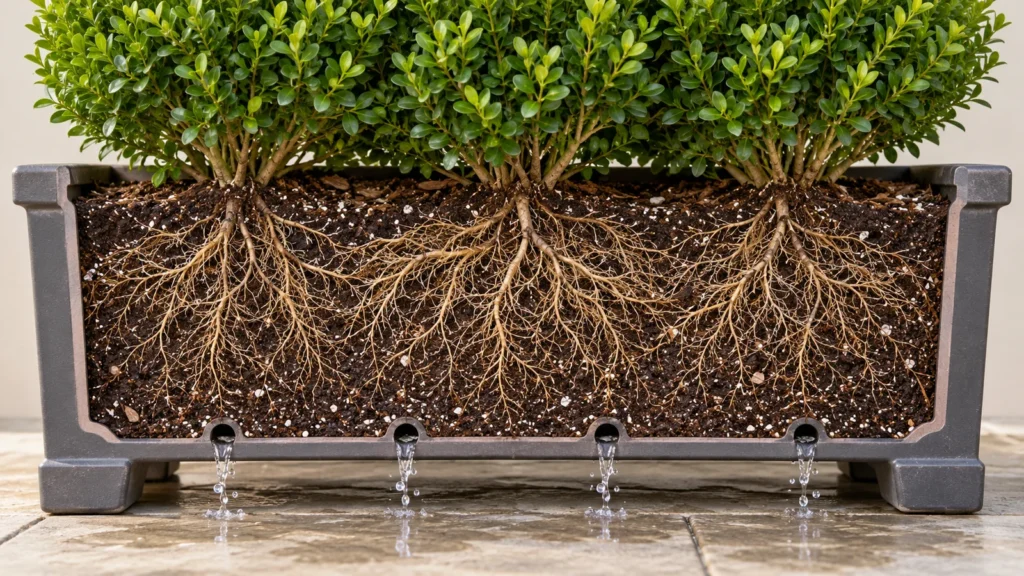
Use a container with unobstructed drainage holes and fill its growing area with a suitable, well-draining potting medium. Do not add a thick layer of stones or gravel under the soil to improve drainage. According to UC Master Gardeners, a coarse bottom layer can hold a saturated zone of finer soil above it, reducing usable root depth.
For established boxwood, a loam-based mix intended for permanent shrubs is useful. The RHS recommends a peat-free John Innes No. 3 type where available. Avoid filling pots entirely with dense garden soil, which can compact and reduce oxygen around roots. Mesh can cover large holes without sealing them.
For tricky containers:
- No drainage holes: Use a removable inner nursery pot, water it separately, and empty collected water.
- Very tall decorative planter: Use a stable internal support and appropriately sized inner pot.
- Large trough: Preserve adequate root volume along its full length; do not pack the bottom with waste filler.
- Wet patio surface: Raise the container slightly on pot feet so openings remain clear.
Plastic bottles, foam blocks, and rocks may seem like cheap filler, but they can complicate root growth, moisture control, and future repotting. Save money by reducing genuinely unused decorative depth, not by removing space the roots need.
How Can You Make DIY Boxwood Planters?
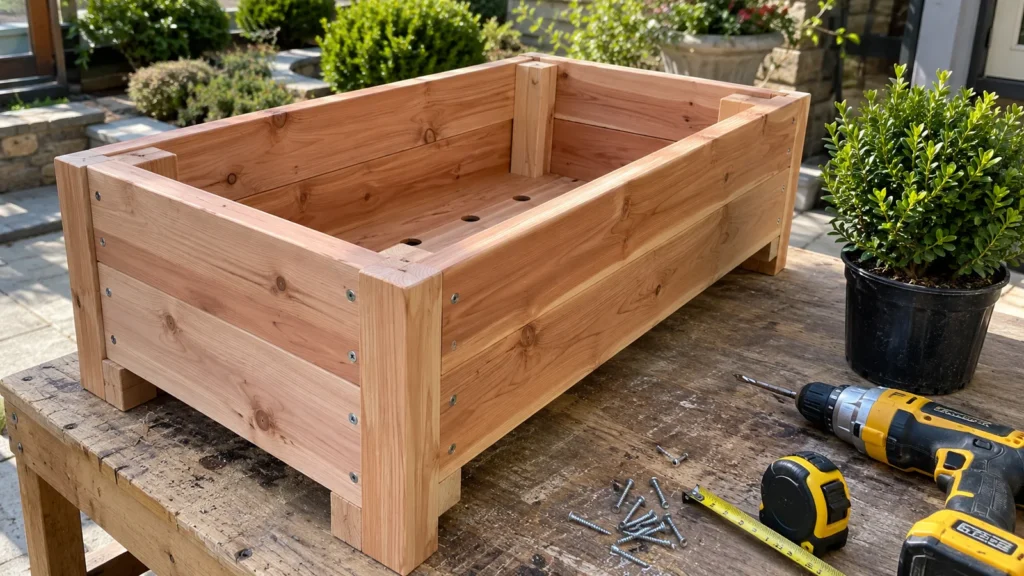
A simple timber planter is a practical, affordable alternative to buying a large stone urn. Cedar or suitable exterior-rated boards can form a rectangular box for a single shrub or several compact boxwoods. Build for the weight of saturated soil, not the empty appearance of the planter; sturdy joints and drainage are more important than elaborate decorative trim.
Repurposed containers such as reinforced crates, secondhand ceramic pots, and galvanized tubs also work when they are structurally sound and can drain. Avoid containers previously used for hazardous chemicals. A nursery pot inside a decorative sleeve avoids drilling.
Basic wooden planter method:
- Choose dimensions based on the boxwood’s root ball and likely mature size.
- Cut exterior-suitable boards and screw together the side panels.
- Fit a supported base with several unobstructed drainage openings.
- Raise the base slightly on stable feet.
- Add a draining liner where needed and fill with appropriate potting mix.
- Set the shrub at its original soil depth, water, and check the structure.
Slow growth partly explains mature boxwood prices. Smaller healthy plants usually cost less than mature topiary. Compare the total cost of shrub, potting medium, container, and maintenance—not the planter price alone.
What Plants Pair Well With Boxwoods?
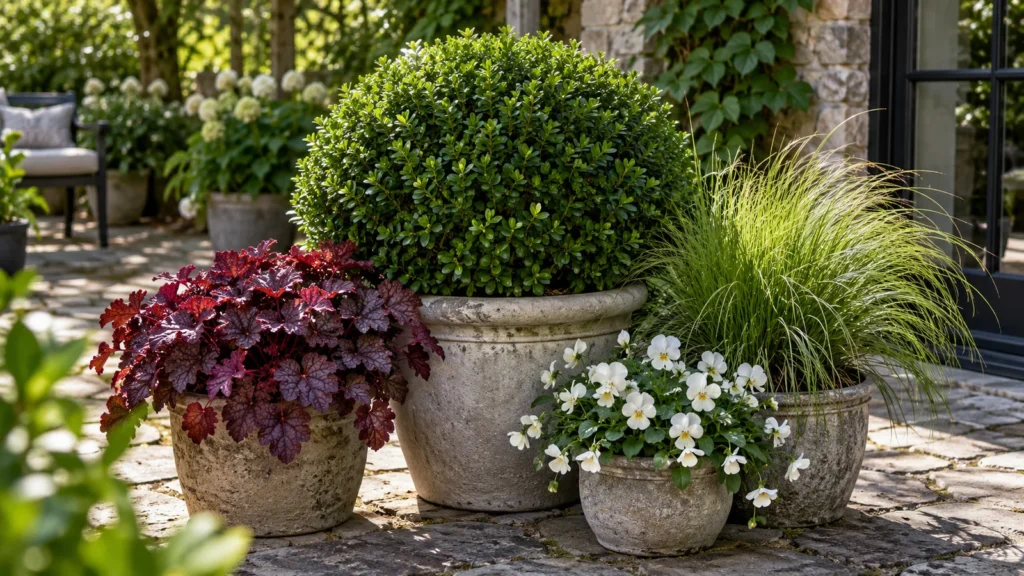
Boxwood’s fine-textured, dense foliage looks especially good beside broader leaves, soft grasses, and seasonal flowers. Companions add movement and color. Use separate pots for different water requirements.
Pansies and violas can brighten cool-season entrances, while suitable compact begonias contribute warm-season color. Heuchera adds contrasting burgundy, bronze, or lime leaves; ferns create softer shapes in sheltered shade. Ornamental grasses work beside square or rectangular planters, particularly when their mature spread leaves enough circulation space.
Effective combinations include:
- Formal: Paired Green Velvet boxwoods with white violas nearby.
- Modern: One black boxwood cube beside airy ornamental grass.
- Shaded: Rounded boxwood with separate heuchera and fern containers.
- Rustic: Wooden boxwood planter beside seasonal cottage flowers.
- Mediterranean-inspired: Terracotta boxwood with lavender or rosemary in separate, drier pots.
Lavender and rosemary commonly prefer leaner, drier conditions, so visual pairing is safer than planting them inside the same boxwood pot. If you do add annuals to a spacious container, place them near its outer edge without burying the boxwood’s crown or crowding roots. Leave room to inspect lower stems for disease.
How Do You Plant and Care for Boxwoods?
Begin with a healthy nursery shrub. Check for leaf spots, dieback, damaged roots, and circling roots before planting. Place the root ball so its upper surface remains near the finished growing-medium level, gently loosen tightly circling outer roots where appropriate, and backfill without burying the stem base. Water thoroughly until excess moisture exits the drainage holes.
Avoid fixed watering schedules. Check the growing medium below the surface because a dry-looking top may conceal wet roots. Water when the root zone needs it, then allow surplus moisture to escape. During hot or windy spells, inspection may be frequent; during cool weather, growth and water use usually slow. Excessive watering can deprive roots of oxygen and lead to decline.
Year-round care priorities:
- Spring: Inspect drainage, refresh tired growing medium, and assess feeding needs.
- Summer: Watch moisture, leaf scorch, and pests; shape lightly in suitable weather.
- Autumn: Clear suspicious debris and avoid late heavy pruning.
- Winter: Protect exposed root balls from severe cold and drying winds.
Boxwood grows relatively slowly, so a small shrub may need several years to reach its desired shape. Compact varieties can remain around two feet, while unpruned common boxwood can eventually grow into a large shrub. Healthy established boxwoods may live for decades, but container lifespan depends on root management and growing conditions. Repot or renew the medium when roots become overcrowded; fertilizer alone cannot fix restricted root space.
What Kills Boxwoods in Planters?
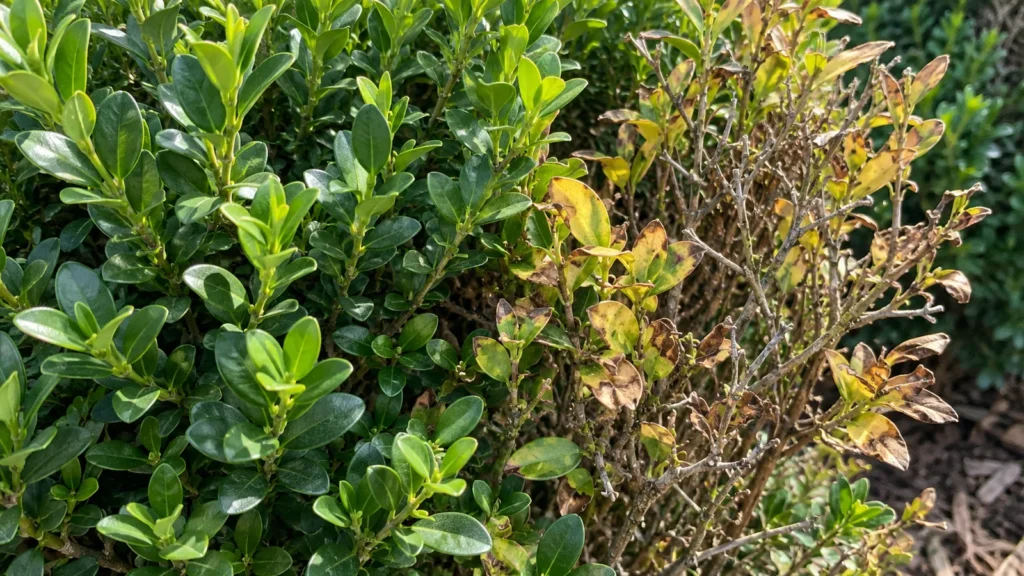
The biggest threats include prolonged waterlogging, drought, winter injury, boxwood blight, and damaging insect infestations. Brown leaves are not a diagnosis. Inspect soil, stems, and foliage before treatment. Yellow foliage with continuously wet mix suggests a different problem from sudden leaf loss with dark streaks on stems.
Boxwood blight is a fungal disease associated with spots, rapid leaf drop, and narrow black lesions on young green stems. Box tree moth caterpillars may leave chewed foliage, webbing, and droppings. They require different responses. The USDA APHIS box tree moth guidance, updated in October 2026, also describes movement restrictions in affected US areas.
| Warning sign | Possible explanation | First step |
|---|---|---|
| Yellow leaves; wet soil | Waterlogging or root stress | Check roots and drainage |
| Crispy leaves; dry soil | Drought or heat injury | Check root moisture |
| Brown spots; black stem streaks | Possible boxwood blight | Isolate and seek diagnosis |
| Chewed leaves; silky webbing | Possible box tree moth | Inspect and follow local guidance |
| Browning after freezing weather | Winter burn | Assess living stems and exposure |
Prevention is more reliable than rescue: Buy healthy stock, avoid wetting foliage unnecessarily, clean pruning tools, and inspect inside dense shrubs. Do not move suspected infested cuttings across regulated boundaries. Where symptoms remain uncertain, consult a qualified local plant-health service rather than applying pesticides blindly. Boxwood is toxic to dogs, cats, and horses if ingested, as documented by the ASPCA.
What Can You Plant Instead of Boxwood?
Japanese holly, compact inkberry holly, selected yews, dwarf conifers, and climate-appropriate Pittosporum or Osmanthus cultivars may work better than boxwood. Match replacements to soil, climate, and mature size. In locations with recurring boxwood blight, planting a different genus may reduce exposure to that particular disease.
| Alternative | Why choose it | Important drawback |
|---|---|---|
| Japanese holly | Small leaves and clipping potential | Often dislikes alkaline soil |
| Inkberry holly | Compact evergreen selections | Usually favors acidic soil |
| Yew | Excellent formal shaping | Highly toxic if eaten |
| Dwarf conifer | Natural architectural structure | Size and hardiness vary |
| Pittosporum/Osmanthus | Distinct foliage and form | Some cultivars dislike severe cold |
If a pet regularly chews plants, check each proposed alternative for toxicity too; yew is not a pet-safe substitution. Dwarf conifers still need suitable drainage and winter care. A nursery that knows the local climate can help identify an appropriate named cultivar.
For a dependable display, start with one suitable evergreen in a spacious planter and expand gradually. Living boxwoods provide natural structure; artificial shrubs suit temporary decoration.
What Are Common Boxwood Planter FAQs?
Can boxwoods grow in full sun?
Yes, especially in mild climates with adequate moisture. In hot conditions, morning sun with afternoon shade often reduces stress.
Which boxwood stays the smallest?
Green Gem is a compact choice, commonly around two feet tall and wide. Confirm the exact cultivar’s mature size.
How many boxwoods go in one planter?
One shrub per pot is easiest. Large troughs can hold several if root space and mature width are sufficient.
Do boxwoods have deep roots?
They have relatively shallow, fibrous roots. Mature specimens still need a substantial, well-drained growing volume.
When is the best month to plant boxwood?
Mild spring or autumn conditions are generally easiest in temperate areas. Avoid extreme heat and imminent hard freezes.
Should I put rocks at the bottom of a planter?
No. Gravel can keep moisture perched in the soil above it. Use drainage holes and suitable potting mix.
Why are boxwoods so expensive?
Dense, mature specimens take years to grow and require nursery space, clipping, and plant-health management.
Do boxwoods smell bad?
Some have a musky scent that people compare to cat urine, especially when foliage is warm or disturbed.
Are plastic containers bad for boxwoods?
No. Durable plastic planters work well when they provide drainage and sufficient root space; monitor heat and moisture.
Can boxwoods survive winter in pots?
Yes, if the cultivar is hardy and roots are protected from severe freezing and drying winds.
Final takeaway: Boxwood planter ideas succeed when attractive styling follows good horticulture. Choose a compact cultivar, provide room and drainage, and design around the site rather than forcing an evergreen into an unsuitable container. The result can be a structured outdoor display that stays useful beyond one season.
Myra is the founder and lead writer of Backyard Planter Ideas, where she shares practical, well-researched guidance on planter design, plant selection, and outdoor styling. Her goal is to help homeowners create attractive, functional garden spaces with clear, reliable, and easy-to-apply advice.
Blueberry Planter Ideas: Best Pots, Soil, and Growing Tips
The best blueberry planter ideas use spacious containers, acidic potting mix, and varieties suited to local weather. Wooden barrels, large patio pots, raised troughs, and compact balcony planters can all work. Aim for soil pH 4.5–5.5, steady moisture, and ample...
Hosta Planter Ideas: 21 Beautiful Designs for Shady Spaces
Hosta planter ideas can turn shaded patios, porches, balconies, and garden corners into striking foliage displays. Hostas grow successfully in containers when they have drainage holes, moisture-retentive potting mix, adequate root space, and protection from harsh afternoon sun. The best...
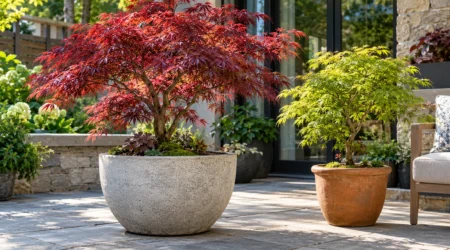
21 Japanese Maple Planter Ideas for Beautiful Outdoor Spaces
Japanese maple planter ideas can turn an ordinary patio, balcony, or courtyard into a garden focal point. Japanese maples (Acer palmatum) grow well in containers when their roots have drainage, consistent moisture, and protection from extreme sun and cold. The...
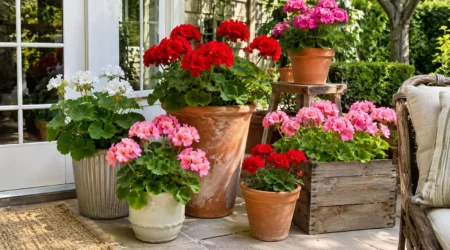
Geranium Planter Ideas: 15 Beautiful Designs and Growing Tips
Geranium planter ideas can brighten patios, balconies, porches, and window boxes with relatively little equipment. Choose upright zonal geraniums for bold flower clusters, trailing varieties for baskets, and companion plants with matching sunlight and moisture needs. The best results come...
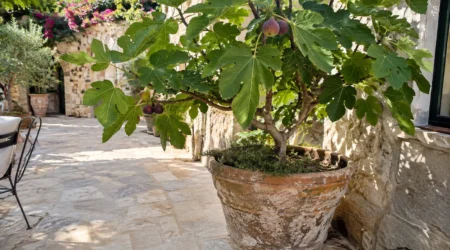
Fig Tree Planter Ideas
The best fig tree planter ideas balance appearance with drainage, root space, and sunlight. Terracotta pots, wooden half-barrels, glazed ceramic containers, and lightweight resin planters all accommodate edible figs. Established trees generally benefit from around 15 gallons (57 liters) of...
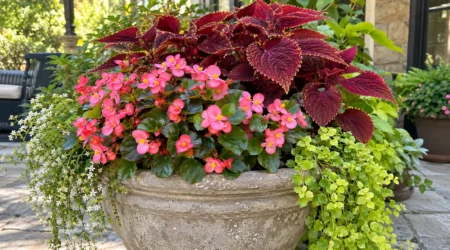
Begonia Planter Ideas: 15 Beautiful Combinations for Every Space
Begonia planter ideas work best when flower color, foliage, container size, and light requirements fit together. Choose wax begonias for compact outdoor displays, trailing varieties for hanging baskets, or Rex begonias for striking indoor leaves. Combine compatible plants in well-drained...
Railing Planter Ideas: Best Designs, Plants, and DIY Tips
Railing planter ideas make balconies, decks, and porches greener without sacrificing floor space. The best choices are securely fitted saddle planters, bracket-mounted flower boxes, and hanging baskets planted with compact flowers, herbs, or strawberries. Match the container to your railing,...
11 Best Vegetables for Deep Planters: Complete Soil Depth Guide
The best vegetables for deep planters are carrots, parsnips, daikon radishes, potatoes, sweet potatoes, tomatoes, cucumbers, peppers, eggplants, zucchini, and pole beans. Most benefit from approximately 12–24 inches of usable growing mix, although the right depth depends on variety, container...
Potato Planter Ideas: 15 Easy Containers and DIY Growing Tips
Potato planter ideas range from fabric grow bags and large plastic pots to wooden boxes and homemade bucket planters. For most beginners, a wide, opaque 10–15-gallon (38–57-liter) container with drainage, loose potting mix, and six to eight hours of sunshine...
25 Trough Planter Ideas for Beautiful Outdoor Spaces in 2026
Trough planter ideas turn patios, balconies, fences, and small backyards into productive, attractive gardens. The best designs pair a long, suitable container with plants that share similar light, moisture, and root-space needs. Wooden herb boxes, galvanized flower troughs, evergreen displays,...