

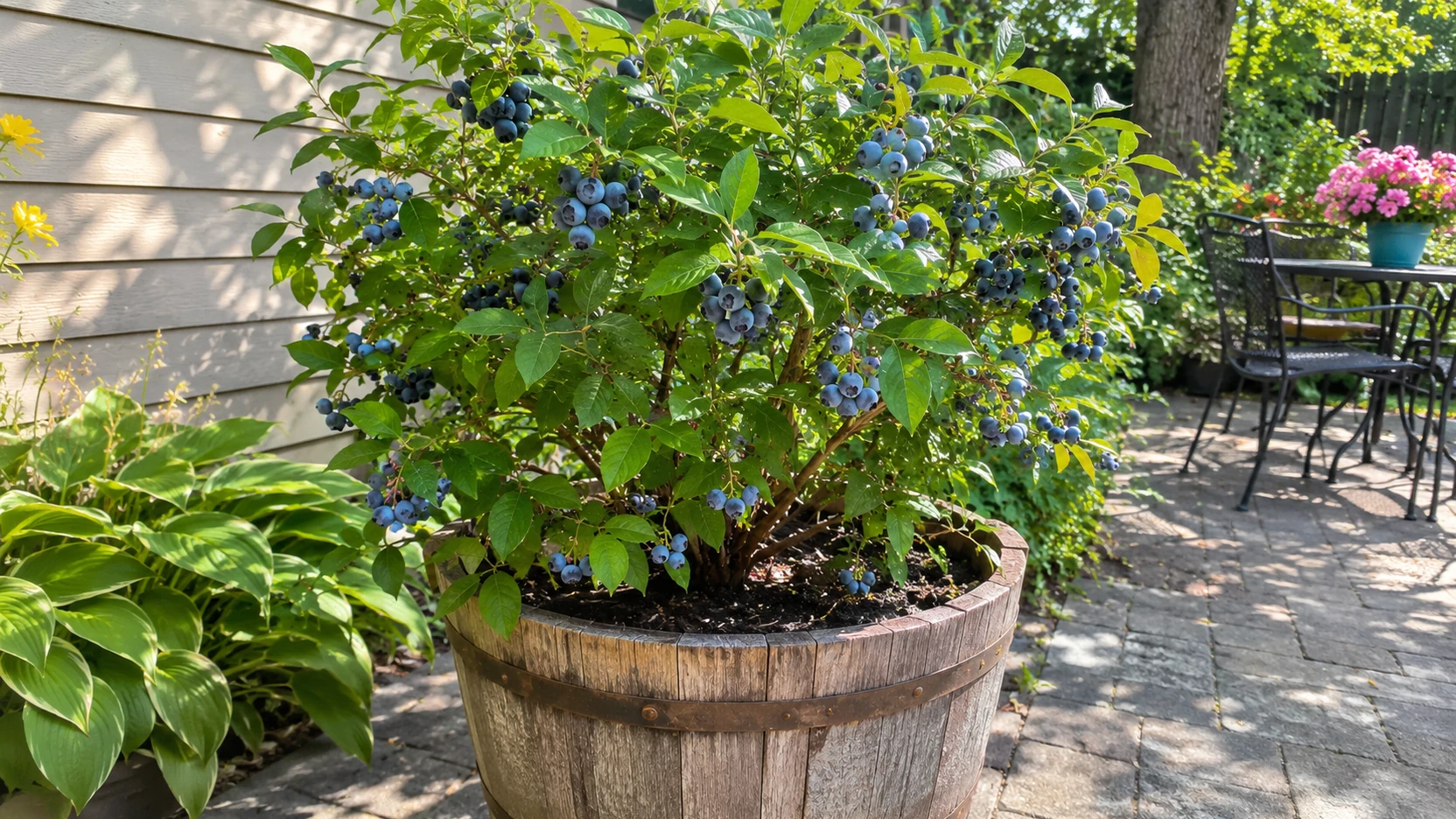
The best blueberry planter ideas use spacious containers, acidic potting mix, and varieties suited to local weather. Wooden barrels, large patio pots, raised troughs, and compact balcony planters can all work. Aim for soil pH 4.5–5.5, steady moisture, and ample sunlight. Choose the pot for the bush’s mature size, not its nursery label.
Blueberry shrubs offer spring flowers, summer fruit, and colorful autumn foliage. This backyardplanterideas guide covers planter selection, planting methods, and long-term care without costly guesswork.
What Are the Best Blueberry Planter Ideas?
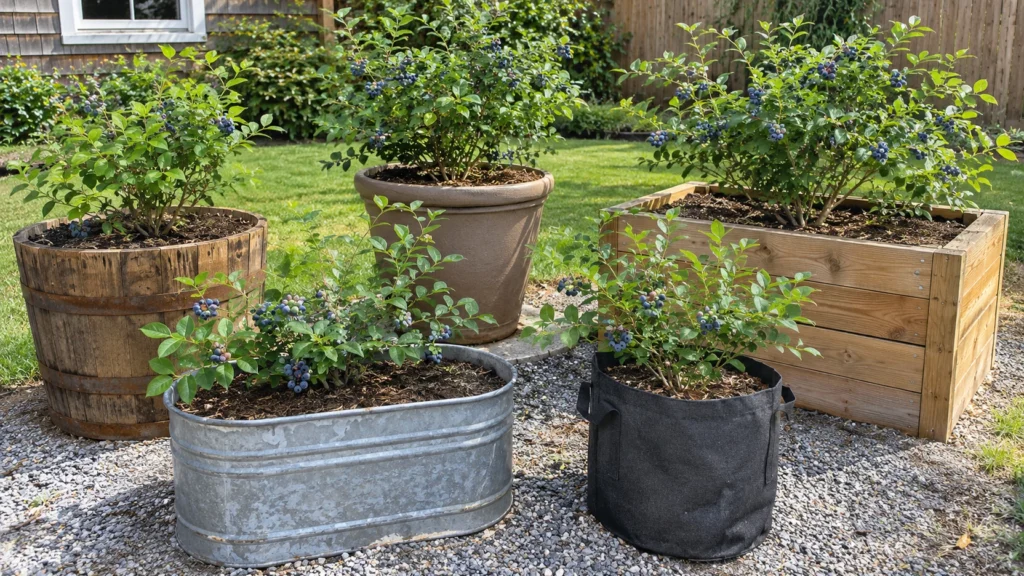
A successful blueberry planter fits your outdoor space while allowing adequate root volume, drainage, and winter protection. Check sunlight, watering access, and harvesting clearance before deciding where it will stand.
For a cohesive edible garden, use matching materials and vary the heights of the containers. A sunny seating area can become productive without resembling a vegetable plot. Leave an accessible gap behind each bush for pruning and harvesting; a beautiful arrangement becomes frustrating if branches cannot be reached without moving heavy, wet pots.
- Large patio pots: Weather-resistant resin or glazed ceramic suits modern terraces; light-colored finishes can reduce heat buildup.
- Half-barrel planters: Wide wooden barrels complement cottage gardens and accommodate larger root systems.
- Raised wooden boxes: Dedicated acidic growing beds work for several bushes, provided each has adequate spacing.
- Galvanized troughs: A farmhouse option when drainage is drilled and metal surfaces are protected from excessive heat.
- Fabric grow bags: Affordable and movable, but prone to faster drying in wind and sunshine.
- Coordinated entrance pots: Two matching shrubs frame a sunny path and can support cross-pollination when varieties are compatible.
For balconies, check safe load limits using the weight of wet compost and water. Use hanging baskets only for compact trailing cultivars, not conventional highbush blueberries.
Which Pots and Sizes Work Best for Blueberries?
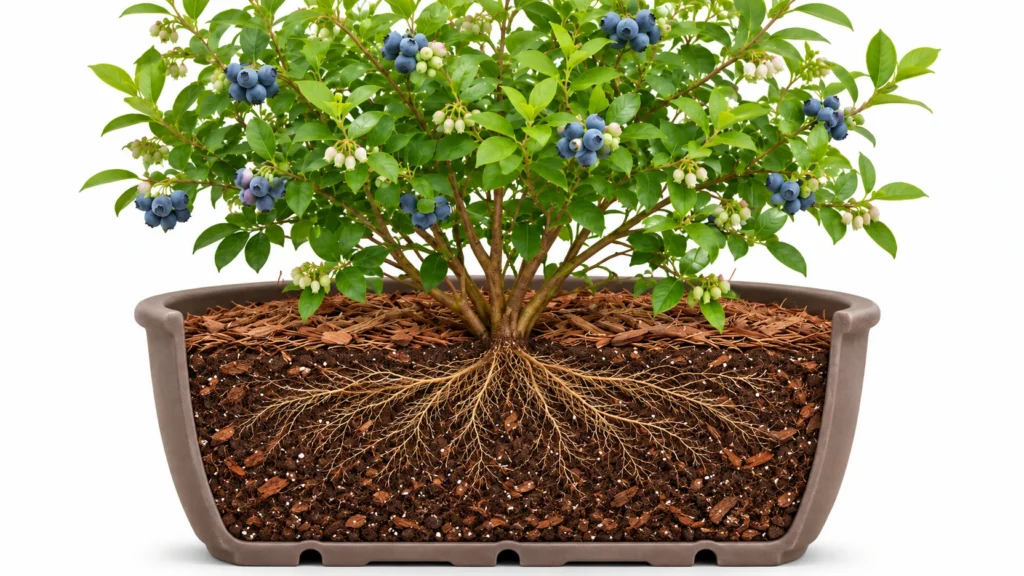
Blueberries favor wide pots because their fibrous roots spread through the upper growing medium; adequate depth still supports stability and moisture retention. A small nursery bush may start in a 12-inch (30-cm) pot. Established compact plants often need 18–24 inches (45–60 cm) of width, while vigorous highbush varieties may need 20 gallons or more.
For mature half-high bushes, plan on roughly 10 gallons or more. Size up when roots crowd the container, rather than following age alone. A wide, shallow decorative bowl is not a substitute for sufficient root volume. A heavy mature plant also needs a base that resists tipping during strong wind.
| Material | Main strength | Main drawback |
|---|---|---|
| Resin or plastic | Lightweight, slower moisture loss | Dark sides can overheat |
| Wood | Broad, insulating, natural appearance | Eventually deteriorates |
| Glazed ceramic | Decorative and moisture-retentive | Heavy; frost damage possible |
| Terracotta | Breathable traditional finish | Dries faster |
| Fabric | Inexpensive and portable | Needs closer watering attention |
Choose open drainage holes, a stable base, and room below the rim for mulch and irrigation. Skip gravel layers; they take up space without fixing drainage. Self-watering designs can work when an overflow outlet prevents waterlogging.
Pots versus ground: Acidic garden soil offers greater root space and steadier moisture, often supporting larger harvests. Where soil is alkaline, heavy, or poorly drained, containers provide better control. Expect more attention to irrigation, nutrition, and winter insulation.
Which Blueberry Varieties Suit Planters?
Compact and half-high blueberries are generally easier to maintain in pots than vigorous rabbiteye or highbush types, although full-size bushes work in appropriately large planters. Compare mature height, winter chilling needs, heat tolerance, and pollination compatibility before choosing for flavor or fruit size.
Cold-region cultivars may flower poorly without sufficient winter chilling; warm-region varieties may suffer in severe freezes. Choose plants recommended by local horticultural services or specialist nurseries. If planning two bushes, compare flowering periods before purchasing. Cultivars ripening at different times can lengthen harvest, but they must bloom together to exchange pollen.
| Cultivar | Typical habit | Best setting |
|---|---|---|
| ‘Top Hat’ | Very compact dwarf | Small patio display |
| ‘Northsky’ | Low, cold-hardy half-high | Cold-region containers |
| ‘Sunshine Blue’ | Compact southern highbush | Mild-winter patios |
| ‘Jelly Bean’ | Compact ornamental cultivar | Small-space pots |
| ‘Bluecrop’ | Vigorous northern highbush | Large barrels or beds |
| ‘Midnight Cascade’ | Trailing growth habit | Appropriate hanging planter |
Two- and three-year-old nursery bushes vary widely in size; some measure about 12–36 inches tall. Dwarf cultivars may remain below two feet, while highbush types often reach four to eight feet and some rabbiteye varieties grow taller. “Blueberry tree” is a marketing description, not a separate plant type.
Where Should Blueberry Planters Go?
Give blueberries roughly six to eight hours of direct sunlight, airflow, and convenient watering access. Most produce better crops in full sun; shade often means fewer flowers and berries. Open patios and bright garden edges generally outperform enclosed, dim courtyards.
Where summers are very hot, use pale pots or shield container walls from afternoon heat while retaining good overall sunlight. Avoid roof runoff, pooled water, and crowded corners; allow branches room to expand. Watch the chosen spot on a clear morning and afternoon rather than judging it once: neighboring buildings can change the amount of direct light dramatically.
- Northern Hemisphere: South-facing exposure is often bright, but check actual shadows.
- Southern Hemisphere: North-facing areas often receive more sunlight.
- Balconies: Account for wind, weight, reflected heat, and water runoff.
- Entrances: Leave walking space so berries and branches are not repeatedly brushed.
- Pollinator access: Avoid enclosing flowers behind barriers that exclude bees.
Indoor growing is possible in controlled conditions but difficult in ordinary rooms. Grow lights may improve illumination without replacing seasonal chilling requirements. Outdoor pots are simpler for reliable fruiting.
What Soil and pH Do Blueberries Need?
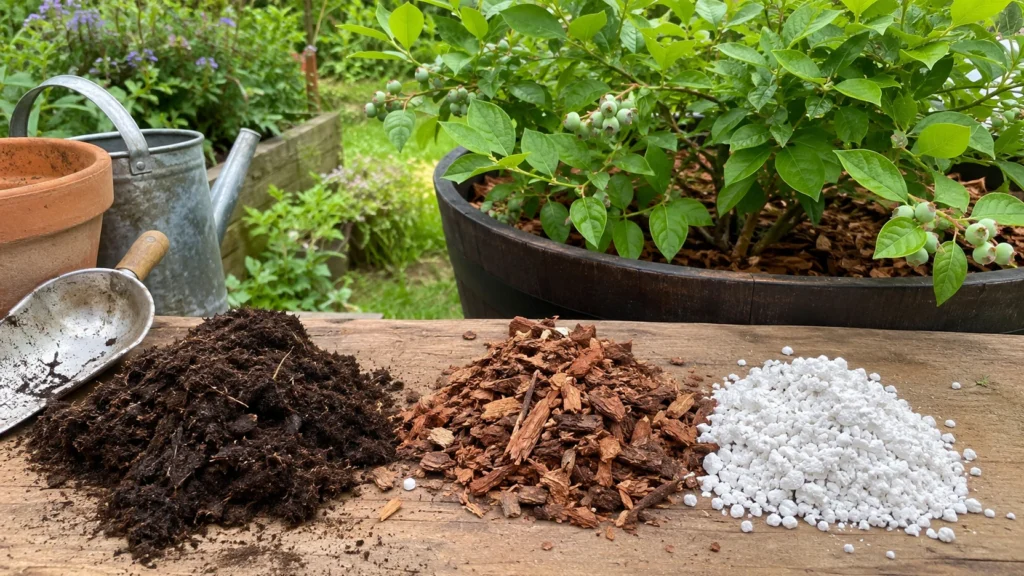
Use an acidic, airy, moisture-retentive mix with good drainage and pH around 4.5–5.5. Commercial peat-free ericaceous compost is a convenient choice. Ordinary compost or garden soil may be alkaline or become too dense inside containers.
Homemade mixes can include composted fine pine bark, an acidic moisture-holding component, and perlite or pumice for air spaces. Test finished pH; ingredients vary. Even an initially acidic mix may change after repeated applications of alkaline irrigation water. Recheck pH if leaves turn yellow between green veins, rather than assuming the plant needs another dose of fertilizer. Avoid lime and alkaline amendments such as mushroom compost unless testing establishes suitability.
How can you acidify blueberry soil?
For a new planter, replace unsuitable compost with ericaceous mix rather than trying to alter it. For garden beds, test pH before treatment. Elemental sulfur can lower pH through microbial action, but it works gradually; application rates depend on soil properties. Avoid guessed doses or indiscriminate aluminum sulfate.
- Test the growing medium before applying amendments.
- Review irrigation water, especially where tap water is hard or alkaline.
- Use rainwater when practical without allowing the plant to become dry.
- Retest when leaves show possible nutrient-uptake problems.
- Refresh aging compost instead of repeatedly adding random household acids.
Vinegar and lemon juice do not provide reliable, lasting corrections. Confirm pH before treating yellowing foliage; wet roots or nutrient imbalances can produce similar symptoms.
When and How Should You Plant Blueberries?
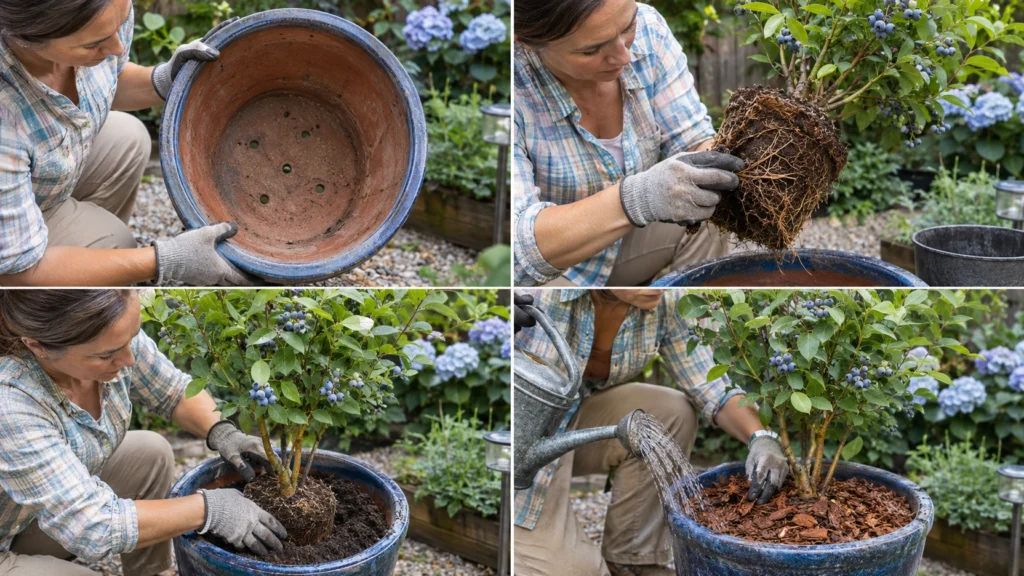
Plant blueberries during mild weather, often early spring or autumn. Spring gives roots time to establish before hard winters; autumn works well in milder climates. Because seasons vary internationally, use local weather rather than a fixed month. Avoid repotting a fruit-laden plant during extreme heat when possible; moving it then adds root disturbance to the plant’s already high water demand.
Select nursery plants with firm stems, healthy buds, and no obvious disease. Set up large pots in their final position before filling: wet containers are heavy, especially on balconies.
- Choose the site: Confirm sun exposure, watering access, and a level, weight-bearing surface.
- Inspect drainage: Open every hole; cover large openings with permeable mesh if necessary.
- Moisten the mix: Fill partway with acidic compost that is evenly damp, not soggy.
- Check the roots: Gently loosen tight outer circling roots without unnecessarily tearing them.
- Set planting depth: Keep the crown close to its previous soil level; do not bury stems deeply.
- Backfill and water: Settle compost gently, then water thoroughly until drainage begins.
- Finish with mulch: Add a thin layer of suitable bark without piling it against stems.
Do not place concentrated fertilizer against newly planted roots. Removing flowers from a very young bush during its first season can support root and shoot establishment before heavy cropping.
Which Companion Plants Help Blueberries?
Companion plants should tolerate acidic conditions and avoid shading or competing with blueberry roots. Heather, some azaleas, lingonberries, and cranberries can suit acidic garden areas. Their value is generally ornamental or ecological, not a guaranteed increase in berry yield.
Keep blueberry bushes in dedicated pots, with flowering companions in neighboring containers. Lavender, many vegetables, and lime-loving ornamentals prefer different soil conditions and are poor choices for the same root zone. For a coordinated display, put compatible flowers in small neighboring pots and keep the blueberry’s main container dedicated to its roots.
Do blueberries need two plants?
Many highbush blueberries are self-fertile, but compatible cultivars blooming together often improve fruit size and yield. Rabbiteye types especially benefit from cross-pollination. Two identical cultivars do not provide a different pollen variety.
- Choose regionally appropriate cultivars with overlapping bloom times.
- Place pots in the same sunny garden area, accessible to bees.
- Grow pollinator-friendly flowers nearby without crowding blueberry roots.
- Keep spraying practices from harming visiting pollinators.
- Remember that cold, rainy, or windy bloom weather can limit bee activity.
Matching entrance pots can hold different but visually compatible cultivars. If space permits only one bush, choose a self-fertile variety.
How Do You Water and Feed Blueberries?
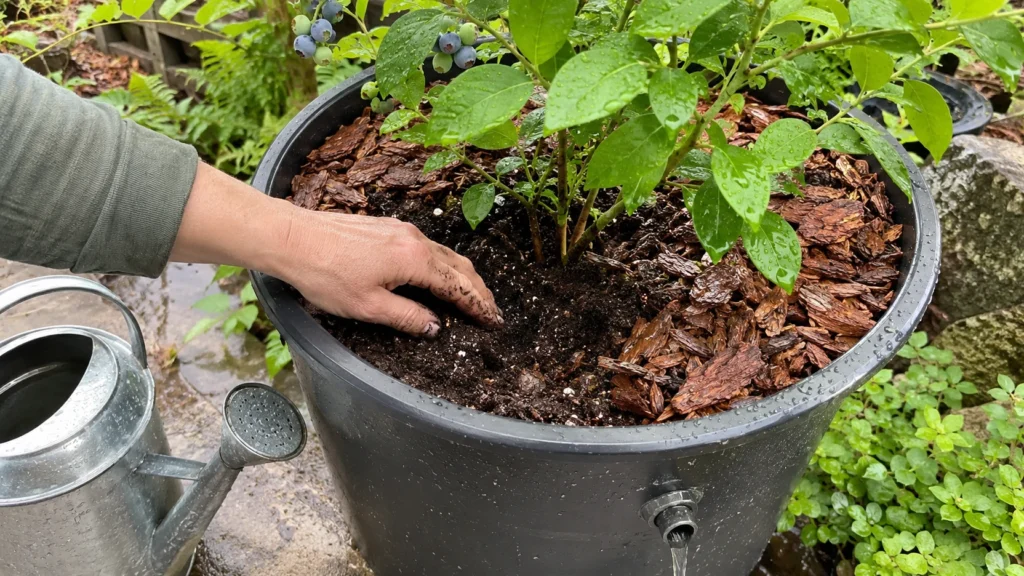
Blueberries need evenly moist, aerated compost. Check the top one to two inches and water thoroughly when it begins drying; let surplus water escape. Fabric bags and terracotta dry faster than glazed or resin pots, particularly during hot weather and fruit formation.
Composted pine bark or suitable wood chips help retain moisture and moderate temperature. Keep mulch off the stems and empty standing saucers. Rainwater is useful where tap water is alkaline; never let roots dry out while collecting it. During warm weather, lift smaller pots occasionally to learn the weight of damp versus dry compost. This simple comparison can expose moisture problems that a wet-looking surface hides.
What fertilizer works best?
Use a blueberry or ericaceous fertilizer during active growth, following its label. Either controlled-release granules or appropriately diluted liquid feed can work. Avoid doubling up on full doses or stimulating tender late-season growth in cold climates.
- Spring: Assess growth and compost condition; begin appropriate feeding.
- Summer: Monitor moisture closely and continue only the recommended program.
- Autumn: Reduce unnecessary nitrogen as growth slows.
- Winter: Water sparingly when needed, without encouraging soft new growth.
Kitchen-scrap fertilizer recipes rarely supply predictable nutrients. Suitable compost may improve organic matter but cannot replace a balanced feeding plan. Before treating yellow foliage or browned tips, check drainage, salts, and soil pH.
Do Coffee Grounds or Epsom Salt Help Blueberries?
Used coffee grounds do not reliably acidify blueberry compost; their pH and effect vary. Small amounts can enter a general compost system, but thick, wet layers on the soil surface may obstruct airflow and water infiltration.
Epsom salt supplies magnesium and sulfur but lacks balanced nutrients. Use it only for a diagnosed magnesium shortage. It does not reliably acidify soil, and routine dosing can disturb nutrient balance.
- For high pH, use tested ericaceous medium or a calculated amendment.
- For low nutrients, choose a suitable formulated fertilizer.
- For drying soil, change watering and mulch practices.
- For yellow leaves, test pH before buying iron or magnesium supplements.
Banana peels, vinegar, and other home remedies are similarly unpredictable. Testing the medium is a better first step than adding an unmeasured ingredient. For example, if a shrub is yellow and its pH is above the recommended range, an Epsom salt treatment misses the likely issue entirely.
How Do Blueberry Planters Survive Winter?
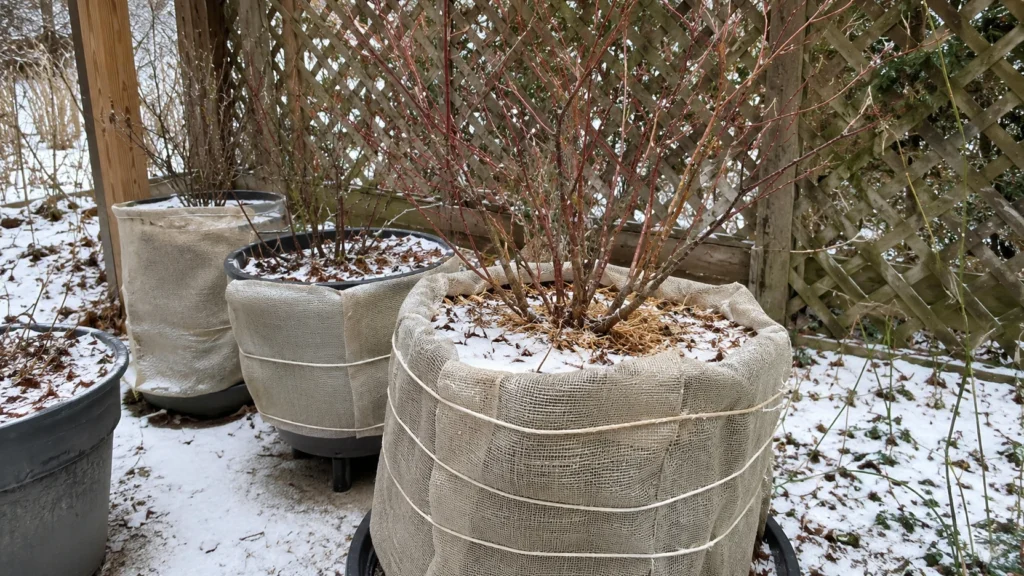
Dormant blueberry shoots may withstand substantial cold, but exposed container roots are less protected than in-ground roots. Select a locally hardy cultivar and insulate its pot rather than moving it into a heated living room.
In cold climates, cluster pots, insulate their sides, or shelter them in a suitable unheated structure. Alternatively, sink pots into well-drained ground. Maintain drainage and check winter moisture occasionally; dormant roots still need protection from both drought and saturation.
- Protect against drying winds and repeated freeze-thaw cycles.
- Avoid waterlogged saucers and sealed decorative sleeves.
- Return protected plants to sunlight as seasonal growth resumes.
- Cover vulnerable blossoms temporarily when late frost threatens.
- Keep animals from chewing stems in sheltered storage areas.
Warm winters may provide insufficient chilling even when plants survive. Check cultivar requirements before purchasing. In spring, return sheltered pots gradually, watching for wind and late frosts. Flower buds are often more vulnerable than dormant wood, so protect developing blooms when freezing weather is forecast.
How Long Do Blueberry Bushes Grow and Live?
Blueberries are long-lived perennial shrubs. With proper soil, pruning, and periodic compost renewal, many remain productive for decades. Growth is moderate, and meaningful harvests typically develop over several growing seasons rather than immediately after planting.
Bushes expand through new canes and, in some types, underground shoots. Inspect root congestion and compost condition periodically. On established highbush plants, remove selected older canes during suitable dormant pruning; indiscriminate cuts can sacrifice the next crop.
Can you grow blueberries from a branch?
Yes. Healthy nonflowering softwood or semi-hardwood shoots can root in suitable propagation media. Take cuttings in the recommended local season, use clean tools, provide bright indirect light, and maintain humidity without waterlogging.
- Propagate from healthy, correctly identified parent plants.
- Use clean tools and containers to limit disease transfer.
- Keep medium moist while roots develop; do not assume success immediately.
- Acclimate rooted cuttings gradually before transplanting outdoors.
Cuttings take time to establish. Buy an older nursery bush if you want fruit sooner. Because berries generally form on shoots from the previous growing season, avoid cutting away all healthy young wood during pruning. Remove selected old or damaged canes instead.
How Do You Fix Blueberry Planter Problems?
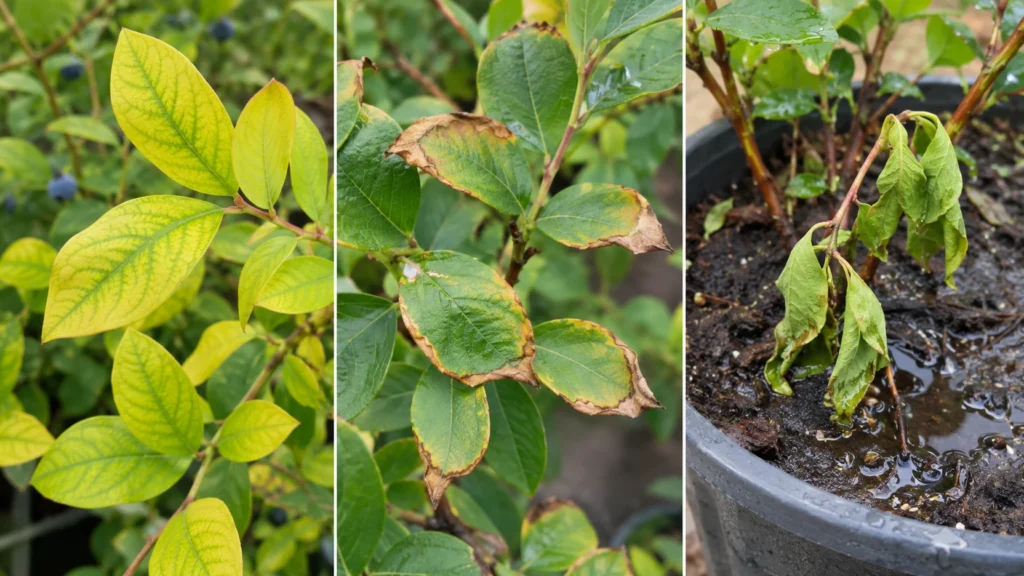
Blueberry container problems often involve unsuitable pH, moisture, drainage, root space, or light. Identify the cause before fertilizing: similar symptoms can have different explanations and require different responses.
Yellow leaves may indicate high pH or poor nutrient uptake; wilting occurs with either drought or damaged, waterlogged roots. Inspect the compost before treating.
| Symptom | Possible cause | First check |
|---|---|---|
| Yellow leaves, greener veins | High pH; poor iron availability | Test root-zone pH |
| Brown leaf edges | Heat, drought, fertilizer salts | Moisture and feeding history |
| Wilting in wet compost | Poor aeration or root damage | Drainage and root condition |
| Few flowers or berries | Shade, age, pollination | Light and cultivar compatibility |
| Slow growth | Root restriction or unsuitable medium | Pot size and mix |
| Dropping or shriveling berries | Water stress or poor pollination | Watering and bloom conditions |
Birds can eat ripe fruit. Use well-secured, wildlife-safe netting or a cage and check it regularly. For cane dieback, unusual spots, or spreading lesions, consult regional disease guidance instead of assuming nutrient deficiency.
Make one evidence-based correction, then assess fresh growth; damaged older leaves may not recover. Keep a short record of watering changes, fertilizers, and pH readings. Compare subsequent new growth rather than stacking treatments.
Which Blueberry Planter Setup Should You Choose?
For beginners, a compact cultivar in a wide, well-drained, weather-appropriate pot filled with ericaceous mix is the simplest choice. Use barrels or raised beds for vigorous bushes, lightweight resin where pots must move, and compatible cultivars when growing a pair.
Before buying, confirm mature size, regional chilling requirements, sunlight, watering access, and winter protection. An expensive decorative pot cannot compensate for the wrong variety or soil. Select a setup that works throughout the year. If you are choosing between attractive planters at the same price, favor drainage, adequate internal volume, and weather resistance over decorative features that provide no benefit to roots.
Blueberry Planter FAQs
Do blueberries prefer deep or wide pots?
Wide pots are particularly useful because roots spread laterally, but the planter still needs adequate depth and overall capacity for the cultivar.
What is the best month to plant blueberries?
Choose early spring or a mild autumn planting period based on your local hemisphere and climate. Avoid severe heat and frozen soil.
Do blueberries need full sun?
About six to eight hours of direct sun usually supports the best fruiting. Partial shade can reduce flowering and yields.
What is the best compost for blueberries?
Use ericaceous compost designed for acid-loving plants, preferably peat-free, with good drainage and a tested acidic pH.
Can blueberries grow indoors?
Ordinary indoor conditions seldom supply enough light or seasonal chilling for reliable fruiting.
What should not grow next to blueberries?
Avoid sharing their acidic root zone with lime-loving plants, aggressive roots, or species requiring much drier conditions. Separate pots can solve conflicts.
Do blueberry bushes need a second plant?
Many are self-fertile, but a compatible second cultivar with overlapping flowers can improve harvests. Rabbiteye types generally benefit strongly from cross-pollination.
How often should you repot blueberries?
Check roots and medium annually. Established plants may need compost renewal or careful repotting every two to three years, depending on growth.
Do blueberries spread and live for years?
Yes. They form expanding shrubs and can live for decades under favorable conditions. Actual height and lifespan depend on variety and care.
Are coffee grounds or Epsom salt good fertilizer?
Neither is a complete blueberry fertilizer. Coffee grounds cannot reliably acidify soil, and Epsom salt is useful only when magnesium is genuinely needed.

Myra is the founder and lead writer of Backyard Planter Ideas, where she shares practical, well-researched guidance on planter design, plant selection, and outdoor styling. Her goal is to help homeowners create attractive, functional garden spaces with clear, reliable, and easy-to-apply advice.
Hosta Planter Ideas: 21 Beautiful Designs for Shady Spaces
Hosta planter ideas can turn shaded patios, porches, balconies, and garden corners into striking foliage displays. Hostas grow successfully in containers when they have drainage holes, moisture-retentive potting mix, adequate root space, and protection from harsh afternoon sun. The best...
21 Japanese Maple Planter Ideas for Beautiful Outdoor Spaces
Japanese maple planter ideas can turn an ordinary patio, balcony, or courtyard into a garden focal point. Japanese maples (Acer palmatum) grow well in containers when their roots have drainage, consistent moisture, and protection from extreme sun and cold. The...
Geranium Planter Ideas: 15 Beautiful Designs and Growing Tips
Geranium planter ideas can brighten patios, balconies, porches, and window boxes with relatively little equipment. Choose upright zonal geraniums for bold flower clusters, trailing varieties for baskets, and companion plants with matching sunlight and moisture needs. The best results come...
Fig Tree Planter Ideas
The best fig tree planter ideas balance appearance with drainage, root space, and sunlight. Terracotta pots, wooden half-barrels, glazed ceramic containers, and lightweight resin planters all accommodate edible figs. Established trees generally benefit from around 15 gallons (57 liters) of...
Begonia Planter Ideas: 15 Beautiful Combinations for Every Space
Begonia planter ideas work best when flower color, foliage, container size, and light requirements fit together. Choose wax begonias for compact outdoor displays, trailing varieties for hanging baskets, or Rex begonias for striking indoor leaves. Combine compatible plants in well-drained...
Railing Planter Ideas: Best Designs, Plants, and DIY Tips
Railing planter ideas make balconies, decks, and porches greener without sacrificing floor space. The best choices are securely fitted saddle planters, bracket-mounted flower boxes, and hanging baskets planted with compact flowers, herbs, or strawberries. Match the container to your railing,...
11 Best Vegetables for Deep Planters: Complete Soil Depth Guide
The best vegetables for deep planters are carrots, parsnips, daikon radishes, potatoes, sweet potatoes, tomatoes, cucumbers, peppers, eggplants, zucchini, and pole beans. Most benefit from approximately 12–24 inches of usable growing mix, although the right depth depends on variety, container...
Boxwood Planter Ideas
Boxwood planter ideas bring year-round greenery to front doors, patios, courtyards, and garden pathways. These evergreen shrubs grow well in outdoor containers when they have enough root space, a free-draining growing medium, and consistent moisture. Choose compact varieties suited to...
Potato Planter Ideas: 15 Easy Containers and DIY Growing Tips
Potato planter ideas range from fabric grow bags and large plastic pots to wooden boxes and homemade bucket planters. For most beginners, a wide, opaque 10–15-gallon (38–57-liter) container with drainage, loose potting mix, and six to eight hours of sunshine...
25 Trough Planter Ideas for Beautiful Outdoor Spaces in 2026
Trough planter ideas turn patios, balconies, fences, and small backyards into productive, attractive gardens. The best designs pair a long, suitable container with plants that share similar light, moisture, and root-space needs. Wooden herb boxes, galvanized flower troughs, evergreen displays,...