

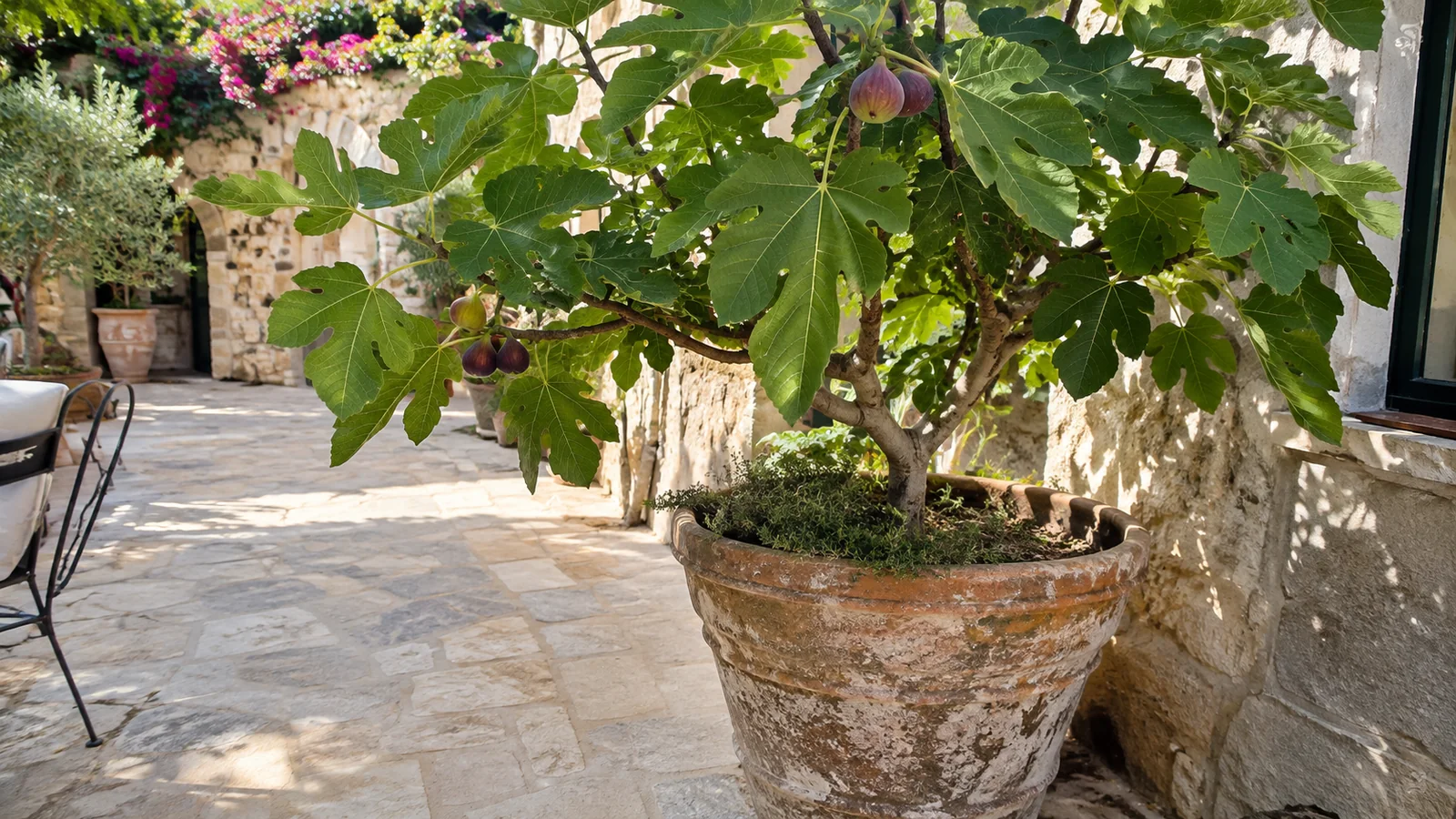
The best fig tree planter ideas balance appearance with drainage, root space, and sunlight. Terracotta pots, wooden half-barrels, glazed ceramic containers, and lightweight resin planters all accommodate edible figs. Established trees generally benefit from around 15 gallons (57 liters) of root space or more, depending on cultivar, pruning, and climate.
A common fig (Ficus carica) brings deeply lobed foliage and edible fruit to patios, balconies, and courtyards. Many cultivars fruit without a second tree. The choices below cover decorative and DIY planters, varieties, soil, watering, fertilizing, and harvests. This guide concerns edible figs, not the indoor ornamental fiddle-leaf fig (Ficus lyrata).
What Are the Best Planters for Fig Trees?
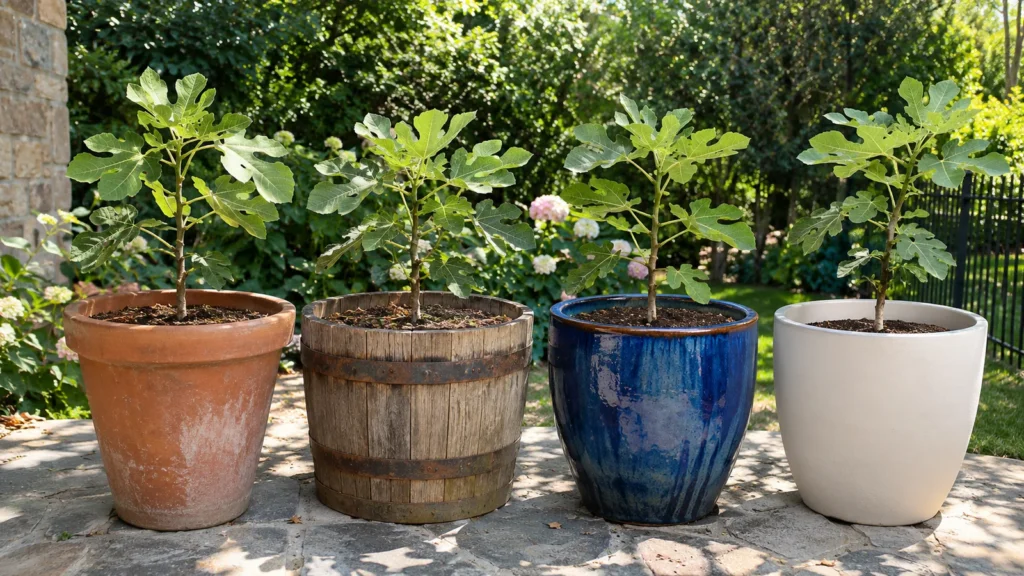
Choose a stable fig planter with unobstructed drainage holes and sufficient root volume. Container material affects moisture loss, root temperature, weight, and winter portability.
| Planter | Main advantage | Main drawback |
|---|---|---|
| Terracotta | Classic appearance; porous walls | Frequent watering; frost cracking |
| Wooden barrel | Broad, stable root space | Wood eventually deteriorates |
| Glazed ceramic | Attractive; holds moisture longer | Heavy; variable frost resistance |
| Resin or plastic | Lightweight and affordable | Can heat up in direct sun |
| Fabric grow bag | Air-prunes emerging roots | Dries quickly in wind |
| Concrete | Stable in exposed locations | Difficult to relocate |
Terracotta suits courtyards where regular watering is practical. Resin is easier to relocate before frost; wooden barrels add structure to rustic patios.
Check usable internal volume, not exterior height: tall decorative pots sometimes conceal shallow inserts. Favor a broad base, open drainage, and space beneath the rim for watering. For high-wind rooftops, stability is more important than portability; for freezing winters, prioritize a pot you can safely move or insulate.
Which 15 Fig Tree Planter Ideas Work Best?
These 15 designs suit different gardens and budgets. All need sufficient soil volume and drainage; some also require frequent watering or winter relocation.
- Mediterranean terracotta pot: Pair weathered clay with pale paving and lavender in separate pots. Clay dries faster in heat.
- Rustic wooden half-barrel: A wide barrel supports patio figs. Use sound, food-safe wood, reinforce loose hoops, and create unobstructed drainage openings.
- Minimalist white cylinder: A matte white resin planter highlights the fig’s sculptural foliage. Light colors absorb less sun.
- Glazed ceramic statement pot: Deep blue or olive glaze creates contrast with green leaves. Confirm outdoor suitability and inspect drainage rather than assuming decorative pottery is functional.
- Lightweight balcony container: Choose a compact cultivar in a manageable resin pot. Check balcony load limits.
- Fabric grow bag: Useful for economical growing and air pruning. Check moisture often in wind.
- Square timber planter: Clean wooden lines fit modern gardens. Use rot-resistant construction, raised feet, and bracing strong enough to hold saturated growing medium.
- Concrete courtyard pot: Heavy concrete resists tipping in windy positions. Place it permanently before filling, and protect exposed roots during severe frost.
- Galvanized farmhouse tub: A simple metal tub suits gravel paths and cottage gardens. Drill drainage holes, smooth sharp edges, and avoid containers with unknown chemical residues.
- Wheeled winter-ready planter: Put a sturdy pot on a rated, lockable plant trolley. This makes moving dormant figs into a sheltered unheated space far easier.
- Fan-trained wall planter: Grow a fig against secure wall wires in a generous rectangular container. Its branches need deliberate training, sufficient light, and a support independent of the pot.
- Self-watering reservoir pot: A properly ventilated system with an overflow can help reduce summer drying. Never keep the root zone constantly saturated.
- Sunroom feature planter: A compact fig looks striking beside bright glazing. Fruiting indoors needs very strong light and suitable seasonal dormancy, not ordinary houseplant conditions.
- Tall architectural planter: A charcoal tapered container adds height near entrances. Confirm it has real soil volume and a stable base rather than a shallow insert.
- Upcycled DIY container: Convert a sound wooden crate or safe reclaimed tub into a custom planter. Strengthen joints and provide drainage before using it for a permanent fruit tree.
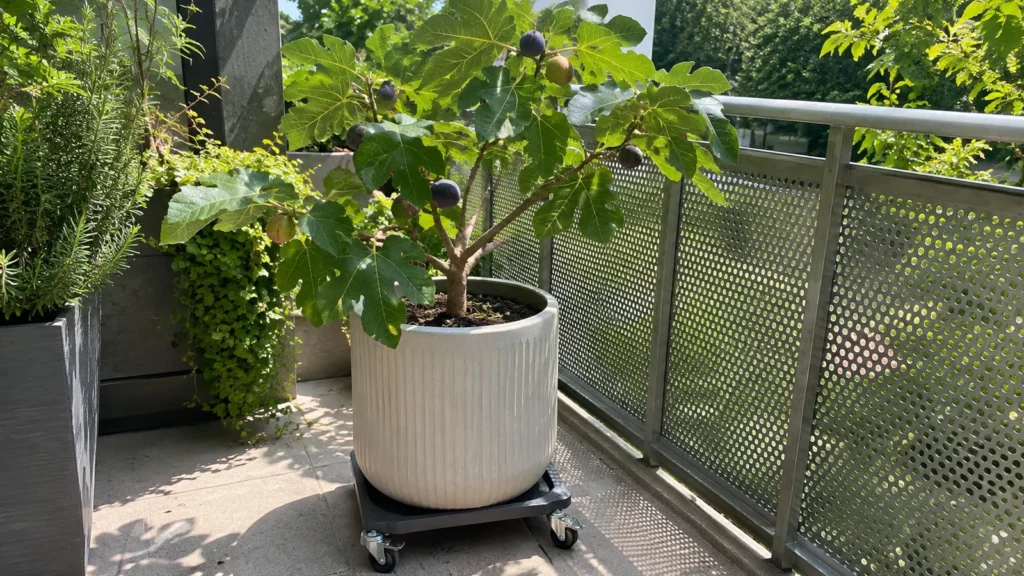
For balconies, prioritize lightweight pots, a compact cultivar, and a wheeled base where appropriate. Keep companion herbs in separate containers.
What Size Planter Does a Fig Tree Need?
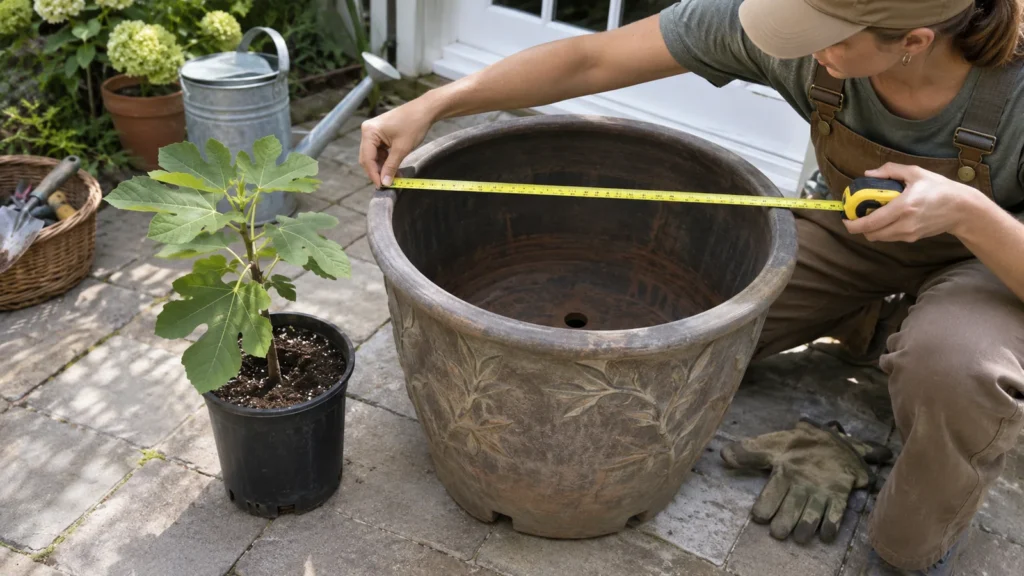
Young figs can start in a pot approximately 30 cm (12 inches) wide and deep. University of Maryland Extension suggests at least 15 gallons (57 liters) for established container figs. Increase pot size gradually so unused compost does not stay wet for too long.
| Tree stage | Practical pot decision |
|---|---|
| Newly purchased small tree | Begin around 30 cm wide and deep |
| Developing tree | Move up modestly when roots fill the pot |
| Established fruiting fig | Plan for approximately 15 gallons or more |
| Mature managed patio fig | Maintain a strong container; renew compost and prune roots when necessary |
A box measuring 40 × 40 × 40 cm internally holds roughly 64 liters before planting clearance. Vigorous trees or hot locations may need more.
Circling roots, rapid drying, or water running around the root ball indicate crowding. Moderate root restriction controls vigor; extreme crowding weakens the tree. A newly repotted fig should sit at its previous soil depth. Do not bury the trunk or pack soil so tightly that air and water cannot move through it.
Which Fig Varieties Grow Best in Pots?
Choose a compact, early-ripening common fig adapted to your climate. A late cultivar may thrive in a hot summer but fail to ripen in a cooler, shorter season.
| Variety | Main reason to choose it |
|---|---|
| Little Miss Figgy | Compact, attractive patio habit |
| Petite Negri | Naturally dwarf growth |
| Violette de Bordeaux | Relatively compact with dark fruit |
| Brown Turkey | Widely grown and adaptable |
| Chicago Hardy | Useful cold tolerance in suitable sites |
| Celeste | Sweet, relatively early fruit in warm areas |
The Royal Horticultural Society identifies Little Miss Figgy as a compact patio selection; Maryland Extension describes Petite Negri as a dwarf growing roughly 4–6 feet tall.
Buy a named common, persistent fig that fruits without specialized pollination. Ask the nursery about regional ripening and inspect roots before purchase. In cool summers, prioritize dependable main-crop ripening over advertised fruit size. In humid climates, ask which cultivars resist fruit splitting or souring locally.
Are Fig Trees Better in Pots or the Ground?
Figs grow in pots or the ground. Containers offer mobility and size control; in-ground trees develop broader roots, need less watering once established, and can yield more.
Containers favor renters, balconies, small patios, and cold climates. Ground planting suits larger spaces with well-draining soil and favorable winters.
The Royal Horticultural Society notes that moderate root restriction can check excessive leafy growth and encourage fruiting. Severely crowded roots, however, reduce resilience. Choose based on space and maintenance, not an assumption that pots always yield more. A ground-planted fig may eventually shade paths or crowd neighboring beds. A container-grown specimen can be kept as a low, open bush with reachable fruit.
How Do You Build a DIY Fig Tree Planter?
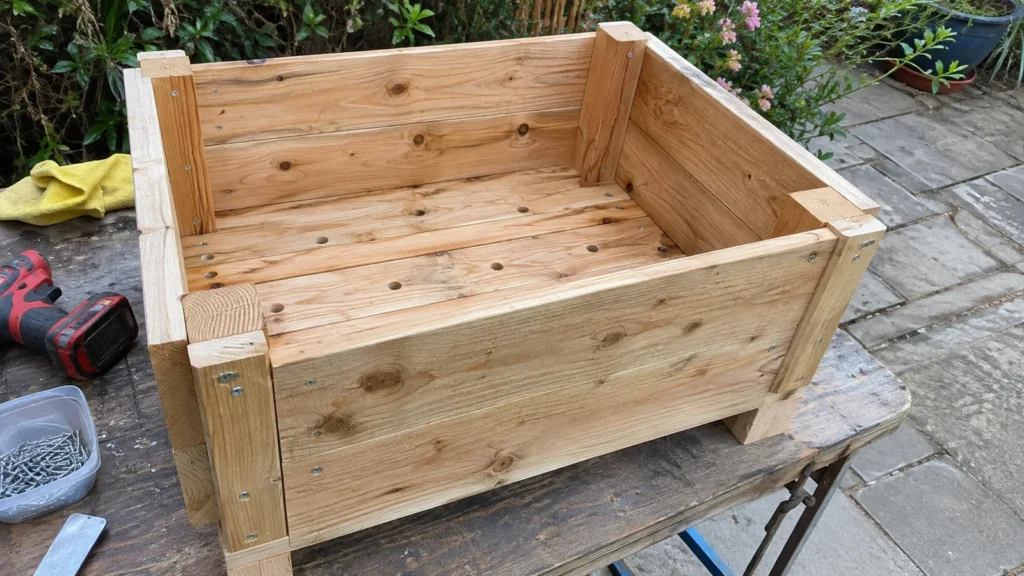
Build a DIY fig planter from durable timber with reinforced corners, drainage, and access for repotting. Because wet compost is heavy, strength matters. Avoid reclaimed wood with unknown chemical treatments.
- Plan capacity: For an established managed tree, target around 57 liters or more of usable root space; allow room below the rim for watering.
- Cut and reinforce timber: Use rot-resistant boards, corrosion-resistant screws, and corner bracing. Reinforce the base.
- Create drainage: Leave appropriate gaps or drill several holes. Raise the base on feet so water exits freely rather than pooling on the patio.
- Protect without sealing: If using an interior liner, perforate it thoroughly. A waterproof liner without outlets turns the box into a waterlogged tub.
- Fill and plant: Use suitable container compost, plant at the previous nursery depth, firm gently, and water until moisture runs out.
- Position and inspect: Set the planter in full sun before filling if it will be heavy. Check timber, joints, and drainage each season.
For a fan-trained fig, attach training wires to the wall, not the pot. Use a wheeled base only on level ground and within its loaded-weight rating. Before filling a DIY box, pour water into it to confirm drainage reaches every outlet. Check that timber feet lift the base clear of puddles.
What Soil, Sun, and Water Do Potted Figs Need?
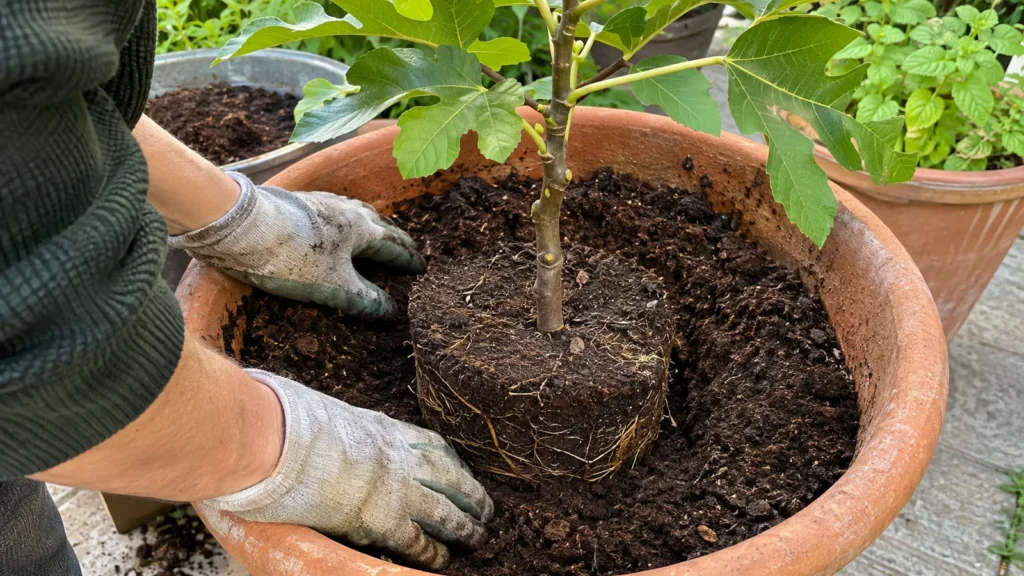
Potted figs need free-draining compost, strong sunlight, and consistent moisture in active growth. Repeated drought causes fruit drop; waterlogged roots can cause similar wilting.
Soil: Use a quality, free-draining container mix or peat-free, soil-based compost with sufficient structure for a woody perennial. Maryland Extension suggests combining compost and a soilless mix for container figs. Avoid filling pots entirely with heavy garden soil. Keep drainage openings clear and do not add stones below the compost as a supposed drainage layer.
Sun: Aim for at least eight hours of direct summer sunlight for the strongest production. In the Northern Hemisphere, a sheltered south-facing position is often favorable; in the Southern Hemisphere, a north-facing aspect frequently provides comparable exposure.
Water: Check several centimeters below the surface rather than following a fixed calendar. Water thoroughly when the mix has begun to dry, letting surplus water escape.
- Wilted leaves can mean either dry roots or poorly functioning, saturated roots; check the compost first.
- Mulch the surface lightly if it helps limit evaporation, but leave the trunk clear.
- Raise containers off solid surfaces where drainage holes become blocked.
- Protect pot walls from extreme afternoon heat without shading the foliage excessively.
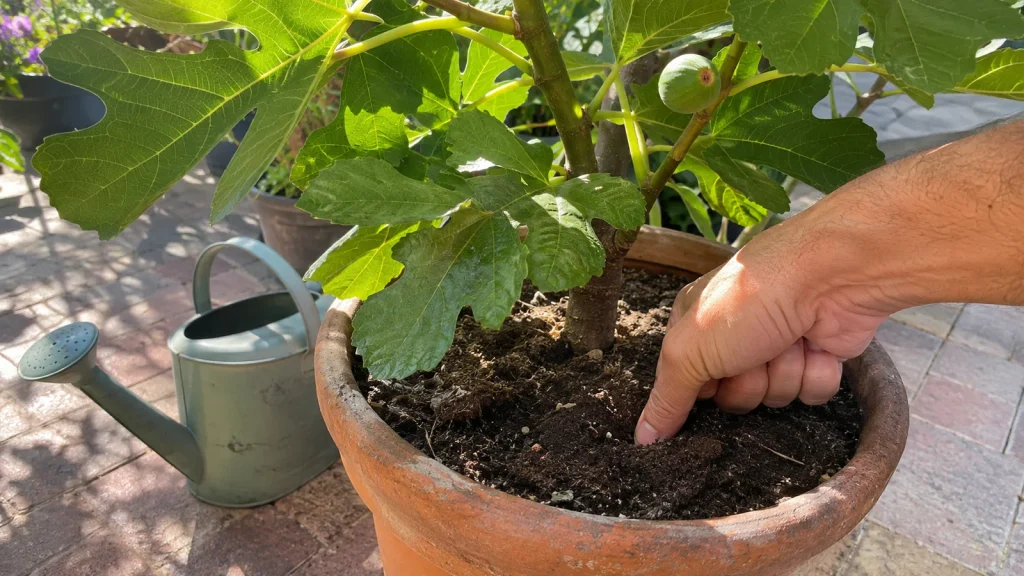
If water rushes straight through a very dry pot, the compost may have pulled away from the sides. Rewet it slowly in several passes rather than assuming the root ball has soaked through.
What Fertilizer Helps Potted Fig Trees?
Use a complete fertilizer for fruiting plants without overdoing nitrogen, which promotes foliage over fruit. The RHS recommends high-potassium liquid feeding during active growth, while Maryland Extension describes monthly feeding in late spring and early summer. Follow one suitable labeled schedule.
Feed from spring growth onward, adjusting to tree vigor and compost fertility. Stop heavy feeding as growth slows. If shoots thrive but fruit does not ripen, check sun, cultivar, and pruning before adding nutrients.
What about home remedies? Banana peels and crushed eggshells break down slowly; they are not balanced, fast-acting fertilizers. Compost them first. Banana-peel water has no reliable standard nutrient concentration or proven soaking period, so there is no meaningful number of days to recommend. Long soaking can also cause odor and microbial growth.
Epsom salt supplies magnesium, not a complete nutrient blend. Apply it only when a real magnesium deficiency has been identified, preferably through testing or professional diagnosis. Arbitrary amendments can increase soluble salts or disturb nutrient balance. Yellow leaves alone do not prove magnesium deficiency: check watering, old leaf shedding, and root condition first. A soil or growing-medium test is more informative than repeated homemade treatments.
When Do Potted Fig Trees Produce Fruit?
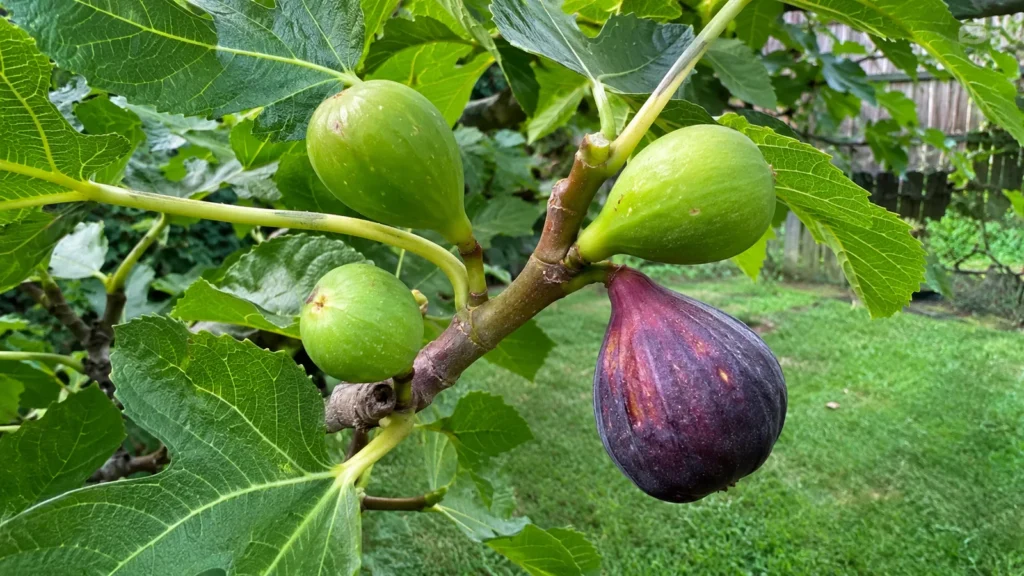
Nursery-grown figs often start bearing two to three years after planting, depending on variety, age, climate, and care. Young trees may offer a few figs; productive established potted trees can yield dozens, but harvests vary widely.
Some cultivars produce an early breba crop on previous-season wood and a main crop on new shoots. Both may ripen in warm regions, but cooler locations sometimes mature only one. Cutting away all last year’s shoot tips can remove the early crop before it develops. A crop of tiny figs that stays hard until cold weather is often a season-length issue, not proof that the tree needs stronger fertilizer.
Do you need two trees? No, not for most common edible fig cultivars. They develop fruit without pollination. Other fig types depend on specialized fig-wasp relationships, which is why purchasing a named common fig is important.
In temperate Northern Hemisphere gardens, harvest usually falls between summer and autumn, depending on crop type; Southern Hemisphere seasons differ. Pick figs when soft, fully colored for the cultivar, and drooping. Discard spoiled fruit.
How Can You Increase Fig Yield?
More figs come from the right cultivar, full sun, steady moisture, and careful pruning. Neither oversized pots nor extra fertilizer compensate for a short season or deep shade.
Use this checklist before changing your care routine:
- Confirm the tree receives close to eight hours of direct summer sun.
- Check that the root ball is moist but not persistently saturated.
- Keep drainage holes open and correct severe root crowding.
- Avoid heavy nitrogen feeding on an already vigorous tree.
- Remove crossing, weak, or dead branches without cutting off all breba-bearing tips.
- Choose early-ripening cultivars where summers are short.
- Protect overwintering shoots and roots from damaging frost.
- Harvest ripe figs promptly to reduce losses to birds and spoilage.
If a tree produces leaves but no ripe fruit, determine whether its fruit never forms, forms and drops, or stays hard until frost. Excess nitrogen often causes vigorous shoots; drought can trigger fruit drop; insufficient heat or an unsuitable cultivar may prevent ripening.
Where and When Should You Plant Figs?
Spring planting gives potted figs time to establish before winter where frost occurs. Dormant-season planting also works in milder climates. Follow local frost dates rather than a fixed month.
Choose a warm, sunny, sheltered courtyard with room for the canopy and access for harvesting. A sun-facing wall can shelter a trained tree, provided airflow and irrigation remain adequate.
For visual companions, arrange lavender, rosemary, or thyme in separate pots around the fig. Do not crowd vigorous shrubs, running bamboo, dense vines, or water-loving species into the same container. They compete for restricted root space or require incompatible moisture conditions.
Indoor fig tree planter ideas work best in extremely bright conservatories or greenhouses rather than standard living rooms. Edible figs are deciduous and benefit from seasonal rest. For ordinary low-light interiors, a fiddle-leaf fig is a different ornamental plant, not a substitute for a productive edible fig.
How Do You Maintain, Prune, and Propagate Figs?
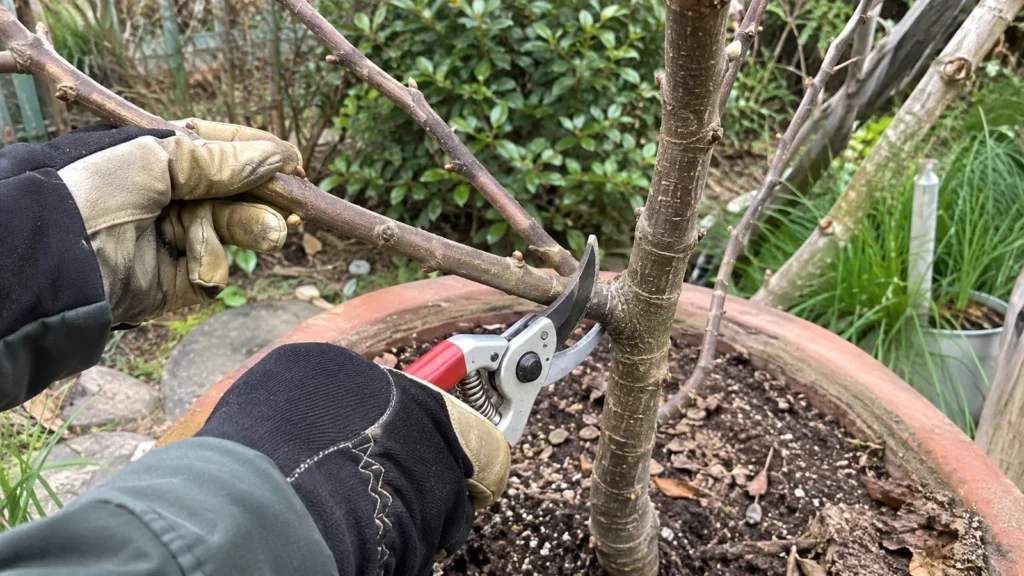
Container figs can live for decades with good care. Five-year-old trees vary substantially: dwarf cultivars remain compact while vigorous ground-grown trees may reach several meters. Manage actual growth, not age alone.
Spring: Inspect winter damage, renew deteriorated compost, repot if needed, and resume watering and feeding as growth begins. Summer: Monitor moisture, harvest fruit, and lightly thin excessive shoots. Autumn: Reduce feeding and prepare protection. Winter: Keep dormant containers cool and sheltered from damaging freezes, with only enough moisture to prevent prolonged complete drying.
Prune dead, crowded, damaged, and crossing branches, while preserving wood carrying developing fruitlets where appropriate. Excessive hard pruning can stimulate long shoots and sacrifice a crop. Wear gloves: milky fig sap can irritate skin, especially with sun exposure.
To propagate, take healthy dormant hardwood cuttings or suitable summer stem cuttings and root them in clean, lightly moist propagation mix. Established figs sometimes resprout after being cut back or frost-damaged, provided the root system survives.
What Fig Tree Problems Should You Avoid?
Most container fig problems arise from shade, blocked drainage, crowded roots, erratic watering, or frost. Limited soil volume makes problems develop quickly.
| Symptom | First check | Practical response |
|---|---|---|
| Drooping leaves | Dry or saturated compost | Correct irrigation and drainage |
| Leafy tree, few figs | Shade, nitrogen, pruning | Improve light; reassess feeding |
| Fruit drops early | Drought, stress, cultivar | Stabilize water; check variety |
| Hard figs at frost | Short season, late cultivar | Choose earlier-ripening fig |
| Yellowing leaves | Roots, season, nutrients | Inspect before adding supplements |
| Frost-damaged tips | Winter exposure | Shelter the pot; prune dead wood later |
Fallen ripe fruit can attract insects and create mess near seating. If the tree is severely pot-bound, repot or carefully root-prune during a suitable dormant period.
A heavy pot does not guarantee cold protection. Above-ground roots are more exposed to freezing than roots in soil, including in cold-tolerant cultivars. When moving a dormant fig indoors for winter, choose a cool unheated space rather than a warm living room, and check the compost occasionally.
Fig Tree Planter Ideas: Frequently Asked Questions
What is the best container for a fig tree?
A sturdy pot with drainage and enough root volume is best. Terracotta suits sunny patios; lightweight resin is convenient when winter moving is necessary.
Do fig trees prefer full sun or shade?
Full sun is best for fruiting, with about eight hours of direct summer light a useful target. Shade can reduce yields and delay ripening.
Are fig trees difficult to maintain?
Not usually, but potted figs need regular moisture checks, seasonal feeding, occasional pruning, and protection from damaging frost.
Do I need two fig trees for fruit?
No. Most named common fig cultivars bear without pollination. Confirm the cultivar before buying, because some other fig types have different requirements.
How many figs can one tree produce?
A young tree may yield only a handful; a healthy mature potted fig may produce dozens. Weather, container size, and variety prevent an honest fixed estimate.
Is Epsom salt good for fig trees?
Only when magnesium is genuinely deficient. It does not replace fertilizer.
What should you not plant beside a fig?
Avoid vigorous plants that shade the canopy or compete for root space. Separate herb pots are usually easier to manage than shared planting.
When should you not eat a fig?
Discard figs that are moldy, slimy, decaying, or smell strongly sour or fermented. Wash ripe fruit.
Why are figs important in Islam?
Figs are mentioned alongside olives in Surah At-Tin (Quran 95:1), giving them cultural and religious significance. Eating them is optional.
Can I grow an edible fig indoors?
Only with very strong light and suitable seasonal conditions. A bright conservatory offers better fruiting prospects than a typical indoor room.
Final choice: A compact common fig in terracotta, a half-barrel, or a movable resin planter offers a strong balance of design and fruit production. Match pot size and material to climate, then prioritize light, water, and root health.

Myra is the founder and lead writer of Backyard Planter Ideas, where she shares practical, well-researched guidance on planter design, plant selection, and outdoor styling. Her goal is to help homeowners create attractive, functional garden spaces with clear, reliable, and easy-to-apply advice.
Blueberry Planter Ideas: Best Pots, Soil, and Growing Tips
The best blueberry planter ideas use spacious containers, acidic potting mix, and varieties suited to local weather. Wooden barrels, large patio pots, raised troughs, and compact balcony planters can all work. Aim for soil pH 4.5–5.5, steady moisture, and ample...
Hosta Planter Ideas: 21 Beautiful Designs for Shady Spaces
Hosta planter ideas can turn shaded patios, porches, balconies, and garden corners into striking foliage displays. Hostas grow successfully in containers when they have drainage holes, moisture-retentive potting mix, adequate root space, and protection from harsh afternoon sun. The best...
21 Japanese Maple Planter Ideas for Beautiful Outdoor Spaces
Japanese maple planter ideas can turn an ordinary patio, balcony, or courtyard into a garden focal point. Japanese maples (Acer palmatum) grow well in containers when their roots have drainage, consistent moisture, and protection from extreme sun and cold. The...
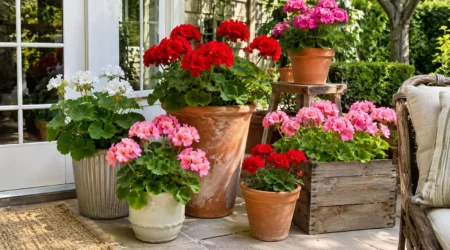
Geranium Planter Ideas: 15 Beautiful Designs and Growing Tips
Geranium planter ideas can brighten patios, balconies, porches, and window boxes with relatively little equipment. Choose upright zonal geraniums for bold flower clusters, trailing varieties for baskets, and companion plants with matching sunlight and moisture needs. The best results come...
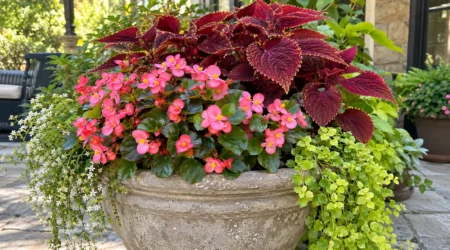
Begonia Planter Ideas: 15 Beautiful Combinations for Every Space
Begonia planter ideas work best when flower color, foliage, container size, and light requirements fit together. Choose wax begonias for compact outdoor displays, trailing varieties for hanging baskets, or Rex begonias for striking indoor leaves. Combine compatible plants in well-drained...
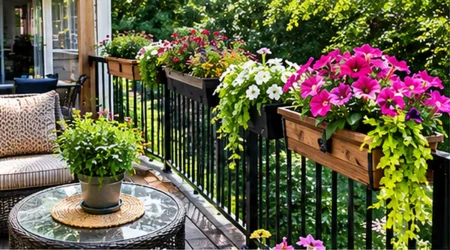
Railing Planter Ideas: Best Designs, Plants, and DIY Tips
Railing planter ideas make balconies, decks, and porches greener without sacrificing floor space. The best choices are securely fitted saddle planters, bracket-mounted flower boxes, and hanging baskets planted with compact flowers, herbs, or strawberries. Match the container to your railing,...
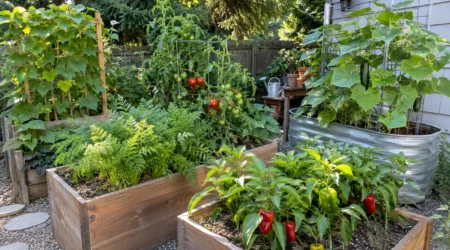
11 Best Vegetables for Deep Planters: Complete Soil Depth Guide
The best vegetables for deep planters are carrots, parsnips, daikon radishes, potatoes, sweet potatoes, tomatoes, cucumbers, peppers, eggplants, zucchini, and pole beans. Most benefit from approximately 12–24 inches of usable growing mix, although the right depth depends on variety, container...
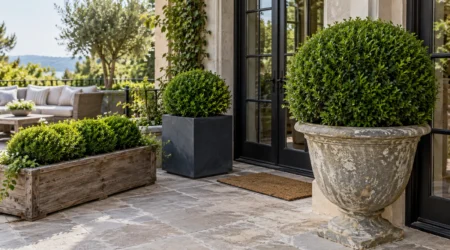
Boxwood Planter Ideas
Boxwood planter ideas bring year-round greenery to front doors, patios, courtyards, and garden pathways. These evergreen shrubs grow well in outdoor containers when they have enough root space, a free-draining growing medium, and consistent moisture. Choose compact varieties suited to...
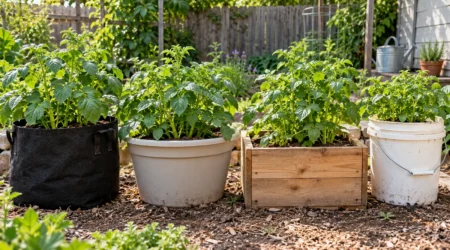
Potato Planter Ideas: 15 Easy Containers and DIY Growing Tips
Potato planter ideas range from fabric grow bags and large plastic pots to wooden boxes and homemade bucket planters. For most beginners, a wide, opaque 10–15-gallon (38–57-liter) container with drainage, loose potting mix, and six to eight hours of sunshine...
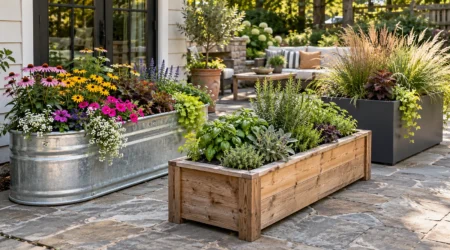
25 Trough Planter Ideas for Beautiful Outdoor Spaces in 2026
Trough planter ideas turn patios, balconies, fences, and small backyards into productive, attractive gardens. The best designs pair a long, suitable container with plants that share similar light, moisture, and root-space needs. Wooden herb boxes, galvanized flower troughs, evergreen displays,...