

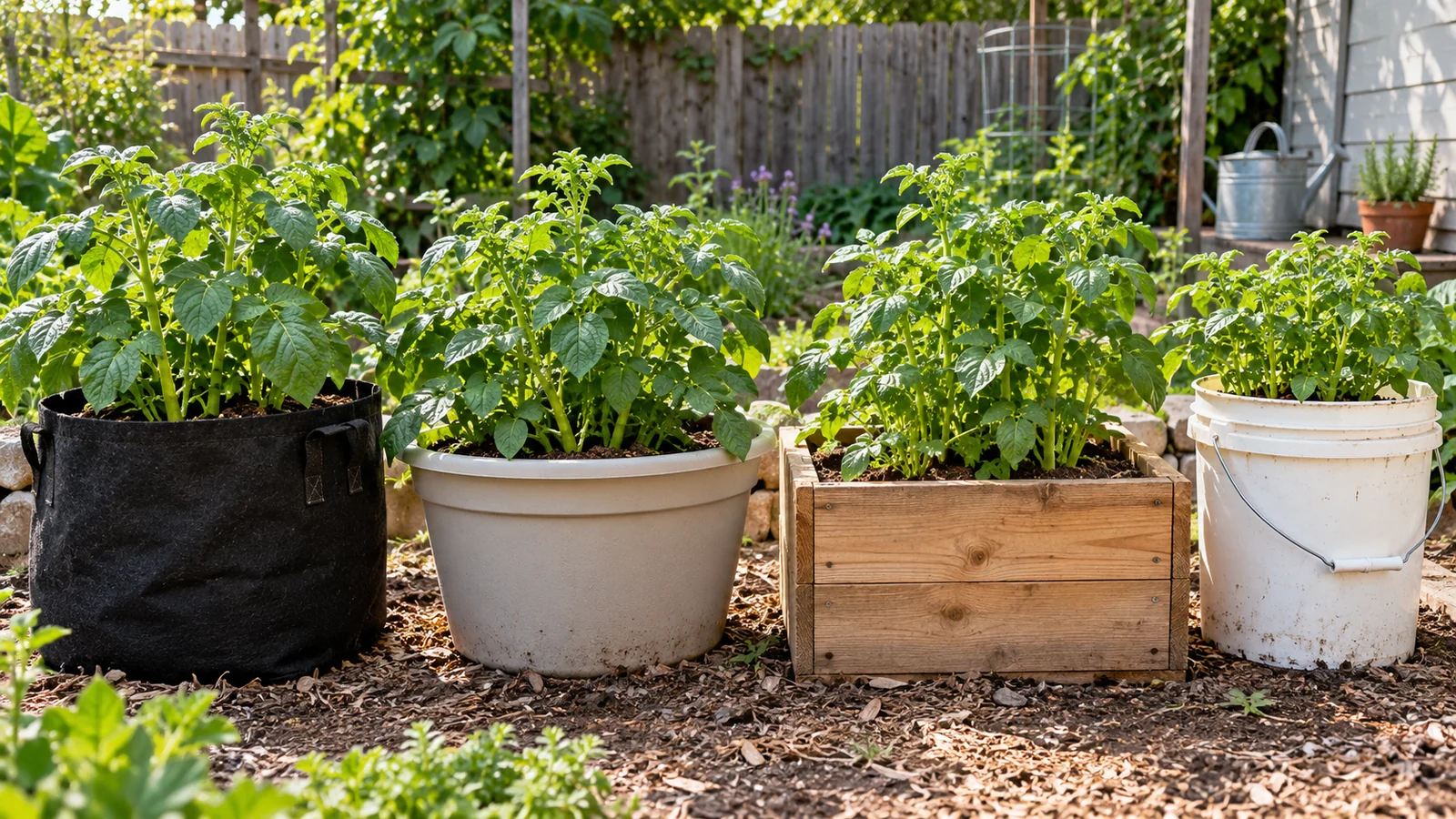
Potato planter ideas range from fabric grow bags and large plastic pots to wooden boxes and homemade bucket planters. For most beginners, a wide, opaque 10–15-gallon (38–57-liter) container with drainage, loose potting mix, and six to eight hours of sunshine is a practical starting point. You can grow a worthwhile crop without digging a garden bed.
The important decisions are not decorative: container width, seed-potato spacing, moisture, and growing-season temperature determine how easily plants develop. This guide from backyardplanterideas compares planter options and explains how to plant, feed, troubleshoot, and harvest potatoes in small outdoor spaces.
Which Potato Planter Ideas Work Best?
The best potato planter is wide enough for developing tubers, drains freely, blocks light from the crop, and suits your watering routine. Fabric grow bags are convenient on patios; plastic pots hold moisture longer; and wooden boxes offer a more permanent backyard design. No particular planter style guarantees a bigger harvest. In-ground beds may offer more root space and moisture reserves; containers offer easier placement, soil control, and harvesting.
Choose according to how much time you can spend watering and whether you need to move the container. A 10-gallon fabric bag may need closer attention during hot weather than an equally sized plastic pot. Large planters also become extremely heavy when wet, so check balcony loading limits before arranging several together.
15 practical potato planter designs
- Fabric grow bag: Foldable, well-draining option for beginners.
- Opaque plastic pot: Durable choice that slows evaporation.
- Food-safe bucket: Inexpensive planter after drilling drainage holes.
- Wooden planter box: Attractive fixture for a backyard vegetable area.
- Reused compost sack: Low-cost seasonal grow bag with added holes.
- Harvest-flap bag: Lets you inspect some tubers, although access is limited.
- Wide rectangular trough: Fits against a sunny patio wall.
- Raised potato bed: Provides generous room for multiple plants.
- Light-colored resin pot: Helps limit wall heating in sunny locations.
- Half-barrel planter: Offers volume but is difficult to move.
- Handled fabric planter: Easy to reposition before filling.
- Stackable planter: Compact visually; check actual growing volume.
- Low wooden potato tower: Useful as a box, not a yield multiplier.
- Straw-mulched container: Reduces evaporation around established plants.
- Recycled storage tub: Works if opaque, food-safe, sturdy, and drained.
Best overall: a wide 10–15-gallon grow bag or plastic pot. Choose plastic in a dry, windy location and fabric where rapid drainage and compact storage matter most.
What Size Potato Planter Do You Need?
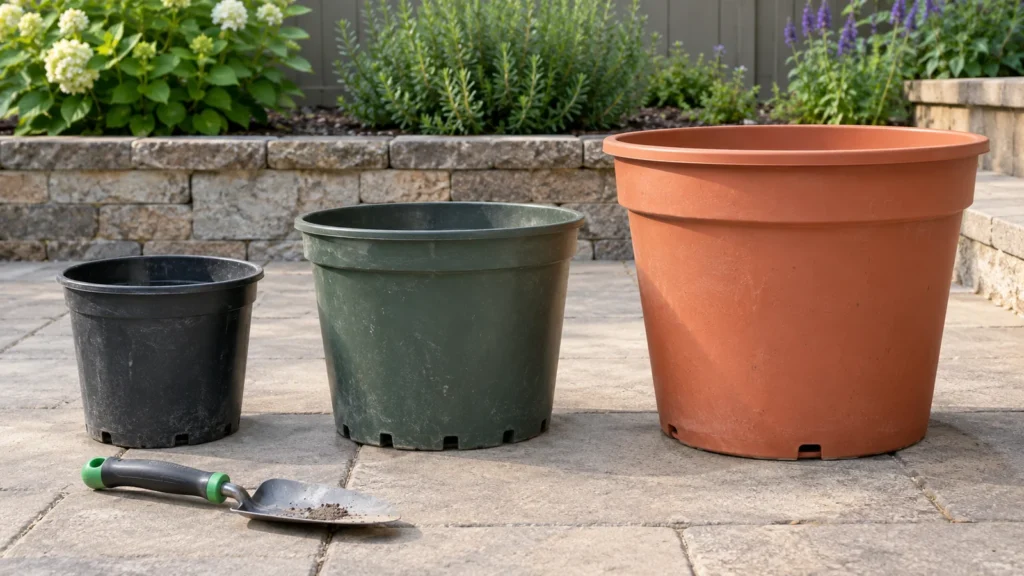
A container at least 12 inches (30 cm) across and deep can grow one seed potato, but wider 10–15-gallon containers are easier to manage. Width gives plants more useful room; extra height alone does not create more tubers. The Royal Horticultural Society advises approximately one seed potato per 12 inches of pot diameter. RHS Guide
For a first crop, avoid filling every available inch with seed pieces. Crowding increases competition for water, nutrients, and light. The suggested numbers below are conservative starting points, not guaranteed yields; actual spacing depends on the container’s shape and variety.
| Container capacity | Beginner planting guide | Best application |
|---|---|---|
| 5 gallons (19 L) | 1 seed potato | Small trial crop |
| 10 gallons (38 L) | 1–2 seed potatoes | Patio growing |
| 15 gallons (57 L) | 2–3 seed potatoes | More growing room |
| 20 gallons (76 L), wide | 3–4 seed potatoes | Larger outdoor setup |
Consider these checks before buying:
- Depth: Aim for roughly 12–18 inches (30–46 cm) of usable growing space.
- Drainage: Water must escape from several openings in the base.
- Material: Use opaque, food-safe containers; avoid unknown chemical residues.
- Location: Allow enough space to inspect leaves and water thoroughly.
One large, manageable container usually makes a better beginner project than several cramped decorative pots.
How Do You Make a DIY Potato Planter?
A homemade potato planter needs four things: adequate volume, safe materials, stable construction, and drainage. Clean food-grade buckets, strong compost sacks, and untreated wooden boxes are all realistic choices. Avoid containers that previously stored pesticides, solvents, or automotive chemicals, even if they appear clean.
The easiest project is a food-safe 10-gallon bucket or storage tub. Place it on blocks or pot feet so drainage holes remain unobstructed. For a wooden planter, use sound untreated timber, exterior-rated screws, and a reinforced base capable of supporting saturated potting mix.
DIY bucket planter
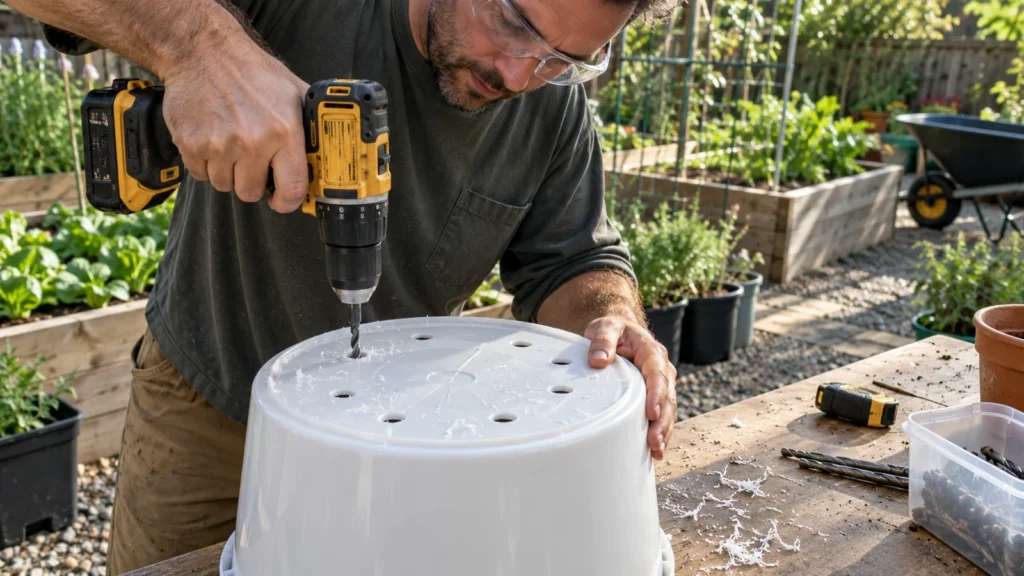
- Wash and inspect a 10-gallon food-safe bucket.
- Drill several holes across the bottom for free drainage.
- Add 4–6 inches (10–15 cm) of loose potting mix.
- Set one or two certified seed potatoes apart.
- Cover with roughly 3–4 inches (8–10 cm) of mix.
- Water lightly, then add more mix as shoots grow.
Wooden box or compost-bag alternative
Build a box roughly 18–24 inches wide and 15–18 inches deep, with an adequately supported, draining base. A removable lower panel may help at harvest, but is optional. For the cheapest setup, fold down the rim of a sturdy, clean compost sack and pierce drainage holes before filling.
DIY mistake to avoid: placing gravel at the bottom instead of drilling holes. Gravel does not substitute for drainage and wastes useful growing volume.
How Do Beginners Plant Potatoes in Pots?
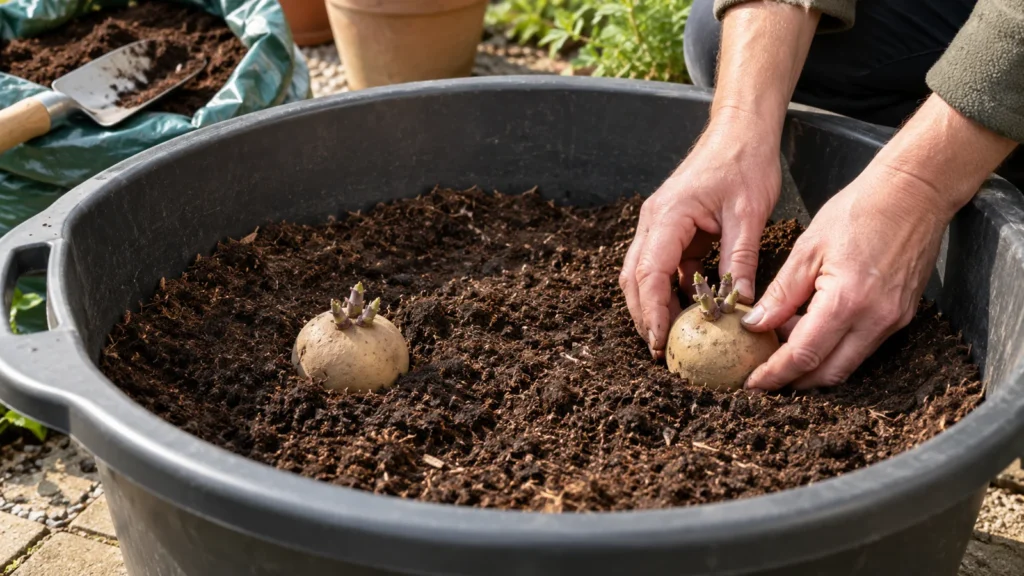
Plant certified seed potatoes in a partially filled pot, then increase the compost level as shoots develop. Certified seed reduces the risk of bringing serious potato diseases into your garden. Grocery-store potatoes may sprout, but they are less dependable for disease management, and some have been treated to delay sprouting.
Choose small whole seed tubers or cut larger ones into substantial pieces with healthy eyes. Let cut surfaces dry and heal according to supplier guidance. Optional chitting—keeping seed potatoes in cool, bright, frost-free conditions until short shoots form—can give early crops a head start.
Beginner planting sequence
- Set the container in a sunny position before filling it.
- Add 4–6 inches of moist, loose potting medium.
- Position seed potatoes with emerging shoots facing upward.
- Cover with 3–4 inches of medium, without compacting it.
- Water enough to settle the mix; avoid soaking it repeatedly before emergence.
- Once shoots reach several inches, add mix around lower stems, leaving upper leaves exposed.
- Repeat until the soil is just below the rim; maintain moisture and watch for pests.
Shoots commonly appear in two to four weeks, depending on temperature and seed condition. Protect emerging foliage from frost. Earthing up primarily shields tubers from sunlight, which can make them green; do not bury the entire active leaf canopy every few days. rhs.org.uk
If your first harvest is modest, compare planting density, watering, sunlight, and cultivar maturity before buying a taller planter.
Which Soil Is Best for Potted Potatoes?
The best medium is loose, moisture-retentive, and freely draining. Ordinary garden soil can become compacted inside a container and may introduce weed seeds or diseases. Use a quality peat-free vegetable potting mix or commercial potting compost formulated for containers, not fresh kitchen waste or pure homemade compost.
A useful optional blend is approximately 70% potting mix, 20% mature screened compost, and 10% perlite by volume. This is an illustrative recipe, not a laboratory-tested optimum; skip extra perlite if the purchased mix already has good aeration. Leave room at planting for later earthing up.
Soil versus compost: what matters?
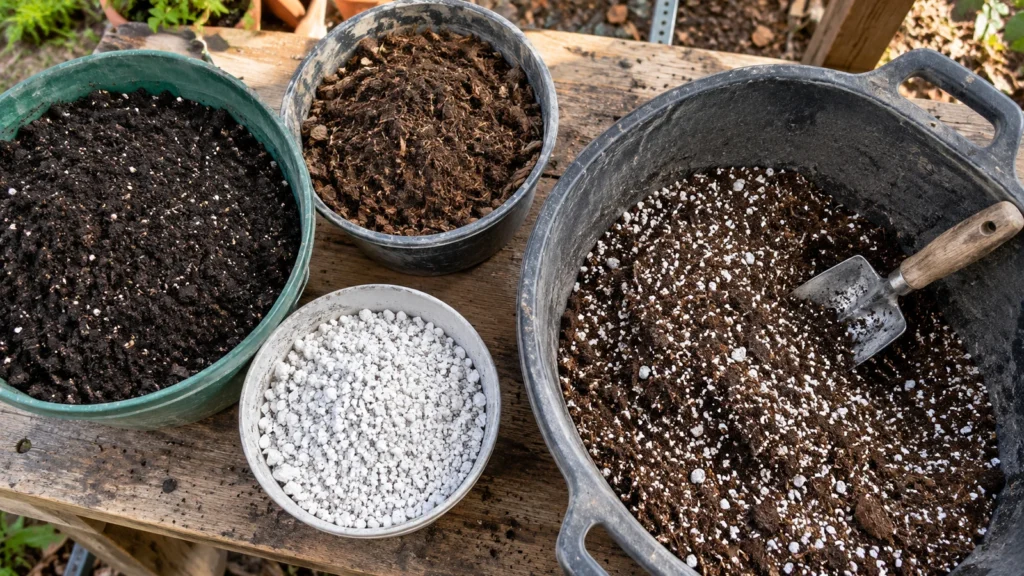
- Potting mix: Usually offers the most predictable drainage and structure.
- Mature garden compost: Improves organic matter but varies in nutrient content.
- Straight garden soil: Often too heavy for small, enclosed containers.
- Fresh manure or scraps: Can burn roots, attract pests, or introduce problems.
Potatoes generally tolerate mildly acidic conditions; guidance commonly places suitable pH around 5–6.5 depending on soil and disease pressure. Where common scab is persistent, lower pH may reduce disease, but do not add sulfur or lime blindly. Testing is preferable to guessing from kitchen ingredients. University of Maryland Extension
When Should You Plant Container Potatoes?
Plant potatoes during a locally suitable cool growing season after severe freezing conditions can be managed. In many temperate Northern Hemisphere locations this means spring; in temperate Southern Hemisphere gardens it often means late winter through spring. Tropical highlands and hot subtropical regions require different schedules based on temperature and rainfall.
Soil around 45–50°F (7–10°C) is a reasonable minimum for planting, while consistently warmer, well-drained soil supports faster emergence. Young leaves remain frost-sensitive. Potatoes prefer full sun—at least six hours of direct light—and tuber development can slow in sustained heat.
Which potato varieties suit containers?
Early varieties are often the most convenient because they mature sooner and usually fit a limited growing season. Names and availability vary internationally:
- Swift or Lady Christl: Early potatoes for quick fresh harvests.
- Charlotte or Jazzy: Popular choices for smaller, waxy potatoes.
- Red Norland: Early red-skinned option where sold.
- Kennebec: General-purpose variety needing longer to mature.
- Sarpo Mira: Maincrop option valued for late-blight resistance.
Choose locally certified seed and check the supplier’s maturity estimate. An early crop may be ready in about 70–90 days, while many later varieties need 100–120 days or longer. The local climate matters more than a universal calendar month.
Do Potato Layers and Straw Really Work?
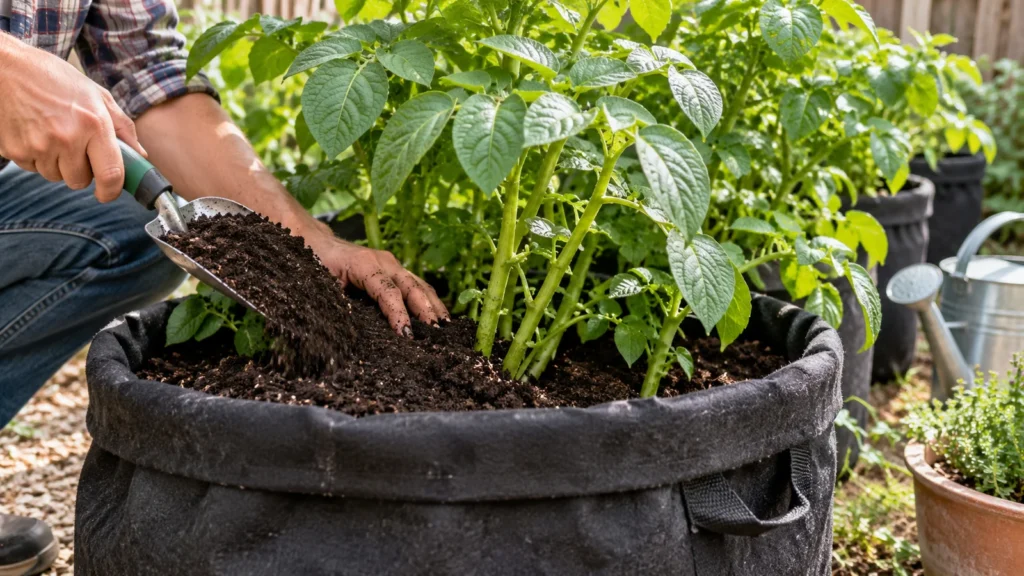
Growing potatoes in layers works when it means adding more potting mix around the lower stems of a growing plant. This process, called hilling or earthing up, keeps developing tubers protected from light and may shelter young shoots. It does not mean each added foot of soil creates another reliable crop of potatoes.
Potato tubers form on underground stems called stolons, generally relatively close to the original seed piece. Extremely tall towers can dry near the top while staying wet below. University of Maryland Extension cautions that elaborate potato towers do not usually perform as advertised. University of Maryland Extension
How to use straw correctly
- Plant seed potatoes in a suitable growing medium as normal.
- Add clean, seed-free straw as surface mulch after establishment.
- Check that developing tubers remain fully shaded by medium or mulch.
- Replace displaced straw after wind, watering, or inspection.
- Keep the container evenly moist; mulch reduces evaporation but cannot fix poor drainage.
Deep straw-growing methods also exist, but require careful coverage and may struggle in very hot, dry weather. For beginners, compost hilling plus a surface straw mulch is more predictable than a straw-only tower. Use a wider container rather than increasing height to chase unrealistic yields. Washington State University
What Fertilizer Helps Potatoes Grow Bigger?
Potatoes need enough nitrogen for healthy leaves, phosphorus for normal growth, and potassium for tuber development. No single homemade ingredient reliably makes tubers bigger. Use a complete vegetable fertilizer appropriate to the potting mix, following its label rather than assuming that the highest-potassium product is best.
Many commercial potting mixes already contain starter nutrients or slow-release fertilizer. Check packaging before adding more. Excessive nitrogen may produce lush foliage without a proportionate tuber harvest, while excess salts can damage roots in containers.
Which fertilizers should you use or avoid?
- Granular vegetable fertilizer: Convenient for measured nutrition at planting.
- Complete liquid fertilizer: Useful when nutrients become depleted during growth.
- Finished compost: A supplementary amendment, not a precise replacement for fertilizer.
- Well-composted manure: Use cautiously; manure may contribute to potato scab concerns.
- Raw chicken manure: Avoid direct application to edible container crops.
- Coffee grounds or banana peels: Compost first; neither supplies balanced nutrition.
- Wood ash: Avoid casually adding it because it raises pH and can favor scab.
For larger tubers, the most reliable improvements are correct spacing, steady moisture, sufficient sunlight, and letting the selected variety complete its growing period. Fertilizer cannot compensate for overcrowding or persistent overheating.
How Often Should You Water Potatoes?
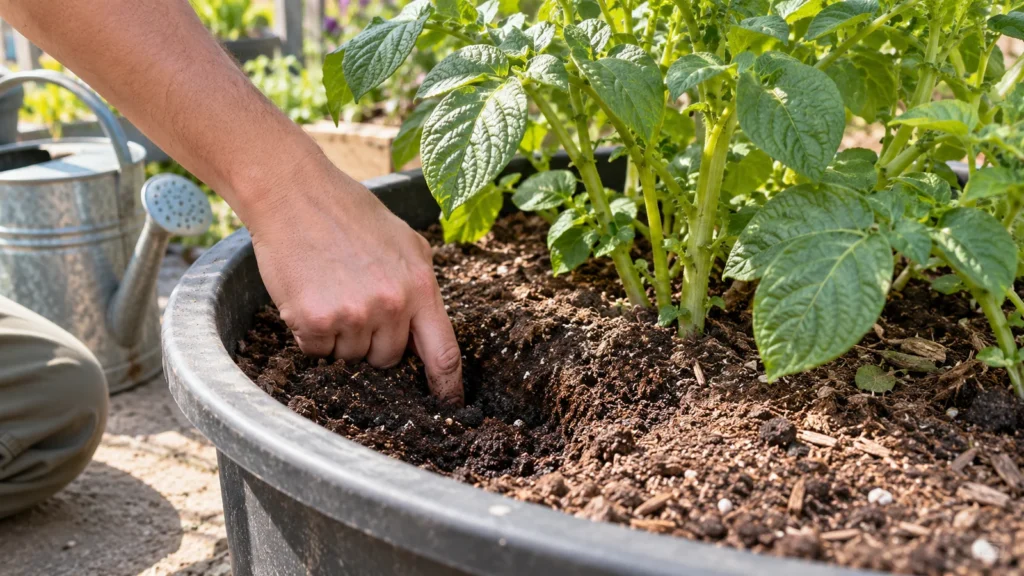
Water potato planters according to moisture, not a daily rule. A container can need watering every day during hot, windy weather yet remain moist for several days after cool rain. Fabric bags often dry faster than plastic pots; larger containers generally buffer fluctuations better than small ones.
Check the mix a couple of inches below the surface, away from the main stems. When that zone begins to dry, water thoroughly until excess runs out, then allow drainage. Newly planted seed pieces need modest moisture, while established leafy plants consume considerably more.
Watering and sunlight checklist
- Inspect soil daily during hot spells, but water only when needed.
- Water the medium directly rather than repeatedly wetting foliage.
- Never leave the planter standing in a tray of stagnant water.
- Watch for both wilting from drought and yellowing from soggy roots.
- Keep foliage in six to eight hours of sun where conditions allow.
- Shade dark container walls from extreme afternoon heat without shading leaves.
Sudden changes between drought and heavy watering can contribute to knobby, cracked, or misshapen tubers. As healthy plants naturally yellow near maturity, gradually reduce watering instead of keeping the pot permanently soaked. Washington State University
Which Plants Grow Well With Potatoes?
In a generous container, fast-growing radishes or salad leaves can temporarily use surface space before potato foliage spreads. Spring onions may fit around the outer edge. However, mixing crops reduces the volume available to potatoes, so beginners often get simpler results by giving them their own planter.
Flowering plants such as nasturtiums, chives, or marigolds can grow in separate nearby pots to add visual variety and support general garden biodiversity. Do not promise pest control from these combinations: University of Minnesota Extension notes that studies have not supported the popular claim that marigolds repel Colorado potato beetles. UMN Extension
Companion-planting decisions
- Same large planter: Try radishes harvested early, before crowding develops.
- Beside the potato pot: Grow chives, marigolds, or other locally suitable flowers.
- After potato harvest: Replace the crop with lettuce, beans, or a seasonal cover crop.
- Avoid close crowding: Tomatoes, peppers, and eggplants share important potato-family diseases.
- Avoid vigorous competitors: Pumpkins and squash overwhelm small containers.
The best companion arrangement preserves light, airflow, and access for watering. Choose combinations for space efficiency or appearance rather than relying on unsupported universal companion-planting charts.
What Problems Affect Container Potatoes?
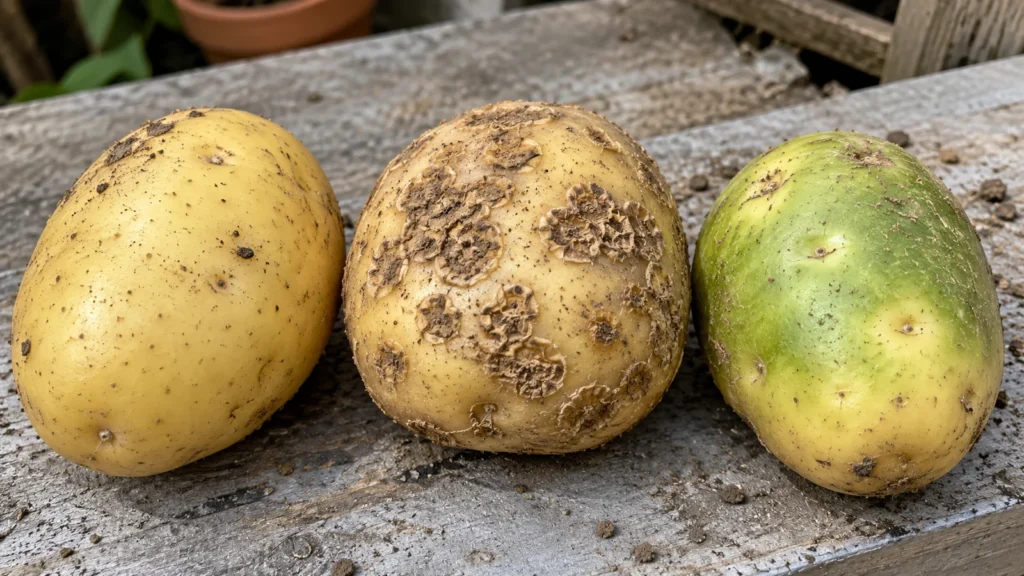
Most disappointing container crops trace back to restricted space, uneven moisture, unsuitable temperatures, too much fertilizer, or pests and diseases. Diagnose the symptom before applying another feed or pesticide. A naturally yellow plant at maturity needs a different response from a young plant with rapidly spreading dark leaf spots.
The most preventable mistakes are inadequate drainage, overcrowding, planting uncertified tubers, repeated deep burial of leaves, and leaving developing potatoes exposed to light. Inspect both foliage and soil moisture regularly, especially after heavy rain or heatwaves.
| Symptom | Possible reason | First response |
|---|---|---|
| No shoots | Cold, saturated soil or rotted seed | Check moisture and temperature |
| Yellow leaves early | Water stress, nutrients, or disease | Inspect soil and leaf patterns |
| Large tops, few tubers | Excess nitrogen, heat, or immaturity | Review feeding and timing |
| Small, uneven potatoes | Crowding or inconsistent watering | Improve spacing and moisture |
| Corky patches on skins | Common scab | Review seed, pH, and hygiene |
| Holes in tubers | Slugs, wireworms, or rodents | Identify the damage source |
| Rapid dark leaf lesions | Possible blight | Seek local disease guidance |
| Green tubers | Light exposure | Cover growing tubers; discard green harvests |
Colorado potato beetles and aphids feed on foliage; slugs and wireworms may damage underground tubers. Remove suspicious crop debris, use disease-free seed next time, and clean reusable containers. Potato leaves, green tubers, and any tomato-like potato fruits should not be eaten.
When Do You Harvest and Reuse Potato Soil?
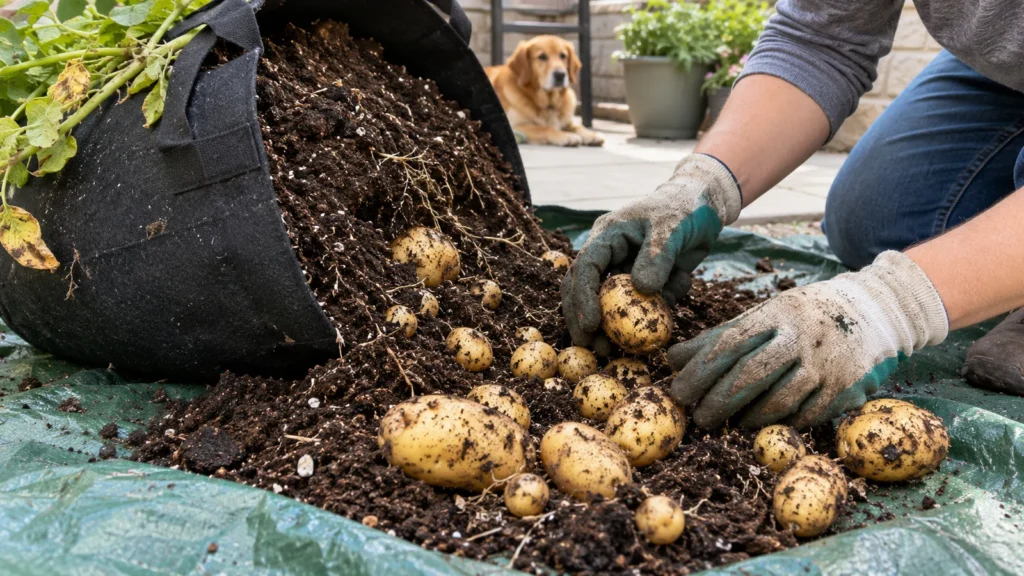
Early potatoes can be lifted once tubers reach a useful small size, often around 70–90 days after planting. Later varieties commonly need 100–120 days or more. For mature potatoes intended for storage, wait until foliage has naturally yellowed and died back, unless disease requires earlier removal.
Harvest by gently tipping a grow bag onto a tarp or loosening the contents of a rigid pot by hand. Sort out cut, green, rotting, or heavily damaged tubers. New potatoes are best eaten soon; sound mature potatoes keep longer in a cool, dark, ventilated, frost-free place.
What should you grow after potatoes?
- Remove leftover tubers and roots before replanting.
- Refresh healthy used mix with suitable new potting medium and nutrients.
- Grow leafy greens or appropriate beans if the season allows.
- Avoid immediately planting another nightshade crop in the same old mix.
- Discard contaminated growing medium if soil-borne disease was suspected.
In garden beds, rotate away from potatoes, tomatoes, peppers, and eggplants for roughly three to four years where possible. A container can be reused sooner if thoroughly cleaned and filled with fresh disease-free mix. Do not assume sterilizing an empty pot makes diseased soil safe again.
Potato Planter FAQs
What is the easiest potato planter for beginners?
A 10–15-gallon fabric grow bag or opaque plastic pot is simple to manage. Choose one with drainage and sufficient width, then start with an early variety.
Can potatoes grow in a five-gallon bucket?
Yes, but use one seed potato and expect a limited crop. A wider 10-gallon container provides more forgiving water and growing-space reserves.
Do potatoes need watering every day?
Not necessarily. Check moisture below the surface and water when needed; hot weather may require daily watering, while cool conditions may not.
How many potatoes come from one plant?
A plant may produce several usable tubers, but the count and weight vary widely with variety, container size, spacing, and growing conditions.
What is the best homemade fertilizer for potatoes?
Mature compost adds organic matter and some nutrients, but is not a complete measured fertilizer. Use a balanced vegetable feed when the mix requires it.
Can you use potato peels as fertilizer?
Compost healthy potato peels fully before using the resulting compost. Do not bury raw peels in pots; avoid composting diseased potato material at home.
Do potatoes prefer sun or shade?
Potatoes prefer full sun, ideally six to eight hours daily. Protect dark planter walls from severe heat without moving the foliage into deep shade.
How long do potatoes take to emerge?
Shoots often emerge in two to four weeks. Cold soil, deep planting, or unhealthy seed pieces can delay or prevent emergence.
Can you plant potatoes in the same container yearly?
Yes, if the container is cleaned and filled with fresh suitable mix. Avoid repeatedly using the same soil, especially after disease symptoms.
Are potato grow bags worth buying?
Yes for small gardens and easy harvesting, particularly if you can monitor watering. A drilled food-safe bucket or large plastic pot can work equally well.
Final recommendation: Start with one wide, well-drained planter and certified early seed potatoes. Track planting date, watering, variety, and harvest weight; those real observations will guide your next container choice better than claims about miracle fertilizers or extra-tall towers.
Myra is the founder and lead writer of Backyard Planter Ideas, where she shares practical, well-researched guidance on planter design, plant selection, and outdoor styling. Her goal is to help homeowners create attractive, functional garden spaces with clear, reliable, and easy-to-apply advice.
Blueberry Planter Ideas: Best Pots, Soil, and Growing Tips
The best blueberry planter ideas use spacious containers, acidic potting mix, and varieties suited to local weather. Wooden barrels, large patio pots, raised troughs, and compact balcony planters can all work. Aim for soil pH 4.5–5.5, steady moisture, and ample...
Hosta Planter Ideas: 21 Beautiful Designs for Shady Spaces
Hosta planter ideas can turn shaded patios, porches, balconies, and garden corners into striking foliage displays. Hostas grow successfully in containers when they have drainage holes, moisture-retentive potting mix, adequate root space, and protection from harsh afternoon sun. The best...
21 Japanese Maple Planter Ideas for Beautiful Outdoor Spaces
Japanese maple planter ideas can turn an ordinary patio, balcony, or courtyard into a garden focal point. Japanese maples (Acer palmatum) grow well in containers when their roots have drainage, consistent moisture, and protection from extreme sun and cold. The...
Geranium Planter Ideas: 15 Beautiful Designs and Growing Tips
Geranium planter ideas can brighten patios, balconies, porches, and window boxes with relatively little equipment. Choose upright zonal geraniums for bold flower clusters, trailing varieties for baskets, and companion plants with matching sunlight and moisture needs. The best results come...
Fig Tree Planter Ideas
The best fig tree planter ideas balance appearance with drainage, root space, and sunlight. Terracotta pots, wooden half-barrels, glazed ceramic containers, and lightweight resin planters all accommodate edible figs. Established trees generally benefit from around 15 gallons (57 liters) of...
Begonia Planter Ideas: 15 Beautiful Combinations for Every Space
Begonia planter ideas work best when flower color, foliage, container size, and light requirements fit together. Choose wax begonias for compact outdoor displays, trailing varieties for hanging baskets, or Rex begonias for striking indoor leaves. Combine compatible plants in well-drained...
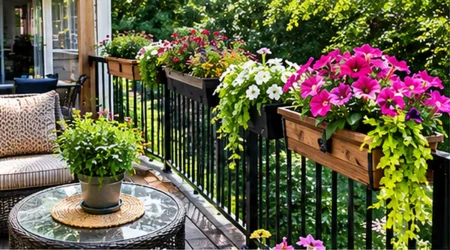
Railing Planter Ideas: Best Designs, Plants, and DIY Tips
Railing planter ideas make balconies, decks, and porches greener without sacrificing floor space. The best choices are securely fitted saddle planters, bracket-mounted flower boxes, and hanging baskets planted with compact flowers, herbs, or strawberries. Match the container to your railing,...
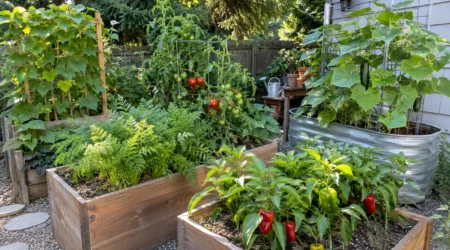
11 Best Vegetables for Deep Planters: Complete Soil Depth Guide
The best vegetables for deep planters are carrots, parsnips, daikon radishes, potatoes, sweet potatoes, tomatoes, cucumbers, peppers, eggplants, zucchini, and pole beans. Most benefit from approximately 12–24 inches of usable growing mix, although the right depth depends on variety, container...
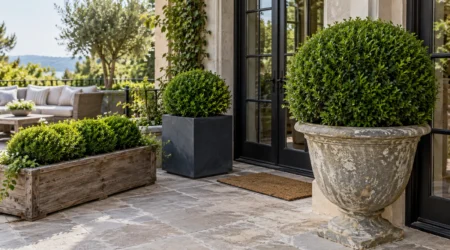
Boxwood Planter Ideas
Boxwood planter ideas bring year-round greenery to front doors, patios, courtyards, and garden pathways. These evergreen shrubs grow well in outdoor containers when they have enough root space, a free-draining growing medium, and consistent moisture. Choose compact varieties suited to...
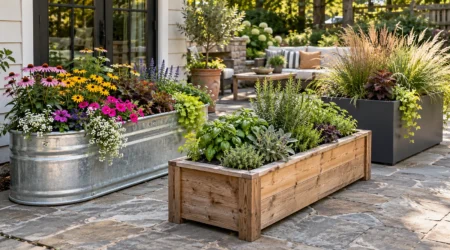
25 Trough Planter Ideas for Beautiful Outdoor Spaces in 2026
Trough planter ideas turn patios, balconies, fences, and small backyards into productive, attractive gardens. The best designs pair a long, suitable container with plants that share similar light, moisture, and root-space needs. Wooden herb boxes, galvanized flower troughs, evergreen displays,...