

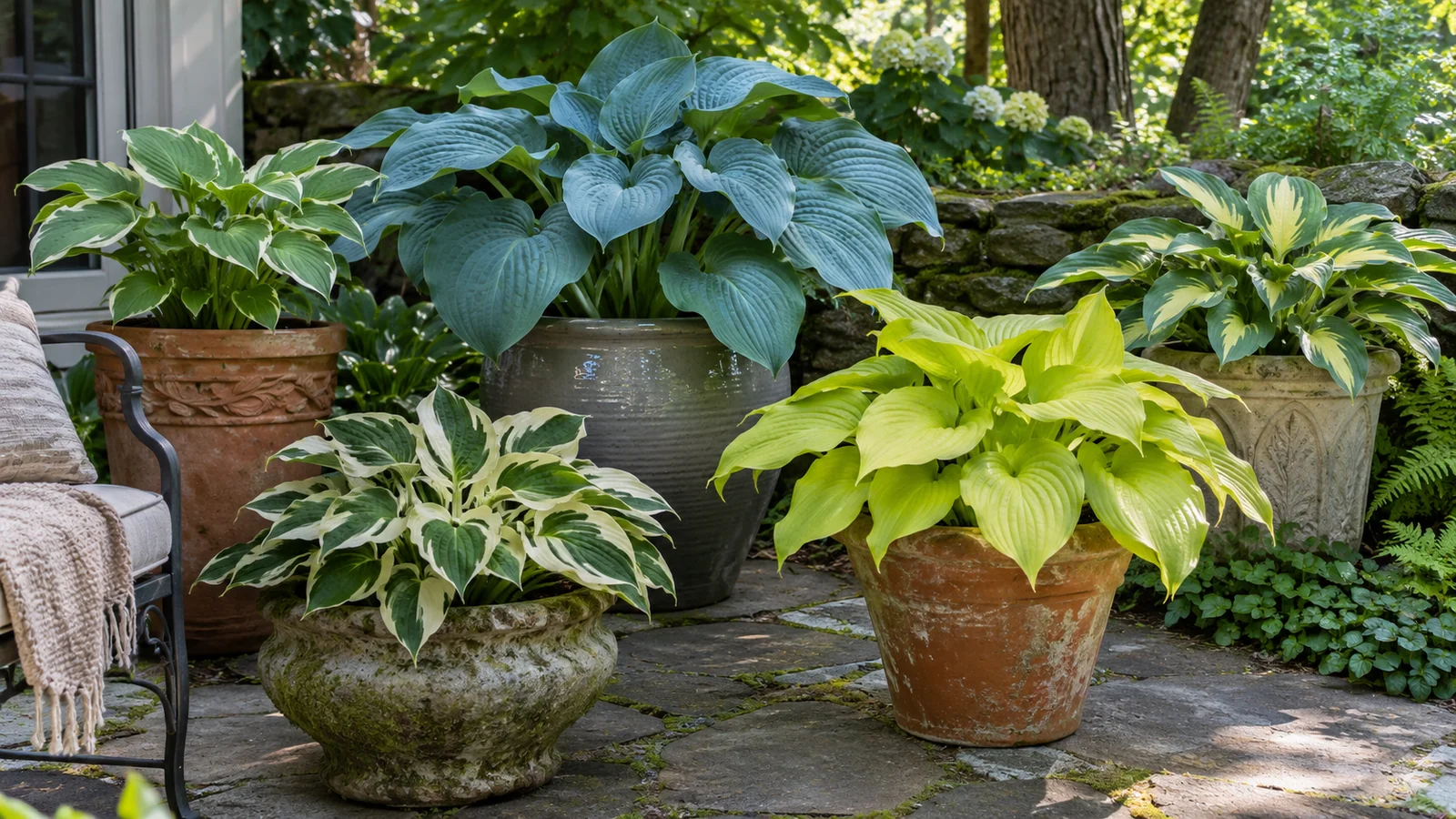
Hosta planter ideas can turn shaded patios, porches, balconies, and garden corners into striking foliage displays. Hostas grow successfully in containers when they have drainage holes, moisture-retentive potting mix, adequate root space, and protection from harsh afternoon sun. The best arrangement combines attractive foliage with practical, long-term growing conditions.
Also called plantain lilies, hostas are perennial plants valued for blue-green, gold, cream, and variegated leaves. Their foliage can be smooth, ribbed, rounded, or deeply textured. Most flower in summer and die back during winter.
Do Hostas Grow Well in Planters?
Yes. Hostas thrive in containers with suitable soil, drainage, shade, and consistent moisture. Compact cultivars fit small patios, while substantial planters can support medium or larger plants. Pots are especially useful where paving, tree roots, or poor garden soil make ground planting difficult.
Containers let you move a hosta when afternoon sun becomes intense, control the growing medium, and refresh a front entrance without digging. However, roots in pots experience greater temperature fluctuations and dry faster than roots in garden beds. Large hostas generally grow more easily in the ground, where moisture and root space are less restricted.
- Choose containers for flexible arrangements, balconies, and paved courtyards.
- Choose garden beds for extensive borders or giant hosta cultivars.
- Allow space: mature hosta leaves may spread well beyond the pot rim.
- Expect dormancy: leaves disappear in winter, but healthy crowns return in spring.
The Royal Horticultural Society recognizes hostas as suitable container plants.
What Are the Best Hosta Planter Ideas?
The strongest hosta planter designs match pot style, foliage color, mature plant size, and available shade. Choose from these 21 outdoor arrangements according to your space and watering routine.
1. Classic Terracotta Hosta
Grow a cream-edged hosta in a wide terracotta pot beside a brick path or garden steps. Warm clay complements cool foliage, but its porous surface dries quickly. Check moisture during hot weather.
2. Modern Black Container
Put blue-gray ‘Halcyon’ in a matte black cylindrical planter against a pale wall. This restrained pairing suits modern patios. Keep the dark container out of intense reflected afternoon heat.
3. Tiered Hosta Collection
Arrange three separate containers at different heights: a taller green hosta behind, a medium variegated one centrally, and a miniature golden cultivar in front. Use sturdy, level stands rather than unstable shelves.
4. Woodland Fern Combination
Pair broad hosta leaves with the delicate fronds of a shade-loving fern. A substantial stone-look planter creates woodland character; separate neighboring pots make future root management easier.
5. Burgundy Heuchera Contrast
Combine a blue-green hosta with burgundy heuchera, also called coral bells. Their contrasting colors provide interest without flowers. Select cultivars with similar water requirements and leave room for both crowns.
6. Miniature Hosta Trough
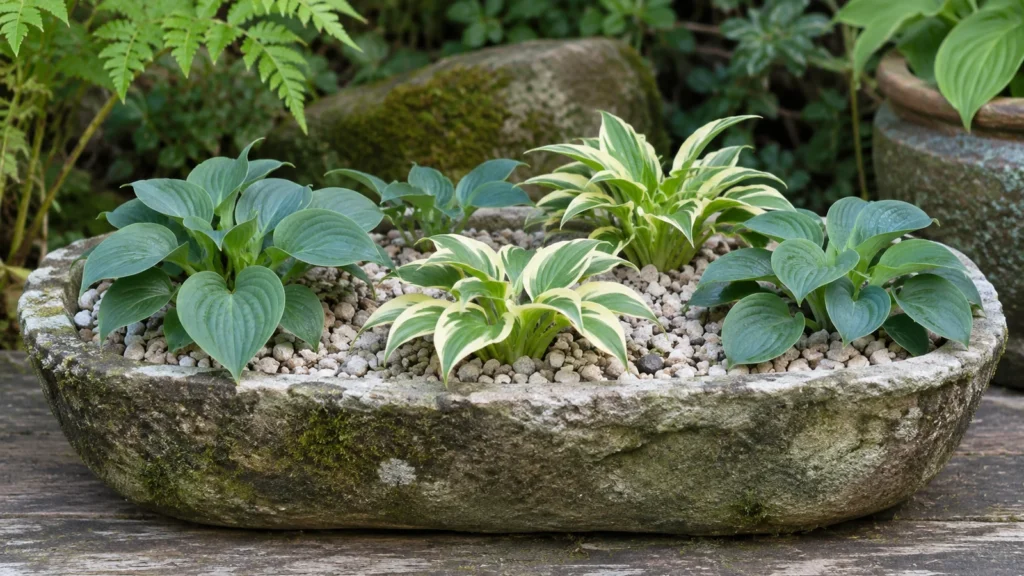
Plant ‘Blue Mouse Ears’ with other true miniature hostas in a low, wide trough. Use drainage holes and a shallow gravel top dressing to minimize splashing without covering the crowns.
7. Shaded Pathway Repetition
Line a sheltered path with matching containers and repeat one hosta cultivar for a coordinated effect. Allow enough clearance so mature leaves do not obstruct walkers or become torn.
8. Symmetrical Front Porch Pots
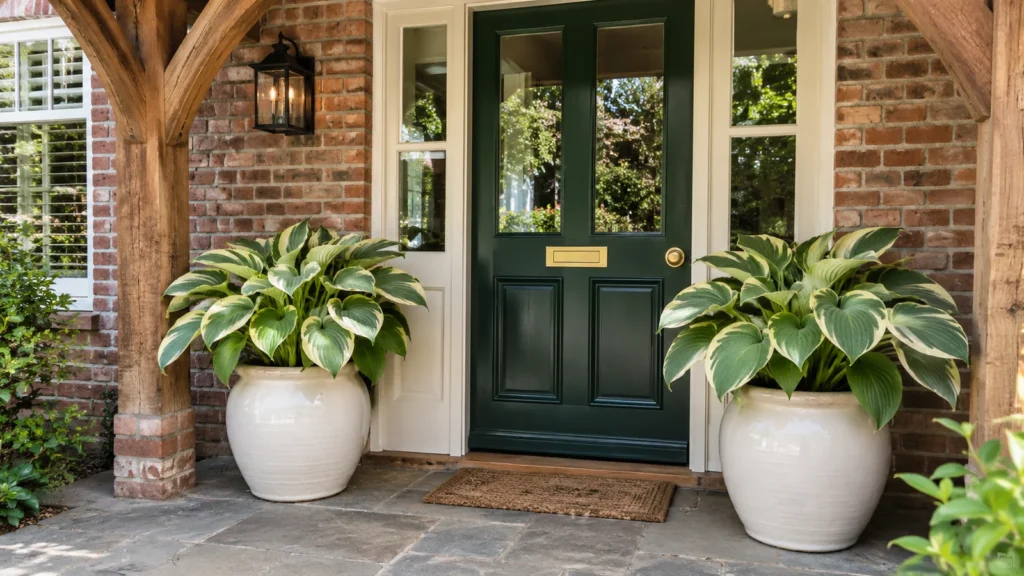
Frame a shaded front door with two equal-sized cream-variegated hostas in white or neutral ceramic planters. This gives a formal entrance balance. Direct drainage away from thresholds and indoor flooring.
9. Rustic Wooden Planter
Choose a rot-resistant wooden box for farmhouse or cottage-style gardens. Its natural finish suits green foliage. Include drainage holes; any protective liner must allow excess water to escape.
10. Raised Hosta Box
Position compact hostas in an elevated planter for easier access and maintenance. Verify that the frame can support wet compost, and allow foliage to spread freely past the edges.
11. Coordinated Color Collection
Group blue hostas in gray pots, chartreuse varieties in charcoal containers, and cream-edged plants in terracotta. Repeat two or three finishes so the collection feels intentional rather than cluttered.
12. Giant Focal-Point Hosta
Use ‘Sum and Substance’ or ‘Empress Wu’ as a dramatic patio centerpiece only with a very large container and generous clearance. Giant cultivars quickly outgrow modest balcony planters.
13. Hosta With Flowering Annuals
Surround a small hosta with shade-tolerant impatiens or begonias for seasonal flowers. Maintain space around the hosta crown and replace annuals carefully to avoid disturbing its roots.
14. Pergola Corner Planters
Place several hosta pots near a pergola post or shaded seating area. Observe sunlight during late afternoon: overhead slats may not block low-angle sun that scorches vulnerable leaves.
15. Garden Bench Cluster
Arrange three to five containers beside a shaded bench, using different heights and foliage colors. Keep seating accessible and avoid positioning broad leaves where people repeatedly brush past them.
16. White Pot and Green Leaves
Display a dark green, deeply ribbed hosta in a simple white pot near timber cladding or dark fencing. Leaf texture becomes the focal feature, removing the need for extra flowers.
17. Japanese Forest Grass Pairing
Position a golden Japanese forest grass pot beside a blue hosta. Narrow, arching grass foliage contrasts with broad leaves. Separate pots help accommodate different growth rates and eventual sizes.
18. Compact Balcony Pots
Choose miniature cultivars in lightweight yet stable containers for sheltered balconies. Check wind exposure, drainage runoff, and structural load limits before arranging multiple large pots.
19. Containers Beneath Trees
Place hosta planters under an established tree when dense roots prevent planting into the soil. Canopies intercept rainfall, so assess container moisture rather than assuming rain reaches the roots.
20. Stone-Look Courtyard Planters
Mix rounded and square stone-effect containers in muted finishes. Contrast hosta leaf sizes and tones instead of introducing too many accessories. Select frost-resistant materials in cold climates.
21. Seasonal Mixed Display
Keep hostas as spring-to-autumn foliage anchors alongside separate pots of bulbs or shade flowers. When the hostas become dormant, rearrange those companion containers to retain winter interest.
Which Hostas Are Best for Pots?
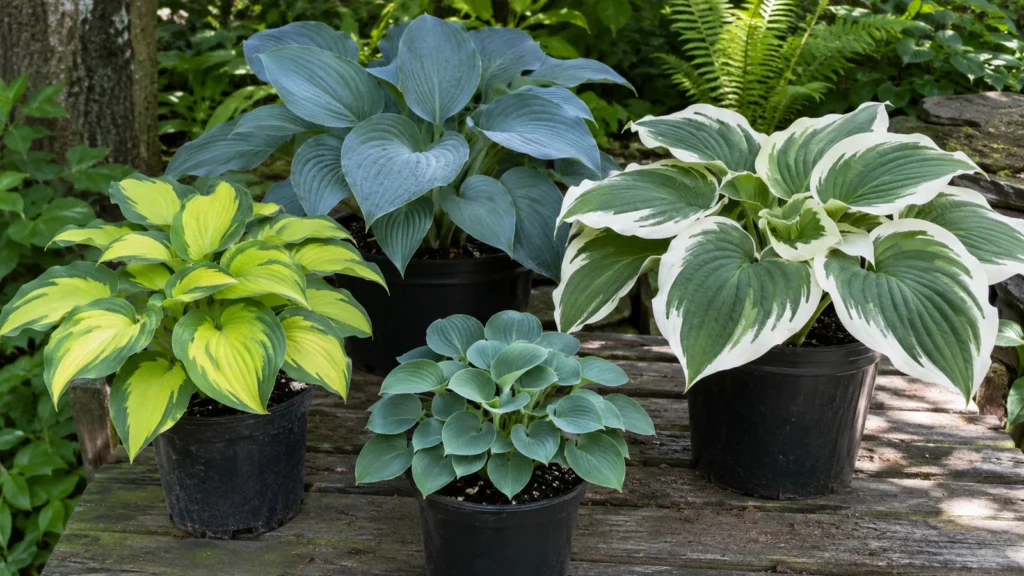
‘Blue Mouse Ears’, ‘Pandora’s Box’, ‘June’, ‘Halcyon’, ‘Golden Tiara’, and ‘Patriot’ are useful container hostas. Miniatures suit troughs; medium cultivars fill feature pots without demanding the extensive space of giants. Check mature width on the nursery label before choosing a plant.
Foliage ranges from deep green and blue-gray to gold, lime, white, and cream variegation. Many blue hostas get their muted color from a waxy leaf coating, which can fade with strong sun and weathering.
| Variety | Foliage feature | Best container use |
|---|---|---|
| Blue Mouse Ears | Small rounded blue-green leaves | Miniature trough |
| Pandora’s Box | Cream and green variegation | Small display pot |
| June | Blue-green with gold | Medium focal pot |
| Halcyon | Blue-gray foliage | Modern planter |
| Golden Tiara | Green with yellow margins | Grouped containers |
| Patriot | Bold white-edged leaves | Entrance planter |
| Stained Glass | Golden center, green edge | Bright partial shade |
Choose ‘June’ for vivid contrast, ‘Halcyon’ for subtle color, and ‘Blue Mouse Ears’ where space is tight. Inspect nursery leaves and crowns before purchasing; reject plants with suspicious mottling, soft tissue, or obvious pest damage. Avoid supposedly purple-leaved hostas shown in exaggerated online pictures: vivid purple foliage is not typical of genuine hosta cultivars.
What Pots and Soil Do Hostas Need?
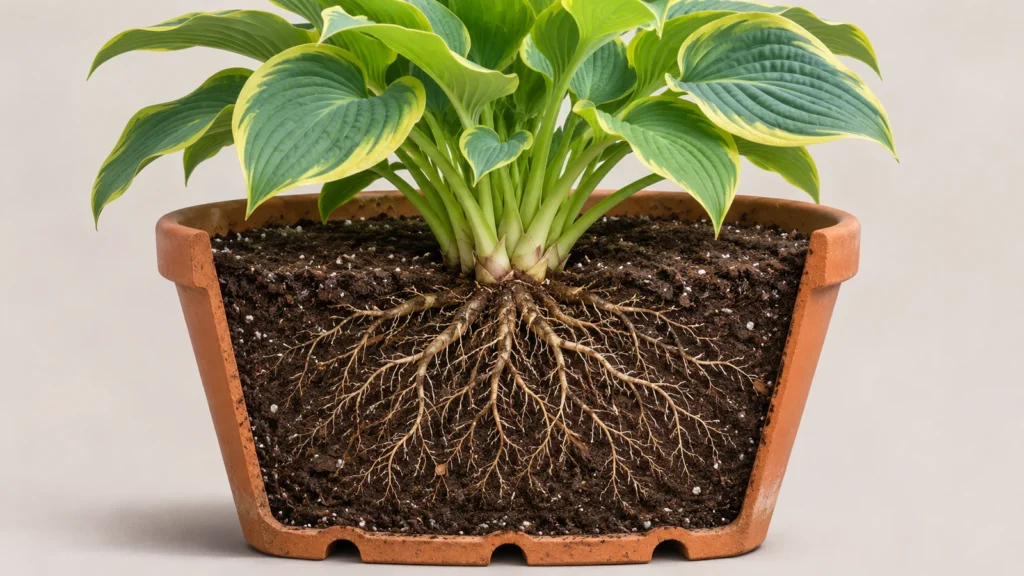
Choose a planter with drainage holes and sufficient room for the rootball to expand. The Royal Horticultural Society suggests pots roughly 30–45 cm (12–18 inches) wide for many hostas, although miniatures need less space and large cultivars need considerably more.
Fill containers with quality peat-free multipurpose or loam-based potting compost. It should hold moisture while draining freely. Heavy garden soil can compact in pots, and stones placed beneath compost do not compensate for blocked drainage. Terracotta breathes and dries faster; glazed ceramic and composite containers tend to retain moisture longer.
- Miniatures: match pot size to roots instead of using an enormous wet container.
- Medium varieties: leave room to grow and repot when roots become crowded.
- Giant varieties: prioritize width, stability, and long-term container weight.
- Cold climates: use pots that tolerate freezing and thawing.
A thin gravel top dressing keeps soil from splashing onto miniature foliage. A light organic mulch can reduce evaporation, but keep either material away from the crown.
How Do You Plant and Arrange Hostas?
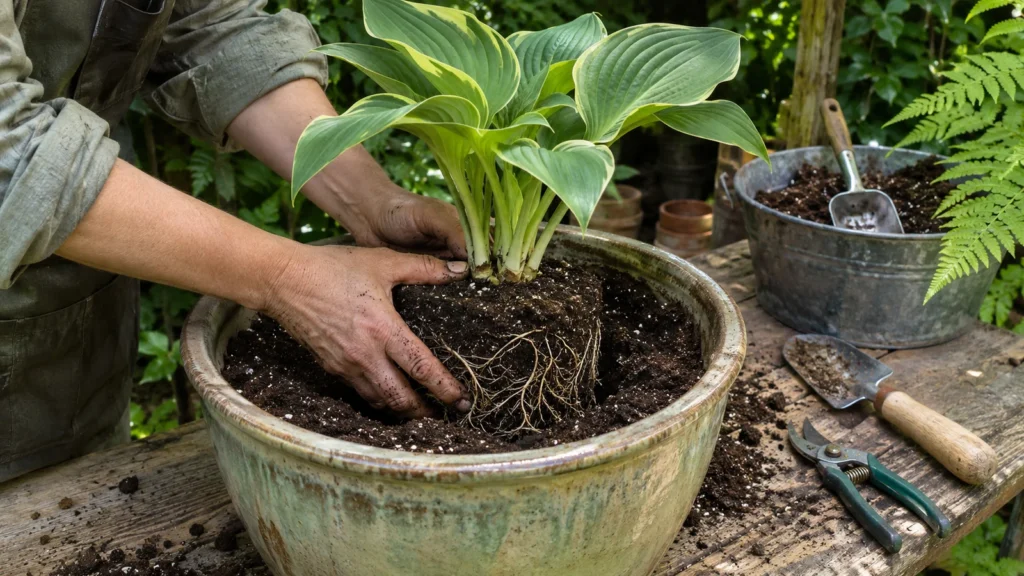
Set each hosta at its original growing depth, water thoroughly, and plan the display around mature foliage spread. Taller plants usually belong behind smaller cultivars. Blue, gold, and variegated leaves provide contrast without requiring numerous flowering companions.
Before planting, observe the location at morning, midday, and afternoon. Arrange empty containers first, checking walkway clearance and accessibility for watering.
- Check the drainage holes and partly fill the pot with compost.
- Remove the hosta gently and loosen tightly circling roots.
- Position its crown at the previous soil level and backfill lightly.
- Water until excess drains, then move the pot into suitable shade.
- Monitor moisture closely while the plant establishes.
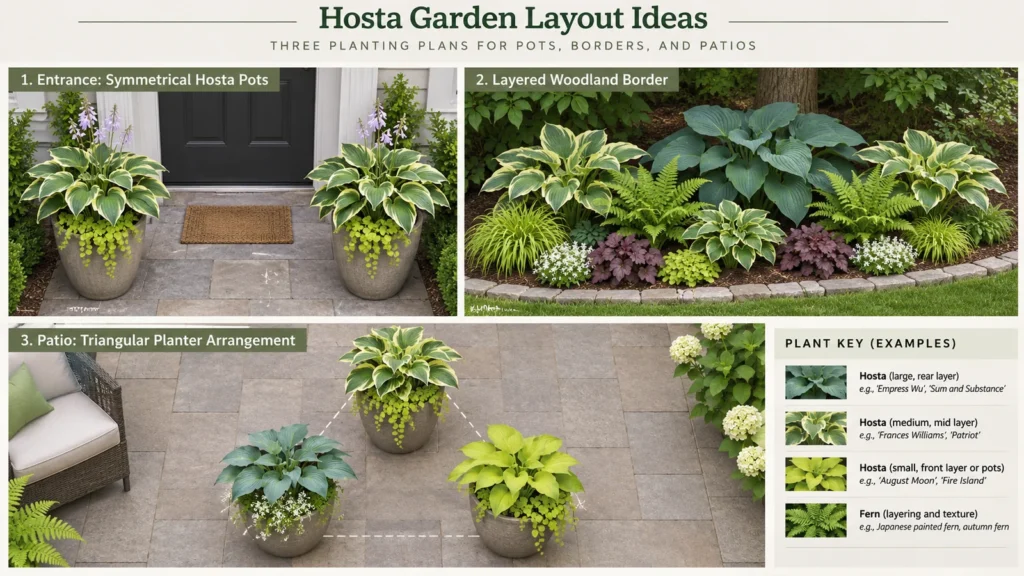
Three layout plans: For a front entrance, place matching medium pots beside the door with two smaller containers nearer the path. For a woodland bed, position broad hostas behind compact golden varieties and ferns. For a tiny patio, group three separate pots in a triangle with the tallest at the rear.
Use mature-width labels when spacing plants. The American Hosta Society notes that clump width often substantially exceeds height, although upright and spreading cultivars differ. Plan for future growth rather than the size of a newly purchased plant.
What Goes Well With Hostas?
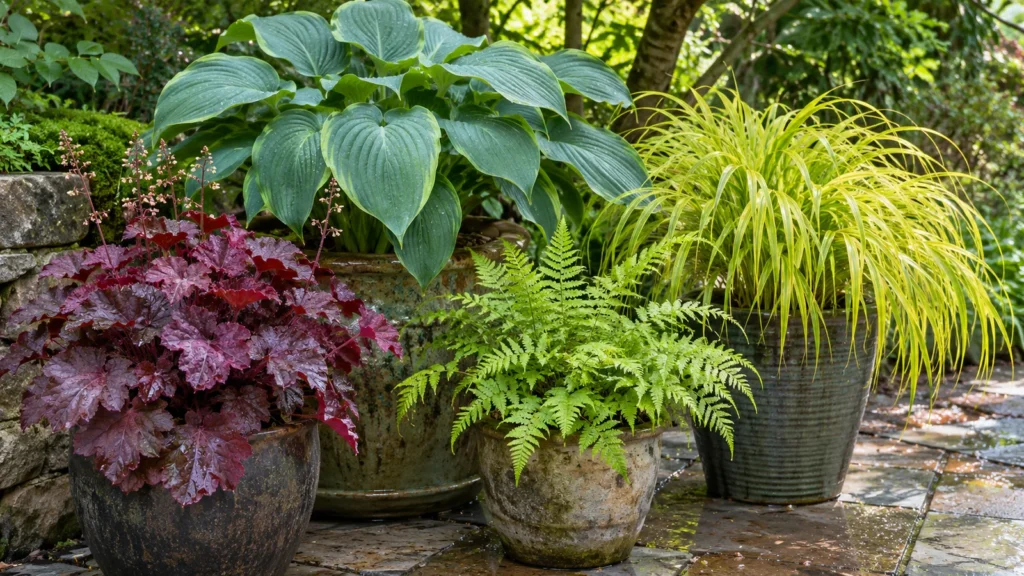
Ferns, heucheras, astilbes, Japanese forest grass, brunnera, and shade-tolerant annuals are attractive hosta companions. They offer finer textures, contrasting foliage, or colorful flowers. Match their growing requirements instead of choosing combinations purely by appearance.
For a woodland theme, position a fern beside a hosta to offset broad leaves with delicate fronds. Burgundy heuchera contrasts with golden or blue-green foliage, while astilbe provides upright blooms in reliably moist conditions. Begonias and impatiens offer temporary flower color. Golden Japanese forest grass adds movement, and brunnera contributes silver-patterned spring foliage.
- For texture: combine hostas with ferns or forest grass.
- For foliage color: try blue hostas beside burgundy heucheras.
- For flowers: use astilbes or suitable shade annuals.
- For maintenance: keep long-lived perennials in separate pots.
Avoid mixing hostas with lavender or rosemary in one container: those herbs generally prefer sunnier, drier conditions. If a site receives some direct morning light, select companions that also tolerate partial shade.
Do Hostas Need Sun or Shade?
Most hostas prefer partial shade, filtered sunlight, or bright shade. Gentle morning sun can help some golden varieties develop stronger color, whereas intense afternoon sunlight may bleach or scorch foliage, particularly if soil dries out.
Full shade is possible, although very dark sites may produce weaker growth and fewer flowers. Blue-leaved hostas often retain their waxy appearance best away from strong sunshine. Climate changes the result: a variety comfortable in an open garden with cool summers might struggle on a hot west-facing paved patio.
- Best position: filtered daylight or morning sun followed by afternoon shade.
- Possible: bright full shade, depending on variety and local climate.
- Avoid: exposed rooftops, hot paving, and intense reflected heat.
- Sun damage: papery brown edges, pale patches, and faded leaf color.
No single air temperature is fatal to every hosta. During prolonged heat around 32°C (90°F) or above, monitor pots closely for moisture and scorching; this is a caution threshold, not an absolute temperature limit. Damaged leaves will not regain their original green tissue, so correct the exposure and protect subsequent growth.
How Should You Water and Feed Hostas?
Water when the upper layer of compost starts drying, before the root zone becomes excessively dry. Do not water automatically every day. Potted hostas need steady moisture, but saturated soil restricts oxygen around roots and can encourage rot.
Check compost a few centimeters down and notice whether the pot feels unusually light. Water slowly at the base until liquid exits the drainage holes. Small terracotta pots may need daily checks during heatwaves, while large shaded planters can remain moist longer. Empty standing water from saucers and avoid routinely splashing foliage in gardens with disease problems.
- Fertilizer: use balanced liquid feed during active growth, following product directions; monthly feeding is a common RHS approach.
- Faster growth: prioritize healthy roots, appropriate light, moisture, and space.
- Epsom salt: use only for a demonstrated magnesium need, not routine boosting.
- Coffee grounds: neither replace complete fertilizer nor reliably block slugs.
If foliage declines despite regular watering, inspect the roots and compost before adding nutrients. Dense roots can make watering inconsistent, while chronically wet compost signals a drainage problem. Adjust conditions to the cause rather than increasing fertilizer.
When Should You Plant and Divide Hostas?
Plant hostas in spring or early autumn when temperatures are moderate and roots can establish. The precise month depends on climate: northern spring often falls in March–May, while southern spring commonly runs from September to November. Avoid frozen ground and extreme heat.
Hostas usually bloom once during their local summer. Upright stalks carry white, lavender, or pale purple flowers, and fragrant cultivars include ‘Stained Glass’ and ‘Guacamole’. Leaves remain the principal ornamental feature until autumn dormancy. Growth rate depends on genetics, climate, and care rather than feeding alone.
- Maturity: many cultivars need several seasons; mature clump comparisons often use plants five years or older.
- Lifespan: well-maintained hostas can persist for many years, including in containers.
- Repotting: inspect tightly crowded roots and declining compost quality.
- Division: consider established clumps after several years, but divide only when needed.
Divide during favorable spring or early-autumn weather, keeping healthy shoots attached to roots. Replant divisions at their former soil level and water thoroughly. Giant varieties require sufficient room and time to reach impressive proportions; a small pot cannot deliver the same result.
What Damages Hostas and How Do You Prevent It?
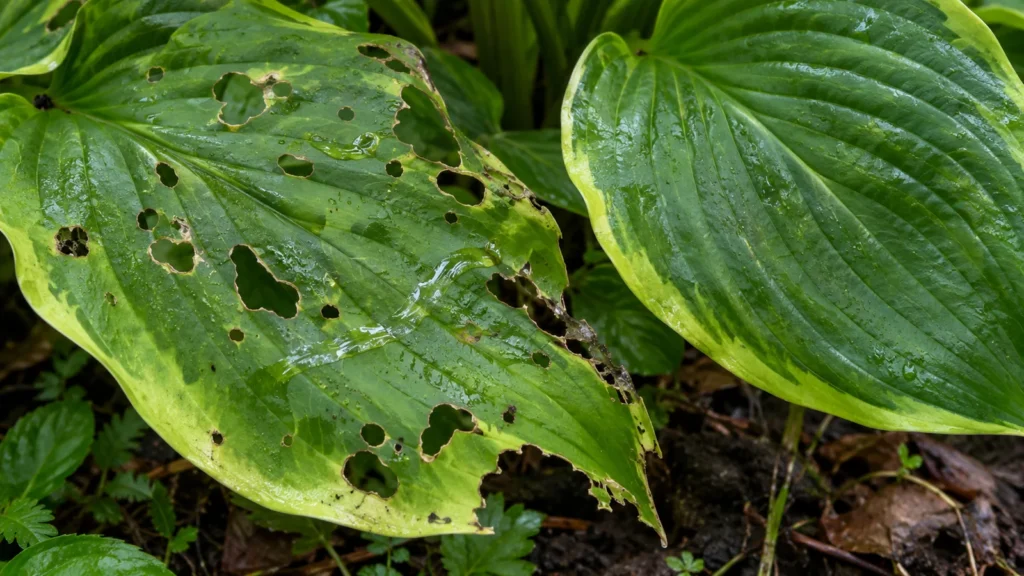
Slugs, snails, deer, rabbits, sun scorch, and poor drainage are frequent causes of hosta damage. Slugs and snails often feed at night, leaving irregular holes or slime trails. Deer may remove leaves, while rabbits can clip young shoots. Check the evidence before applying any treatment.
Inspect undersides of leaves and pot rims after dark, remove unnecessary damp hiding spots, and water in the morning when practical. Thicker leaves may resist some feeding but are not pest-proof. Protect vulnerable plants from browsing animals with suitable fencing. Where slug pressure is severe, follow labels for locally approved controls instead of relying on eggshells or coffee grounds.
| Symptom | Possible cause |
|---|---|
| Ragged holes or slime | Slugs or snails |
| Missing leaves or stems | Deer or rabbits |
| Crispy brown edges | Heat or drought |
| Yellow leaves in soggy soil | Poor drainage or root damage |
| Distorted, strangely mottled leaves | Possible Hosta virus X |
Hosta virus X can spread through infected plant sap on tools. Avoid dividing suspicious plants and seek diagnosis; not every unusual marking indicates disease. Hostas are toxic to cats and dogs if eaten, according to the ASPCA, so place pots away from pets likely to chew plants.
How Do You Care for Hosta Pots in Winter?
Allow hostas to become dormant, then shield their container roots from repeated freezing, waterlogging, and abrupt temperature changes. Leaves naturally yellow and disappear in autumn. A bare pot can contain a healthy crown ready to regrow when conditions warm.
In cold areas, group pots in a sheltered spot or move them into an appropriate unheated structure. Maintain drainage and check occasionally that compost is neither saturated nor completely dry. Do not bring dormant plants into a warm living room, where premature growth may leave them vulnerable to later frost.
Where winters are mild, protection from persistent rain can matter more than insulation. In tropical climates lacking seasonal cooling, hostas may perform inconsistently; seek regionally proven varieties. Once new growth emerges, resume normal watering, inspect roots, and repot crowded plants when conditions are suitable.
FAQs About Hosta Planter Ideas
Can hostas grow in full shade?
Yes. Many tolerate full shade, but bright shade generally supports stronger foliage and more dependable flowering than very dark corners.
Are hostas better in pots or the ground?
Pots offer flexibility and soil control. In-ground plants often receive steadier moisture and more root space, especially for giant varieties.
What is the prettiest container hosta?
‘June’ provides striking variegation, while ‘Blue Mouse Ears’ suits miniature planters. Choose according to space, light, and preferred colors.
Should I water my hosta every day?
Not automatically. Check moisture below the surface and water as required. Heat and small pots increase watering needs.
What month do hostas flower?
Most bloom during local summer, often June–August in Northern Hemisphere temperate gardens. Timing varies by cultivar and climate.
How can I grow huge hostas?
Choose a naturally large cultivar, provide ample root space and water, and allow several seasons for maturity.
Does Epsom salt help hostas grow?
Only if magnesium is deficient. Routine Epsom salt applications do not reliably improve healthy hostas and may cause nutrient imbalance.
What keeps slugs off hostas?
Night inspections, reduced hiding places, suitable barriers, and approved targeted controls can help. Homemade remedies are unreliable.
Are hostas high maintenance?
Generally no, in suitable growing conditions. Potted hostas still need moisture checks, occasional feeding, and winter care.
How long do hostas live in pots?
Potentially many years if roots remain healthy and plants receive suitable moisture, space, and winter protection. Repot when necessary.
Which Hosta Planter Idea Should You Choose?
For a balcony, start with a miniature cultivar in a stable pot. For a shaded entrance, use matching planters; for a larger patio, combine a blue hosta with separate fern and heuchera containers. The most successful choice fits the available light, mature spread, drainage, and watering routine. Plan for growth, and hostas can provide attractive foliage for years.

Myra is the founder and lead writer of Backyard Planter Ideas, where she shares practical, well-researched guidance on planter design, plant selection, and outdoor styling. Her goal is to help homeowners create attractive, functional garden spaces with clear, reliable, and easy-to-apply advice.
Blueberry Planter Ideas: Best Pots, Soil, and Growing Tips
The best blueberry planter ideas use spacious containers, acidic potting mix, and varieties suited to local weather. Wooden barrels, large patio pots, raised troughs, and compact balcony planters can all work. Aim for soil pH 4.5–5.5, steady moisture, and ample...
21 Japanese Maple Planter Ideas for Beautiful Outdoor Spaces
Japanese maple planter ideas can turn an ordinary patio, balcony, or courtyard into a garden focal point. Japanese maples (Acer palmatum) grow well in containers when their roots have drainage, consistent moisture, and protection from extreme sun and cold. The...
Geranium Planter Ideas: 15 Beautiful Designs and Growing Tips
Geranium planter ideas can brighten patios, balconies, porches, and window boxes with relatively little equipment. Choose upright zonal geraniums for bold flower clusters, trailing varieties for baskets, and companion plants with matching sunlight and moisture needs. The best results come...
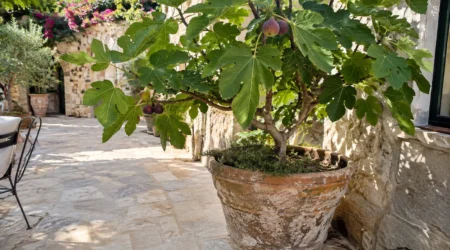
Fig Tree Planter Ideas
The best fig tree planter ideas balance appearance with drainage, root space, and sunlight. Terracotta pots, wooden half-barrels, glazed ceramic containers, and lightweight resin planters all accommodate edible figs. Established trees generally benefit from around 15 gallons (57 liters) of...
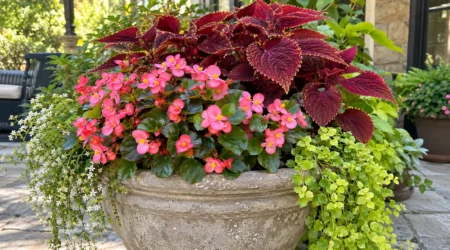
Begonia Planter Ideas: 15 Beautiful Combinations for Every Space
Begonia planter ideas work best when flower color, foliage, container size, and light requirements fit together. Choose wax begonias for compact outdoor displays, trailing varieties for hanging baskets, or Rex begonias for striking indoor leaves. Combine compatible plants in well-drained...
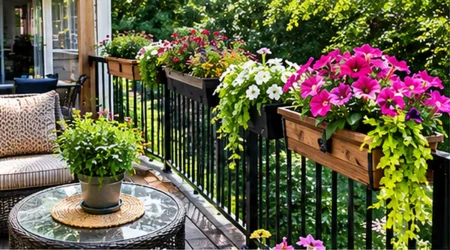
Railing Planter Ideas: Best Designs, Plants, and DIY Tips
Railing planter ideas make balconies, decks, and porches greener without sacrificing floor space. The best choices are securely fitted saddle planters, bracket-mounted flower boxes, and hanging baskets planted with compact flowers, herbs, or strawberries. Match the container to your railing,...
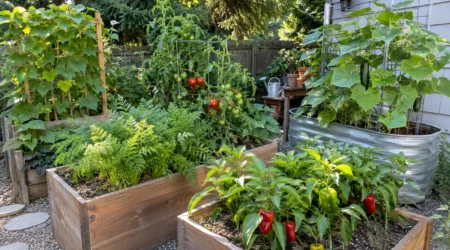
11 Best Vegetables for Deep Planters: Complete Soil Depth Guide
The best vegetables for deep planters are carrots, parsnips, daikon radishes, potatoes, sweet potatoes, tomatoes, cucumbers, peppers, eggplants, zucchini, and pole beans. Most benefit from approximately 12–24 inches of usable growing mix, although the right depth depends on variety, container...
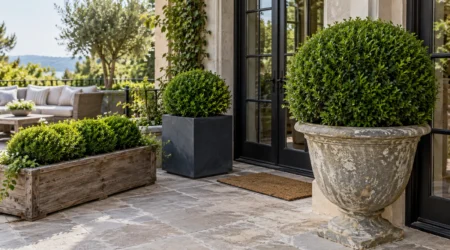
Boxwood Planter Ideas
Boxwood planter ideas bring year-round greenery to front doors, patios, courtyards, and garden pathways. These evergreen shrubs grow well in outdoor containers when they have enough root space, a free-draining growing medium, and consistent moisture. Choose compact varieties suited to...
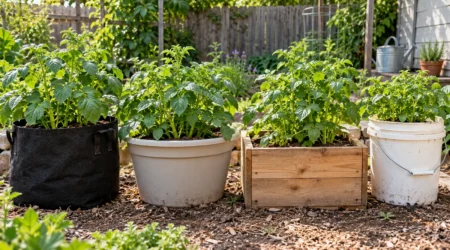
Potato Planter Ideas: 15 Easy Containers and DIY Growing Tips
Potato planter ideas range from fabric grow bags and large plastic pots to wooden boxes and homemade bucket planters. For most beginners, a wide, opaque 10–15-gallon (38–57-liter) container with drainage, loose potting mix, and six to eight hours of sunshine...
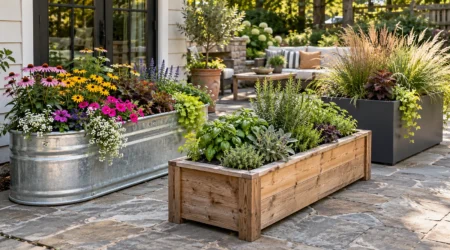
25 Trough Planter Ideas for Beautiful Outdoor Spaces in 2026
Trough planter ideas turn patios, balconies, fences, and small backyards into productive, attractive gardens. The best designs pair a long, suitable container with plants that share similar light, moisture, and root-space needs. Wooden herb boxes, galvanized flower troughs, evergreen displays,...