

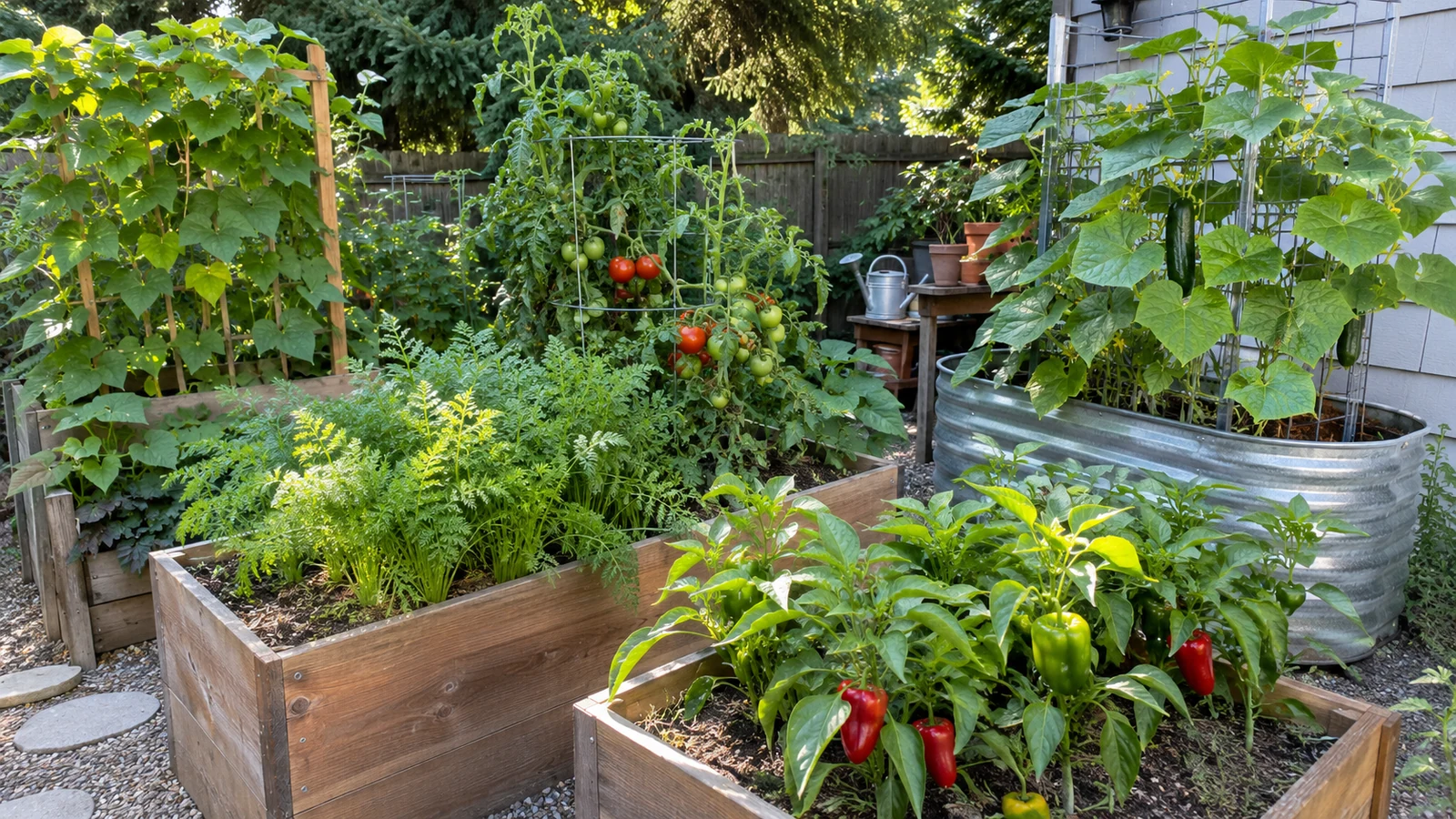
The best vegetables for deep planters are carrots, parsnips, daikon radishes, potatoes, sweet potatoes, tomatoes, cucumbers, peppers, eggplants, zucchini, and pole beans. Most benefit from approximately 12–24 inches of usable growing mix, although the right depth depends on variety, container width, total soil volume, and drainage.
A deep vegetable planter makes edible gardening possible on patios, balconies, and small backyards. Yet an impressive-looking pot may have little rooting space if it is narrow or contains a raised insert. The goal is a healthy root zone, not the tallest planter on sale.
What Soil Depth Do Planters Need?
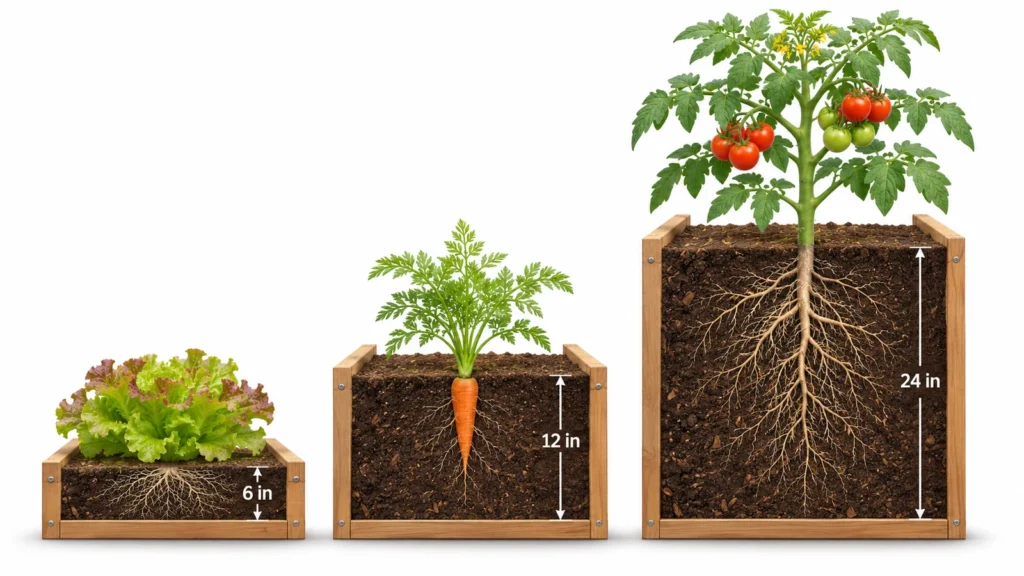
Leafy crops often manage in 6–8 inches of growing mix; many roots and compact vegetables suit 8–18 inches; larger crops may benefit from 18–24 inches.
Measure usable soil depth from the surface to the actual bottom of the growing medium. Reservoirs, elevated legs, and false bottoms do not count. Remember that container width affects water storage and the room available to spreading roots.
| Vegetable | Suggested soil depth | Key consideration |
|---|---|---|
| Carrots | 12–18 inches | Match mature root length |
| Parsnips | 18–24 inches | Loose, unobstructed soil |
| Daikon radishes | 16–24 inches | Long varieties need clearance |
| Potatoes | 18–24 inches | Large bag and hilling space |
| Sweet potatoes | 18–24 inches | Ample width for storage roots |
| Tomatoes | 18–24 inches | Soil volume and support |
| Cucumbers | 16–24 inches | Stable container and trellis |
| Peppers | 12–18 inches | Compact varieties work well |
| Eggplants | 12–18 inches | Warmth and adequate volume |
| Zucchini | 18–24 inches | Wide, high-capacity planter |
| Pole beans | 16–24 inches | Trellis and root volume |
| Beets and turnips | 8–12 inches | Thin seedlings |
| Lettuce and spinach | 6–8 inches | Consistent moisture |
| Globe radishes | 6–8 inches | Loose, shallow growing mix |
Buying rule: Check the seed variety, internal dimensions, drainage holes, and filled planter weight before deciding what to plant.
What Are the 11 Best Vegetables for Deep Planters?
Some vegetables need depth for an edible taproot; others use larger soil volumes to support foliage and fruit. These eleven are strong candidates when the planter suits their mature size and your growing season.
1. Carrots
Soil depth: 12–18 inches. Carrots form edible taproots, so root length and soil texture matter. Nantes and Chantenay types are practical for medium-deep pots; longer cultivars require extra vertical clearance.
Sow seeds directly in loose, stone-free mix, keep the surface moist during germination, and thin seedlings to the variety’s recommended spacing. Compaction, obstacles, and crowding can cause forked or undersized roots. Round varieties can also be grown when a gardener has only a shallow planter.
Best choice: In a 12-inch planter, select short or medium-length carrots rather than the longest varieties.
2. Parsnips
Soil depth: 18–24 inches. Parsnips develop long taproots that benefit from a deep, obstruction-free growing medium.
Direct sow fresh seeds because older parsnip seed may germinate poorly. Allow a long season, often 100 days or more depending on variety, and keep moisture steady. Cool conditions near harvest can improve sweetness.
Best choice: Dedicate one deep container to parsnips rather than mixing them with fast-growing crops.
3. Daikon Radishes
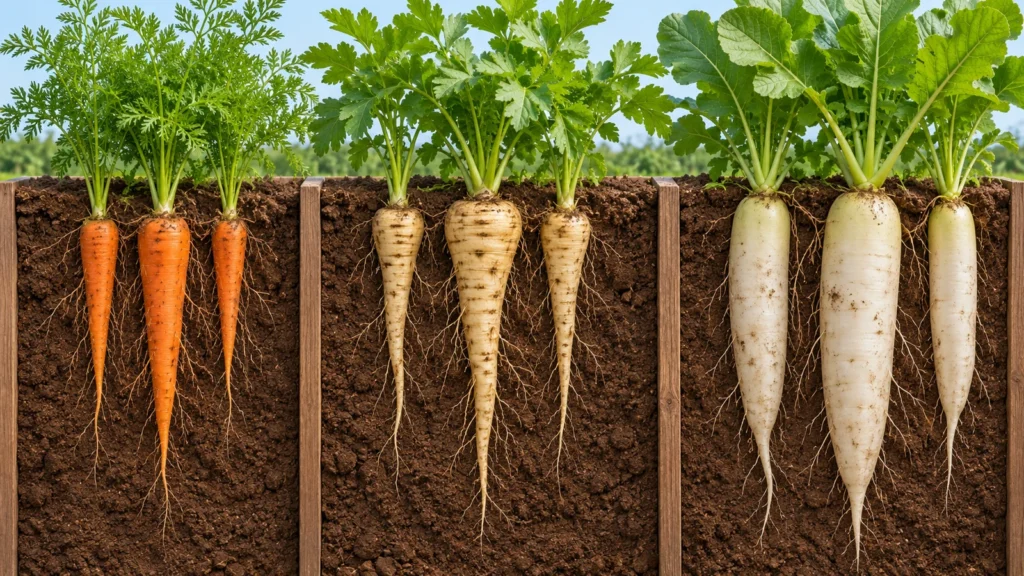
Soil depth: 16–24 inches for long varieties. Daikon produces elongated edible roots, but cultivars differ widely in mature length.
Sow directly during a suitable cool-weather period and thin seedlings so each root has space to enlarge. Even moisture supports consistent growth; crowding or unsuitable temperatures can reduce quality. Small globe radishes generally need only six to eight inches of soil, so choose those for shorter pots.
Best choice: Grow long daikon only when the planter comfortably exceeds the expected root length.
4. Potatoes
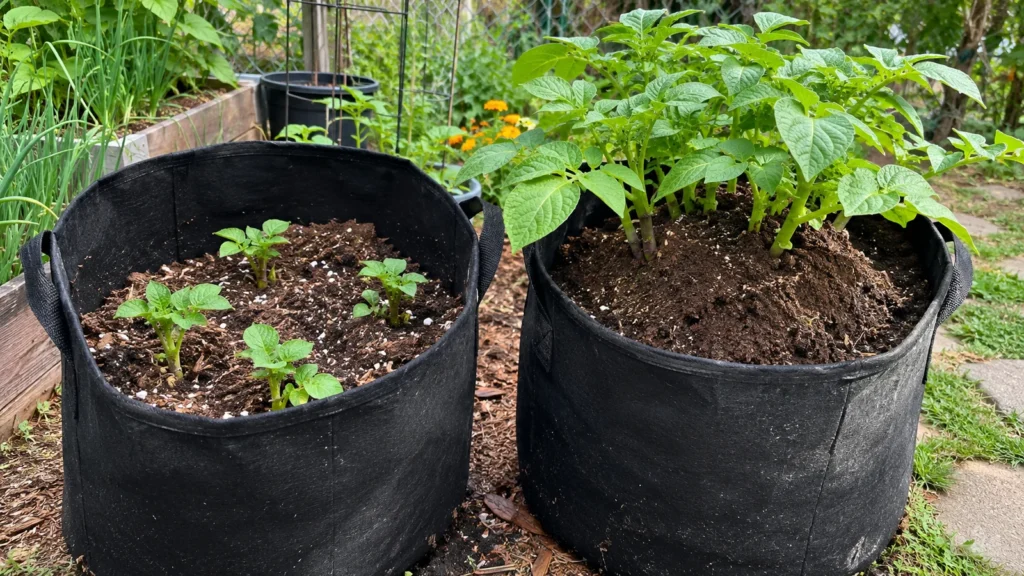
Planter depth: approximately 18–24 inches. Large opaque grow bags, often around 10–15 gallons or more, make it easier to protect tubers while providing adequate soil volume.
Place certified seed potatoes in an initial layer of mix. As shoots grow, add medium around the lower stems while leaving healthy leaves exposed. This hilling method keeps developing potatoes covered. Water evenly and ensure surplus moisture drains; protect tubers from light, and avoid eating any that have turned green.
Best choice: Use a roomy grow bag, not a narrow decorative pot.
5. Sweet Potatoes
Soil depth: 18–24 inches, with generous width. Sweet potatoes produce storage roots and spreading vines, so overall capacity matters as much as depth.
Plant after frost danger has passed, provide warm conditions, and allow the vines room to trail without smothering neighbors. Select a cultivar suited to the length of your warm season. Sweet potatoes are established from slips, not the seed potato pieces used for ordinary potatoes.
Best choice: Use a broad grow bag with plenty of usable mix.
6. Tomatoes
Soil depth: 18–24 inches is a generous target. Tomatoes depend on adequate root volume, reliable moisture, and sturdy support. Compact cherry, patio, and determinate cultivars are easier to manage in limited spaces than vigorous indeterminate plants.
Some compact tomatoes grow in five-gallon pots with close attention, although larger containers make watering easier. Install a cage or stake at planting time and give plants adequate sun.
Best choice: Prioritize container capacity and stability over height alone.
7. Cucumbers
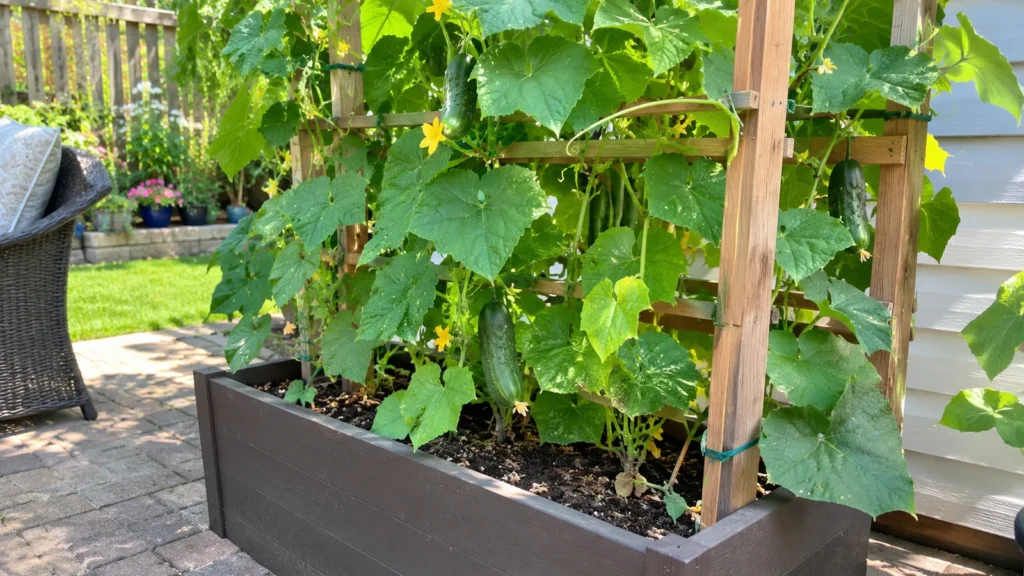
Soil depth: 16–24 inches as a comfortable target. Cucumbers have extensive root systems, fast-growing leaves, and substantial water demands during fruiting.
Choose a wide, stable planter and install support early. Train stems gently, provide good airflow, and pick cucumbers regularly while they are the appropriate size. Check moisture often during hot weather because fruiting vines can dry out a small pot quickly.
Best choice: Pair a large container with vertical support instead of relying on a very narrow, deep pot.
8. Peppers
Soil depth: 12–18 inches. Peppers suit medium-deep containers particularly well. A three- to five-gallon pot can work for many varieties, with larger options providing easier moisture management.
Provide warmth, direct sun, and consistently moist but well-drained soil. Stake branches if developing fruits make them heavy.
Best choice: Select peppers when planter volume is moderate and conditions are sunny.
9. Eggplants
Soil depth: 12–18 inches. Eggplants thrive in warm, sunny conditions with sufficient root space. A pot around five gallons is a useful starting point for many varieties.
Use an airy growing mix, avoid cold exposure, and maintain steady moisture without saturation. Heavy fruits may need light support. With inadequate sunlight, leafy greens usually make a better use of the same planter than eggplants.
Best choice: Combine a compact cultivar, warm position, and sufficiently large pot.
10. Zucchini
Soil depth: 18–24 inches; prioritize width. Zucchini produces large foliage and has high water demands during flowering and fruit development.
Choose a large planter, often ten gallons or more as a starting point, and avoid crowding multiple plants. Water consistently and watch for poor pollination when young fruits stop developing. Leave enough clearance around the planter for the broad leaves and for convenient harvesting.
Best choice: Use one compact zucchini plant in a broad, high-volume container.
11. Pole Beans
Soil depth: 16–24 inches for generous growing room. Pole beans make productive use of vertical space when provided with a strong trellis. They can grow in shallower containers, but greater soil volume helps maintain moisture during extended harvesting.
Sow directly when temperatures are appropriate, install climbing support before roots spread, and avoid overcrowding. Harvest pods regularly, and anchor the trellis securely against wind.
Best choice: Use a stable trellised planter beside a sunny fence or wall.
Do Deep or Wide Planters Work Best?
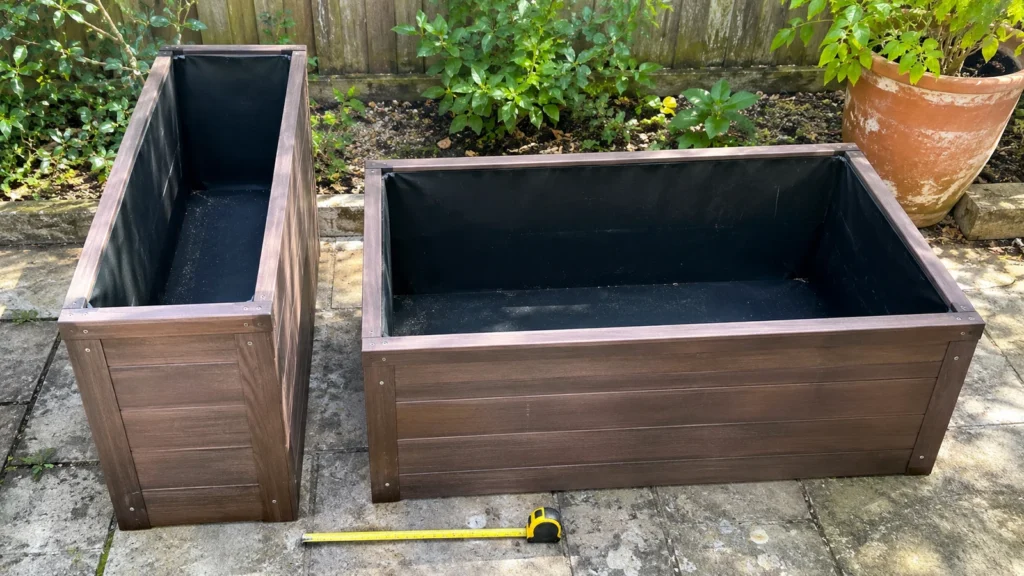
Long taproots benefit from depth; larger fruiting crops often need width and total soil volume. A 24-inch-tall narrow container may hold less growing medium than a 16-inch-deep wide planter.
Compare actual liters or gallons for tomatoes, zucchini, cucumbers, and sweet potatoes. For long parsnips and daikon, sufficient width cannot replace vertical root clearance. Check the safe load capacity before placing several deep, water-filled planters on a raised balcony or deck.
- Tall and roomy: Parsnips, long carrots, daikon.
- Wide and roomy: Zucchini, tomatoes, sweet potatoes.
- Firm support: Cucumbers, pole beans, tall tomatoes.
Choose by crop architecture, not exterior pot height.
Is 12 Inches Deep Enough?
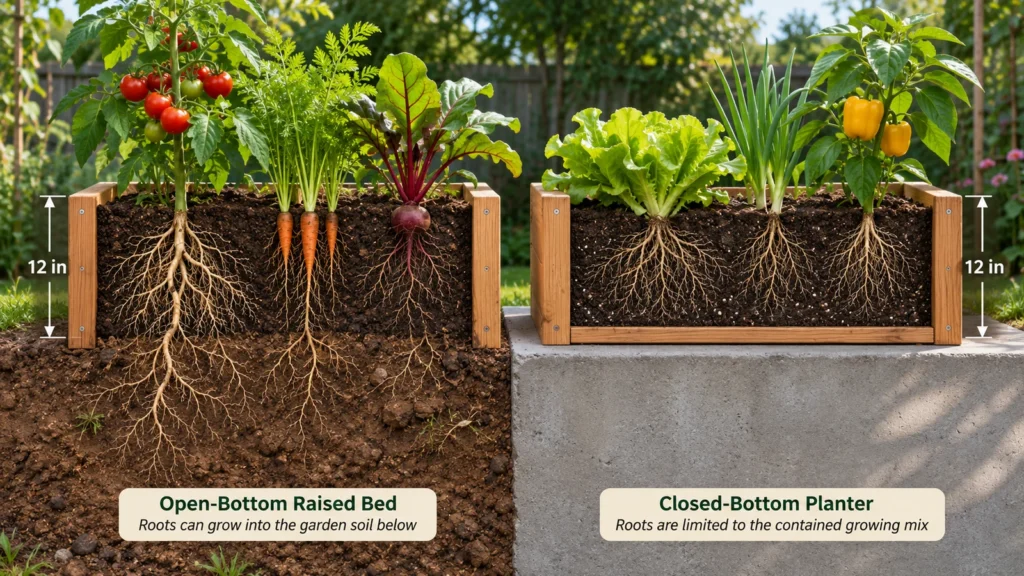
Yes, 12 inches can support short carrots, beets, turnips, leafy greens, and some compact vegetables.
Raised-bed construction changes the answer. Roots in an open-bottom bed can extend into healthy, loosened ground beneath its frame. A planter sitting on concrete or fitted with a solid bottom restricts roots to the soil inside. A short carrot variety is therefore a more predictable choice than a long-rooted cultivar in a 12-inch closed pot.
- 12-inch closed container: Short carrots and medium-rooted crops.
- 12-inch open-bottom raised bed: More rooting room if subsoil is suitable.
- Over paving: Treat the structure as a giant container.
What Grows in 6-Inch Planters?
Leaf lettuce, arugula, scallions, globe radishes, and baby mustard greens are good options for six-inch-deep planters. Spinach may also work, although eight inches gives extra moisture buffering. These crops suit window boxes and shallow salad troughs.
Harvest tender leaves young and prevent overcrowding. Six-inch troughs also lose moisture faster than larger beds, especially in warm or windy conditions. A six-inch planter is not suitable for mature zucchini, potatoes, long daikon, or parsnips.
- Quick roots: Small globe radishes.
- Repeat leaves: Lettuce and arugula.
- Narrow boxes: Scallions.
Which Vegetables Grow Underground?
Vegetables harvested underground include true roots, enlarged root structures, and stem tubers. Twelve common examples are carrots, parsnips, beets, turnips, radishes, rutabagas, celeriac, sweet potatoes, jicama, cassava, potatoes, and yams.
Potatoes produce edible stem tubers, while sweet potatoes form storage roots. Carrots and parsnips have elongated taproots.
Tomatoes, peppers, cucumbers, zucchini, beans, broccoli, cabbage, and lettuce are harvested above ground. They still need healthy roots below it. Tomatoes, for example, make fruit above ground but require much more root volume than a planter of lettuce. Edible-part location alone does not determine planter depth.
What Soil Is Best for Deep Planters?
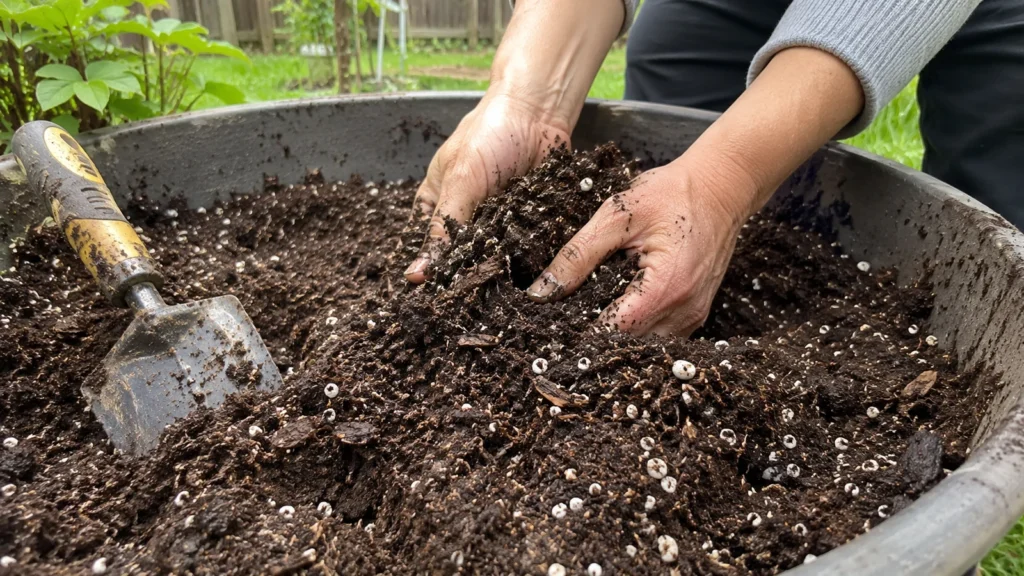
Closed-bottom vegetable containers perform best with lightweight potting mix that drains well but retains useful moisture.
Commercial mixes may combine coir or peat, composted bark, perlite, vermiculite, and finished compost. Check whether fertilizer is already included before adding more. Open-bottom raised beds can use suitable screened topsoil blended with compost when drainage and soil safety are established. For root vegetables, remove large stones and dense clumps before sowing to reduce distorted harvests.
- Pots and grow bags: Container-specific mix.
- Open-bottom beds: Suitable soil plus finished compost.
- Long-rooted crops: Loose, stone-free texture.
What Goes in a Planter Bottom?
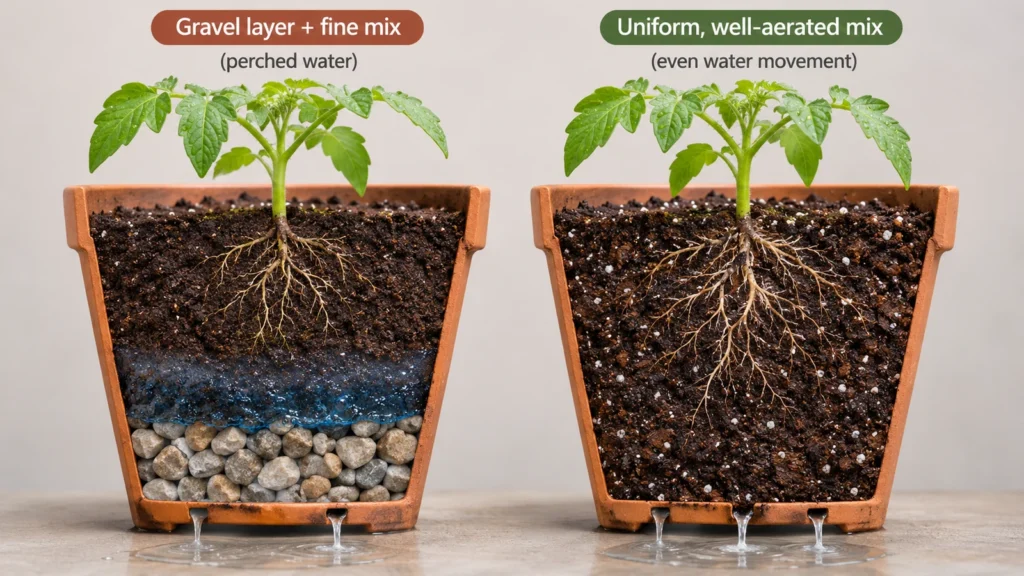
Use suitable potting mix above clear drainage holes instead of adding gravel. Water can remain perched in fine growing medium above a coarse layer, so stones may actually reduce usable rooting depth without fixing drainage.
Cover unusually large drainage holes with a small piece of mesh only if mix escapes. An open-bottom bed can sit on prepared ground rather than a layer of rubble.
- Ordinary pot: Potting mix and functioning holes.
- Reservoir planter: Follow its design instructions.
- Open-bottom bed: Prepare the soil underneath.
How Can You Fill Deep Planters Cheaply?
Calculate the required volume first, then compare quality soil prices by cubic foot or liter. Open-bottom beds may use appropriate bulk soil blends; closed containers generally need lighter potting media.
For a rectangular planter, multiply internal length × width × usable depth in inches, then divide by 1,728 to get cubic feet. A 36 × 18 × 18-inch container holds 6.75 cubic feet, approximately 191 liters, before leaving headspace. Compare bagged products by actual volume rather than the price per bag.
- Buy suitable soil in bulk where delivery costs make sense.
- Refresh healthy used potting mix with appropriate amendments.
- Use smaller planters for naturally compact crops.
How Do You Plant and Maintain Vegetables?
Start with appropriate drainage, suitable mix, correct spacing, and a crop matched to the season. Direct sow carrots, parsnips, radishes, and beans. Transplant tomatoes, peppers, and eggplants when local temperature conditions are suitable.
Check moisture below the surface and water thoroughly when needed. Feed according to a fertilizer label, considering nutrients already present in the potting mix. Watering requirements depend on the crop, weather, and container material rather than a universal daily schedule.
- Install cages and trellises before roots become extensive.
- Allow space for mature leaves and airflow.
- Inspect pests, moisture, and drainage regularly.
- Harvest beans, cucumbers, and zucchini at suitable maturity.
Which Vegetables Tolerate Poor Soil?
Bush beans, turnips, radishes, and some greens may tolerate modest fertility, but none thrive in seriously compacted, contaminated, or permanently saturated soil.
Beans can associate with nitrogen-fixing bacteria, yet they still need other nutrients. Radishes grow quickly in reasonably loose soil, but compaction may distort roots. Clean container mix is often the practical solution when backyard soil is unsuitable. If soil contamination is possible, arrange testing or avoid planting edible crops directly in it.
- Low fertility: Improve nutrients as needed.
- Heavy compaction: Improve structure or use pots.
- Unknown contamination: Test soil or avoid edible planting.
Which Crops Are Poor for Small Raised Beds?
Full-sized pumpkins, sprawling winter squash, large watermelons, and very small plantings of sweet corn are often inefficient in compact raised beds.
Corn generally needs a sufficiently large block for reliable wind pollination. Sprawling vines can overwhelm pathways. Perennial asparagus occupies space for years, making it awkward in beds intended for frequent seasonal rotation. Choose crops by mature spread as well as depth; a large vine may extend well beyond the bed.
- Choose compact or bush cultivars where possible.
- Use sturdy trellises for appropriate climbers.
- Prioritize peppers, lettuce, carrots, and beans in small beds.
Which Container Mistakes Matter Most?
Poor drainage, crowding, inconsistent moisture, heavy soil, and insufficient root volume cause many container failures.
Check that holes are open and liners do not trap water. Feel moisture below the surface rather than watering on a fixed schedule. Protect tall plants from wind and diagnose leaf yellowing before adding fertilizer. Yellow leaves may reflect drainage, moisture, temperature, or pest trouble rather than a simple nutrient shortage.
- Wilting in wet mix: Check drainage and roots.
- Wilting in dry mix: Water and reconsider pot capacity.
- Forked carrots: Check compaction, stones, and spacing.
- Slow growth: Review light, temperature, and nutrition.
Which Planter Vegetables Grow Fast?
Radishes, lettuce, arugula, scallions, bush beans, and Swiss chard are useful beginner choices. Small radishes often mature in roughly 25–40 days; young salad leaves may be ready within several weeks, depending on cultivar and weather.
Keep crops with similar water and light needs together. A shallow salad trough plus a separate deep pepper pot can be easier to manage than one crowded mixed planter. Start with only two or three containers if you are new to watering vegetables in pots.
- Fast roots: Globe radishes.
- Repeat picking: Lettuce and chard.
- Warm-season option: Bush beans.
Which Planter Ideas Work in 2026?
Compact vegetables, vertical trellises, movable grow bags, and well-designed self-watering planters suit small-space gardens. The Royal Horticultural Society’s 2026 gardening outlook highlights tabletop edibles, compact eggplants, chillies, and hanging-basket cucumbers; these are trends, not guaranteed yield improvements. Prioritize practical drainage and root space over visual trends.
Train beans or cucumbers up sturdy supports, use roomy bags for potatoes, and position shallow salad troughs conveniently near the kitchen. Keep sun-loving fruiting plants in the brightest available locations.
- Patio: Compact tomatoes and peppers.
- Fence: Trellised beans or cucumbers.
- Flexible layout: Grow bags and salad containers.
Can You Grow 30 Vegetables in Buckets?
Thirty vegetable types can grow in suitable containers, but not all in ordinary five-gallon buckets. Repurposed buckets should be clean, safe for food growing, stable, and fitted with appropriate drainage.
Options include lettuce, spinach, arugula, radishes, scallions, mustard greens, bok choy, carrots, beets, turnips, kale, Swiss chard, onions, garlic, peas, tomatoes, peppers, eggplants, cucumbers, bush beans, pole beans, okra, potatoes, sweet potatoes, zucchini, broccoli, cauliflower, cabbage, parsnips, and daikon radishes.
Shallow greens fit troughs; compact peppers and tomatoes suit medium-to-large pots; potatoes, zucchini, and sweet potatoes need substantial growing volume. Pole beans need strong climbing support.
FAQs About Vegetables for Deep Planters
Which vegetable needs the deepest soil?
Long parsnips and daikon benefit from approximately 18–24 inches of loose soil. Large zucchini and tomato plants also need generous soil volume.
Does one carrot seed grow one carrot?
Usually yes. A germinated seed normally develops one carrot plant with one main edible root, although not every seed germinates.
Is 12 inches enough for carrots?
Yes, for many short and medium-length varieties. Use loose soil and check the expected mature root length.
What should carrots not grow near?
There is no universal forbidden companion. Avoid overcrowding and watch for pests shared with parsnips or celery.
Do cucumbers have deep roots?
Cucumbers develop extensive roots and need reliable moisture. Compact types can grow in shallower containers with sufficient volume.
Can vegetables grow without drainage holes?
Ordinary containers generally require holes. Engineered self-watering planters use overflow outlets and reservoirs instead.
What is the cheapest deep planter filler?
Use suitable bulk soil in open-bottom beds or purchase quality container mix by volume. Avoid gravel filler.
What is the king of vegetables?
No vegetable has a universally recognized botanical title of “king.” The phrase varies by culture.
Can shallow and deep-rooted vegetables share a planter?
Yes, when spacing, moisture, light, and nutrients are compatible. Prevent taller plants from shading smaller crops.
Are five-gallon buckets enough for tomatoes?
Some compact tomatoes can grow in them with consistent care. Larger containers simplify watering and support more roots.
How Should You Choose Deep-Planter Vegetables?
Match each crop to usable root space rather than advertised planter height. Choose carrots, parsnips, or daikon for long roots; peppers and compact tomatoes for manageable warm-season production; potatoes for roomy grow bags; and beans or cucumbers when strong vertical support is available.
Use the soil-depth chart as a starting point, then confirm cultivar size, sunlight, drainage, total mix volume, and seasonal conditions. The best planter is one you can water, support, and harvest from comfortably throughout the season.
Myra is the founder and lead writer of Backyard Planter Ideas, where she shares practical, well-researched guidance on planter design, plant selection, and outdoor styling. Her goal is to help homeowners create attractive, functional garden spaces with clear, reliable, and easy-to-apply advice.
Blueberry Planter Ideas: Best Pots, Soil, and Growing Tips
The best blueberry planter ideas use spacious containers, acidic potting mix, and varieties suited to local weather. Wooden barrels, large patio pots, raised troughs, and compact balcony planters can all work. Aim for soil pH 4.5–5.5, steady moisture, and ample...
Hosta Planter Ideas: 21 Beautiful Designs for Shady Spaces
Hosta planter ideas can turn shaded patios, porches, balconies, and garden corners into striking foliage displays. Hostas grow successfully in containers when they have drainage holes, moisture-retentive potting mix, adequate root space, and protection from harsh afternoon sun. The best...
21 Japanese Maple Planter Ideas for Beautiful Outdoor Spaces
Japanese maple planter ideas can turn an ordinary patio, balcony, or courtyard into a garden focal point. Japanese maples (Acer palmatum) grow well in containers when their roots have drainage, consistent moisture, and protection from extreme sun and cold. The...
Geranium Planter Ideas: 15 Beautiful Designs and Growing Tips
Geranium planter ideas can brighten patios, balconies, porches, and window boxes with relatively little equipment. Choose upright zonal geraniums for bold flower clusters, trailing varieties for baskets, and companion plants with matching sunlight and moisture needs. The best results come...
Fig Tree Planter Ideas
The best fig tree planter ideas balance appearance with drainage, root space, and sunlight. Terracotta pots, wooden half-barrels, glazed ceramic containers, and lightweight resin planters all accommodate edible figs. Established trees generally benefit from around 15 gallons (57 liters) of...
Begonia Planter Ideas: 15 Beautiful Combinations for Every Space
Begonia planter ideas work best when flower color, foliage, container size, and light requirements fit together. Choose wax begonias for compact outdoor displays, trailing varieties for hanging baskets, or Rex begonias for striking indoor leaves. Combine compatible plants in well-drained...
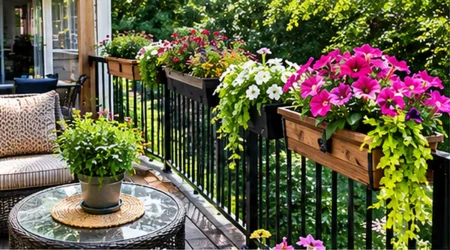
Railing Planter Ideas: Best Designs, Plants, and DIY Tips
Railing planter ideas make balconies, decks, and porches greener without sacrificing floor space. The best choices are securely fitted saddle planters, bracket-mounted flower boxes, and hanging baskets planted with compact flowers, herbs, or strawberries. Match the container to your railing,...
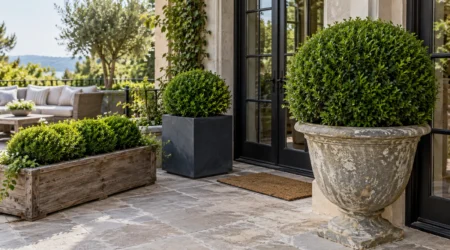
Boxwood Planter Ideas
Boxwood planter ideas bring year-round greenery to front doors, patios, courtyards, and garden pathways. These evergreen shrubs grow well in outdoor containers when they have enough root space, a free-draining growing medium, and consistent moisture. Choose compact varieties suited to...
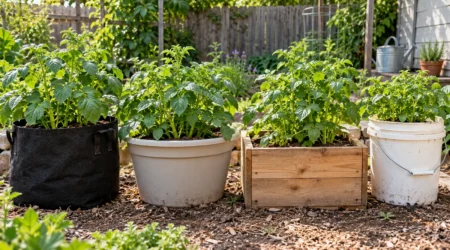
Potato Planter Ideas: 15 Easy Containers and DIY Growing Tips
Potato planter ideas range from fabric grow bags and large plastic pots to wooden boxes and homemade bucket planters. For most beginners, a wide, opaque 10–15-gallon (38–57-liter) container with drainage, loose potting mix, and six to eight hours of sunshine...
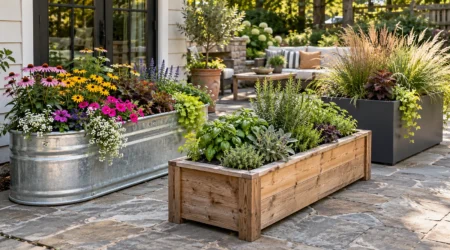
25 Trough Planter Ideas for Beautiful Outdoor Spaces in 2026
Trough planter ideas turn patios, balconies, fences, and small backyards into productive, attractive gardens. The best designs pair a long, suitable container with plants that share similar light, moisture, and root-space needs. Wooden herb boxes, galvanized flower troughs, evergreen displays,...