

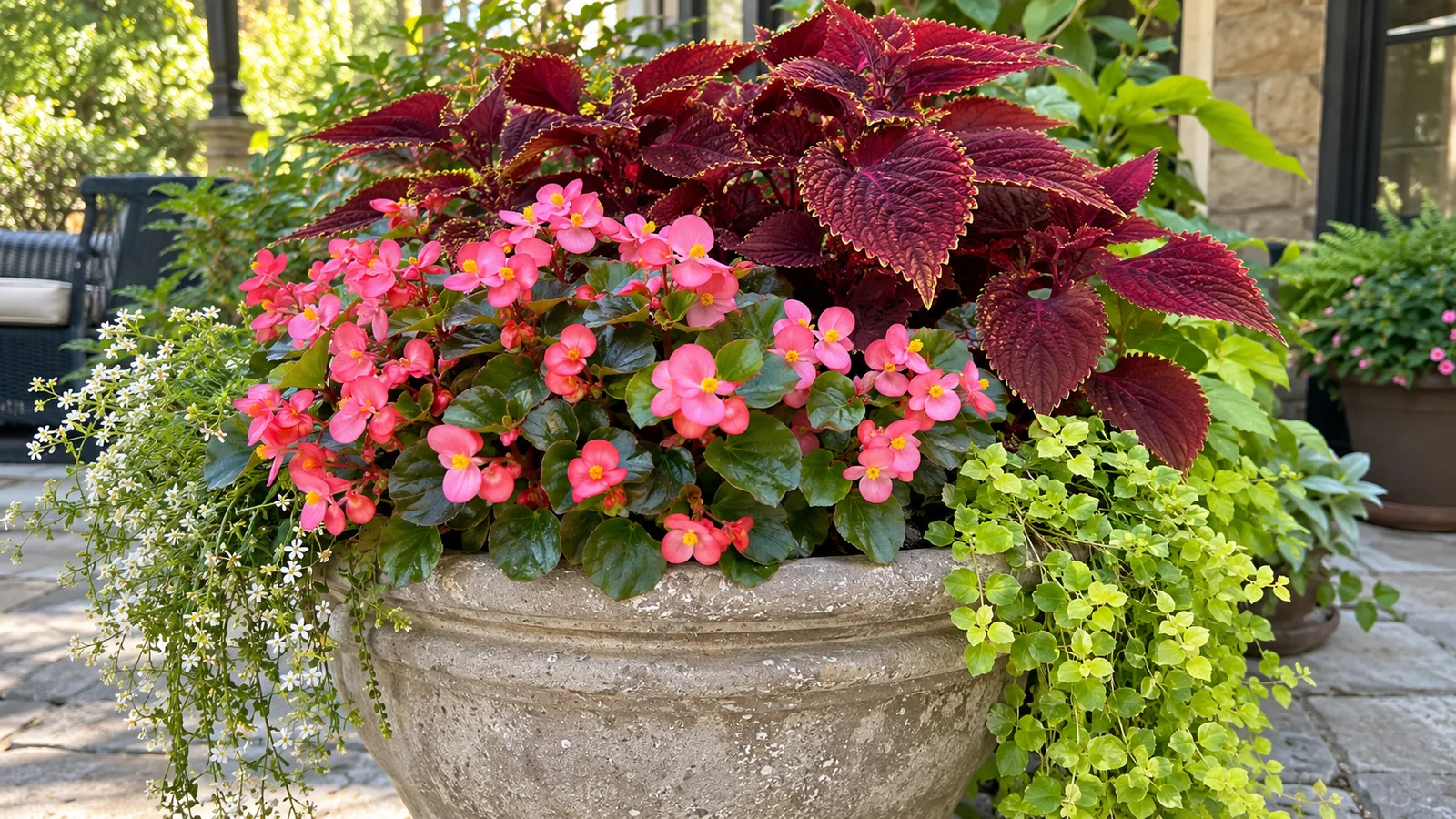
Begonia planter ideas work best when flower color, foliage, container size, and light requirements fit together. Choose wax begonias for compact outdoor displays, trailing varieties for hanging baskets, or Rex begonias for striking indoor leaves. Combine compatible plants in well-drained pots, and allow space for their mature growth.
Which Begonia Planter Ideas Work Best?
The best begonia planter ideas start with the location. A sheltered patio can support flowering begonias and colorful foliage, while a bright indoor shelf may suit a single Rex begonia better than a crowded mixed display. Pick the main begonia first, then choose companion plants that tolerate similar light and moisture.
For small pots, one begonia and one companion suffice. Larger containers can support an upright focal plant, flowering fillers, and a restrained trailer.
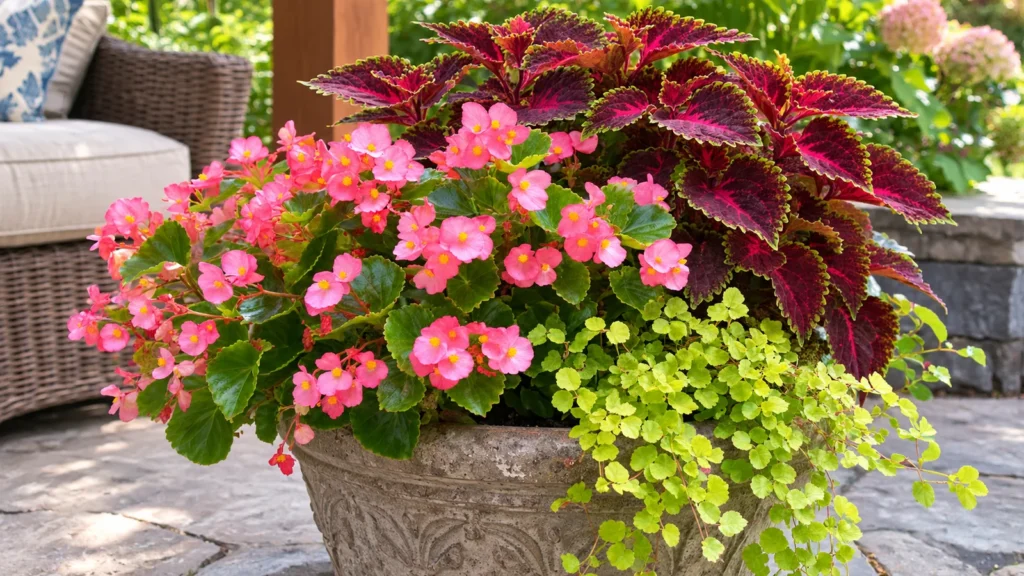
- Pink wax begonias with burgundy coleus: Contrasting flowers and upright leaves for a shaded patio.
- White begonias with compact ferns: A fresh, soft-textured planter near a sheltered doorway.
- Red begonias with golden creeping Jenny: Vivid flowers above a gently trailing edge.
- Orange tuberous begonia alone: Large flowers that make one terracotta pot a focal point.
- Trailing begonias in a basket: Cascading blooms for covered porches and balconies.
- Rex begonia in cream ceramic: Patterned foliage displayed as an indoor centerpiece.
- Pink begonias with white impatiens: Coordinated flowers for mild, partly shaded conditions.
- Begonias with caladiums: Broad tropical foliage behind smaller blooms in warm climates.
- White begonias with purple torenia: Cool-toned flowers in filtered light.
- Mixed wax begonias in a window box: Repeated compact plants for a tidy window display.
- Pink begonias with sweet potato vine: Dramatic trailing foliage in a spacious container.
- Angel wing begonia in a decorative pot: Upright spotted leaves for a bright room.
- Begonias with lime coleus: Colorful foliage even between flower flushes.
- Begonias in a wooden trough: Rustic planting beside outdoor seating.
- Matching pots with one begonia color: A coordinated arrangement for a small balcony.
For the simplest care, choose a single-plant design. Mixed planters need room for mature growth.
What Plants Grow Well With Begonias?
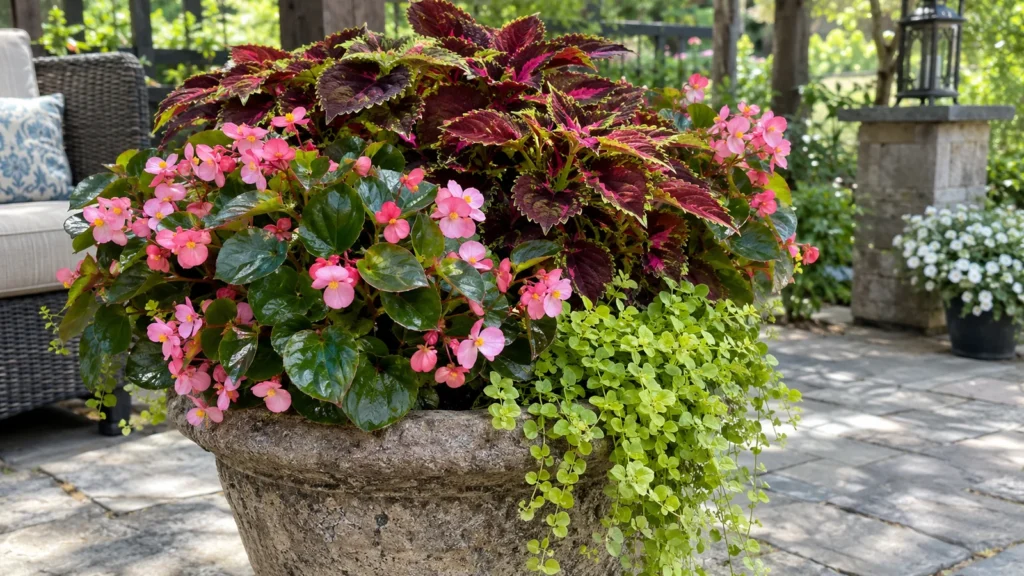
Coleus, impatiens, torenia, selected ferns, caladiums, and modest trailing plants can grow alongside begonias. Many flowering begonias prefer partial shade and a moisture-retentive but freely draining potting mix; their neighbors should tolerate the same conditions.
Think in terms of height and texture. Coleus contributes upright, often burgundy foliage; begonias provide rounded leaves and repeated blooms; creeping Jenny softens the rim. A narrow window box needs fewer plants than a wide patio container.
| Companion | Design benefit | Important consideration |
|---|---|---|
| Coleus | Colorful vertical foliage | Tall types may shade begonias |
| Impatiens | Extra shade-friendly flowers | Prefers consistent moisture |
| Torenia | Contrasting small blooms | Protect from unsuitable heat |
| Ferns | Fine green texture | Choose compatible humidity needs |
| Caladium | Bold patterned leaves | Needs warmth and growing room |
| Creeping Jenny | Soft trailing edges | Trim spreading stems |
| Sweet potato vine | Dramatic cascading leaves | Can overpower small plants |
Avoid planting begonias with lavender, cacti, or other drought-adapted plants requiring significantly drier soil. If two favorites need different care, group them in separate containers. Before planting together, compare their nursery labels for mature spread, not just current height. A fast-growing trailer may hide flowers within weeks; trim it before it crosses into the begonia crown.
Which Begonia Types Suit Containers?
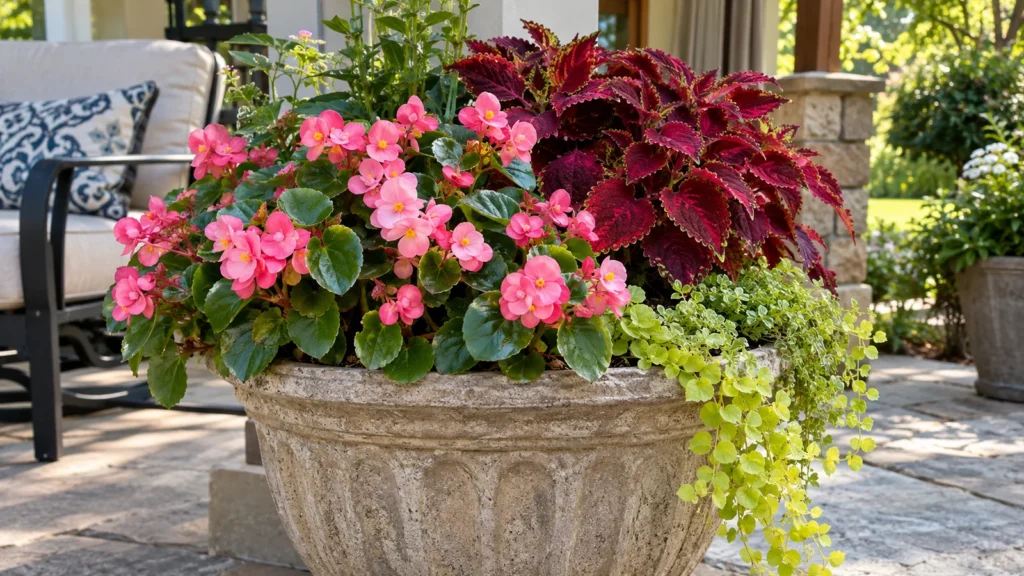
Wax, tuberous, trailing, Rex, and cane begonias each have a useful role in container design. Wax begonias are compact flowering choices for patios and boxes. Tuberous begonias offer showy blooms, while trailing selections spill over basket edges. Rex begonias are grown mainly for decorative foliage; cane types provide taller stems and often spotted leaves.
Wax begonias generally have fibrous roots, Rex begonias commonly grow from rhizomes, and many tuberous varieties develop storage tubers that rest during dormancy.
| Begonia type | Best planter | Main feature |
|---|---|---|
| Wax | Patio pot or window box | Abundant smaller flowers |
| Upright tuberous | Sheltered decorative pot | Large, colorful blooms |
| Trailing tuberous | Hanging basket | Cascading flower stems |
| Rex | Indoor ceramic pot | Patterned, multicolored leaves |
| Angel wing or cane | Stable indoor planter | Height and spotted foliage |
| Dragon Wing-type | Large outdoor container | Vigorous arching growth |
For dramatic flowers, choose a named tuberous cultivar; for remarkable leaves, consider Rex. Check labels for mature size and care. If the plant is unlabeled, look for its growth habit before choosing a display: woody-looking cane stems may need support, broad patterned leaves suggest a foliage selection, and long arching flowering stems indicate a potential basket choice.
Do Begonias Like Sun or Shade?
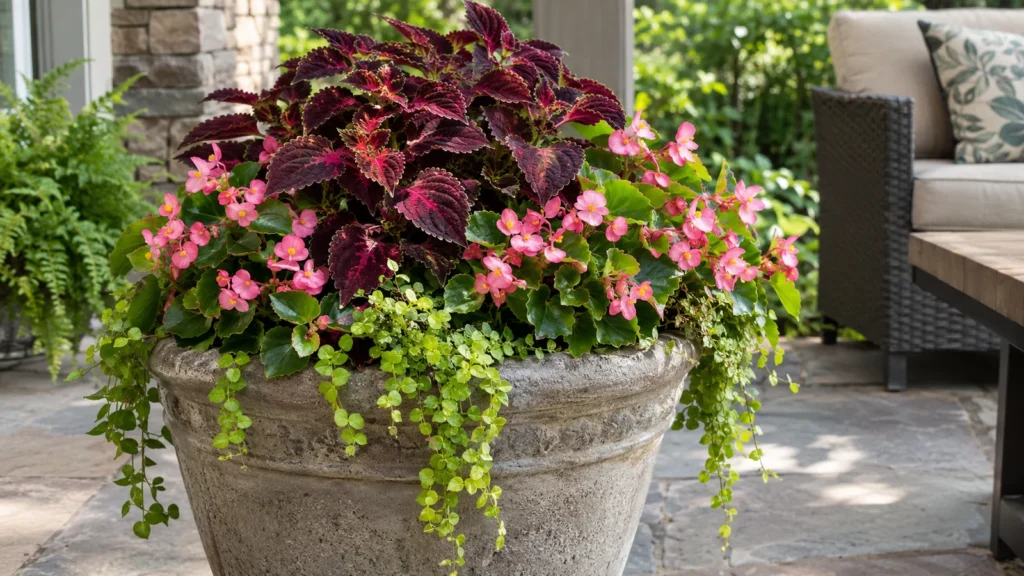
Most commonly grown begonias prefer partial shade or bright filtered light, although some wax begonia cultivars tolerate considerably more sun. Strong afternoon sunlight may scorch Rex and tuberous begonias. Flowering types usually need more light than foliage types.
Morning sunlight followed by afternoon protection is a sensible outdoor starting point. Indoors, bright indirect light near a suitable window can work well. Local heat and reflected sunlight change the exposure.
- Scorched, dry patches: Reduce harsh sun exposure gradually.
- Stretched stems and few flowers: Improve light after confirming the variety normally flowers.
- Midday wilting: Inspect soil moisture before assuming the plant is thirsty.
- Changing seasons: Recheck sunlight as the sun’s position shifts.
Do not apply north-facing and south-facing advice globally; those exposures differ between hemispheres. Observe daily light and reflected heat. A useful test is to watch the leaves for several afternoons after moving a pot. If scorching develops, give the plant more shelter; if growth becomes elongated, increase brightness gradually.
Which Pots and Soil Are Best?
The best begonia pots have drainage holes and enough space for healthy roots without excessive unused potting mix. Oversized pots can remain wet for too long, while crowded roots may dry out quickly. Increase pot size modestly when repotting.
Terracotta loses moisture more quickly than plastic or glazed ceramic. Plastic is lightweight for hanging baskets; glazed pots hold moisture longer. Use removable, draining nursery pots inside decorative covers. On hot paving, lift containers slightly with pot feet so water can escape and roots are less exposed to heat. Never leave the inner pot immersed after watering.
| Planting situation | Starting pot width |
|---|---|
| Small single begonia | 5–7 in (13–18 cm) |
| Larger flowering begonia | 8–10 in (20–25 cm) |
| Mixed patio arrangement | 12–16 in (30–40 cm) |
| Vigorous trailing begonia | 12–14 in (30–36 cm) |
| Large feature planter | 16–20 in (40–50 cm) |
Mature size and the root system matter more than pot diameter alone. Use a quality, preferably peat-free, container potting mix that holds some moisture yet drains freely. Perlite can help aeration when a mix becomes dense.
Do not add a gravel layer beneath the potting mix. It does not improve drainage and can leave an overly wet zone above the stones.
How Do You Style Outdoor and Large Planters?
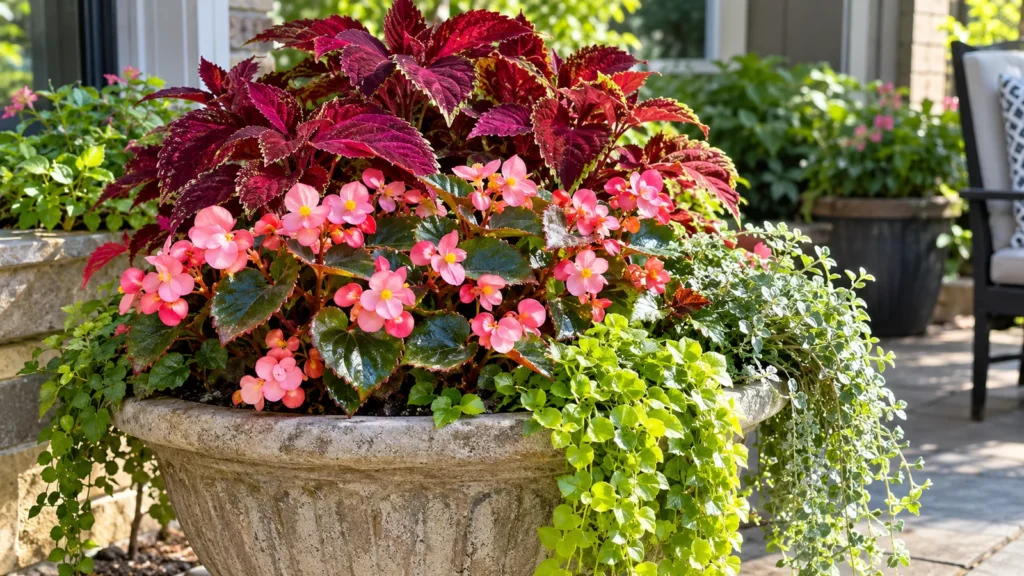
Outdoor arrangements should suit their surroundings. Pink blooms and burgundy coleus complement gray paving; white begonias brighten shaded entrances; orange tuberous flowers stand out in plain terracotta.
In a large pot, use the thriller-filler-spiller approach carefully. An upright coleus supplies height, flowering begonias fill the middle, and a controlled trailer softens the rim. Test the layout with the plants still in nursery pots, then check their mature spreads before planting.
Three practical outdoor layouts
- Shaded entrance: White flowering begonias beside a compact fern in a wide stone-colored container.
- Sheltered seating area: Pink wax begonias, small burgundy coleus, and a little golden trailing foliage.
- Balcony corner: One vigorous begonia in a stable lightweight planter, without crowded companions.
A 20-inch (50 cm) wide container might accommodate one compact coleus, two small begonias, and one restrained trailer, depending on cultivar dimensions. Wide containers generally offer more surface area for mixed arrangements than tall narrow pots.
What Indoor Begonia Planter Ideas Work?
Indoor begonia planter ideas are often strongest when they showcase foliage rather than combine many plants. A patterned Rex begonia can stand alone in a ceramic cover pot. For a layered indoor display, place two other begonias in separate pots nearby instead of sharing one large planter. This lets you adjust moisture individually and inspect each root system.
A room that seems bright may still be too dim for flowering, while direct afternoon rays through glass may damage tender leaves. Place plants near appropriate windows, protect them from cold drafts, and keep roots in well-draining inner pots.
- Shelf: A single compact Rex begonia in a neutral cachepot.
- Bright corner: Cane begonia in a stable container, with support if required.
- Windowsill: Separate small pots for easy individual watering.
- Decorative basket: A removable nursery pot with a saucer that is emptied after watering.
Many indoor begonias appreciate humidity, but wet leaves and stagnant air can encourage disease. Avoid relying on misting. Begonias are toxic to cats and dogs if eaten, so position them away from pets that chew houseplants.
What Works in Baskets and Window Boxes?
Trailing begonias suit hanging baskets because their flowering stems fall below the container rim. Choose a cultivar specifically described as cascading; upright wax begonias will not create the same effect. A 12–14-inch (30–36 cm) basket may suit a vigorous cultivar.
For window boxes, repeat compact wax begonias for an orderly display. Add small coleus behind the flowers only if the box has sufficient width; use a limited trailing plant near the corners.
Essential basket and window-box checks
- Secure brackets for the container’s fully watered weight.
- Confirm drainage water will not damage walls or people below.
- Shelter delicate flowers from persistent wind and harsh afternoon sun.
- Check moisture frequently during hot weather without watering automatically.
- Allow space for mature roots and foliage, not just the nursery plants.
Balcony containers can dry unevenly when one end receives stronger sunlight. Check the potting mix in more than one place.
How Can You Make DIY Begonia Planters?
DIY begonia planters can be made from cleaned buckets, wooden crates, painted clay pots, and reused window boxes. Never reuse a container that previously held hazardous chemicals or has an unknown coating that may contact the soil.
A sturdy food-safe bucket can become a planter after suitable drainage holes are drilled. A wooden crate works well as an outer decorative cover for a separate draining pot, avoiding soil escaping between slats.
Four budget-friendly projects
- Painted terracotta: Add a simple exterior pattern while leaving drainage holes open.
- Recycled bucket: Drill outlets, smooth rough edges, and plant a compact begonia.
- Wooden crate: Place a correctly sized nursery pot inside for a rustic finish.
- Refreshed window box: Clean thoroughly, clear outlets, and replace compacted mix.
Large decorative planters may use purpose-designed inserts to reduce potting-mix volume, provided drainage remains effective. Keep containers accessible for maintenance.
How Should You Plant and Water Begonias?
Plant an established begonia at approximately its previous root-ball depth. Choose suitable mix, position the plant without damaging fragile stems, fill gently around the roots, and water thoroughly until excess runs out. Follow separate planting instructions for dormant tubers.
Water when the upper portion of the mix starts to dry, rather than every day by default. A hanging basket in hot wind might need daily attention, whereas a shaded indoor pot may remain moist much longer. Check beneath the surface before watering.
Step-by-step planting and watering
- Match the begonia variety to the available sunlight.
- Select a pot with clear drainage holes.
- Fill with airy, lightly moistened container mix.
- Set the root ball at its existing planting level.
- Water thoroughly, then empty any collection tray.
- Check root-zone moisture before watering again.
Top watering directly onto the soil is straightforward and helps flush excess fertilizer salts. Bottom watering can also work: let a draining pot briefly absorb shallow water, then remove it to drain completely.
Yellowing leaves, soft stems, and wilting despite wet soil can indicate waterlogging or root damage. Dry mix and a lightweight pot point more strongly toward underwatering. Diagnose moisture before adding more water.
How Do You Keep Begonias Blooming?
Begonias bloom best when their light, moisture, and nutrition suit the variety. Many wax begonias flower repeatedly during favorable warm weather; tuberous begonias can provide striking seasonal displays. Blooming months vary by cultivar and climate.
During active growth, outdoor flowering begonias may benefit from a suitable potassium-rich liquid fertilizer. The Royal Horticultural Society advises fortnightly feeding for some container begonias in summer. Follow product directions and check existing nutrients. Reduce feeding during dormancy.
- Plenty of leaves, few flowers: Confirm the variety is grown for blooms, then review light.
- Dropping buds: Check for heat, irregular watering, or sudden environmental changes.
- Spent flowers: Remove decaying blooms when needed; some cultivars shed them naturally.
- Excess leafy growth: Avoid unnecessary high-nitrogen feeding.
- Coffee grounds: Do not use them as a replacement for balanced fertilizer.
Begonias can flower in repeated waves. To support a longer display, remove soggy fallen petals from the soil surface and rotate movable pots when light reaches only one side. Avoid severe pruning during peak display unless damaged stems need removal.
When Should You Repot or Overwinter?
Repot when roots circle densely, the plant becomes unstable, or old potting mix breaks down. Severe root crowding restricts growth and watering. Choose a slightly larger pot and handle tender roots gently, ideally around the beginning of active growth.
Many begonias can survive for years if protected appropriately. Wax begonias are often treated as annuals where frost is severe, while Rex and cane begonias can persist as indoor perennials. Tuberous begonias can return from healthy dormant tubers.
Which winter care suits your begonia?
- Wax begonia: Protect from frost; bring indoors if adequate light is available.
- Rex or cane begonia: Maintain warmth and reduce water if growth slows.
- Tuberous begonia: Let foliage yellow naturally, reduce water, and store the dormant tuber cool and frost-free under appropriate conditions.
- Mixed outdoor pot: Separate plants when their winter requirements differ.
Inspect stored tubers occasionally for rot or excessive shriveling. Healthy cane and fibrous-rooted begonias may regrow after selective pruning, but dormant tuberous varieties return from their storage organs.
Why Is My Begonia Struggling?
Most container problems come from unsuitable light, moisture extremes, poor drainage, temperature stress, or overcrowding. Begin with the soil and roots rather than guessing from leaf color alone.
Limited airflow and persistent leaf moisture can encourage fungal problems. Watch for mealybugs, mites, thrips, powdery mildew, and rot. Inspect leaf undersides and stems, and identify the problem before applying any product to sensitive foliage.
| Symptom | Check first | Practical response |
|---|---|---|
| Yellow leaves, wet soil | Root condition and drainage | Correct waterlogging |
| Crisp brown patches | Intense sun and dryness | Provide gentler light |
| Soft, dark stems | Possible rot | Remove affected growth; inspect roots |
| Few flowers | Variety, light, and feeding | Adjust the limiting factor |
| Falling buds | Heat and moisture swings | Stabilize conditions |
| White powder | Possible mildew | Improve airflow; confirm diagnosis |
Older yellow leaves may be normal. Remove fallen petals, prevent unnecessary splashing, and separate badly affected pots when practical. If one variety repeatedly fails in a particular location, select a begonia better suited to that setting.
What Begonia Planter Care Routine Works?
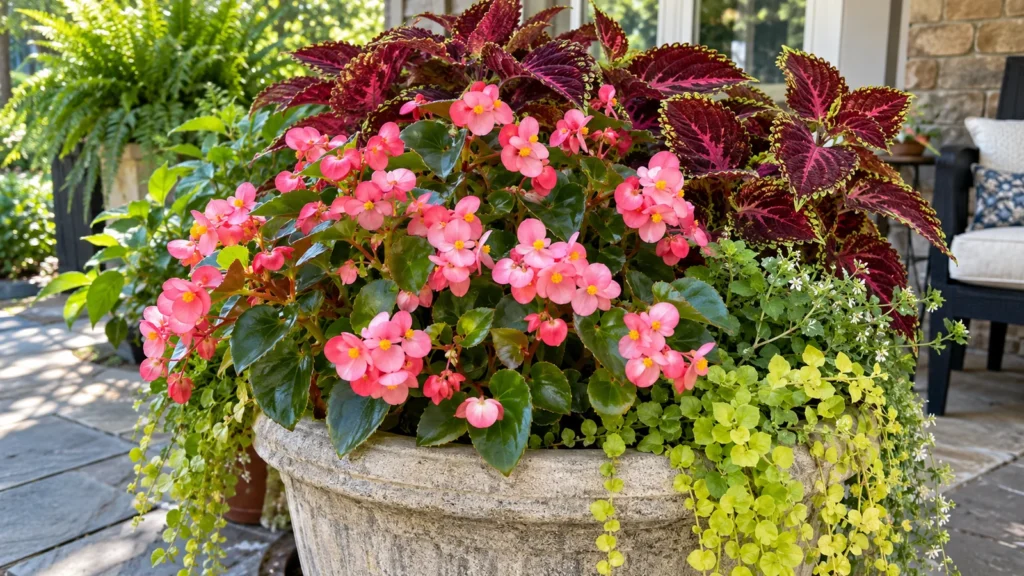
Good begonia planter care relies on regular observation rather than a rigid calendar. Check moisture before watering, monitor sunlight as seasons change, and remove decaying plant material. Inspect new growth and leaf undersides so problems can be noticed before they spread through a mixed container.
Record the cultivar, mature size, and winter requirements. Adjust your routine to the local season, not a fixed month used in another country. Make one change at a time when correcting a problem, such as improving light before increasing fertilizer. That makes the plant’s response easier to interpret and helps prevent additional stress.
- Weekly: Check moisture, drainage, pests, and deteriorating flowers.
- During heat or wind: Inspect exposed baskets more often.
- During active growth: Feed only as required by the variety and product label.
- Before frost: Move tender pots or prepare dormant tubers for storage.
- At seasonal restart: Review root space and refresh exhausted mix if needed.
Frequently Asked Questions
Can begonias stay in planters year-round?
Some survive outdoors in frost-free climates. In colder regions, tender begonias need protection indoors, and tuberous varieties may require dormant storage.
Are begonias better in pots or the ground?
Both work. Pots simplify drainage control and winter protection, while suitable garden beds offer more root space.
Should I water begonias every day?
Not automatically. Check the mix first; hot hanging baskets dry faster than shaded indoor pots.
What should I plant with begonias?
Try compact coleus, impatiens, torenia, compatible ferns, or restrained trailing foliage. Match light and moisture needs.
Do begonias prefer big or small pots?
Choose a pot appropriate to the root ball. Avoid severely crowded roots and oversized containers that stay wet.
Can begonias flower all summer?
Many wax and tuberous begonias bloom repeatedly in favorable warm conditions. Adequate light and steady moisture support flowering.
Why is my begonia not flowering?
Check its type first. Flowering varieties may need brighter light, more stable moisture, or adjusted feeding.
Should I remove dead begonia flowers?
Remove decaying blooms when they remain attached. Some modern varieties shed spent flowers without much help.
Do coffee grounds help begonias?
They are not a balanced fertilizer and can affect surface moisture. Use suitable container plant food instead.
Are begonias toxic to pets?
Yes. Begonias are toxic to cats and dogs if eaten. Keep planters out of reach and contact a veterinarian after suspected ingestion.
Final Thoughts
The most successful begonia planter ideas combine the right variety, suitable companions, and reliable drainage. Choose wax begonias for compact outdoor color, cascading types for baskets, and Rex begonias for indoor foliage. Leave growing room, check moisture rather than following a rigid schedule, and protect tender plants when seasons change.
Myra is the founder and lead writer of Backyard Planter Ideas, where she shares practical, well-researched guidance on planter design, plant selection, and outdoor styling. Her goal is to help homeowners create attractive, functional garden spaces with clear, reliable, and easy-to-apply advice.
Blueberry Planter Ideas: Best Pots, Soil, and Growing Tips
The best blueberry planter ideas use spacious containers, acidic potting mix, and varieties suited to local weather. Wooden barrels, large patio pots, raised troughs, and compact balcony planters can all work. Aim for soil pH 4.5–5.5, steady moisture, and ample...
Hosta Planter Ideas: 21 Beautiful Designs for Shady Spaces
Hosta planter ideas can turn shaded patios, porches, balconies, and garden corners into striking foliage displays. Hostas grow successfully in containers when they have drainage holes, moisture-retentive potting mix, adequate root space, and protection from harsh afternoon sun. The best...
21 Japanese Maple Planter Ideas for Beautiful Outdoor Spaces
Japanese maple planter ideas can turn an ordinary patio, balcony, or courtyard into a garden focal point. Japanese maples (Acer palmatum) grow well in containers when their roots have drainage, consistent moisture, and protection from extreme sun and cold. The...
Geranium Planter Ideas: 15 Beautiful Designs and Growing Tips
Geranium planter ideas can brighten patios, balconies, porches, and window boxes with relatively little equipment. Choose upright zonal geraniums for bold flower clusters, trailing varieties for baskets, and companion plants with matching sunlight and moisture needs. The best results come...
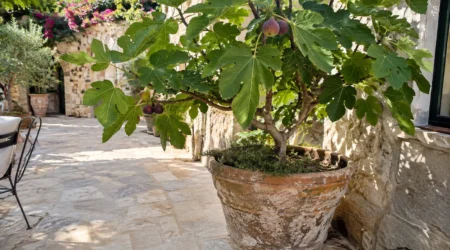
Fig Tree Planter Ideas
The best fig tree planter ideas balance appearance with drainage, root space, and sunlight. Terracotta pots, wooden half-barrels, glazed ceramic containers, and lightweight resin planters all accommodate edible figs. Established trees generally benefit from around 15 gallons (57 liters) of...
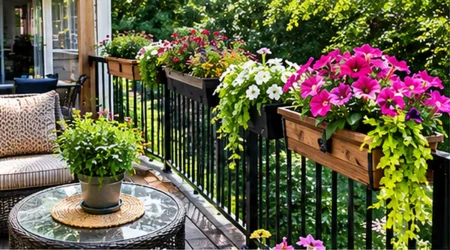
Railing Planter Ideas: Best Designs, Plants, and DIY Tips
Railing planter ideas make balconies, decks, and porches greener without sacrificing floor space. The best choices are securely fitted saddle planters, bracket-mounted flower boxes, and hanging baskets planted with compact flowers, herbs, or strawberries. Match the container to your railing,...
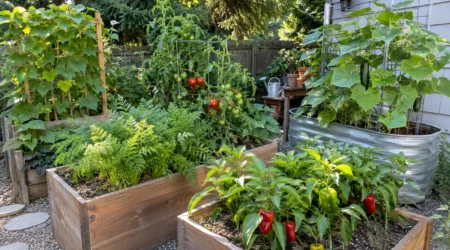
11 Best Vegetables for Deep Planters: Complete Soil Depth Guide
The best vegetables for deep planters are carrots, parsnips, daikon radishes, potatoes, sweet potatoes, tomatoes, cucumbers, peppers, eggplants, zucchini, and pole beans. Most benefit from approximately 12–24 inches of usable growing mix, although the right depth depends on variety, container...
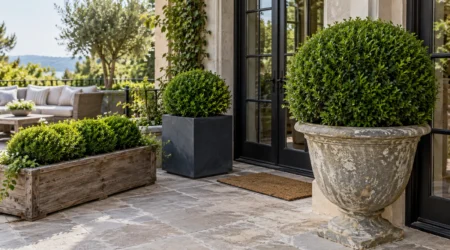
Boxwood Planter Ideas
Boxwood planter ideas bring year-round greenery to front doors, patios, courtyards, and garden pathways. These evergreen shrubs grow well in outdoor containers when they have enough root space, a free-draining growing medium, and consistent moisture. Choose compact varieties suited to...
Potato Planter Ideas: 15 Easy Containers and DIY Growing Tips
Potato planter ideas range from fabric grow bags and large plastic pots to wooden boxes and homemade bucket planters. For most beginners, a wide, opaque 10–15-gallon (38–57-liter) container with drainage, loose potting mix, and six to eight hours of sunshine...
25 Trough Planter Ideas for Beautiful Outdoor Spaces in 2026
Trough planter ideas turn patios, balconies, fences, and small backyards into productive, attractive gardens. The best designs pair a long, suitable container with plants that share similar light, moisture, and root-space needs. Wooden herb boxes, galvanized flower troughs, evergreen displays,...