

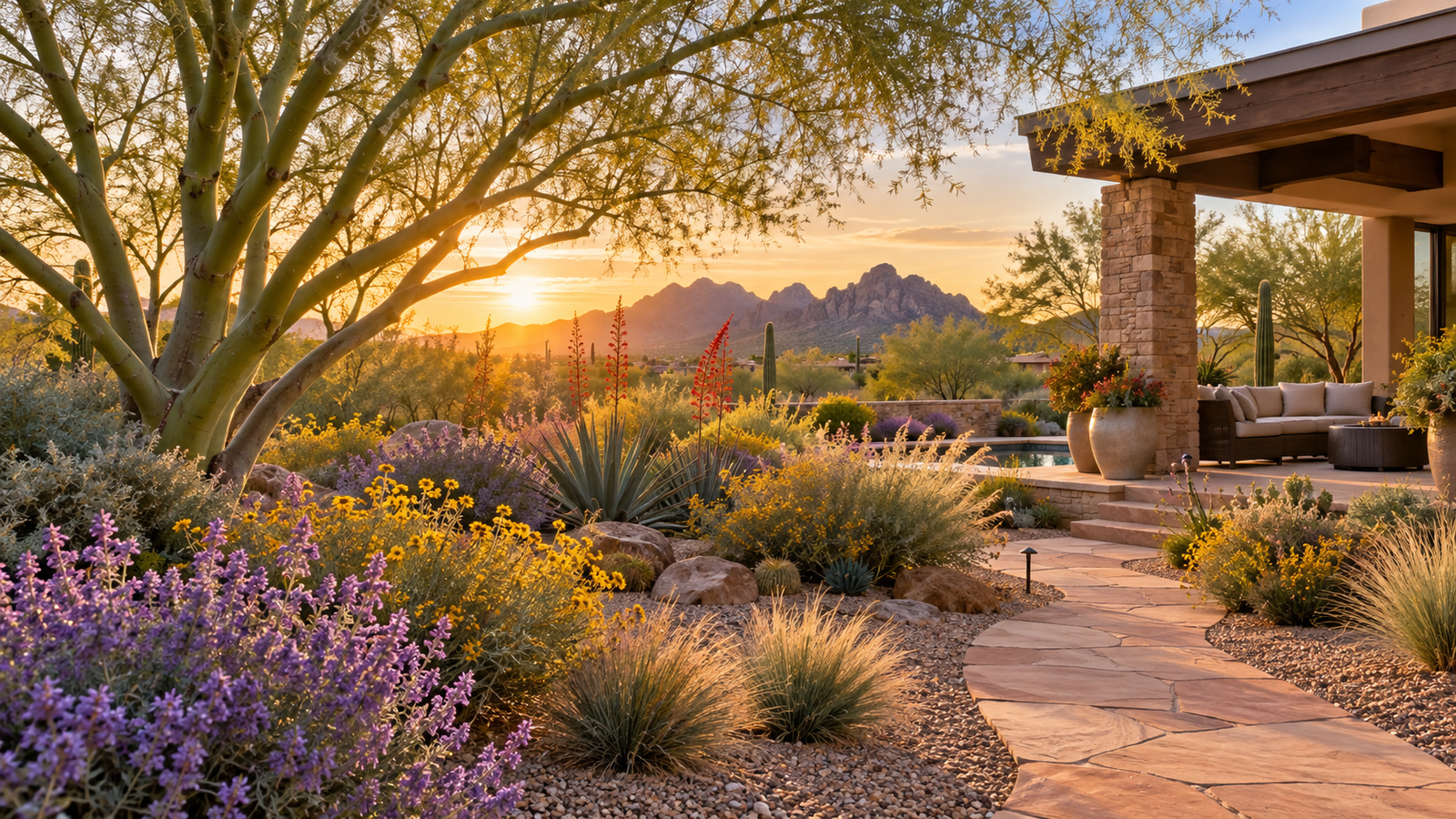
The best Arizona backyard plant ideas combine heat tolerance, efficient water use, and plants that fit their surroundings. Palo verde, desert willow, Texas sage, red yucca, flowering perennials, and native grasses can provide shade, privacy, seasonal color, and wildlife habitat without creating a thirsty landscape. Phoenix and Yuma have extreme low-desert heat; Prescott and Flagstaff face colder winters.
This guide explains plant choice, placement, watering, and care across Arizona climates.
What Are the Best Arizona Backyard Plant Ideas?
A balanced yard combines shade trees, shrubs, flowers, grasses, and architectural accents. Choose a few compatible species from this shortlist rather than crowding the landscape.
How Do the 25 Arizona Backyard Plants Compare?
| Plant | Approximate mature size (height × width) | Best use |
|---|---|---|
| Blue palo verde | 30 × 30 ft | Filtered shade |
| Foothills palo verde | 15 × 15 ft | Native desert structure |
| Desert willow | 25 × 20 ft | Flowering shade |
| Desert ironwood | 25 × 25 ft | Long-term structure |
| Velvet mesquite | 25 × 25 ft | Broad shade |
| Texas sage | 6 × 6 ft | Informal privacy |
| Baja fairy duster | 5 × 5 ft | Hummingbirds |
| Brittlebush | 3 × 4 ft | Yellow flowers |
| Creosote bush | 6 × 6 ft | Naturalistic screening |
| Jojoba | 6 × 6 ft | Evergreen structure |
| Chuparosa | 4 × 4 ft | Nectar flowers |
| Fourwing saltbush | 5 × 8 ft | Wide screening |
| Globe mallow | 3 × 3 ft | Orange flowers |
| Desert marigold | 1 × 1 ft | Sunny borders |
| Blackfoot daisy | 1 × 2 ft | Low flower beds |
| Desert zinnia | 0.5 × 1 ft | Compact color |
| Firecracker penstemon | 1 × 1.5 ft | Hummingbirds |
| Red yucca | 3 × 5 ft | Flowering accent |
| Desert spoon | 4 × 4 ft | Sculptural form |
| Parry’s agave | 2 × 2 ft | Succulent focal point |
| Saguaro | 40 × 10 ft | Desert specimen |
| Engelmann’s prickly pear | 4 × 8 ft | Cactus habitat |
| Ocotillo | 12 × 10 ft | Vertical accent |
| Deer grass | 4 × 4 ft | Soft texture |
| Sideoats grama | 2 × 2 ft | Natural grassland |
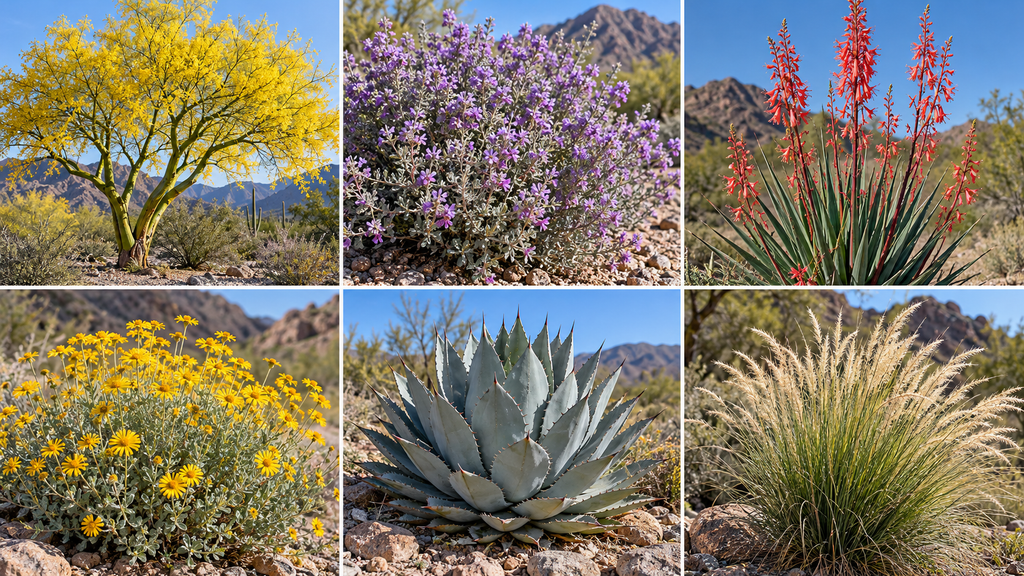
Sizes vary by cultivar and growing conditions; flowering stalks may extend farther. Check nursery labels and choose compact plants for small yards.
Are All Heat-Tolerant Arizona Plants Native?
No. Blue palo verde, creosote, brittlebush, and saguaro are Sonoran Desert natives. Texas sage originates in the Chihuahuan Desert region; Baja fairy duster comes from Baja California.
Desert-adapted non-natives also work, but choose regionally native species when habitat is the priority.
What Makes a Good Arizona Plant?
Choose plants for local climate, mature size, and purpose. Check sun, reflected heat, drainage, winter cold, water requirements, and thorns before buying. Choose the site first.
Sharp agaves are unsafe beside narrow paths; oversized Texas sage requires constant pruning in small beds.
How Does Arizona Climate Affect Plants?
Elevation changes plant suitability: Phoenix heat-tolerant species may fail in Flagstaff winters, and cold-hardy plants may struggle with reflected desert heat.
| Location | Main challenge | Selection priority |
|---|---|---|
| Phoenix | Extreme heat and paving | Heat tolerance |
| Tucson | Heat and colder winter nights | Heat plus frost tolerance |
| Yuma | Prolonged intense heat | Desert adaptation |
| Prescott | Drought and freezing weather | Winter hardiness |
| Flagstaff | Cold winters and short season | Cold tolerance |
Walls, gravel, shade, and wind create microclimates. Drought tolerance does not ensure extreme-heat or winter-cold tolerance.
Which Arizona Shade Trees Are Best?
Choose shade trees for mature canopy, thorns, litter, and available space—not just growth speed.
1. Blue Palo Verde
Blue palo verde (Parkinsonia florida) offers green-blue bark, yellow spring flowers, and broad filtered shade. Allow room for its 30-foot canopy and expect flowers, pods, and small thorns.
2. Foothills Palo Verde
Foothills palo verde (Parkinsonia microphylla) has a smaller, open canopy and a natural Sonoran Desert appearance. It grows slowly and has sharp branch tips; its value lies in landscape character rather than dense shade.
Which Palo Verde Tree Is Best?
Blue palo verde offers broader shade; foothills palo verde stays smaller. Thornless ‘Desert Museum’ suits spacious patios but needs pruning and canopy clearance.
3. Desert Willow
Desert willow (Chilopsis linearis) produces trumpet-shaped flowers that attract hummingbirds and offers light shade. It works beside patios with sufficient space, although winter leaf loss and dropped flowers mean some cleanup.
4. Desert Ironwood
Desert ironwood (Olneya tesota) is a slow-growing native suited to larger low-desert properties. Allow for mature branches and thorns.
5. Velvet Mesquite
Velvet mesquite (Prosopis velutina) provides generous shade but requires space for its canopy and roots. Thorns and seed pods make it unsuitable for tight seating areas.
How Do Monsoons Affect Arizona Trees?
Monsoon winds expose weak branches and roots. Avoid topping; remove dead limbs, inspect stakes, and develop balanced canopies without exposing trunks to sun. Use qualified help near utilities.
Which Arizona Shrubs Handle Heat?
Shrubs provide screening, flowers, and habitat when allowed their natural shape.
6. Texas Sage
Texas sage (Leucophyllum frutescens) has gray-green foliage and pink-to-purple flowers, often following humid weather. Choose a cultivar that fits the bed instead of repeatedly shearing it.
7. Baja Fairy Duster
Baja fairy duster (Calliandra californica) produces red flowers visited by hummingbirds. It needs more supplemental water than creosote bush.
8. Brittlebush
Brittlebush (Encelia farinosa) combines silvery leaves and yellow flowers. Pair with palo verde and agaves in sunny, well-drained soil; severe cold can damage it.
9. Creosote Bush
Creosote bush (Larrea tridentata) tolerates dry low-desert conditions and supplies year-round structure. Its open form suits naturalistic beds, not clipped hedges.
10. Jojoba
Jojoba (Simmondsia chinensis) is a slow-growing evergreen shrub useful for informal screening and background structure. Leave room for its mature spread.
11. Chuparosa
Chuparosa (Justicia californica) produces tubular red or orange flowers that attract hummingbirds, especially during cooler months. Drought-related leaf loss makes it unreliable for dense privacy.
12. Fourwing Saltbush
Fourwing saltbush (Atriplex canescens) brings silvery foliage, screening, and habitat to wider planting areas. Avoid narrow planting strips.
Which Arizona Flowers Thrive in Heat?
Combine drought-adapted flowers with overlapping bloom periods and suitable drainage.
13. Globe Mallow
Globe mallow (Sphaeralcea ambigua) has orange or apricot flowers that brighten slopes, borders, and boulder gardens. Group plants for impact; leaf hairs may irritate skin.
14. Desert Marigold
Desert marigold (Baileya multiradiata) produces bright yellow flowers over silver foliage. Use along sunny edges; it may reseed.
15. Blackfoot Daisy
Blackfoot daisy (Melampodium leucanthum) offers low mounds of white flowers with yellow centers. It needs well-drained soil.
16. Desert Zinnia
Desert zinnia (Zinnia acerosa) is a low native perennial with small white flowers. Plant where its small blooms are visible, in well-drained soil.
17. Firecracker Penstemon
Firecracker penstemon (Penstemon eatonii) sends up red flower spikes that attract hummingbirds. Pair with globe mallow for contrast.
When Do Arizona Desert Plants Bloom?
Chuparosa and firecracker penstemon can flower in winter or spring. Palo verde, globe mallow, and brittlebush offer spring color. Red yucca and desert willow extend interest into warmer months, while Texas sage often flowers around humid or rainy periods.
Bloom timing varies with climate and irrigation.
Which Desert Accent Plants Work Best?
Architectural plants add structure, but spines demand careful placement.
18. Red Yucca
Red yucca (Hesperaloe parviflora) has arching narrow leaves and tall coral-colored flower stalks. It suits modern landscapes and pollinator beds. Leave room for its mature clump and flowers.
19. Desert Spoon
Desert spoon (Dasylirion wheeleri) forms a striking rounded shape with serrated leaves. Keep it away from paths and play areas.
20. Parry’s Agave
Parry’s agave (Agave parryi) creates a compact blue-gray rosette and works as a focal point in well-drained beds or large containers. Keep sharp tips away from traffic.
21. Saguaro
Saguaro (Carnegiea gigantea) is an iconic slow-growing desert cactus that offers wildlife value and vertical structure. Allow open space and use lawful sources.
22. Engelmann’s Prickly Pear
Engelmann’s prickly pear (Opuntia engelmannii) provides broad pads, flowers, fruit, and habitat. Keep spines and glochids away from seating and pools.
23. Ocotillo
Ocotillo (Fouquieria splendens) has upright thorny stems and red flowers. Leaves can appear after rain and drop during drought.
Which Arizona Grasses Tolerate Drought?
Grasses soften gravel and cactus plantings.
24. Deer Grass
Deer grass (Muhlenbergia rigens) forms generous fountain-like clumps. Plant near rocks with room for mature clumps.
25. Sideoats Grama
Sideoats grama (Bouteloua curtipendula) creates a natural grassland appearance with distinctive seed stalks. Expect seasonal tan foliage.
Where Should Arizona Backyard Plants Go?
Choose plants by location: hot walls, shaded patios, pool areas, and boundaries have different needs.
| Location | Suitable choices | Watch for |
|---|---|---|
| West wall | Creosote, Texas sage | Reflected heat |
| Patio | Desert willow, palo verde | Canopy clearance, litter |
| Poolside | Jojoba, blackfoot daisy | Spines and cleanup |
| Boundary | Texas sage, saltbush | Mature width |
| Pollinator bed | Chuparosa, red yucca | Bloom timing |
Which Plants Work Near West-Facing Walls?
Masonry intensifies reflected heat, especially for new plants. Use proven heat-tolerant species, allow airflow, and check root-zone moisture.
Which Arizona Plants Work Near Pools?
Choose manageable, non-spiny species such as blackfoot daisy, jojoba, or deer grass. Keep cactus and sharp agaves away from barefoot routes.
Which Arizona Plants Grow in Containers?
Desert marigold, blackfoot daisy, desert zinnia, and compact agaves suit well-drained pots. Check moisture frequently in summer and position spines away from traffic.
How Do You Arrange Arizona Desert Plants?
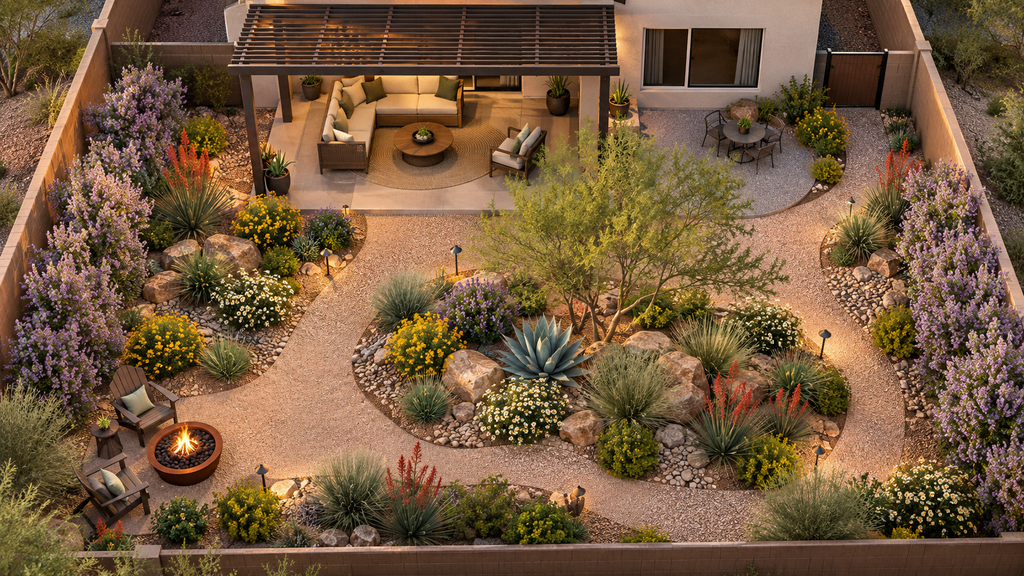
Repeat trees, shrubs, flowers, and accents in layers. Plan irrigation zones before planting.
How Can You Design a Small Arizona Backyard?
For a compact patio, put Texas sage at the boundary, red yucca in the middle, and desert marigold or blackfoot daisy in front. Add sideoats grama and one safely placed Parry’s agave. Preserve walking space.
How Can You Create a Privacy-Focused Arizona Backyard?
Use Texas sage or jojoba along boundaries; reserve fourwing saltbush for wider spaces. Add deer grass and flowers in front. Stagger shrubs without blocking gates or drainage.
How Can You Build a Tucson Pollinator Garden?
Layer desert willow, chuparosa, red yucca, globe mallow, and firecracker penstemon. Their varied blooms help hummingbirds; favor local natives and limit pesticides.
How Should You Group Plants by Water Needs?
Hydrozoning groups plants by irrigation needs. Creosote and Baja fairy duster should not automatically share a schedule; neither should trees and containers. Adjust emitters as roots spread.
What Is Arizona Xeriscaping?
Xeriscaping uses appropriate plants, mulch, drip irrigation, and rainwater capture to conserve water while providing shade and habitat; it is not simply gravel.
When Should You Plant in Arizona?
Fall and early spring are generally favorable for many low-desert trees and shrubs because roots can establish before extreme summer heat. Cacti often root best when soil is warm, making spring or suitable early-summer periods useful; avoid unnecessary transplanting during peak heat. High-elevation areas follow a different calendar because freezing weather and short growing seasons matter more.
Cool-season native wildflower seeds are often sown in fall, but individual species have different requirements.
How Does Planting Time Differ Between Phoenix and Flagstaff?
Phoenix can support fall planting of many hardy trees and shrubs. In Flagstaff, spring planting after serious frost risk declines often gives roots more time before winter. Check local weather and species hardiness rather than relying on a statewide date.
How Do You Prepare Arizona Soil?
Most desert-adapted plants do not need heavily amended planting holes. Prioritize correct depth, drainage, and a root ball set at or slightly above the finished soil grade. Widen the planting area when necessary, but avoid making a deep pocket of contrasting soil.
Keep mulch away from stems and trunks.
What Is Caliche in Arizona Soil?
Caliche is soil cemented by calcium carbonate. A dense layer can restrict roots and trap water, while loose deposits may cause fewer problems. Inspect the planting hole rather than assuming every hard patch is identical.
How Can You Test Caliche Drainage?
Partially fill a test hole with water and measure how quickly the level drops. University of Arizona guidance describes a decrease of about four inches within four hours as a useful caliche drainage check. Persistent standing water suggests further investigation.
Severe layers may require professional correction or a raised planting area; fertilizer cannot fix a physical barrier.
How Often Should Arizona Plants Be Watered?
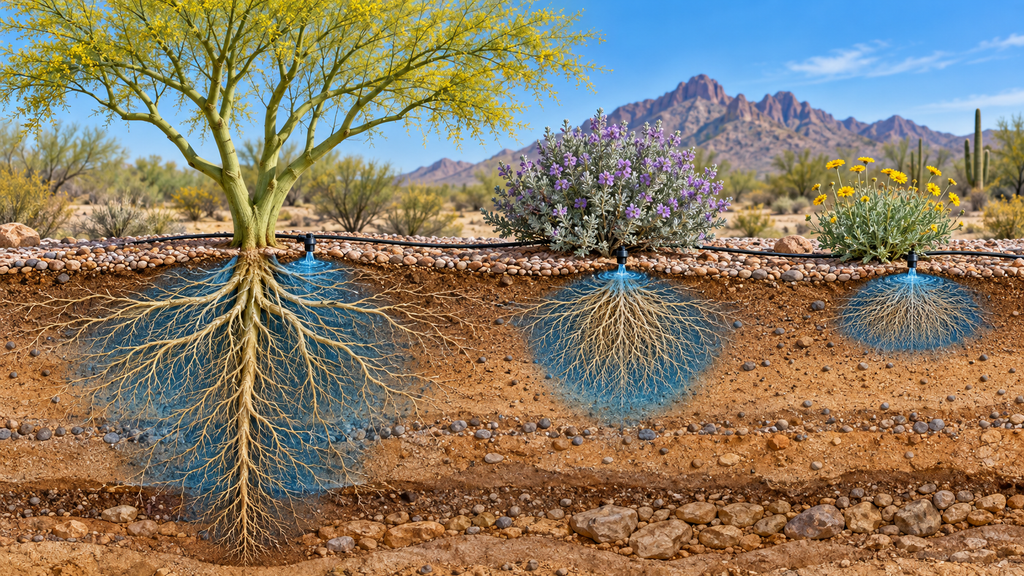
New drought-tolerant plants require establishment irrigation. As roots expand, many trees and shrubs can be watered more deeply and less often. Frequency depends on soil, plant size, rainfall, season, and emitter output—not just controller runtime.
How Deep Should You Water Arizona Plants?
General targets are around 6–12 inches for small plants, 12–24 inches for shrubs, and 18–36 inches for trees, depending on species and root development. Use a soil probe to check penetration. Cacti and succulents have different rooting patterns and should not automatically share a tree schedule.
How Do You Know When Plants Need Water?
Check moisture in the active root zone, recent weather, plant establishment, drainage, and emitter function. Dry surface gravel is not proof that deeper soil is dry. Expand the wetted area around developing trees rather than soaking only against their trunks.
Why Do Arizona Plants Wilt or Turn Yellow?
Wilting may reflect drought, overheated foliage, root injury, or overly wet soil. Yellow leaves can also have several causes, including drainage problems or nutrient availability. Check the root zone before increasing watering or adding fertilizer.
Ocotillo losing leaves in dry weather may be behaving normally.
Do Established Desert Plants Need Irrigation?
Some established natives survive largely on rainfall in suitable locations. However, survival and attractive growth are different: extreme drought can reduce flowering and foliage. Supplemental watering should reflect the species and conditions, not an identical schedule for the entire landscape.
What Arizona Planting Mistakes Should You Avoid?
Common mistakes include overcrowding young plants, ignoring mature canopy width, treating reflected heat like ordinary sun, placing sharp foliage beside paths, and using one irrigation schedule for every species. Deep planting, poor drainage, excessive shearing, and emitters kept against trunks also create problems. A newly planted desert yard may look sparse.
Allow room for growth instead of filling every gap. Correct placement and realistic maintenance expectations prevent many future issues.
Are Arizona Native Plants Protected?
Some Arizona native species, including saguaros, are protected under state rules. Plant ownership, removal, sale, and transportation can involve authorization, permits, tags, or notices depending on the circumstances. Buy from reputable nurseries and check current Arizona Department of Agriculture requirements before handling regulated plants.
Can You Move a Wild Saguaro?
Do not assume a wild saguaro can be moved freely, even from private land. Confirm ownership, legal requirements, and transport documentation before relocation. Large specimens are extremely heavy and should be handled by qualified professionals with suitable equipment.
What Grows Best in Northern Arizona?
Flagstaff and other high-elevation locations need plants selected for freezing temperatures, drying winds, and shorter growing seasons. Low-desert favorites should not automatically be transplanted into these conditions.
Which Plants Work in Colder Arizona Backyards?
Rubber rabbitbrush, Utah serviceberry, mountain mahogany, Woods’ rose, Rocky Mountain juniper, and Apache plume are possible choices for suitable northern Arizona sites. Each has different space, exposure, and moisture needs. Check local hardiness and nursery guidance before buying.
How Should You Plan a High-Elevation Backyard?
Start with appropriately hardy structural plants, then add flowering shrubs and grasses suited to the site. Consider frost pockets, snow, wind, and drainage. Prescott, Flagstaff, and the Verde Valley have different conditions; city names alone cannot replace a site assessment.
How Do You Create a Low-Maintenance Arizona Yard?
Low maintenance comes from matching plants to their mature space, climate, and water needs. Start with one suitable shade tree, a few repeated shrubs, flowering perennials, and one grass rather than using every species in the nursery.
Which Plant Choices Reduce Maintenance?
Choose compact cultivars for narrow beds, trees with acceptable litter levels near patios, and plants that share irrigation requirements. Avoid constant hedge shearing and needless replacement of species that cannot tolerate local winter cold or summer heat. Even desert gardens require occasional pruning, weeding, and irrigation checks.
What Affects Arizona Backyard Planting Costs?
Costs depend on plant size, quantities, drainage correction, drip irrigation, delivery, and installation. Prioritize functional shade or privacy before decorative planting. Smaller nursery plants can reduce initial spending, although they still require establishment care.
A phased plan also leaves room to correct spacing and irrigation problems.
What Are Common Questions About Arizona Plants?
What Are the Easiest Low-Maintenance Plants for Arizona Backyards?
Texas sage, creosote, brittlebush, red yucca, and desert marigold are practical low-desert choices when matched to the site. They still need establishment care.
Which Arizona Plants Survive Full Sun and Reflected Heat?
Creosote, Texas sage, red yucca, and foothills palo verde are candidates for exposed low-desert sites. Newly installed plants may still suffer heat stress.
Which Arizona Plants Stay Green and Provide Privacy?
Jojoba and Texas sage offer evergreen informal screening. Allow enough room for mature width rather than forcing them into narrow hedges.
What Is the Best Shade Tree for a Small Arizona Backyard?
Foothills palo verde is a relatively small option with filtered shade. Its branch tips are sharp, and its canopy still needs clearance.
Which Arizona Flowers Attract Hummingbirds?
Chuparosa, red yucca, desert willow, Baja fairy duster, and firecracker penstemon attract hummingbirds. Combine species with different bloom seasons.
How Often Should Newly Planted Desert Plants Be Watered?
New plants need more frequent checks and establishment irrigation. Frequency depends on species, soil moisture, season, and weather.
Can Arizona Desert Plants Survive Without Irrigation?
Some established native plants survive largely on rainfall in suitable locations. Newly installed specimens normally need supplemental water.
When Is the Best Time to Plant in Phoenix or Tucson?
Fall and early spring work well for many shrubs and trees. Warm soil favors cactus establishment, but avoid extreme transplanting conditions.
Can Arizona Desert Plants Grow in Caliche Soil?
Some can, but dense caliche can restrict roots and drainage. Test the site and address severe restrictions before planting.
What Plants Grow Best in Northern Arizona?
Rabbitbrush, Utah serviceberry, mountain mahogany, and suitable junipers are possibilities. Confirm winter hardiness for the exact elevation and location.
How Were These Arizona Plant Ideas Researched?
This guide prioritizes mature dimensions, climate suitability, water needs, drainage, seasonal performance, wildlife value, and safety. Information is based on Arizona-focused horticultural guidance rather than claims of firsthand testing. Plant performance varies with cultivars, microclimate, and maintenance.
Which Sources Support These Recommendations?
The Arizona Municipal Water Users Association plant database provides landscape profiles and water-use categories. University of Arizona Cooperative Extension offers regional guidance on planting, irrigation, caliche, and high-elevation gardens. For protected species, consult the Arizona Department of Agriculture. Confirm specific plant choices and current regulations before starting work.

Myra is the founder and lead writer of Backyard Planter Ideas, where she shares practical, well-researched guidance on planter design, plant selection, and outdoor styling. Her goal is to help homeowners create attractive, functional garden spaces with clear, reliable, and easy-to-apply advice.
Blueberry Planter Ideas: Best Pots, Soil, and Growing Tips
The best blueberry planter ideas use spacious containers, acidic potting mix, and varieties suited to local weather. Wooden barrels, large patio pots, raised troughs, and compact balcony planters can all work. Aim for soil pH 4.5–5.5, steady moisture, and ample...
Hosta Planter Ideas: 21 Beautiful Designs for Shady Spaces
Hosta planter ideas can turn shaded patios, porches, balconies, and garden corners into striking foliage displays. Hostas grow successfully in containers when they have drainage holes, moisture-retentive potting mix, adequate root space, and protection from harsh afternoon sun. The best...
21 Japanese Maple Planter Ideas for Beautiful Outdoor Spaces
Japanese maple planter ideas can turn an ordinary patio, balcony, or courtyard into a garden focal point. Japanese maples (Acer palmatum) grow well in containers when their roots have drainage, consistent moisture, and protection from extreme sun and cold. The...
Geranium Planter Ideas: 15 Beautiful Designs and Growing Tips
Geranium planter ideas can brighten patios, balconies, porches, and window boxes with relatively little equipment. Choose upright zonal geraniums for bold flower clusters, trailing varieties for baskets, and companion plants with matching sunlight and moisture needs. The best results come...
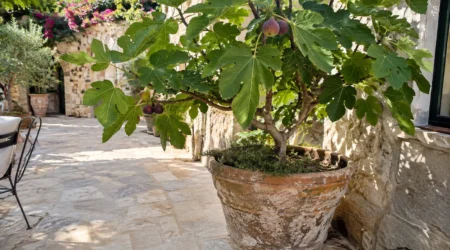
Fig Tree Planter Ideas
The best fig tree planter ideas balance appearance with drainage, root space, and sunlight. Terracotta pots, wooden half-barrels, glazed ceramic containers, and lightweight resin planters all accommodate edible figs. Established trees generally benefit from around 15 gallons (57 liters) of...
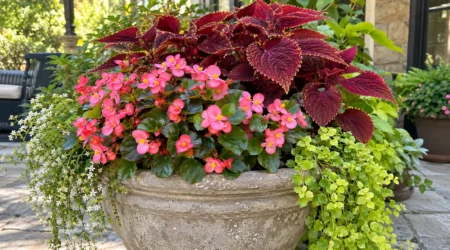
Begonia Planter Ideas: 15 Beautiful Combinations for Every Space
Begonia planter ideas work best when flower color, foliage, container size, and light requirements fit together. Choose wax begonias for compact outdoor displays, trailing varieties for hanging baskets, or Rex begonias for striking indoor leaves. Combine compatible plants in well-drained...
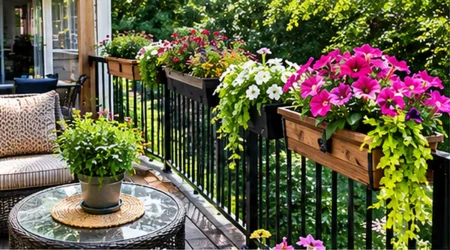
Railing Planter Ideas: Best Designs, Plants, and DIY Tips
Railing planter ideas make balconies, decks, and porches greener without sacrificing floor space. The best choices are securely fitted saddle planters, bracket-mounted flower boxes, and hanging baskets planted with compact flowers, herbs, or strawberries. Match the container to your railing,...
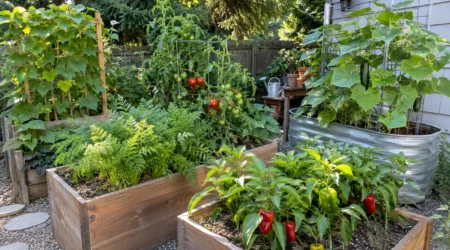
11 Best Vegetables for Deep Planters: Complete Soil Depth Guide
The best vegetables for deep planters are carrots, parsnips, daikon radishes, potatoes, sweet potatoes, tomatoes, cucumbers, peppers, eggplants, zucchini, and pole beans. Most benefit from approximately 12–24 inches of usable growing mix, although the right depth depends on variety, container...
Boxwood Planter Ideas
Boxwood planter ideas bring year-round greenery to front doors, patios, courtyards, and garden pathways. These evergreen shrubs grow well in outdoor containers when they have enough root space, a free-draining growing medium, and consistent moisture. Choose compact varieties suited to...
Potato Planter Ideas: 15 Easy Containers and DIY Growing Tips
Potato planter ideas range from fabric grow bags and large plastic pots to wooden boxes and homemade bucket planters. For most beginners, a wide, opaque 10–15-gallon (38–57-liter) container with drainage, loose potting mix, and six to eight hours of sunshine...